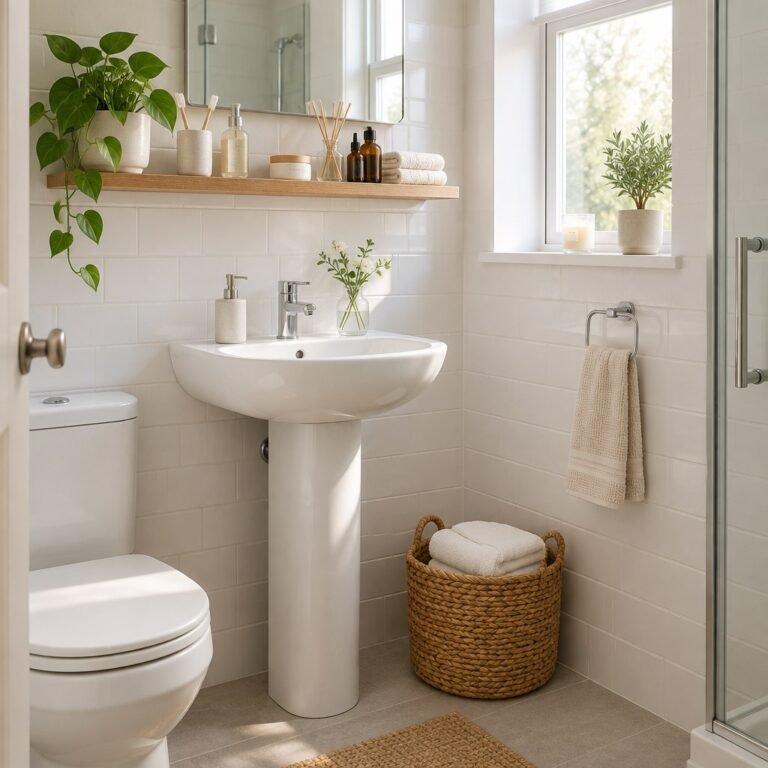
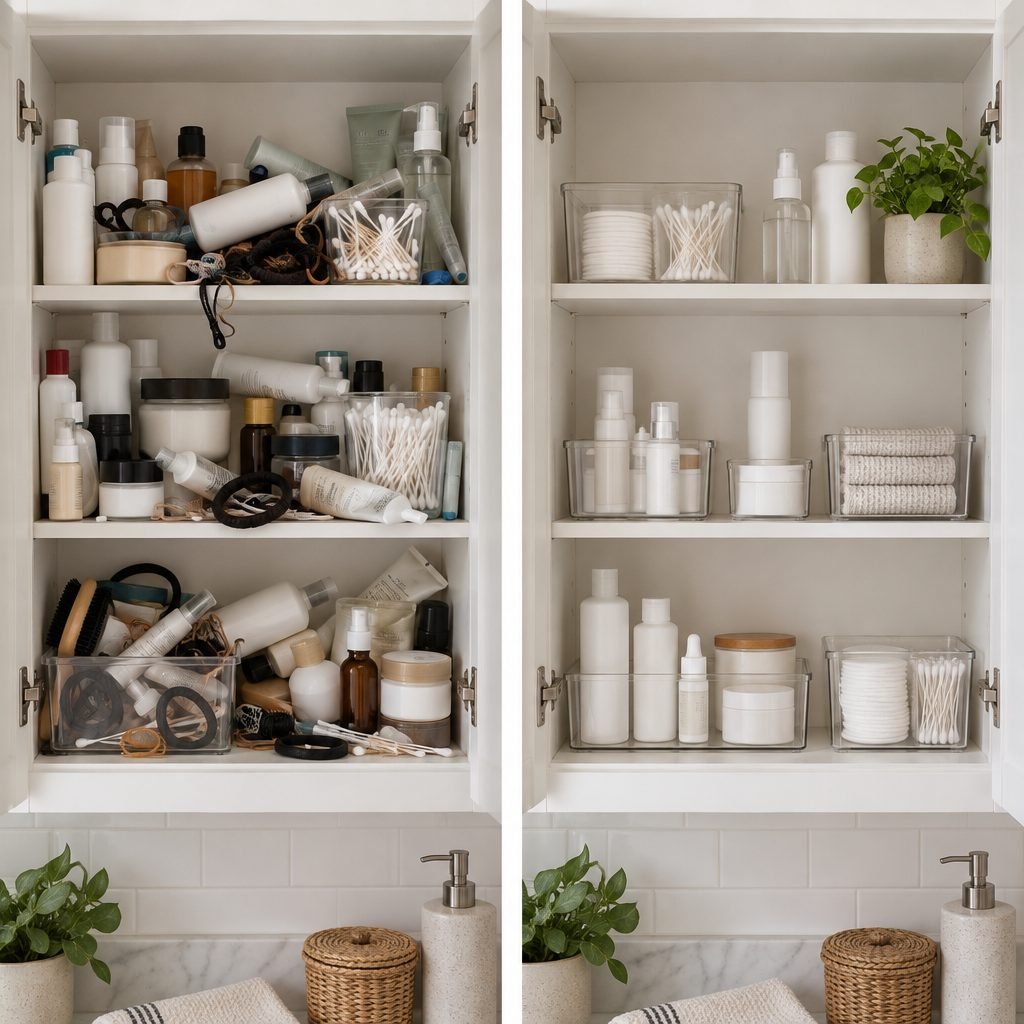
Good medicine cabinet organization turns the most cluttered spot in the bathroom into a small, tidy shelf you can use with your eyes half closed. Most cabinets are shallow and packed with half-empty bottles, old samples and loose hair ties, so finding the toothpaste becomes a daily dig. A few simple rules fix that fast.
This guide shows what really belongs in a medicine cabinet, a shelf-by-shelf map, an easy 7-step clean-out and 15 ideas for bins, doors and small bathrooms. It also covers the part most people miss: why your actual medicines are often better stored somewhere else.
Key Takeaways
- Quick answer: Empty the cabinet, toss expired and unused items, keep daily toiletries at eye level, put backups on the top shelf, group small things in clear bins and use the door for tools. Store pills and other medicines in a cool, dry place out of reach of children instead of the steamy bathroom.
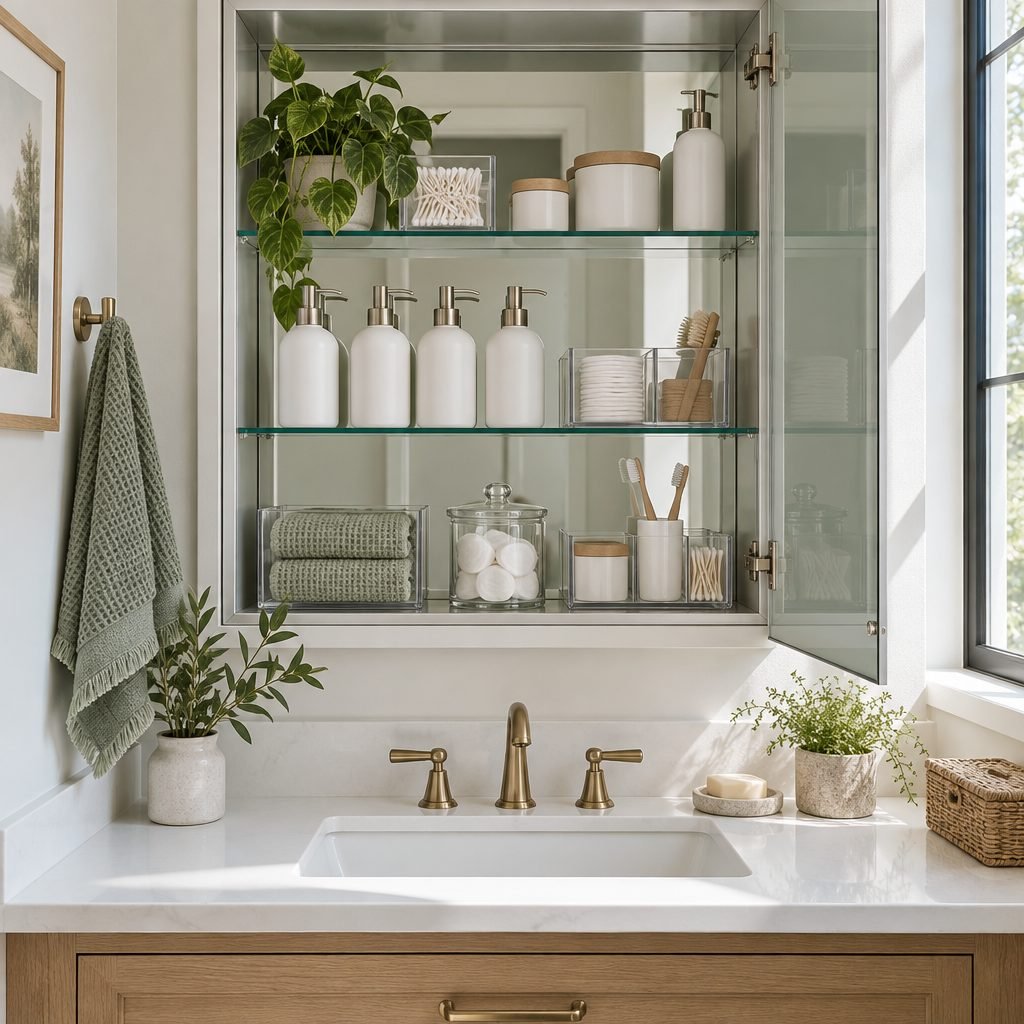
- Clear, narrow bins and adjustable glass shelves make the most of a shallow cabinet.
- Do a five-minute reset once a month and check expiration dates.
Time: 30–60 minutes · Cost: $0–40 (more if you add a new cabinet) · Difficulty: Easy
What Belongs in a Medicine Cabinet?
Despite the name, the bathroom cabinet is not the best home for most medicines. MedlinePlus, from the U.S. National Library of Medicine, explains in its guide to storing your medicines that heat and moisture from the shower, bath and sink may damage them. It recommends a cool, dry place instead, such as a dresser drawer or a kitchen cabinet away from the stove, sink and hot appliances, and always out of reach and out of sight of children.
Good medicine cabinet organization starts by freeing the cabinet for what you actually use at the sink: toothpaste, floss, skincare, deodorant, cotton rounds and small grooming tools. The map below shows where each group goes.
Quick Pick: Medicine Cabinet Organization by Goal
| Your goal | Best ideas | Cost |
|---|---|---|
| Find things fast | #1, #2, #3, #5 | $0–20 |
| More space in a shallow cabinet | #6, #7, #8 | $0–25 |
| Store medicines safely | #10, #11, #12 | $0–25 |
| Small bathroom, little storage | #13, #14 | $40+ |
| Keep it tidy | #4, #9, #15 | $0–10 |
How to Organize a Medicine Cabinet in 7 Steps
- Empty everything. Take every item out and lay it on a towel on the counter.
- Check dates. Set aside expired products and anything that has changed color, texture or smell.
- Dispose of old medicines safely. Use a take-back option where possible (see below).
- Sort what is left. Make groups: dental, skin, hair, first aid, tools and medicines.
- Move medicines out. Put pills and other medicines in a lidded box for a cool, dry spot.
- Wipe and set the shelves. Clean the glass, then adjust shelf heights to fit your tallest bottles.
- Put things back by use. Daily items at eye level, backups up high, tools on the door.
Medicine Cabinet Organization Ideas for Every Shelf
1. Organize Shelves by How Often You Use Them
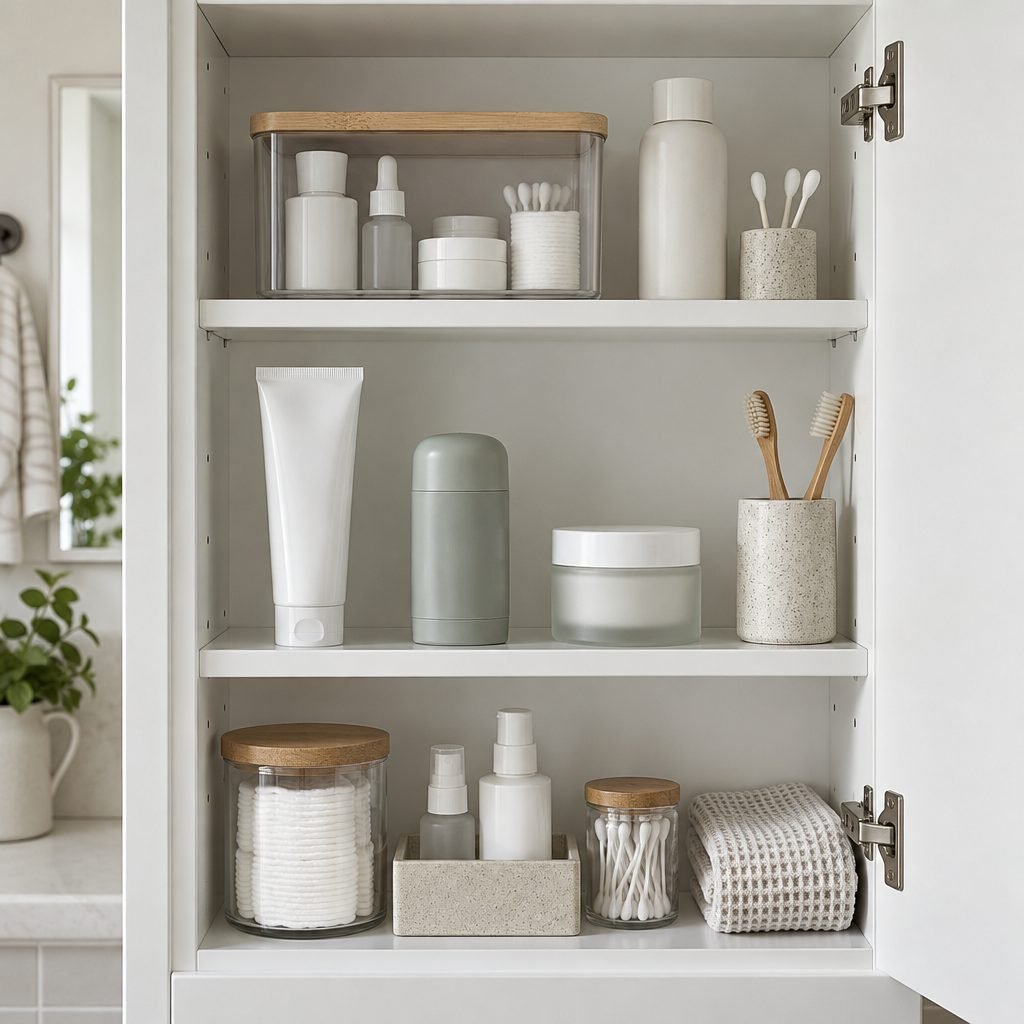
This one rule does most of the work. Put the things you reach for every morning, like toothpaste, deodorant and face cream, on the eye-level shelf. Backups and once-a-week items go on the top shelf, and taller bottles sit on the bottom shelf where there is more height.
2. Group Small Things in Clear Bins
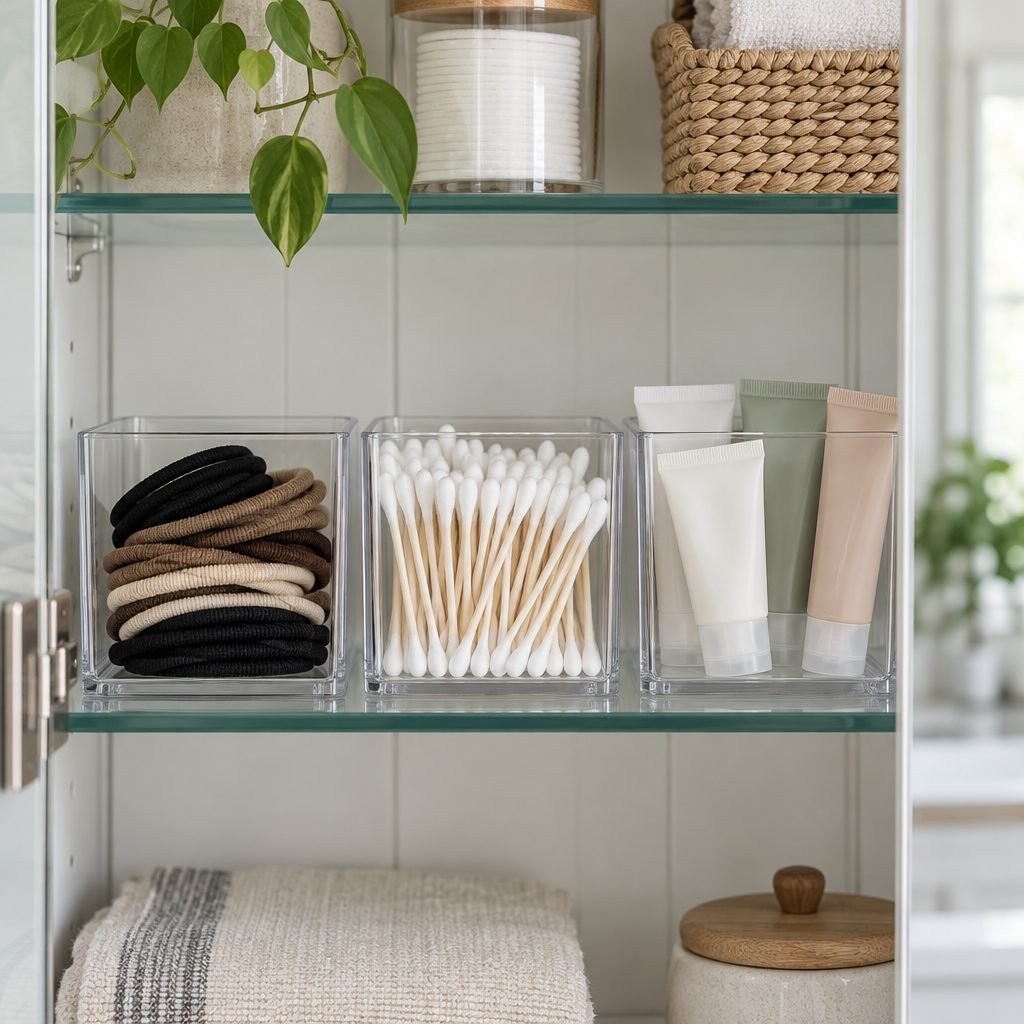
Hair ties, cotton swabs and travel tubes roll around and fall out when you open the door. Narrow clear bins keep each group together so you can see what you have at a glance. Measure the inside depth of your cabinet before you buy, since many are shallow. The same trick works in a junk drawer organizer.
3. Use a Small Turntable in a Deeper Cabinet
If your cabinet is deep enough (measure first; a vanity cabinet usually is, and some surface-mounted ones are), a small turntable keeps skincare bottles within reach. One spin brings the back row to the front, so nothing gets lost behind taller bottles.
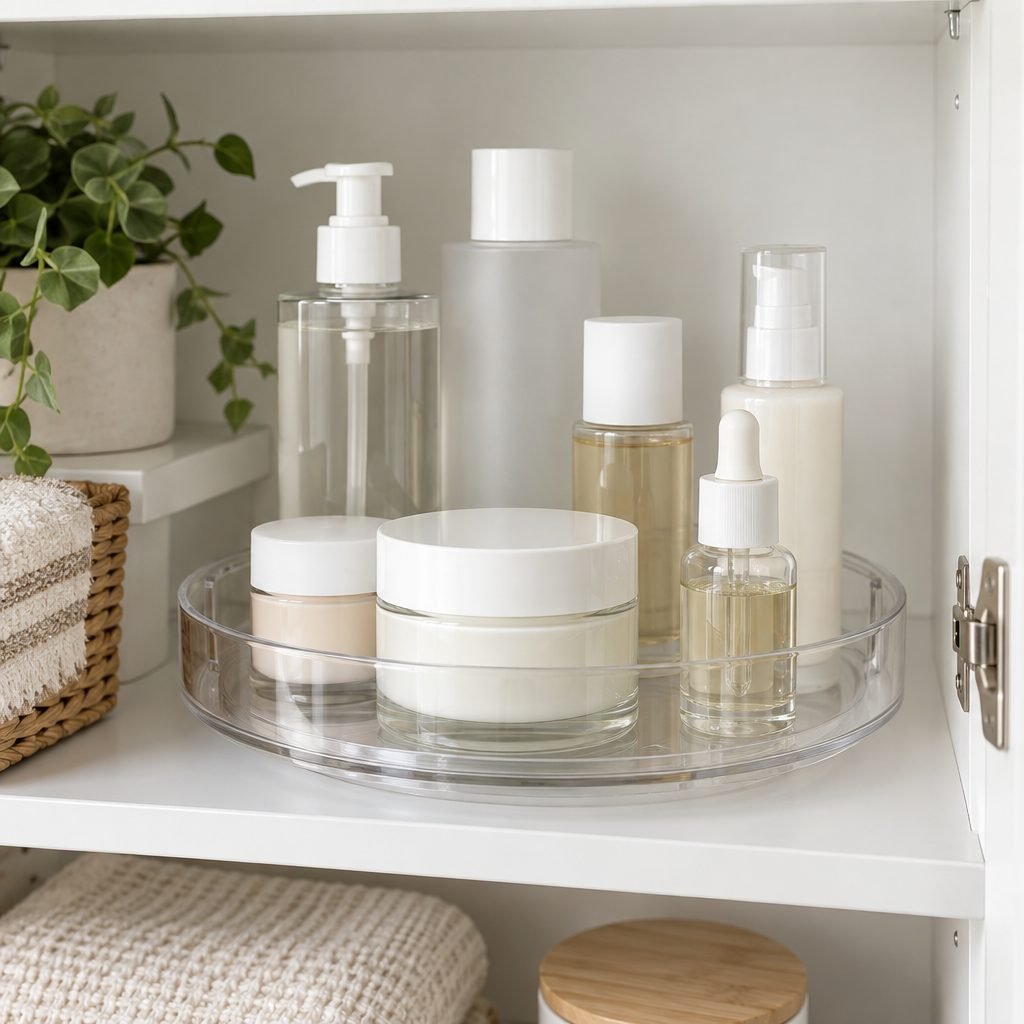
4. Decant Into Matching Pump Bottles
Matching pump bottles for hand soap or lotion look tidy and are easier to use with one hand. Label each one so nobody mixes them up, and keep the original bottle (or a photo of its label) until you are sure you like the product.
5. Keep Cotton Rounds and Swabs in Lidded Jars
Small glass jars with lids keep cotton rounds and swabs clean and dry and make them easy to grab. Two small jars side by side take up less room than an open bag.
6. Adjust the Glass Shelves
Most cabinets have adjustable shelves that nobody moves. Before you put anything back, set each shelf to fit what goes on it. A shelf that sits just above your tallest bottle often gives you room for one more row.
Use the Door and Every Inch
7. Add a Magnetic Strip Inside the Door
A slim magnetic strip on the inside of the door holds tweezers, nail clippers and bobby pins where you can see them. Check that the door still closes with the strip and tools in place before you stick it on.
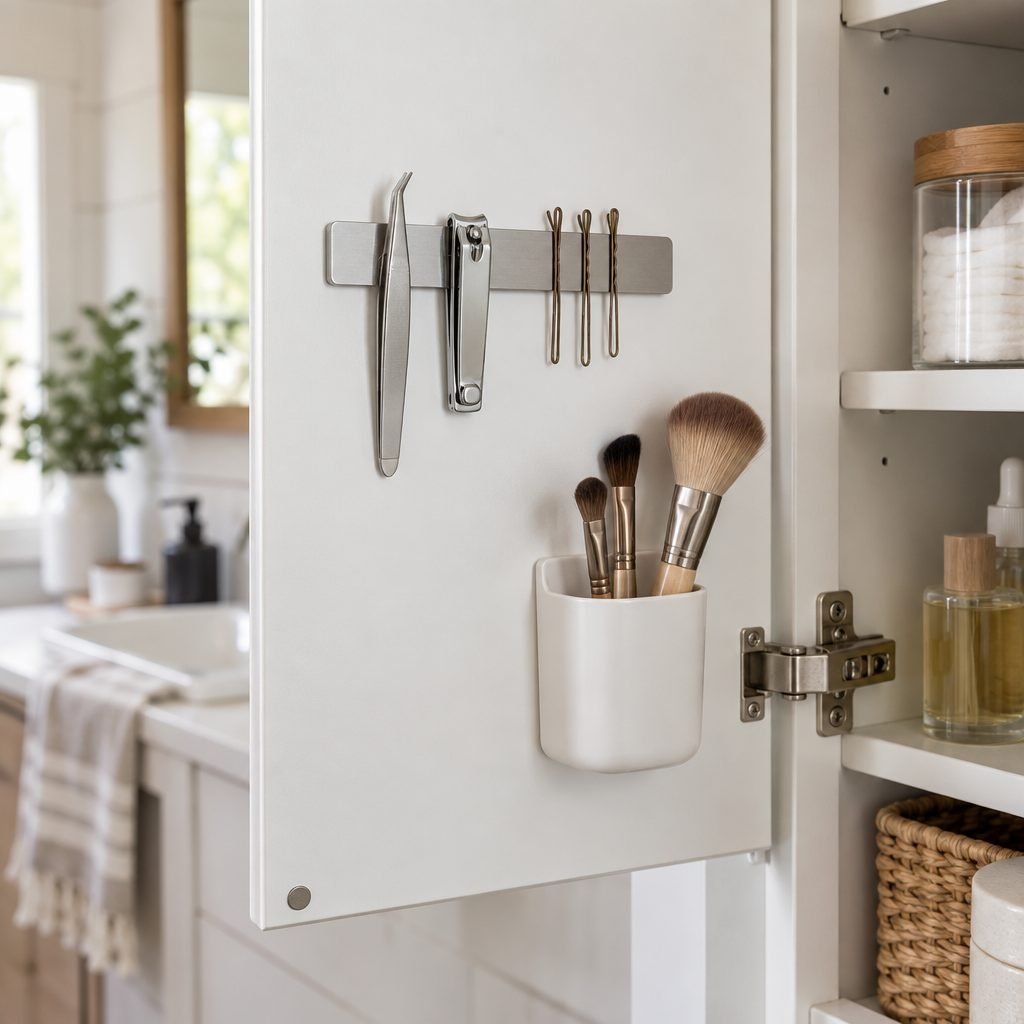
8. Stick a Small Cup on the Door
A small adhesive cup on the door holds makeup brushes or a few cotton swabs and keeps them off the shelf. Pick a shallow one so it does not hit the shelves when the door closes.
9. Label the Shelves
Small labels on the shelf edge, like dental, skin and hair, make it easy for everyone in the house to put things back in the right spot. It also helps you notice when you are running low.
Where to Keep Medicines Instead
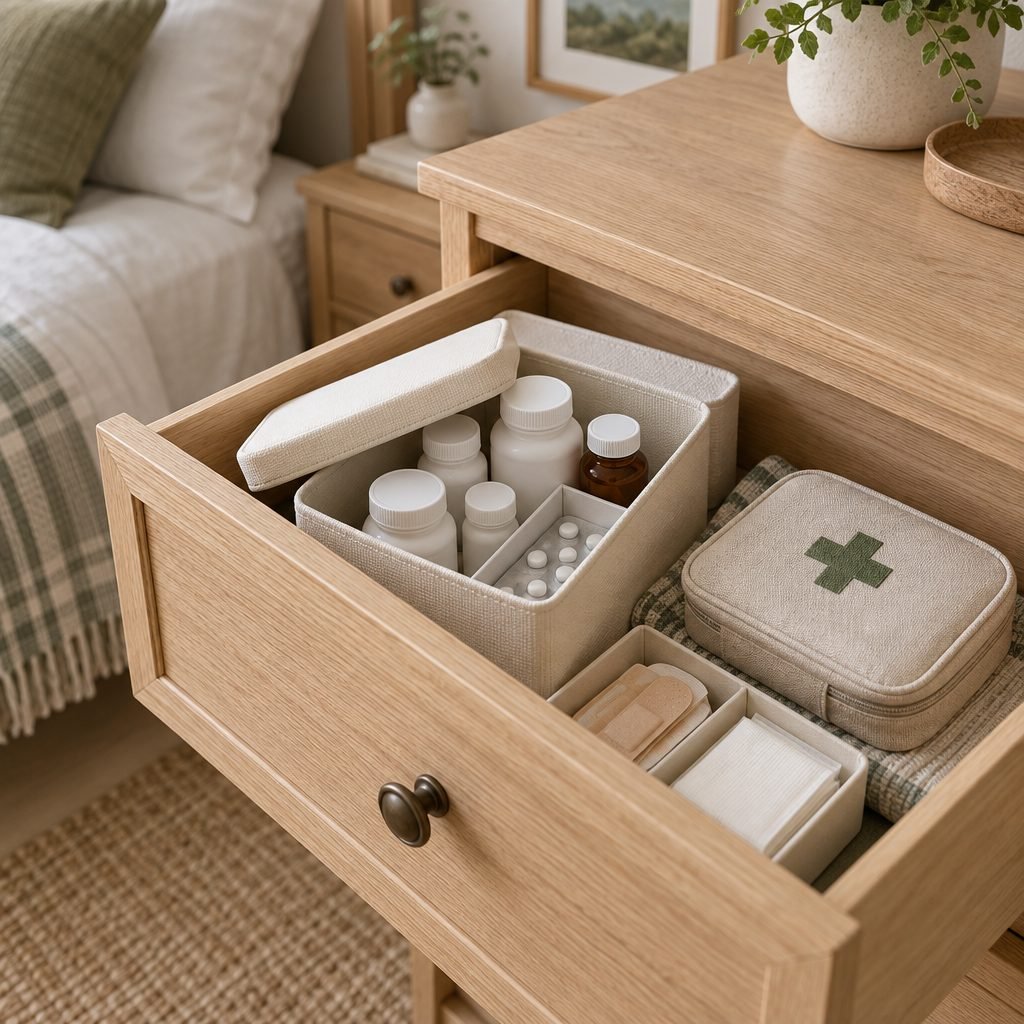
10. Move Pills to a Cool, Dry Drawer
A lidded box in a bedroom dresser drawer is a simple home for pills, capsules and other medicines. MedlinePlus also advises always keeping medicines in their original containers and taking the cotton ball out of the bottle, since it pulls moisture in. Keep the box out of reach of children, and see our guide on how to store perfume for the same cool, dark, dry idea applied to fragrance.
11. Use a Cabinet With a Child Latch
MedlinePlus advises always storing medicines in a cabinet with a child latch or lock, which matters most if young children live with or visit you. A high kitchen cabinet away from the stove and sink, with a latch added, works well in many homes.
12. Give the First Aid Kit One Clear Spot
Bandages, gauze and tape are easier to find in an emergency when they live in one zippered pouch in a spot everyone knows. A dresser drawer next to your medicines or a hall or linen closet shelf is a good choice, and you can keep a few bandages in the bathroom cabinet for small scrapes.
Ideas for Small Bathrooms
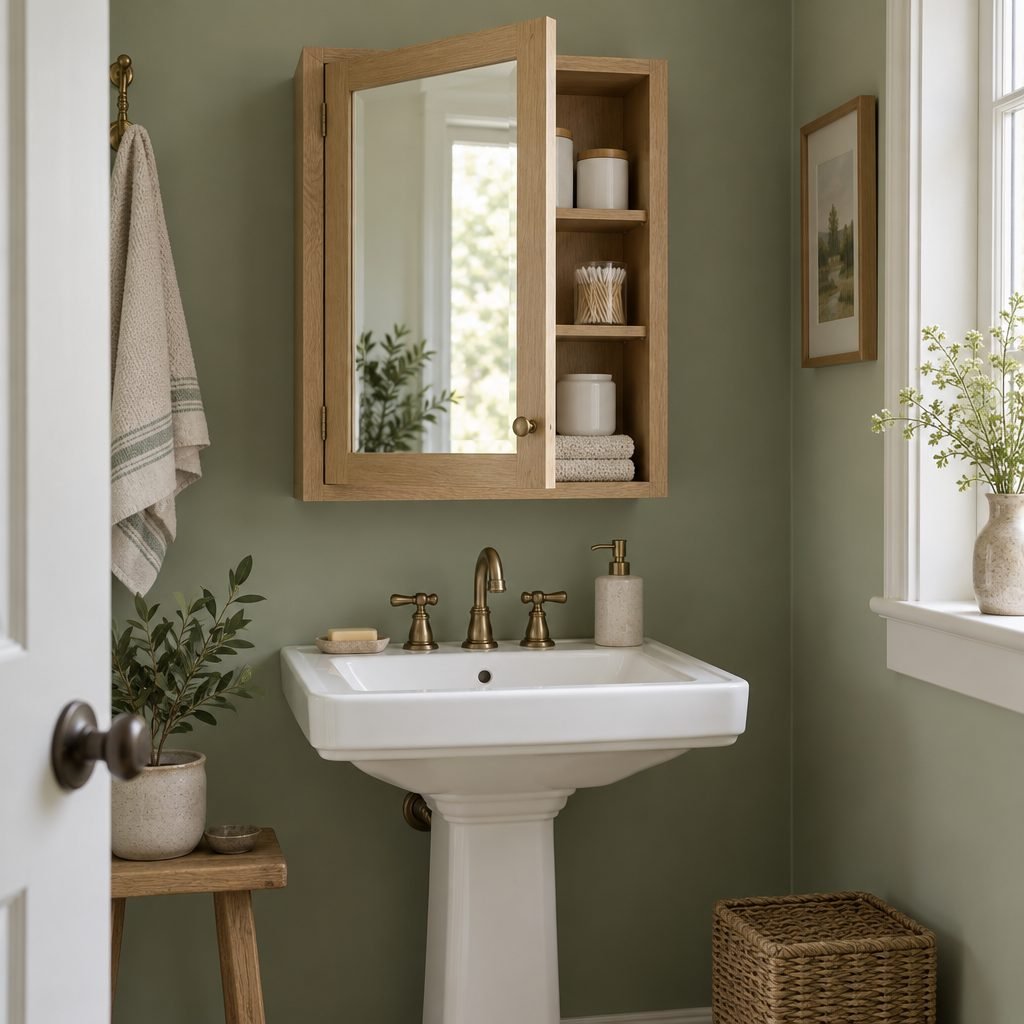
13. Add a Surface-Mounted Cabinet
No medicine cabinet at all? A surface-mounted cabinet with a mirror door hangs on the wall like a picture and gives you a mirror and storage in one. For more ways to add storage without a remodel, see our small bathroom storage ideas.
14. Split Storage Between Cabinet, Sink and Toilet
A small medicine cabinet cannot hold everything. Keep daily items in it, move bulk refills and cleaning products under the sink and use the wall over the toilet for towels and extra rolls.
15. Do a Five-Minute Monthly Reset
Once a month, take out anything that does not belong, wipe the shelves and check dates. It takes five minutes and keeps the cabinet from sliding back into clutter. Our bathroom organization ideas show how to set the same habit for the whole room.
How to Get Rid of Old Medicines
Do not keep expired or unused medicines around. The FDA’s guide to disposing of unused medicines says the best option is a drug take-back location or a prepaid mail-back envelope. If that is not possible and the medicine is not on the FDA flush list, mix it with something unappealing such as dirt, cat litter or used coffee grounds without crushing pills, seal it in a plastic bag and throw it in the trash. Scratch out personal information on the empty bottle before you toss it.
Medicine Cabinet Mistakes to Avoid
- Keeping all your medicines in the bathroom. Heat and moisture from the shower may damage them.
- Holding on to expired products. Old items take up space and may not work as they should.
- Buying bins before measuring. Many cabinets are shallow, and a bin that is too deep stops the door from closing.
- Overfilling the shelves. If things fall out when you open the door, remove a few items.
- Leaving medicines within reach of children. Use a high cabinet with a latch or a lock box.
Frequently Asked Questions
What should be kept in a medicine cabinet?
Daily toiletries you use at the sink: toothpaste, floss, mouthwash, skincare, deodorant, cotton rounds, swabs and small grooming tools. Most medicines are better kept in a cool, dry place outside the bathroom.
Is it bad to keep medicine in the bathroom?
It is not ideal. MedlinePlus notes that heat and moisture from the shower, bath and sink may damage medicines and suggests a dresser drawer or a kitchen cabinet away from the stove, sink and hot appliances.
How do you organize a small medicine cabinet?
Adjust the shelves to fit your bottles, keep daily items at eye level, group small things in narrow clear bins, use the inside of the door for tools and move medicines and bulk refills elsewhere.
How do you get rid of expired medicine?
Use a drug take-back location or a mail-back envelope if you can. Otherwise, follow the FDA’s household trash steps: mix the medicine with something unappealing, seal it in a bag and throw it away, unless it is on the FDA flush list.
Final Thoughts
Medicine cabinet organization is mostly about deciding what belongs there. Keep the cabinet for daily toiletries, sort them by how often you use them, contain small things in clear bins and move your medicines to a cool, dry place out of children’s reach. Then a monthly five-minute reset keeps it that way.
Next, finish the room with our bathroom counter decor ideas or tackle another small space with our guide on how to declutter your home.
How this guide was made: researched and written with the help of AI tools, fact-checked against trusted sources and published by Mohamed Elber. Images are AI-generated illustrations. See our Editorial Policy.