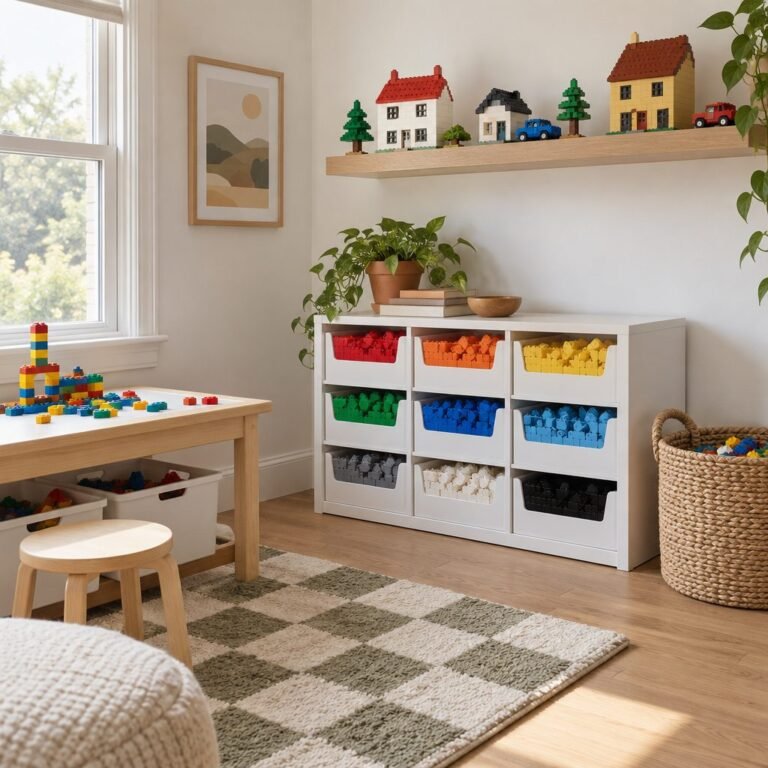
Good toy storage ideas do one thing well: they make cleanup so easy that kids can do it themselves. Most homes don’t have too little storage for toys. They have storage that’s too high, too deep or too complicated, so everything ends up on the floor.
This guide covers a simple toy rotation system, a 6-step way to reset your toy collection, and 18 ideas for playrooms, the living room, stuffed animals, bedrooms and small spaces.
Key Takeaways
- Quick answer: The best toy storage ideas make cleanup easy for kids: keep a small set of toys on low shelves, give each toy type one bin with a picture label, and rotate the rest every week or two.
- Keep a small set of toys out on low shelves and rotate the rest every week or two.
- Give each toy type one bin with a picture label, at your child’s height.
- Use closed storage in the living room and one big basket for stuffed animals.
Time: 2–3 hours · Cost: $20–150 · Difficulty: Easy
Start With Fewer Toys Out
Before you buy bins, decide how many toys should be out at once. The easiest homes to keep tidy have a small set of toys on low shelves, the rest in storage, and a regular swap.
There’s research behind this. In a University of Toledo study of 36 toddlers, children who had 4 toys in the room stayed with each toy longer and played with it in more ways than when they had 16 toys. For parents, that means fewer toys out is not a sacrifice. It’s less to clean up and often better play.
Quick Pick: Toy Storage Ideas by Situation
| Your situation | Start with these ideas |
|---|---|
| Toys everywhere, no system | Low open shelf (#1), one bin per type (#2), picture labels (#3) |
| Toys in the living room | Closed sideboard (#6), baskets under a console (#7), storage ottoman (#8) |
| Too many stuffed animals | Big basket (#10), display ledge (#11), hanging net (#12) |
| Too many toys overall | Toy rotation (#4), one-in-one-out (#18) |
| Small bedroom | Under-bed drawers (#13), storage bench (#14), over-the-door pockets (#15) |
| Small apartment | Rolling cart (#16), closet toy zone (#17) |
How to Organize Toys in 6 Steps
- Gather every toy. Collect toys from every room, car and bag in one place.
- Pass on what’s done. Remove broken toys, toys with missing pieces, duplicates and anything your kids have outgrown.
- Sort by type. Blocks, vehicles, dolls, art supplies, puzzles, stuffed animals, pretend play.
- Choose what stays out. Pick a small set of favorites for the low shelf. Box up the rest for rotation.
- Give each type one home. One bin, one basket or one shelf per category, at your child’s height.
- Label it. Picture labels for young kids, words for older ones.
18 Toy Storage Ideas
These toy storage ideas are grouped by room and problem, so you can jump to the part of the house that needs help first.
Playroom and Everyday Toy Storage
1. Use a low open shelf
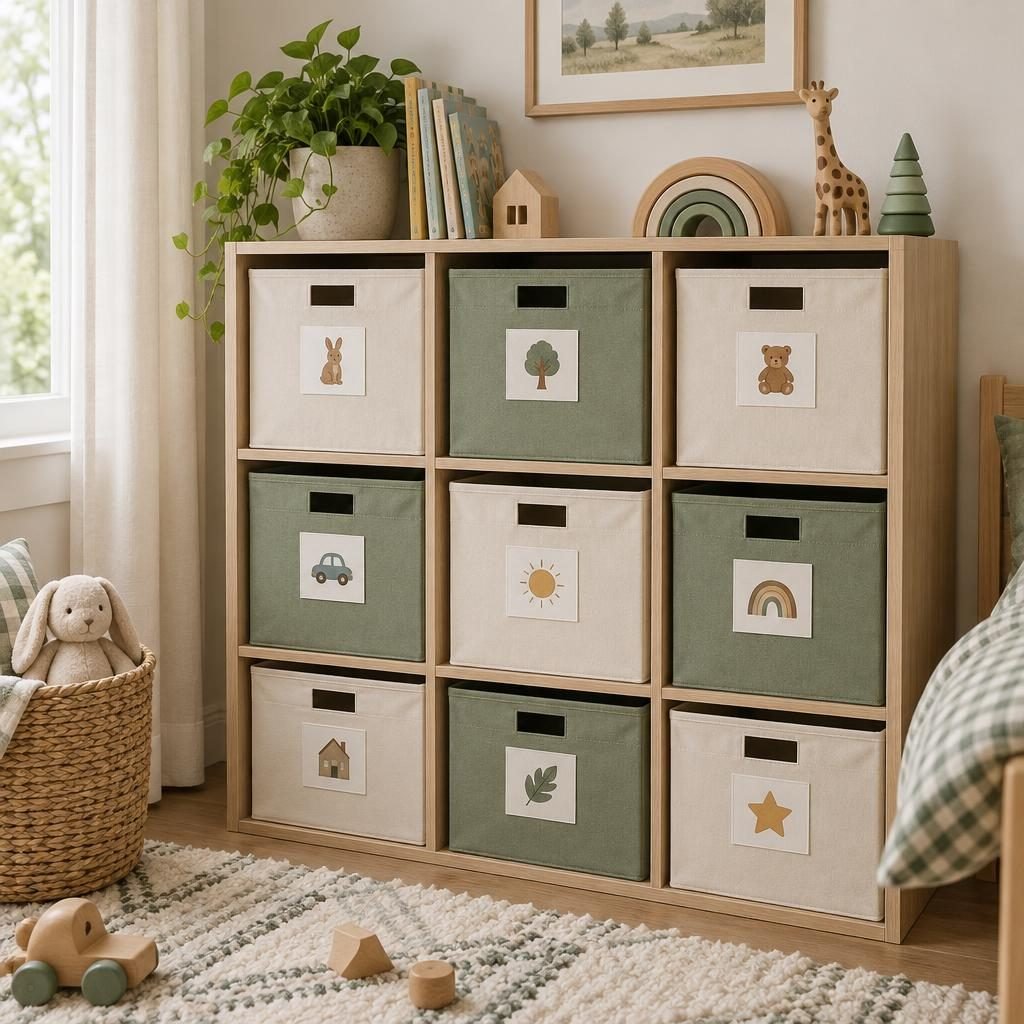
A low cube shelf is the backbone of most toy storage. Kids can see everything, reach everything and put it back without asking for help. Keep the top shelf for a few toys on display, not piles.
2. Give each toy type one bin
One bin for cars, one for blocks, one for animals. Bins that are too big turn into junk drawers, so choose a size that fits one category.
3. Add picture labels
A small picture on the front of each bin lets toddlers put toys away before they can read. It’s one of the easiest toy organization ideas and it makes cleanup faster for everyone.
4. Set up a toy rotation
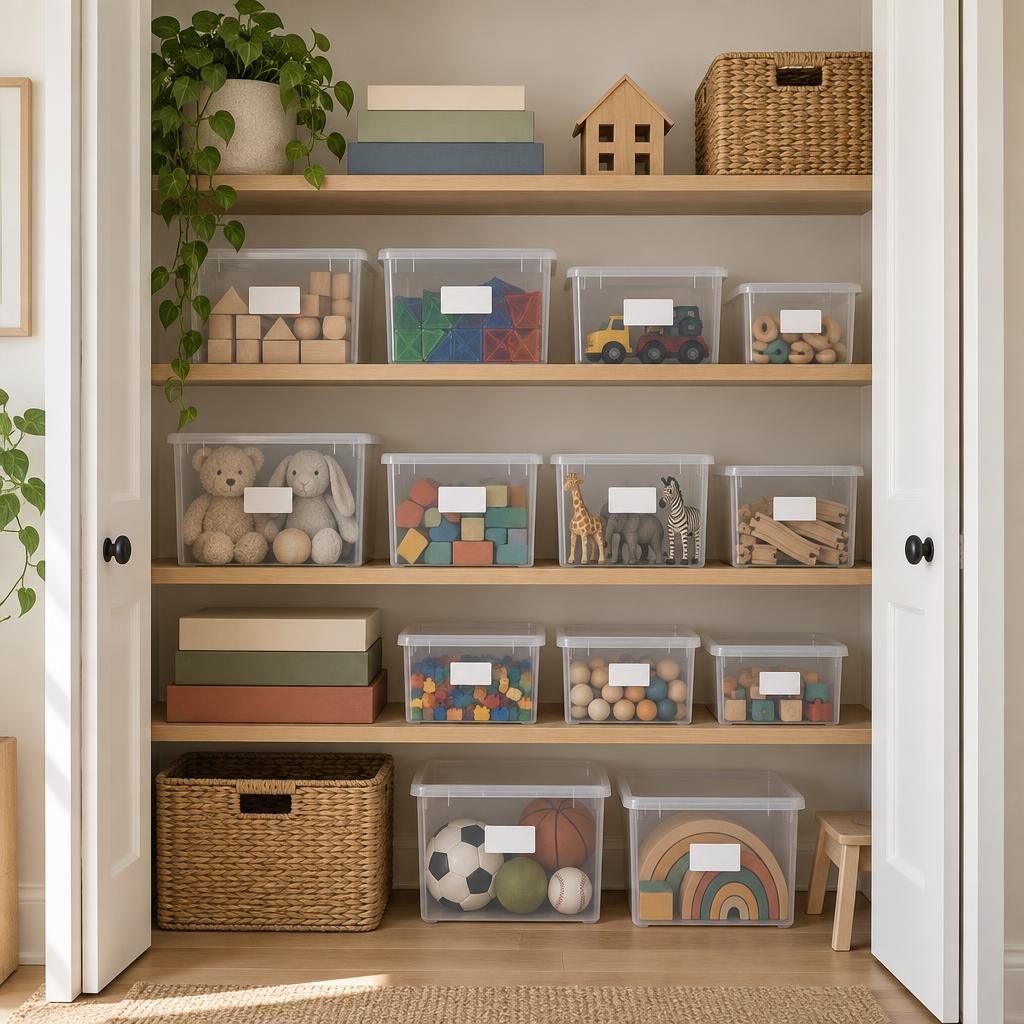
Keep most toys in clear, labeled boxes in a closet or on a high shelf. Every week or two, swap one box for another. Old toys feel new again, and there’s less on the floor at any one time.
5. Make a cozy reading corner
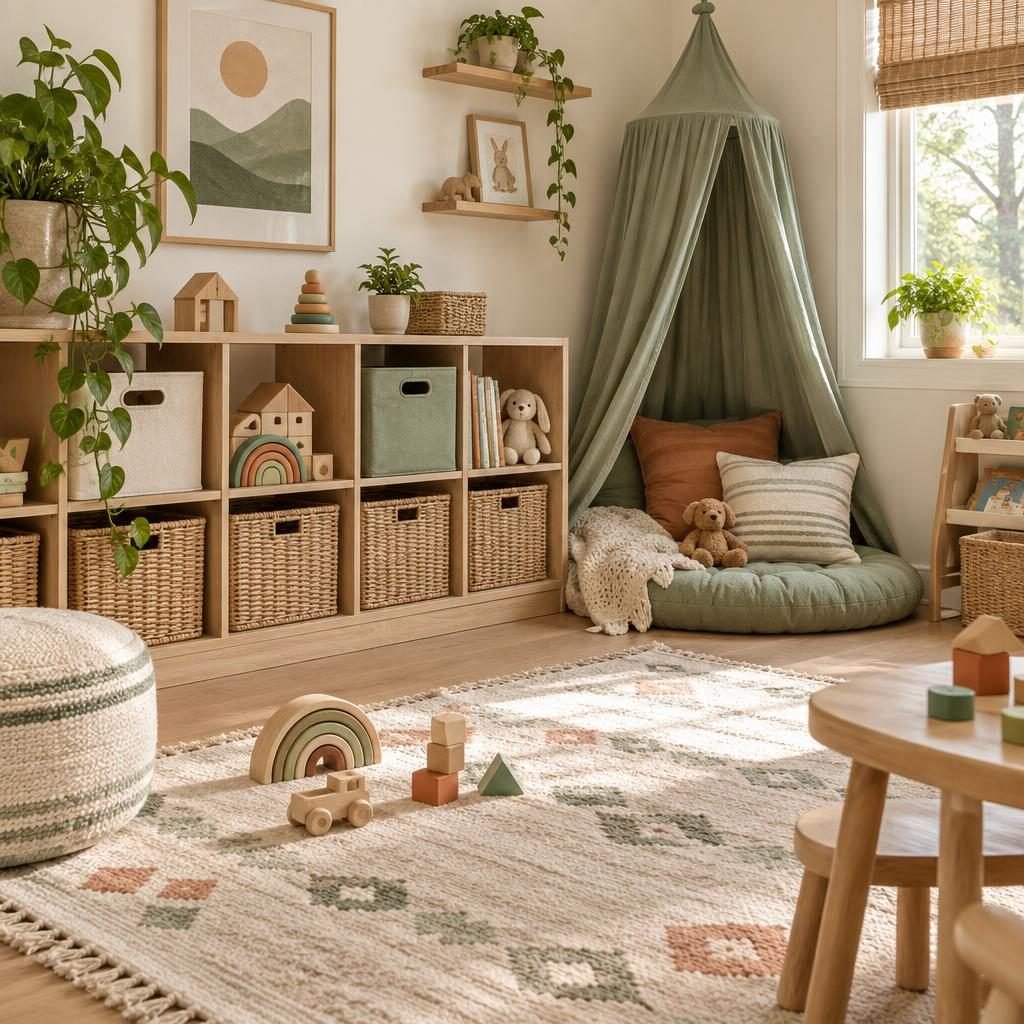
Books are toys too. A floor cushion, a front-facing book ledge and a basket of favorites turn a corner into a quiet spot that’s easy to tidy.
Toy Storage Ideas for the Living Room
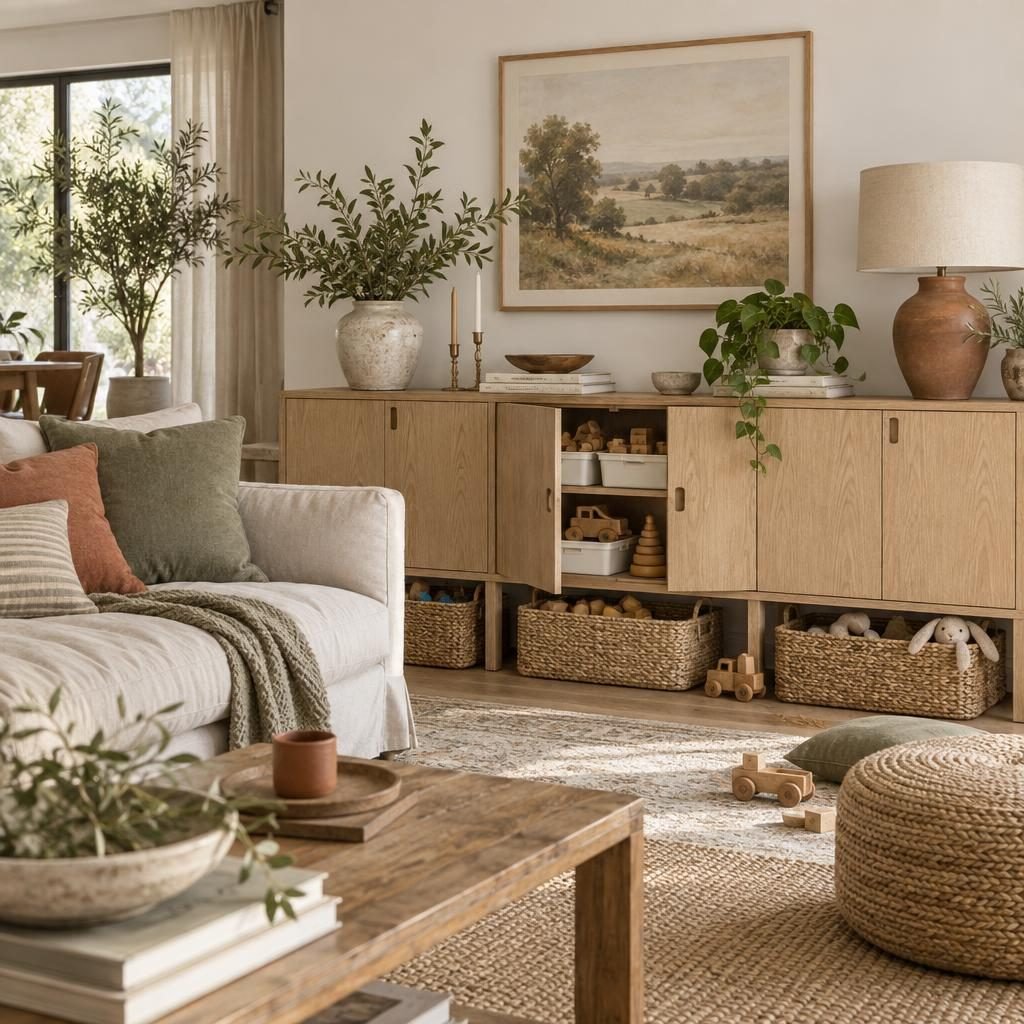
6. Hide toys in a closed sideboard
A sideboard or media cabinet with doors is the best toy storage for a living room. Bins inside hold the toys, and the doors close at night so the room feels like a grown-up space again.
7. Slide baskets under a console
Woven baskets under a console table or bench hold wooden toys, blocks and play food, and they look like decor rather than toy storage.
8. Choose a storage ottoman or coffee table
An ottoman with a lift-off lid swallows a surprising number of toys. A coffee table with drawers works the same way.
9. Keep one basket per child
For toys that travel into the living room, give each child one basket. At the end of the day, everything goes back into the basket and back to the playroom.
Storage Ideas for Stuffed Animals and Plush Toys
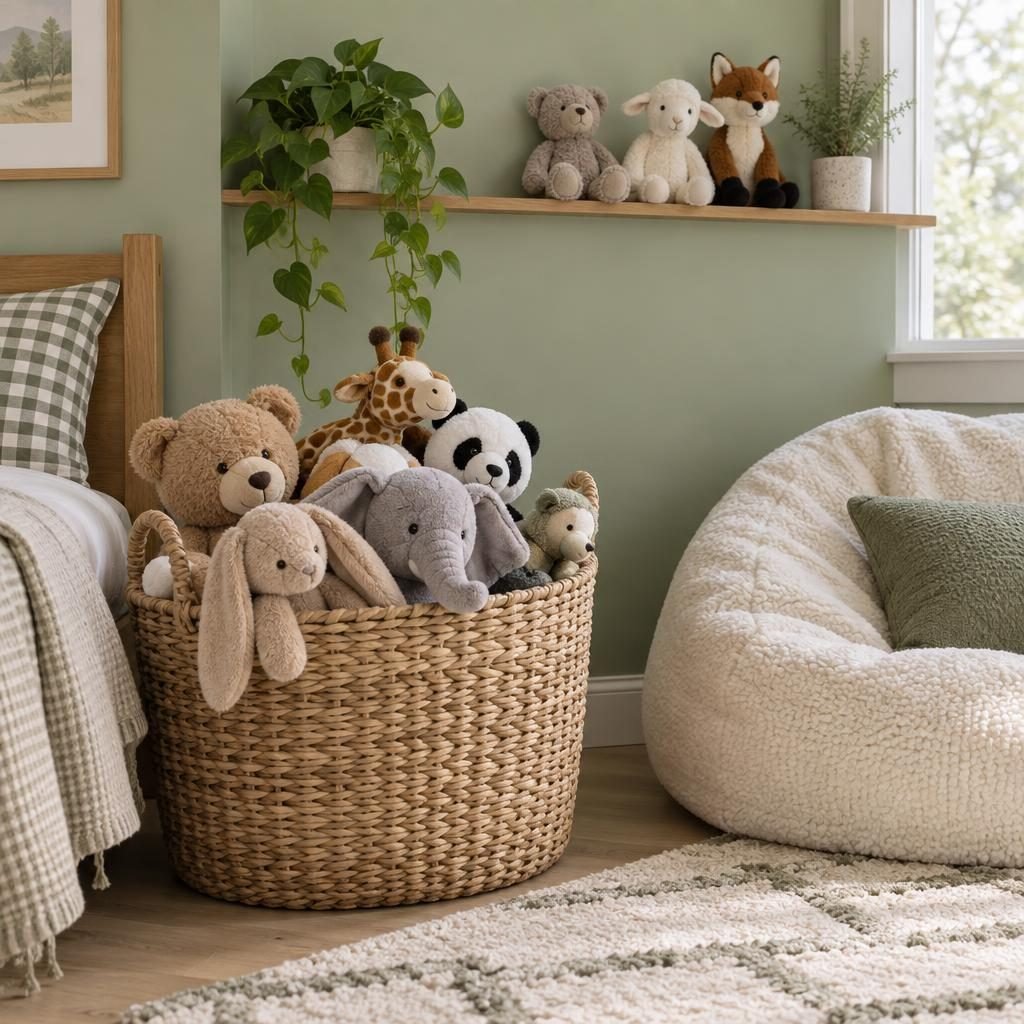
10. Use one big basket
A large woven basket is the simplest storage for cuddly toys. It’s soft, easy to toss into and small enough to set a natural limit: when the basket is full, it’s time to pass some on.
11. Display favorites on a ledge
A narrow wall ledge holds a few favorite stuffed animals where kids can see them, and keeps the rest from taking over the bed.
12. Hang a toy net or hammock in a corner
A corner net uses wall space instead of floor space. Mount it low enough for kids to reach, and keep cords out of reach of babies and toddlers.
Toy Storage for Bedrooms and Small Spaces
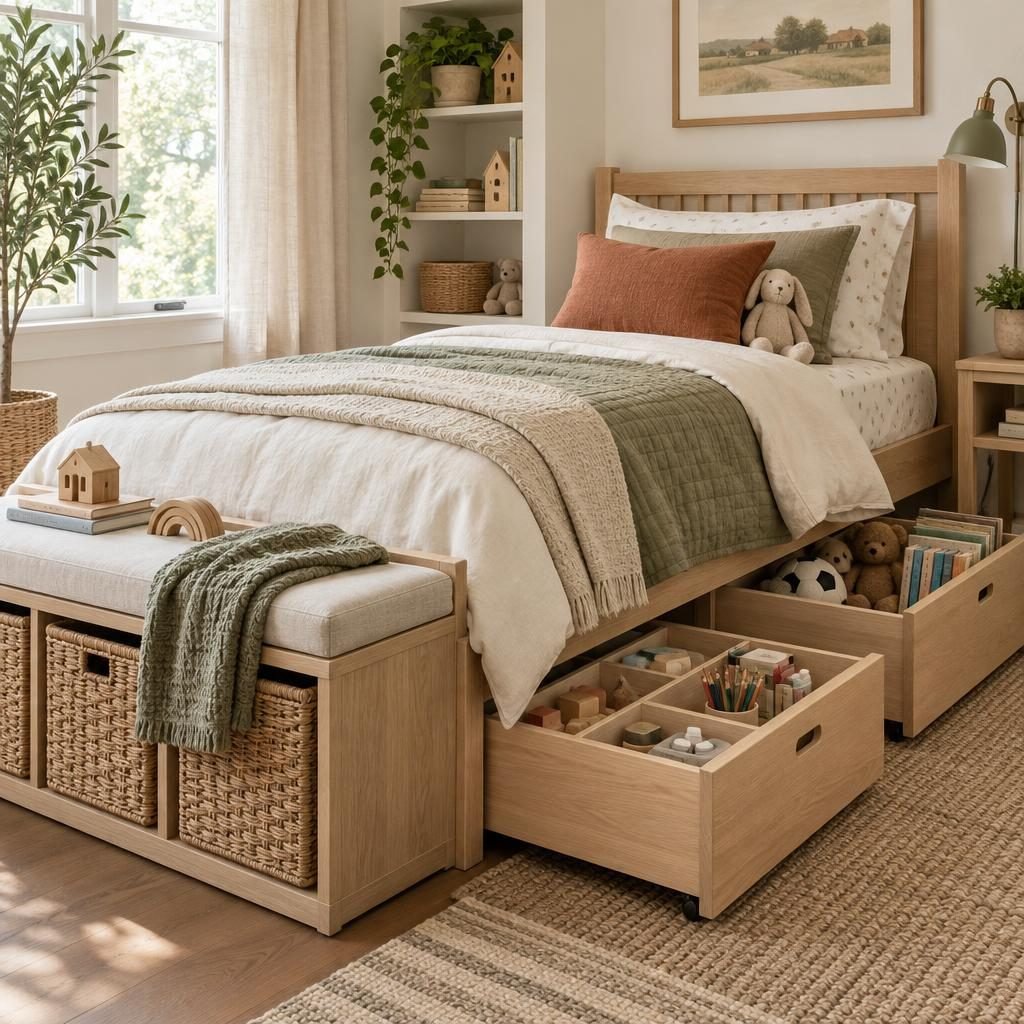
13. Roll drawers under the bed
Under-bed drawers on wheels hold toys, art supplies or rotation boxes. Our small bedroom storage ideas show more ways to use the space under and around the bed.
14. Add a storage bench
A bench with baskets at the foot of the bed gives kids a place to sit and a place to put toys away.
15. Use the back of the door
Over-the-door pockets hold small dolls, cars and art supplies that get lost in big bins.
16. Try a rolling cart
A three-tier cart holds art supplies or small toys and rolls wherever kids want to play, then back into a corner.
17. Make a toy zone in the closet
The lower half of a kids closet is often empty. Low shelves or bins there make a hidden toy zone. See our small closet organization ideas for layouts that work for kids.
18. Follow one-in, one-out
When a new toy comes in, an old one goes. It’s the simplest rule for keeping toy storage from overflowing after birthdays and holidays. For building sets, our LEGO storage ideas show how to keep bricks under control.
Common Toy Storage Mistakes
- Bins that are too big. Everything gets dumped in and nothing can be found.
- Storage kids can’t reach. If they need help to put toys away, they won’t.
- Lids on everyday bins. Open bins are faster for young kids to use.
- Every toy out at once. More toys out means more mess and often less focused play.
- Heavy toy chests with hinged lids. Choose lids that stay open safely or skip the lid.
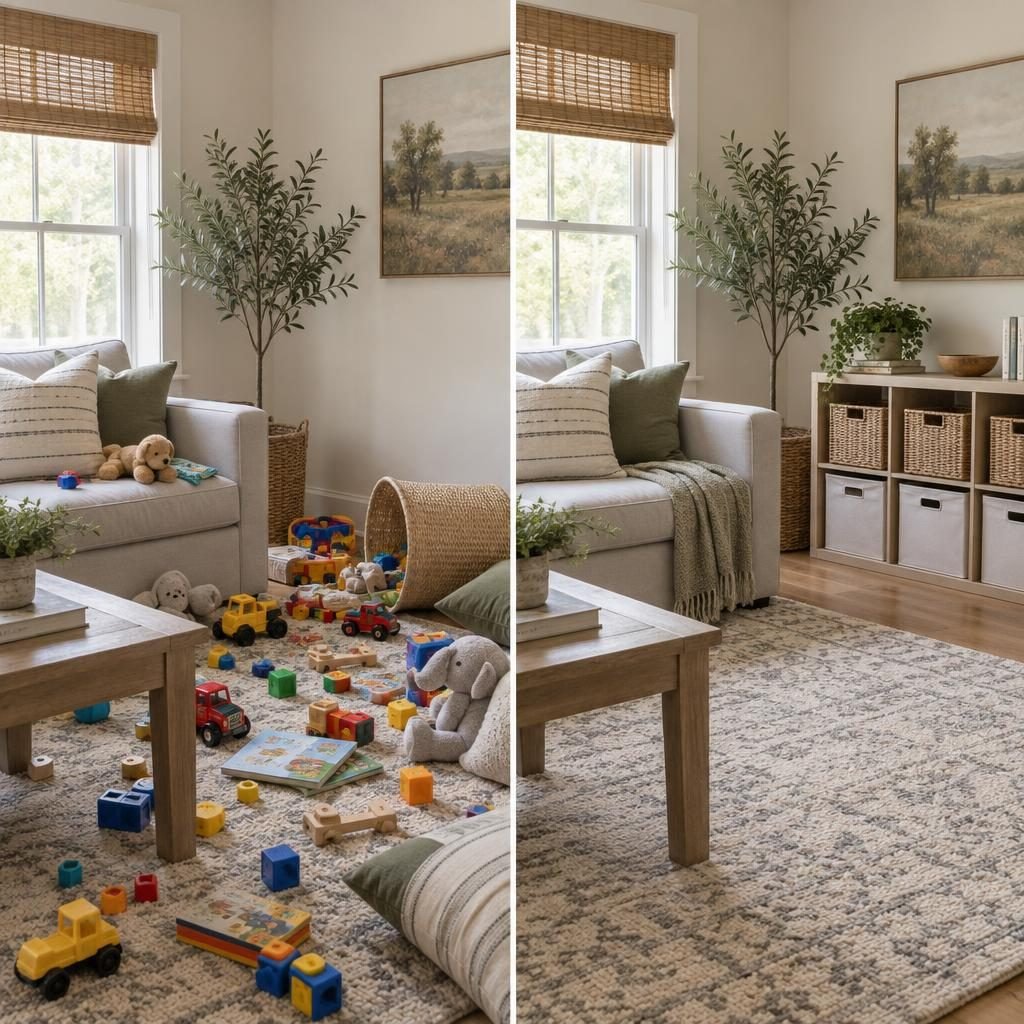
The before-and-after above is the same living room. The change isn’t more space, it’s fewer toys out, a low shelf and a basket for every group. That’s what the best toy storage ideas have in common.
Toy Storage FAQ
How do you organize toys in a living room?
Use closed storage like a sideboard or ottoman for most toys, baskets under a console for a few favorites, and one basket per child for toys that wander in during the day.
What is the best storage for stuffed animals?
A large basket is the easiest option. Add a wall ledge or a corner net for favorites, and let the size of the basket decide how many cuddly toys you keep.
How many toys should be out at once?
There’s no magic number, but fewer is usually better. Keep a small set on low shelves and rotate the rest every week or two.
How do you store toys in a small house?
Use space under beds, the back of doors, the lower half of closets and furniture with hidden storage, and keep most toys in rotation boxes.
Short on floor space for toys? A small play nook or toy cupboard under the stairs is a popular option; our under stairs storage ideas show how to plan it.
If your child’s room is a tiny box room, our box room bedroom ideas include cabin beds and mid-sleepers that leave space for play.
Sharing a bedroom between two kids? A low open shelf filled with toy bins can give each child their own corner. Our room divider ideas include options for shared kids’ rooms.
Final Thoughts
The best toy storage ideas are simple enough for kids to use on their own: fewer toys out, low shelves, one bin per type and a regular rotation. Start with one room, box up half the toys, and see how much easier cleanup gets.
Save this guide to Pinterest for your next playroom reset.
How this guide was made: researched and written with the help of AI tools, fact-checked against trusted sources and published by Mohamed Elber. Images are AI-generated illustrations. See our Editorial Policy.