Good shelf decor ideas make a wall look finished without turning it into a dust collector. A shelf is one of the few places in a small home where you can show what you love, from a favorite vase to a stack of books, but it only looks good when each piece has room to breathe.
Below you will find a simple styling formula, a 6-step method and 18 shelf decor ideas for the living room, kitchen, bathroom and bedroom, plus floating shelf ideas for small spaces, a before and after, the mistakes to avoid and how to hang shelves safely.
Key Takeaways
- Quick answer: Start with one larger anchor piece at one end, add objects in three heights so they form a loose triangle, group small things in threes, lean art at the back and leave about a third of the shelf empty. Repeat two or three colors across the shelf so it looks calm, not cluttered.
- Style what you use: plates and jars in the kitchen, towels in the bathroom, a lamp and a book by the bed.
- Mount wall shelves into studs or anchors rated for the weight, and anchor freestanding shelves to the wall.
Time: 30–60 minutes per shelf · Cost: $0–100 · Difficulty: Easy
The Shelf Styling Formula
Most shelves look messy for the same reason: every object is the same size, they sit in one straight line and there is no empty space. A few simple rules fix that, and they work on any wall shelf, whether it is a single ledge or a stack of floating shelves.
Shelves also have to be safe. A wall shelf is only as strong as what holds it, so mount it into studs or use wall anchors rated for the load, and keep the heaviest pieces low and close to the brackets. Freestanding ladder shelves and bookcases are a different risk. The U.S. Consumer Product Safety Commission’s Anchor It campaign says that anchoring all furniture with drawers, doors and shelves to the wall prevents tip-over injuries and deaths. Our DIY floating shelves guide shows how to find studs and choose the right fasteners.
Quick Pick: Shelf Decor Ideas by Room
| Your shelf | Best ideas | Cost |
|---|---|---|
| Living room floating shelves | #1, #2, #3, #4 | $0–80 |
| Kitchen open shelves | #5, #6, #7, #8 | $0–60 |
| Bathroom shelves | #9, #10, #11 | $10–60 |
| Bedroom shelves | #12, #13 | $0–60 |
| Small spaces and corners | #14, #15, #16, #17, #18 | $20–100 |
How to Style a Shelf in 6 Steps
- Clear it completely. Take everything off, dust the shelf and start fresh.
- Pick two or three colors. Pull them from the room, like cream, sage and terracotta, or white, wood and black.
- Place the anchor. Put your largest piece, like a tall vase, a big frame or a stack of books, near one end.
- Add medium and small pieces. Build a loose triangle of heights and group small objects in threes.
- Layer. Lean art or a mirror at the back, then set smaller objects in front so the shelf has depth.
- Edit. Step back across the room and remove one or two things. Aim to leave about a third of the shelf empty.
Living Room Shelf Decorating Ideas
The living room is a good place to start, because the wall above a sofa, sideboard or TV is often the biggest blank wall in the room.
1. Stack Two Floating Shelves
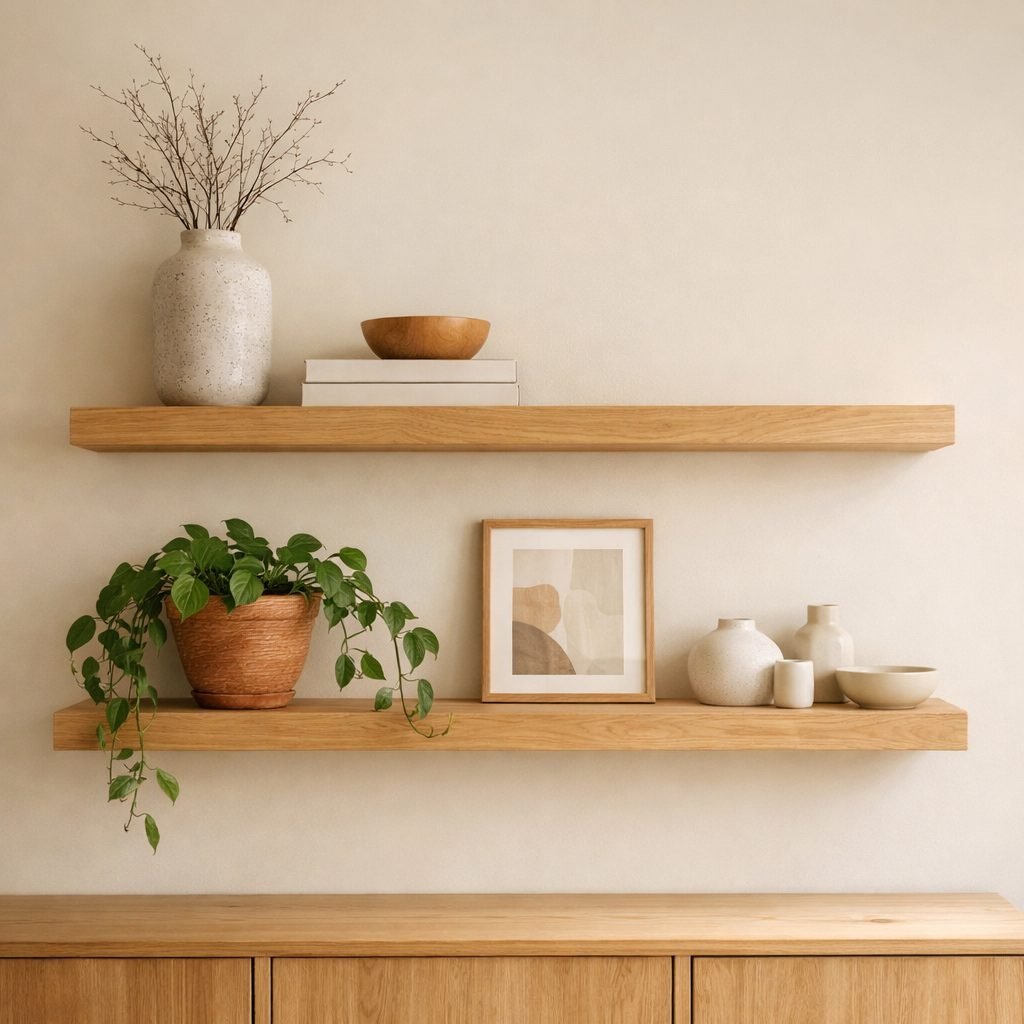
Two shelves one above the other give you room to repeat colors and balance heights. Put a tall piece on the left of the top shelf and a tall piece on the right of the bottom shelf, so your eye moves across both in a zigzag. Keep the shelves about 12 to 15 inches (30 to 38 cm) apart so taller objects fit.
2. Mix Books With Objects
Books are the easiest shelf filler. Stand a few upright, then lay three flat and top the stack with a small bowl or a ceramic piece. For bookcases with many shelves, see our bookshelf decor ideas.
3. Lean Art on a Picture Ledge

A narrow picture ledge lets you lean prints and a mirror instead of hanging them, so you can swap them anytime with no new holes. Overlap frames slightly and mix sizes for a relaxed, collected look.
4. Stick to a Color Story
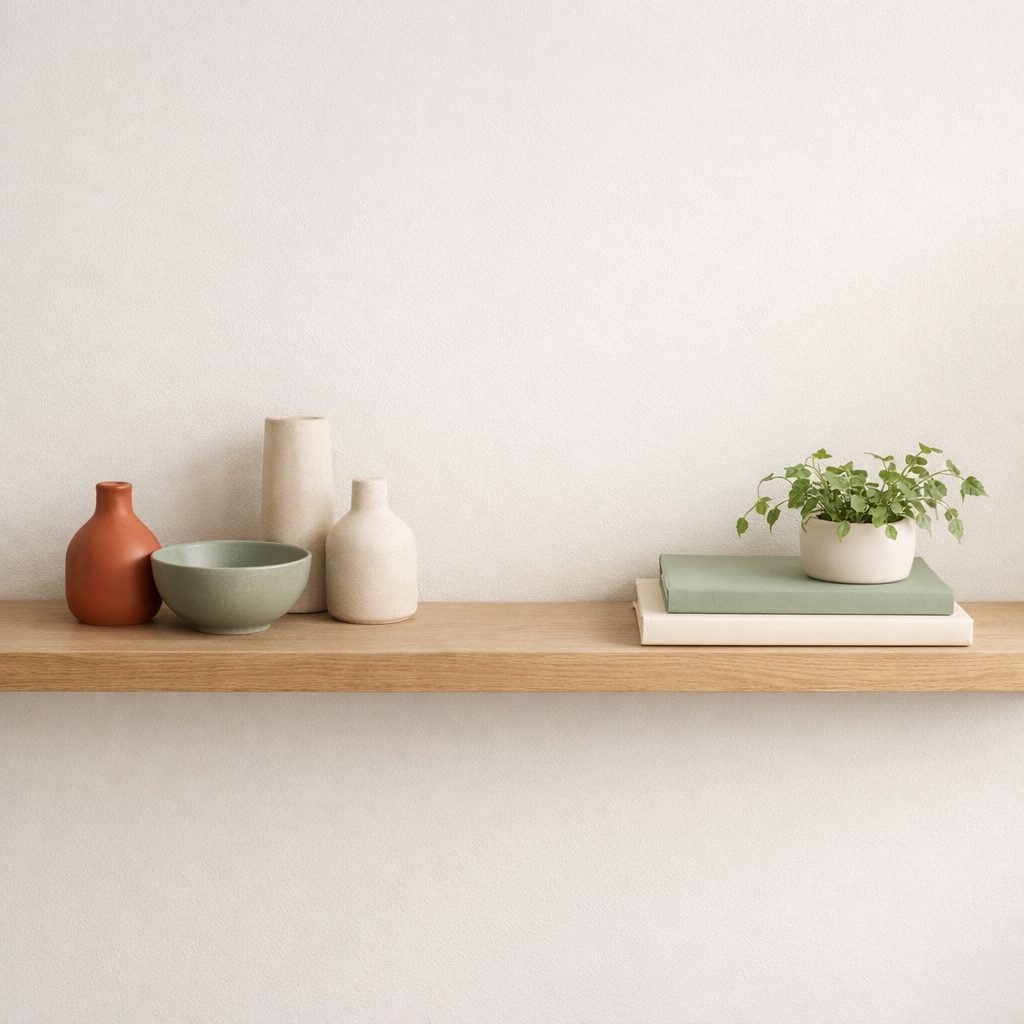
When every object shares two or three colors, even a full shelf looks calm. Cream, sage and terracotta work with wood shelves; black and white look sharp on white shelves. Put colorful items in a bin or drawer instead.
Kitchen Shelf Decor Ideas
5. Style What You Use
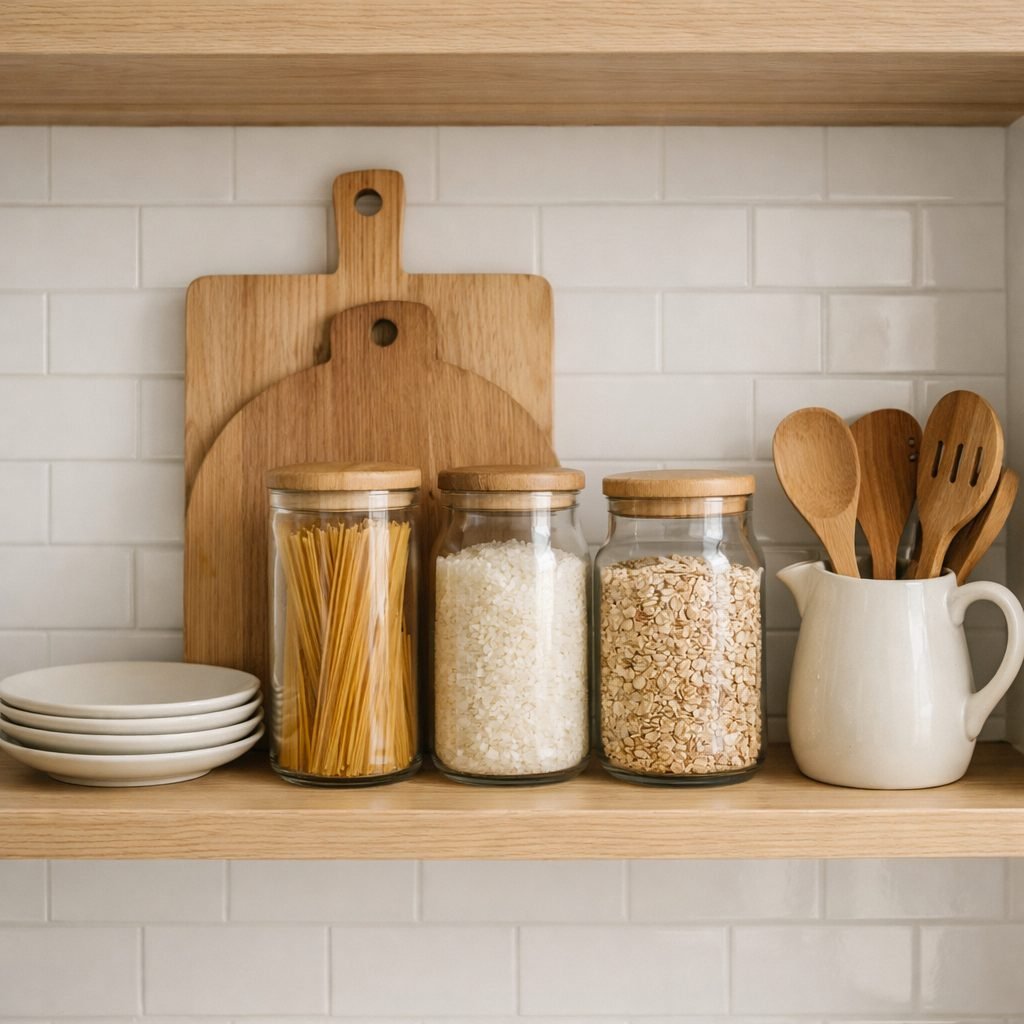
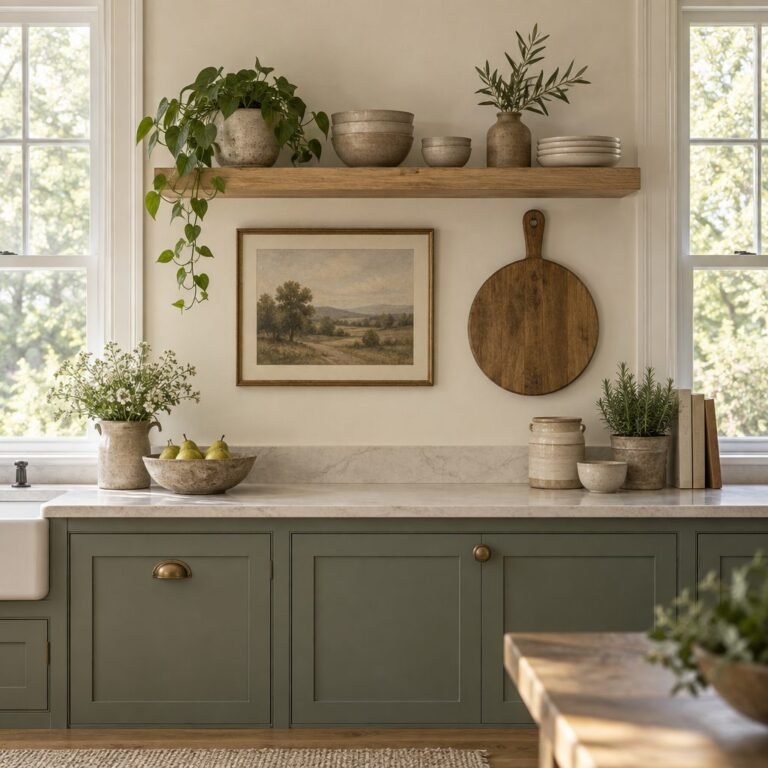
Kitchen shelves look best when they hold real, everyday things: a stack of plates, glass jars of pasta and oats, a pitcher of wooden spoons and a leaning cutting board. It looks styled and saves cabinet space at the same time.
6. Use Matching Jars
A row of clear jars with the same lids turns dry goods into decor. Keep it to three to five jars per shelf. Our kitchen wall decor ideas show more ways to make open shelves part of the wall.
7. Add One Living Thing
A small herb pot or a trailing plant softens all the hard edges of plates and jars. Herbs need plenty of light, so put them on the shelf closest to a window, or choose a plant that tolerates lower light.
8. Keep Everyday Items Low
Put the dishes and jars you use every day on the lowest shelf so you can reach them without a step stool, and save the top shelf for lighter decor and things you use only now and then.
Bathroom Shelf Decor Ideas
9. Use a Corner for Shelves
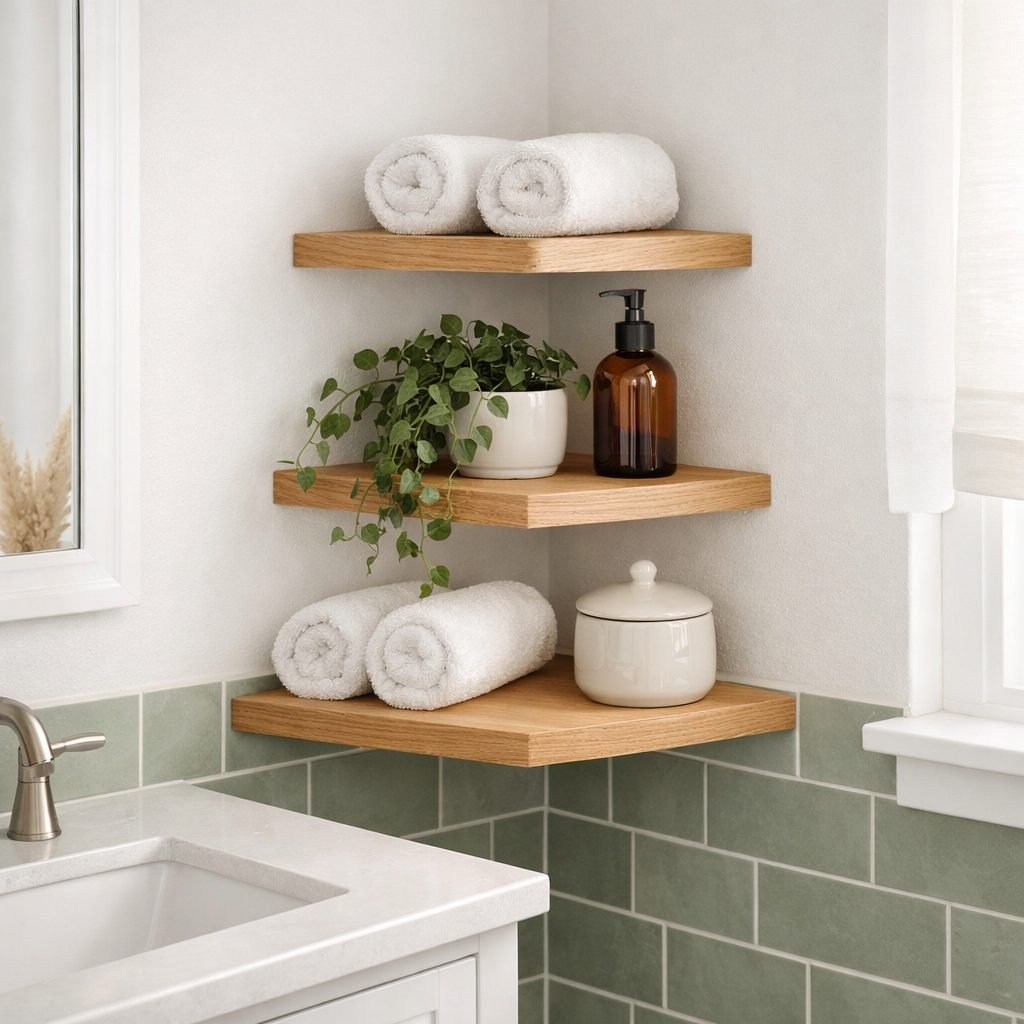
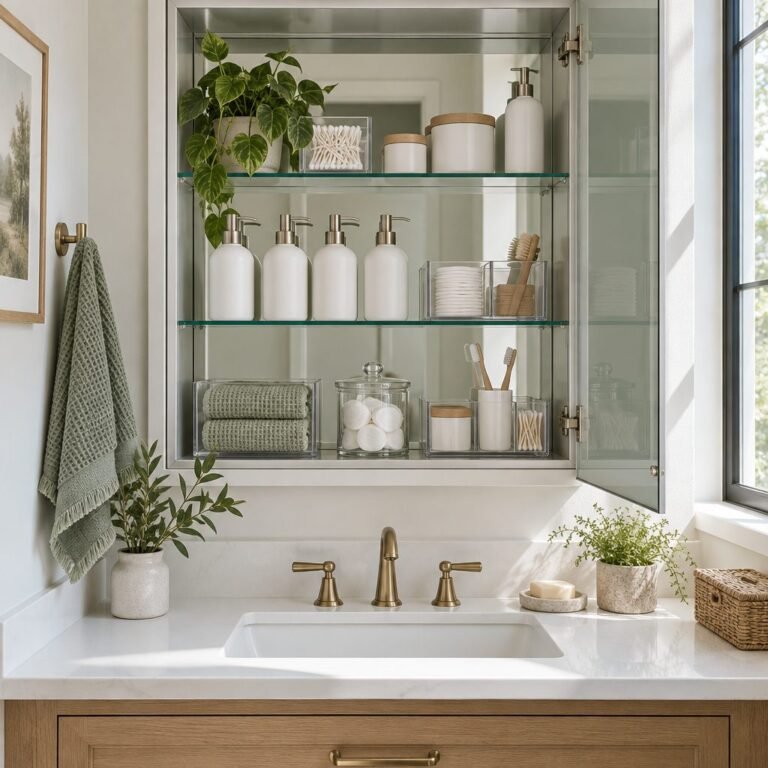
Corner floating shelves turn an empty bathroom corner into storage without blocking the vanity. Mix rolled towels, a small plant and one pretty bottle. For the rest of the wall, see our bathroom wall decor ideas.
10. Roll Towels and Use Lidded Jars
Rolled hand towels look tidy and are easy to grab. Lidded jars hide cotton pads and swabs. Keep the vanity clear by moving extras to the shelf; our bathroom counter decor guide shows what to leave out.
11. Choose Materials That Handle Steam
Bathroom shelves see moisture every day. Sealed wood, glass, metal and ceramic hold up better than raw wood or paper items. Keep shelves outside the direct shower spray and run the fan when you shower.
Bedroom Shelf Ideas
12. Float a Shelf as a Nightstand
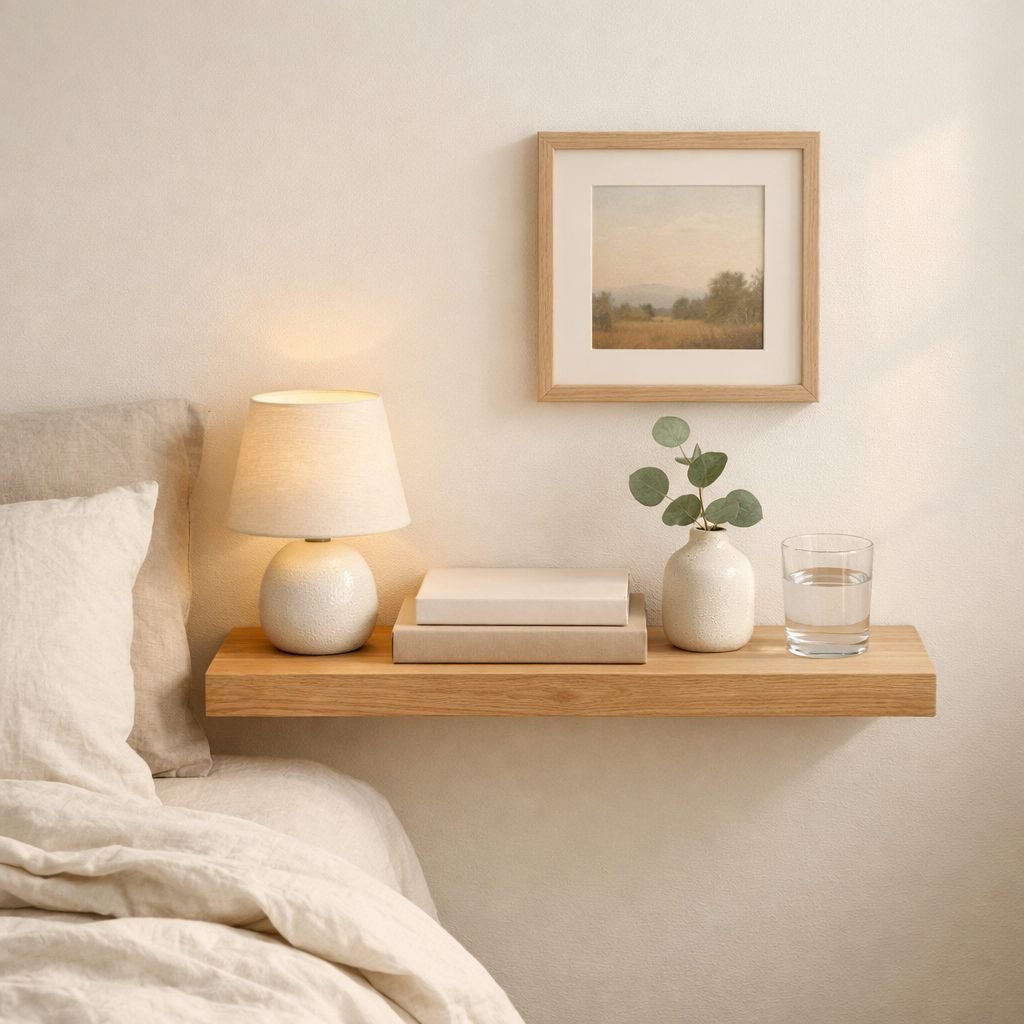
In a small bedroom, a floating shelf beside the bed replaces a nightstand and frees floor space. Keep it simple: a small lamp, one or two books and a glass of water. A plug-in lamp needs an outlet nearby, so plan the shelf height before you drill.
13. Keep Heavy Pieces Away From the Bed
A shelf above the headboard looks lovely, but keep it light: small frames, a plant or a few soft objects, with nothing heavy or breakable that could fall while you sleep. For more space-saving ideas, see our small bedroom storage ideas.
Floating Shelf Decor Ideas for Small Spaces
14. Lean a Ladder Shelf
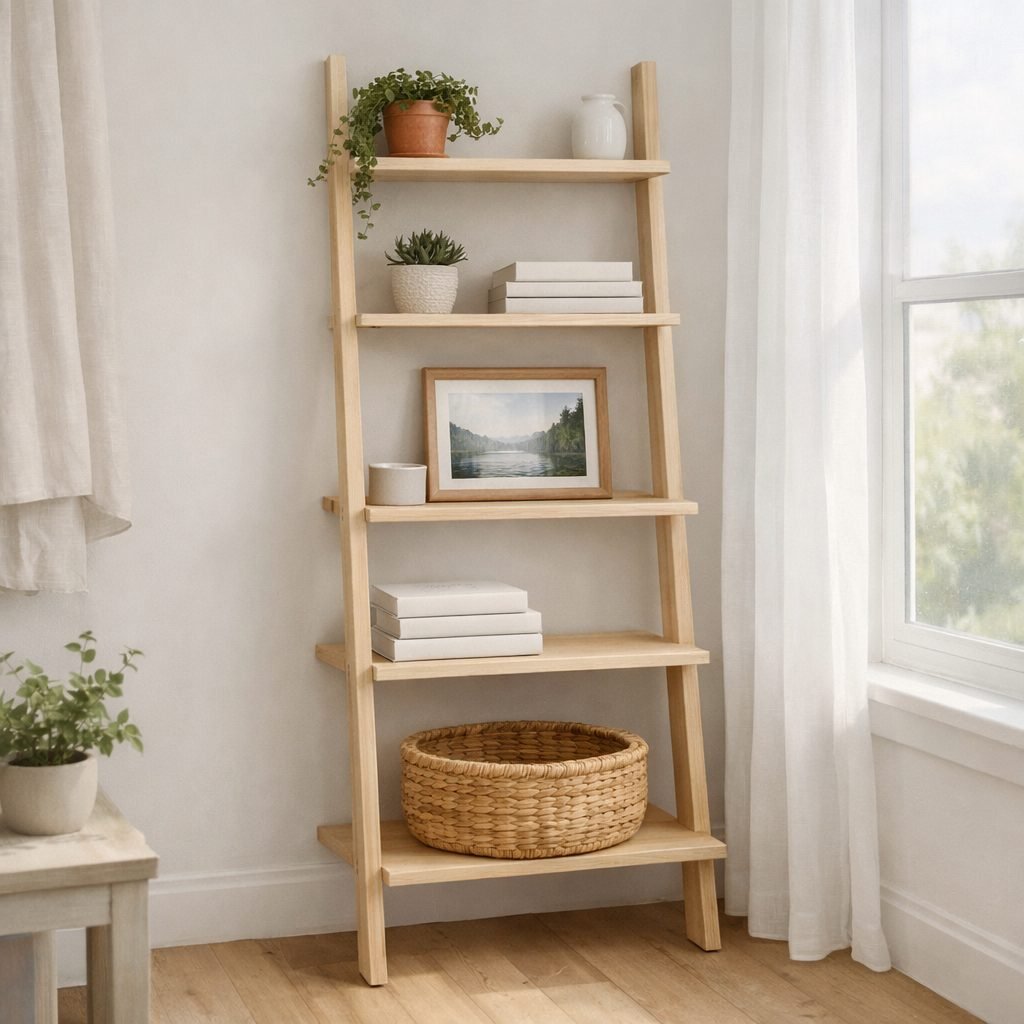
A slim ladder shelf takes up very little floor space and gets narrower toward the top, which keeps the look light. Put baskets and heavier items on the bottom steps and plants and frames higher up. Like any freestanding furniture with shelves, anchor it to the wall with the included hardware or a furniture anchor kit.
15. Use Dead Corners
Corners are often empty. A slim corner shelf unit or a single wall-mounted corner shelf holds plants, books or a speaker in space you would otherwise ignore.
16. Add a Shelf Above a Door or Window
A shelf above a door or window uses wall space no one else claims. It suits light baskets, a row of books or plants that like the light. Our storage ideas for small spaces include more spots like this.
17. Light It Up
A battery or plug-in LED strip under a floating shelf adds a warm glow in the evening and makes even a few objects look special. Run any cords neatly along the wall or use a cord cover.
18. Swap Three Things Each Season
Keep the base of your shelves the same and change just three items with the seasons: a vase of branches in fall, pine and pinecones in winter and fresh flowers in spring. It keeps the shelf feeling new without buying a whole new look.
Before and After: Two Floating Shelves

On the left, mugs, mail, cords and gadgets fill every inch, so nothing stands out. On the right, the same shelves hold a vase of branches, a short stack of books, a trailing plant and one small print, with plenty of empty space. The everyday clutter went to a drawer, a basket and the recycling bin.

Save these ideas
Pin the shelf styling formula so you have it handy the next time you style a shelf.
Save to PinterestCommon Shelf Decor Mistakes
- Filling every inch. Leave about a third of the shelf empty so each piece can be seen.
- Only small objects. Without one larger anchor piece, a shelf looks busy. Add a tall vase or a big frame.
- Everything in one straight line. Vary heights and layer art at the back.
- Weak hanging hardware. Books and plates are heavy. Use studs or anchors rated for the load.
- Toxic plants within reach of pets. The ASPCA lists golden pothos as toxic to dogs and cats, so keep it well out of reach of pets, or choose a pet-safe plant instead.
- Too many colors. Pick two or three and repeat them across the shelf.
Shelf Decor FAQ
How do you decorate a shelf without it looking cluttered?
Use fewer, larger pieces, group small objects in threes, repeat two or three colors and leave about a third of the shelf empty.
What do you put on floating shelves?
Mix books, a plant, a vase or ceramic piece and one framed print. In the kitchen, add plates and jars; in the bathroom, rolled towels and lidded jars.
How far apart should floating shelves be?
For decor shelves, about 12 to 15 inches (30 to 38 cm) apart works for most objects. Measure your tallest vase or frame first and add a few inches of breathing room, or use our free shelf spacing calculator to get the height of every shelf.
How do you decorate kitchen shelves?
Style the things you use: plates, glasses, jars of dry goods and a cutting board, plus one plant. Keep everyday items on the lowest shelf.
Final Thoughts
The best shelf decor ideas are simple: one anchor, a mix of heights, a short color story and enough empty space for each piece to stand out. Start with one shelf this weekend, then carry the same colors to the rest of the room. For the space above your cabinets, see our over kitchen cabinet decorating ideas.
How this guide was made: researched and written with the help of AI tools, fact-checked against trusted sources and published by Mohamed Elber. Images are AI-generated illustrations. See our Editorial Policy.