Good backpack storage ideas fix the most familiar mess in a family home: the pile of school bags, gym bags and work backpacks that lands by the front door every afternoon. Backpacks are bulky, heavy and used every day, so they need a home that is faster to use than the floor.
Below you will find a simple drop zone map, a 6-step plan and 16 backpack storage ideas for entryways, mudrooms, closets, kids’ rooms and small apartments, plus how to store hiking and travel packs, a before and after and the mistakes to avoid.
Key Takeaways
- Quick answer: Give every person one sturdy hook near the door, with kids’ hooks set low enough for them to reach, add a bench with a basket each for lunch boxes and small things, and keep a tray for school papers. Store spare, hiking and travel backpacks clean and dry on a closet shelf, under the bed or on wall hooks in a cool, dry utility room or garage.
- Make the habit easy: the bag goes on the hook and the papers go in the tray the moment you walk in.
- Anchor tall cubby units to the wall and use hooks that can hold a full backpack.
Time: 1–2 hours · Cost: $0–150 · Difficulty: Easy
The Backpack Drop Zone Map
The best place for everyday backpacks is the spot where they get dropped anyway, usually just inside the door you use most. A good drop zone has four parts: hooks, a place to sit, a basket for small things and a spot for papers.
Safety matters when the storage is tall. The U.S. Consumer Product Safety Commission’s Anchor It campaign says that anchoring all furniture with drawers, doors and shelves to the wall prevents tip-over injuries and deaths. That includes tall cubby units and bookcases that kids might climb to reach a bag. For more drop zone layouts, see our mudroom ideas and small entryway ideas.
Quick Pick: Backpack Storage Ideas by Space
| Your space | Best ideas | Cost |
|---|---|---|
| Entryway or mudroom | #1, #2, #3, #4 | $20–150 |
| Coat or hall closet | #5, #6, #7 | $10–60 |
| Kids’ bedroom | #8, #9, #10 | $10–50 |
| Small apartment, no entry | #6, #11, #12, #13 | $10–60 |
| Hiking and travel packs | #14, #15, #16 | $0–80 |
How to Set Up Backpack Storage in 6 Steps
- Count the bags. Include school backpacks, work bags, gym bags and the ones that only come out for trips.
- Split everyday from occasional. Daily bags stay by the door; spare and travel packs go somewhere else.
- Pick the drop spot. Use the door your family actually comes through, even if it is the garage or side door.
- Give each person a hook. Set kids’ hooks low enough for them to use without help, and adults’ hooks higher.
- Add a basket and a paper tray. Lunch boxes, water bottles and permission slips need their own place, or they stay in the bag.
- Make it a habit. Bag on the hook, papers in the tray, shoes under the bench, every day for two weeks.
Entryway and Mudroom Backpack Storage Ideas
1. Hang a Peg Rail at Two Heights
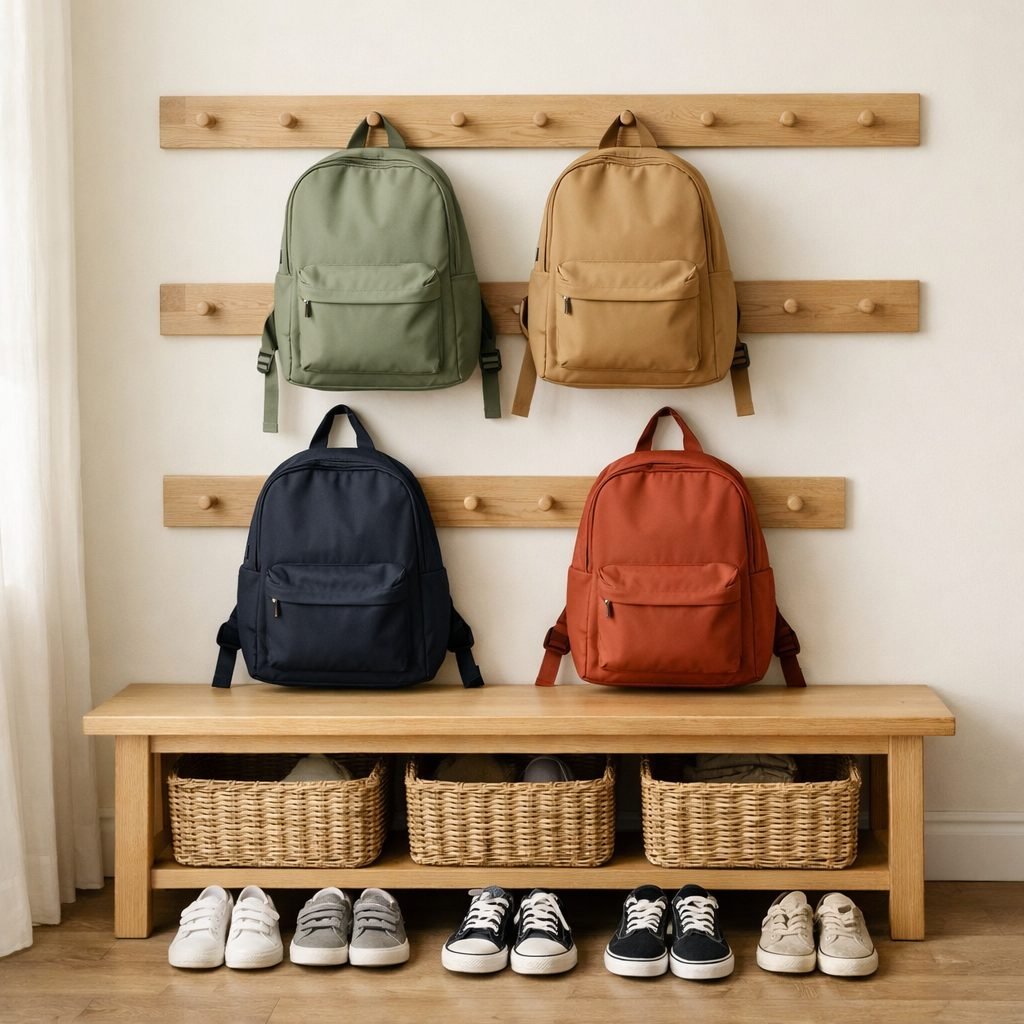
A wooden peg rail is the simplest backpack storage idea, and it costs very little. Mount one rail at adult height and a second one lower for kids, and space the pegs about 8 to 10 inches (20 to 25 cm) apart so full bags do not crowd each other. Screw the rail into studs or use anchors rated for the load. A full backpack is heavier than a coat.
2. Give Each Child a Cubby
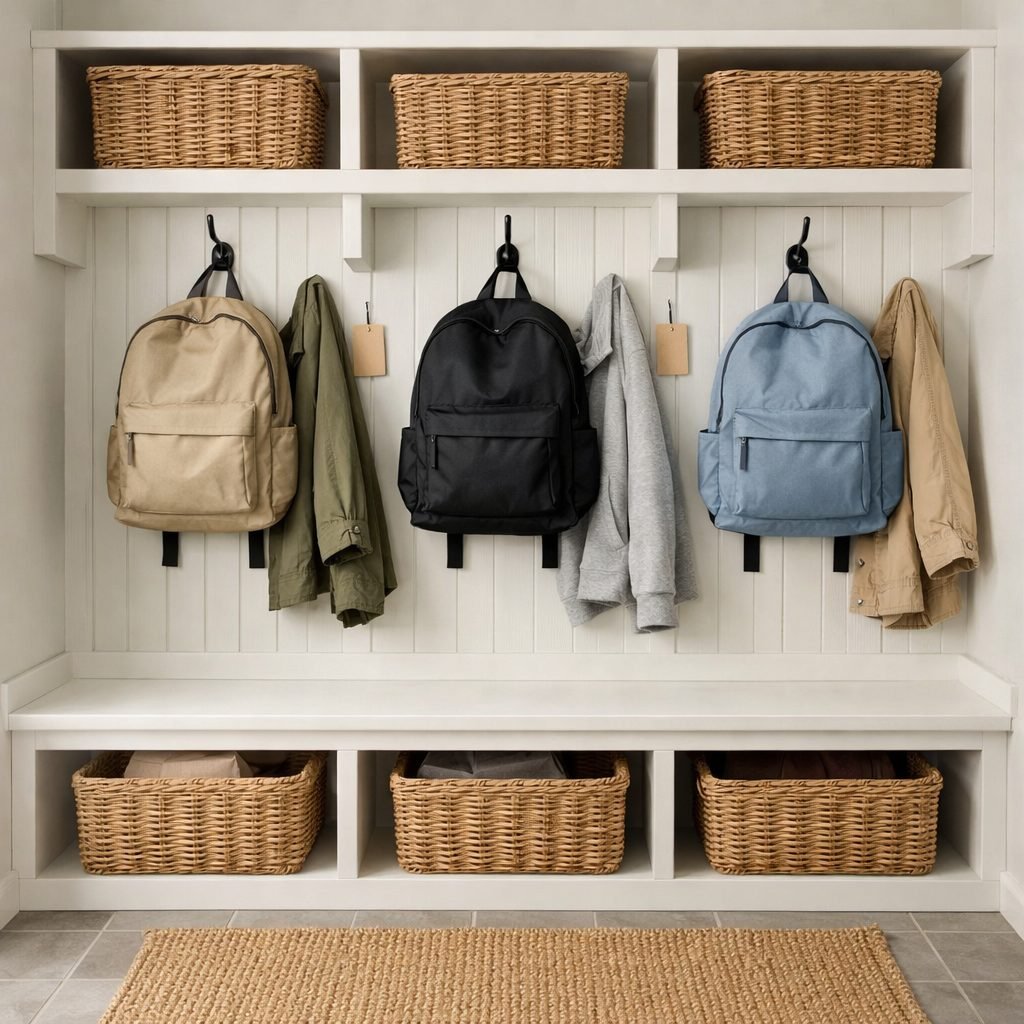
Open cubbies with one hook inside give every child a spot for a backpack and a jacket, with a basket above for hats and gloves. A small tag or a color for each child ends the morning question of whose bag is whose.
3. Add a Bench With Baskets
A bench gives everyone a place to sit and change shoes, and baskets underneath hold shoes, sports gear or lunch boxes. Our shoe storage ideas show more ways to keep the floor by the door clear.
4. Build an After-School Launch Pad
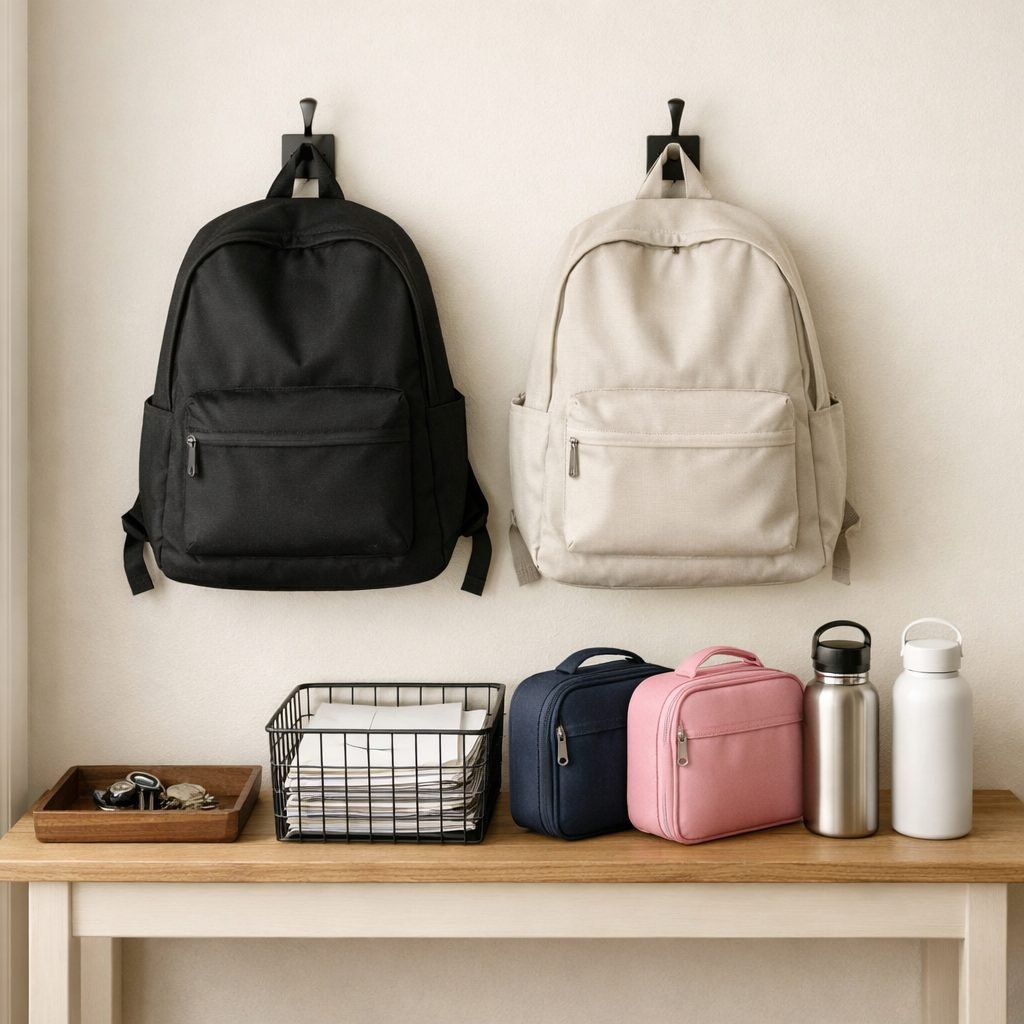
Add a narrow console or shelf below the hooks with a tray for keys, a basket for school papers and a spot to line up lunch boxes and water bottles. Unpacking at the door means fewer forgotten forms and fewer smelly lunch boxes found on Monday.
Closet Backpack Storage Ideas
5. Use the Side Walls of the Coat Closet
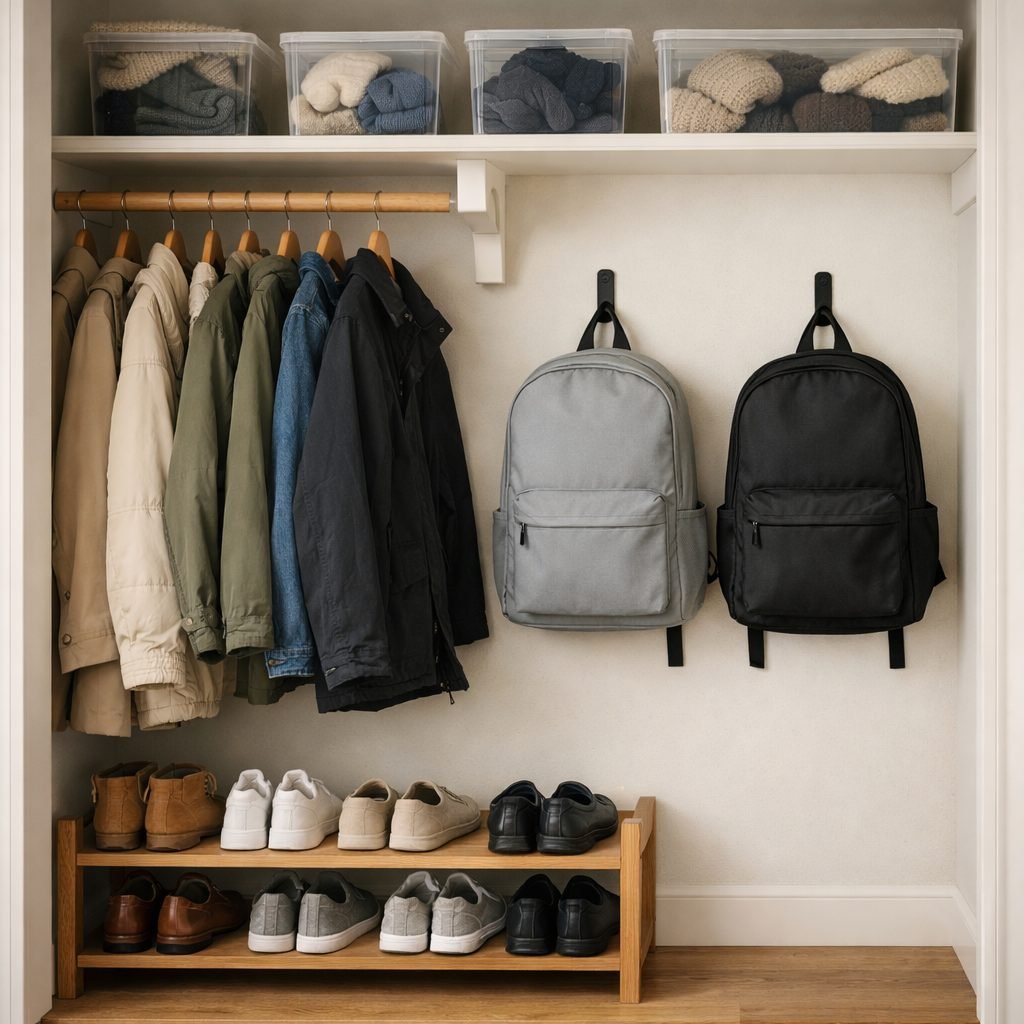
The narrow side walls of a coat closet are often empty. Two or three sturdy hooks there hold backpacks out of sight but still close to the door. See our coat closet organization guide for the rest of the closet.
6. Hang an Over-the-Door Hook Rack
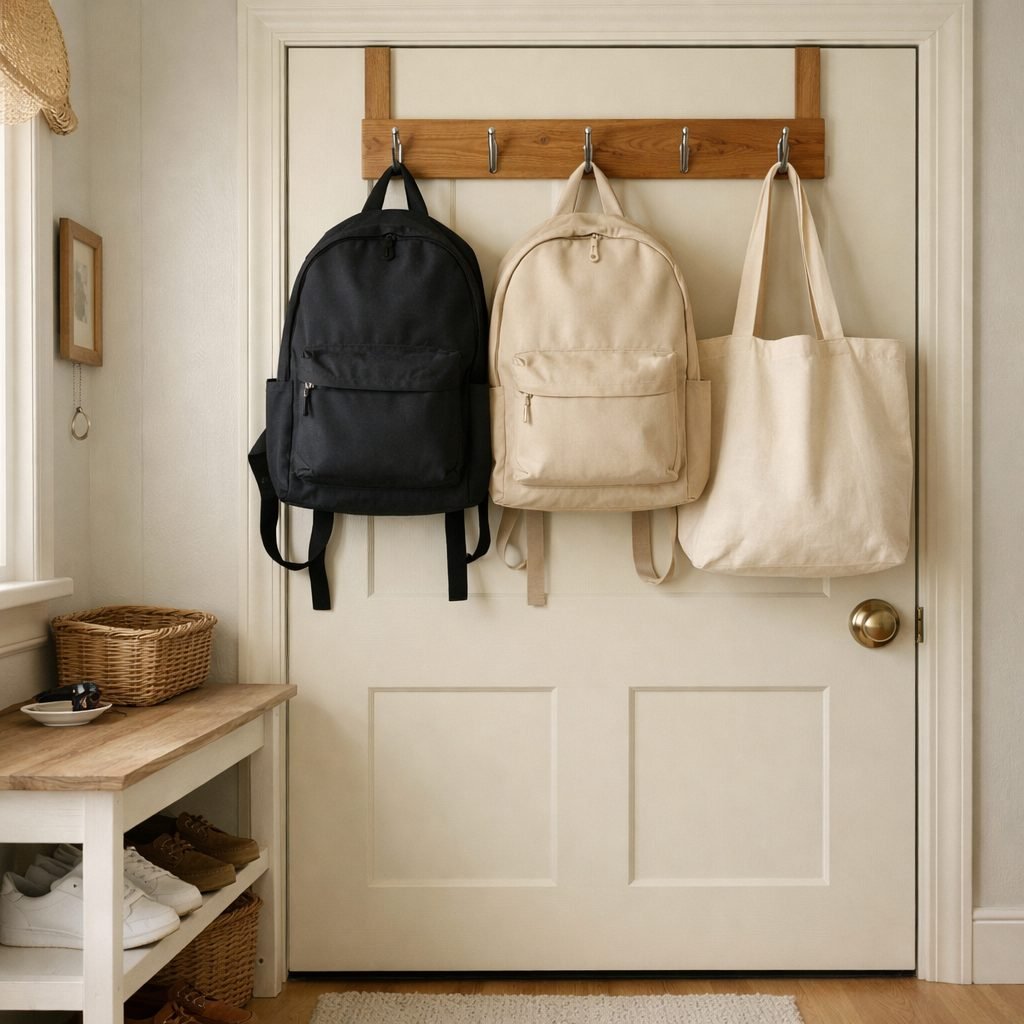
An over-the-door rack holds two to four bags with no drilling, which makes it one of the best backpack storage ideas for renters. Check the rack’s weight limit and make sure the door still closes easily.
7. Keep Spare Bags in a Bin on the Shelf
Backpacks that only come out a few times a year, like old school bags or a spare day pack, can wait in one labeled bin on a high closet shelf. Nest smaller bags inside larger ones so the bin holds more.
Backpack Storage Ideas for Kids’ Rooms
8. Put a Hook Beside the Desk
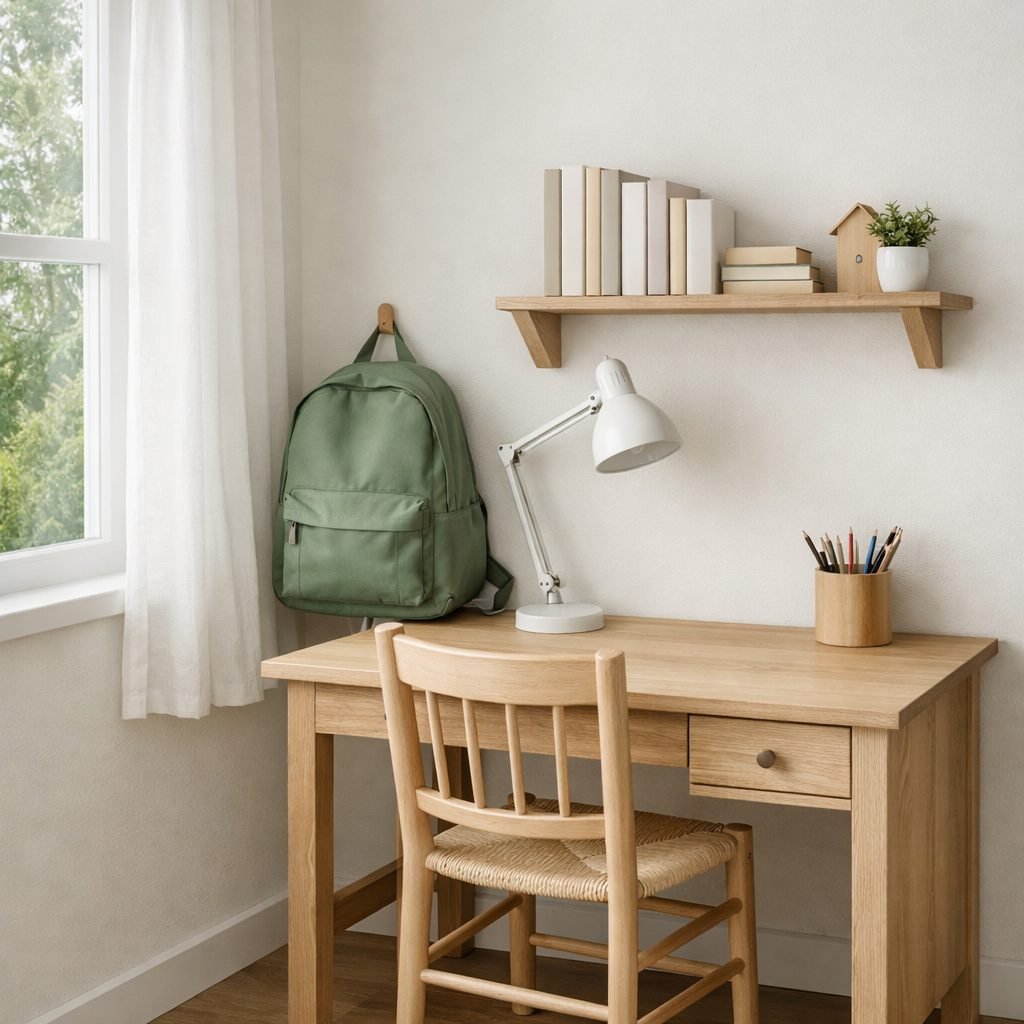
If homework happens in the bedroom, a hook next to the desk keeps the backpack off the floor and ready to pack the night before. Our desk organization ideas help keep the desk itself clear.
9. Empty the Bag Every Afternoon
Most backpack clutter is really paper clutter. A quick daily routine, with homework out, papers in the tray and trash in the bin, keeps bags lighter and stops last week’s lunch from becoming a science project.
10. Add One Bin per Child for School Things
A small bin or magazine file per child holds library books, notebooks and finished art projects that do not need to travel back and forth. For more ideas in a small room, see our small bedroom storage ideas.
Backpack Storage Ideas for Small Spaces
No mudroom or even a real entry? These backpack storage ideas for small spaces use walls and doors instead of floor space.
11. Use Wall Hooks Behind the Door
The wall behind the front door is often dead space. A short row of hooks there holds two or three bags that stay hidden when the door is open.
12. Store Spare Bags Under the Bed
Flat under-bed bins hold off-season and spare backpacks, folded or nested. Our storage ideas for small spaces include more spots like this.
13. Use One Rail for the Whole Household
In a studio or a narrow hall, one long rail with hooks for backpacks, totes and handbags keeps every bag in one line instead of on chairs. Our purse storage ideas show how to keep handbags in shape on hooks.
How to Store Hiking and Travel Backpacks
14. Hang Packs on a Slat Wall or Sturdy Hooks

Hiking packs are bulky and often damp after a trip. Hang them by their haul loop on sturdy hooks in a cool, dry closet, utility room or garage. Keep outdoor gear in clear bins above. Hanging lets them air out and keeps the frame from getting crushed.
15. Clean and Dry Packs Before Storing
Empty every pocket, shake out crumbs and sand and wipe the inside. Hang the pack to dry fully in the shade before you put it away. A damp pack stored in a closed bin can start to smell musty or grow mildew.
16. Nest Travel Bags to Save Space
Store smaller day packs and packing cubes inside a larger travel backpack or suitcase. One bag then holds the whole travel kit, and you always know where it is.
Before and After: A Small Entryway
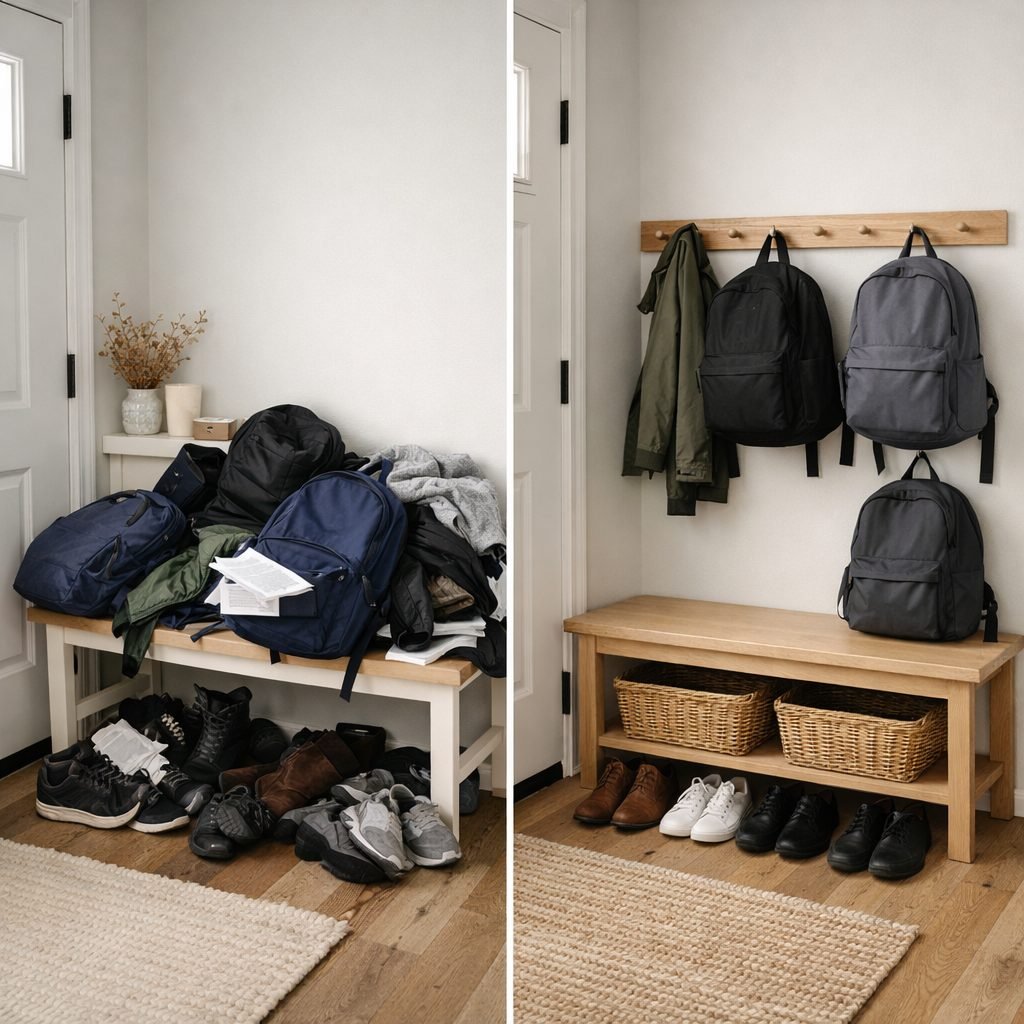
On the left, backpacks, jackets and shoes pile up on the bench and the floor, with papers spilling out. On the right, the same entry has a peg rail for the bags, shoes lined up under the bench and baskets for small things. The change took one rail, a bench and a new habit. For the table by the door, see our entryway table decor ideas.

Save these ideas
Pin the backpack drop zone map so you have it handy when you set up your entry.
Save to PinterestCommon Backpack Storage Mistakes
- Hooks that are too high for kids. If they cannot reach it, the bag ends up on the floor.
- Weak hooks or anchors. A full backpack is heavy. Screw rails into studs or use anchors rated for the load.
- No place for papers. Without a tray, forms stay in the bag and get lost.
- Storing damp packs. Let hiking and gym bags dry before you put them away.
- Unanchored tall cubbies. Anchor tall units to the wall, especially where kids climb.
Backpack Storage FAQ
Where should kids put their backpacks?
On a low hook or in a cubby right by the door they use after school, with a basket or tray nearby for lunch boxes and papers. The closer it is to where they drop the bag anyway, the more likely they are to use it.
How do you store backpacks in a small space?
Use walls and doors: an over-the-door hook rack, a row of hooks behind the front door or one long rail for every bag in the home. Store spare bags flat under the bed or nested inside each other.
How high should backpack hooks be?
Set adult hooks at a comfortable height for adults and kids’ hooks at about your child’s shoulder height, so they can hang the bag without help. Measure your family instead of using one fixed number, and add a second rail as they grow.
How do you store hiking backpacks?
Empty, clean and fully dry the pack first, then hang it by its haul loop on a sturdy hook or store it loosely on a shelf in a cool, dry place.
Final Thoughts
The best backpack storage ideas are the ones your family will actually use: a hook for every person right by the door, a basket for small things and a spot for papers. Start with one rail this weekend, and the pile by the door will finally have somewhere to go. For hats and caps on the same wall, see our hat storage ideas.
How this guide was made: researched and written with the help of AI tools, fact-checked against trusted sources and published by Mohamed Elber. Images are AI-generated illustrations. See our Editorial Policy.