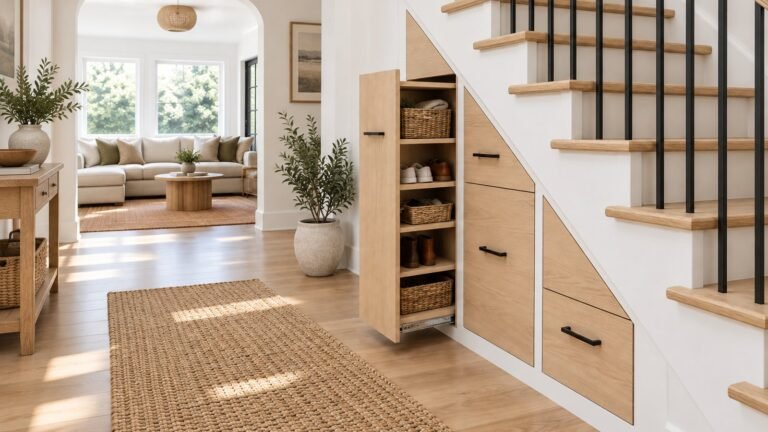
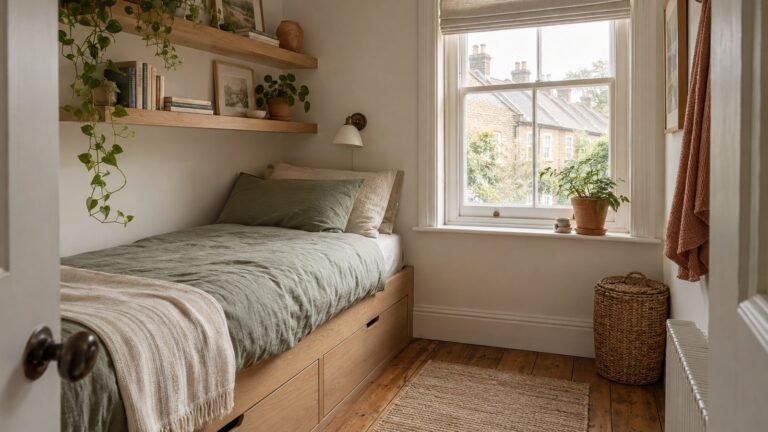
Small entryway ideas have one big job: stop the clutter at the door. Shoes, coats, bags, keys and mail all land in the first few feet of your home, and in a tiny entry there’s nowhere for them to hide. Without a plan, that small space becomes a pile you have to step over every day.
The good news is that even a narrow hallway or an apartment door that opens straight into the living room can work hard. These ideas focus on storage first, then decor, so your entry looks good and stays that way.
Key Takeaways
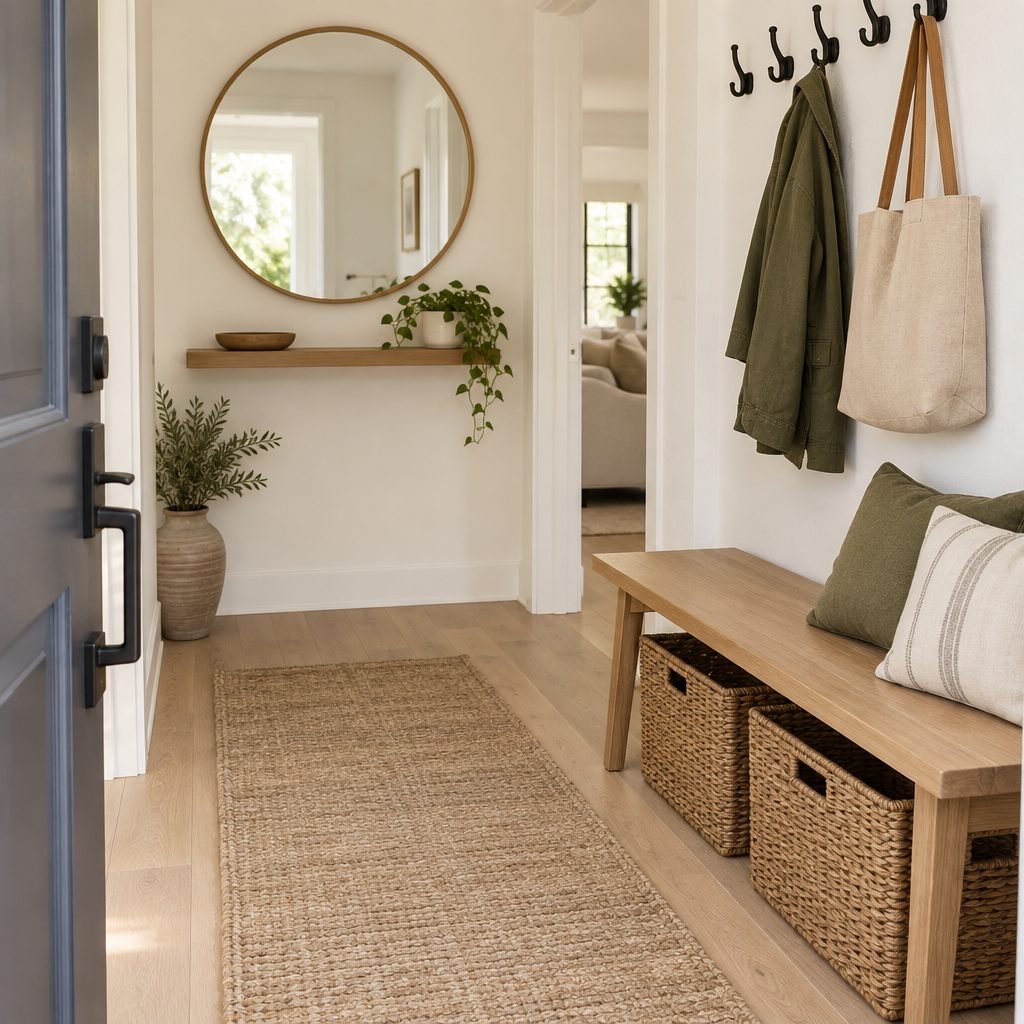
- Quick answer: The best small entryway ideas give shoes, coats, keys and mail their own zone on the wall, using slim pieces like hooks, a 4 to 6 inch floating ledge and a tilt-out shoe cabinet so the walkway stays clear.
- Plan the entry wall in zones: shoes, hooks, a drop spot and a mirror.
- Choose slim furniture so the walkway stays clear.
- Go vertical with hooks and shelves when floor space is tight.
Time: 1–3 hours · Cost: $30–200 · Difficulty: Easy
Start by Zoning Your Entry
Every small entryway handles the same four things: shoes, coats and bags, keys and mail, and a last look in the mirror. Give each one its own zone on the wall, and choose pieces slim enough to leave a clear path.
How much room do you need to walk through? A useful benchmark is the building code for hallways. As Fine Homebuilding explains, the International Residential Code requires hallways to be at least 3 feet wide. If furniture pushes your entry path below about 36 inches, it will start to feel cramped, so in a narrow entry choose wall-mounted and shallow pieces.
Quick Pick: Small Entryway Ideas by Problem
| Your problem | Start with these ideas |
|---|---|
| Shoes piling up by the door | Slim shoe cabinet (#1), bench with baskets (#2), boot tray (#3) |
| Nowhere to hang coats and bags | Peg rail (#5), kid-height hooks (#6), over-the-door hooks (#7) |
| Keys and mail everywhere | Floating ledge drop zone (#9), mail organizer (#10), key dish (#11) |
| Long, narrow entryway | Shallow ledge (#13), runner rug (#14), wall mirror (#15) |
| No entryway at all | Rug to mark the zone (#17), coat rack (#18), furniture divider (#19) |
20 Small Entryway Ideas
1. Choose a slim tilt-out shoe cabinet
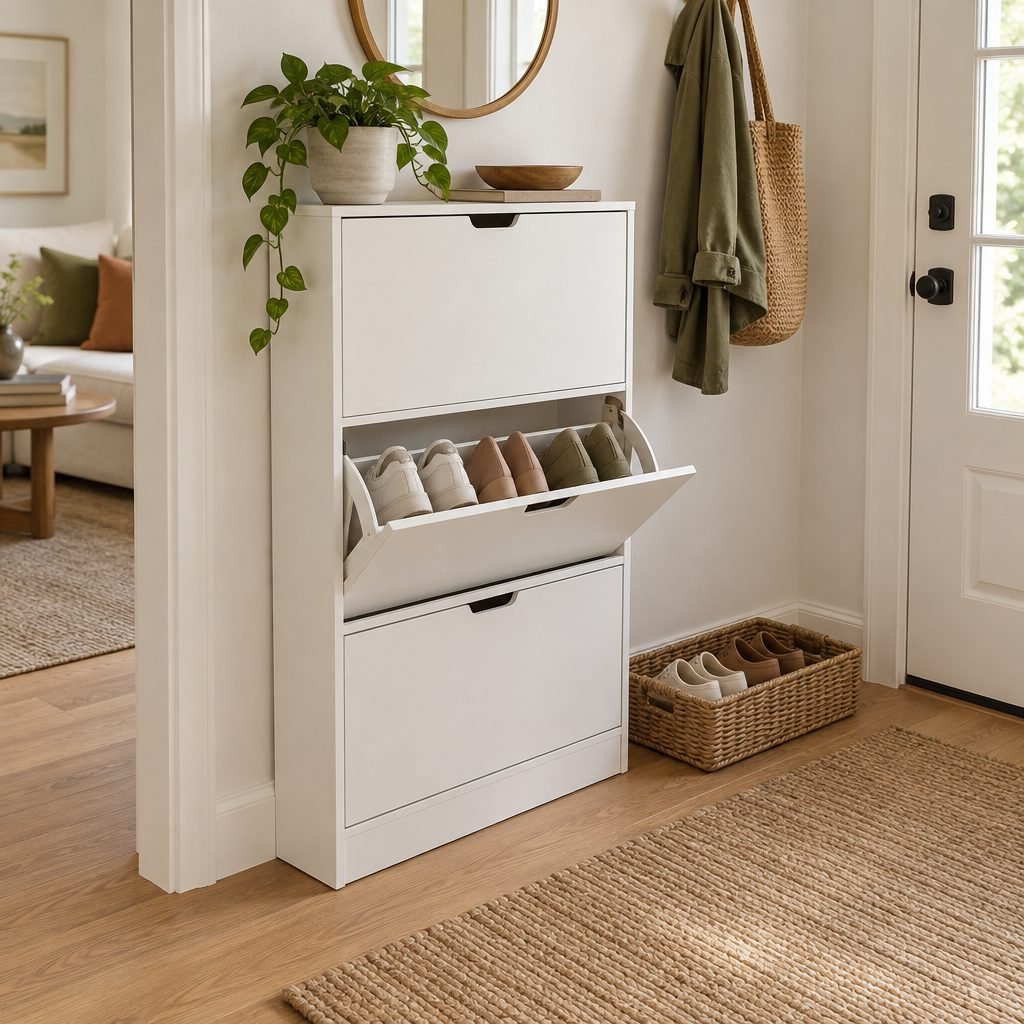
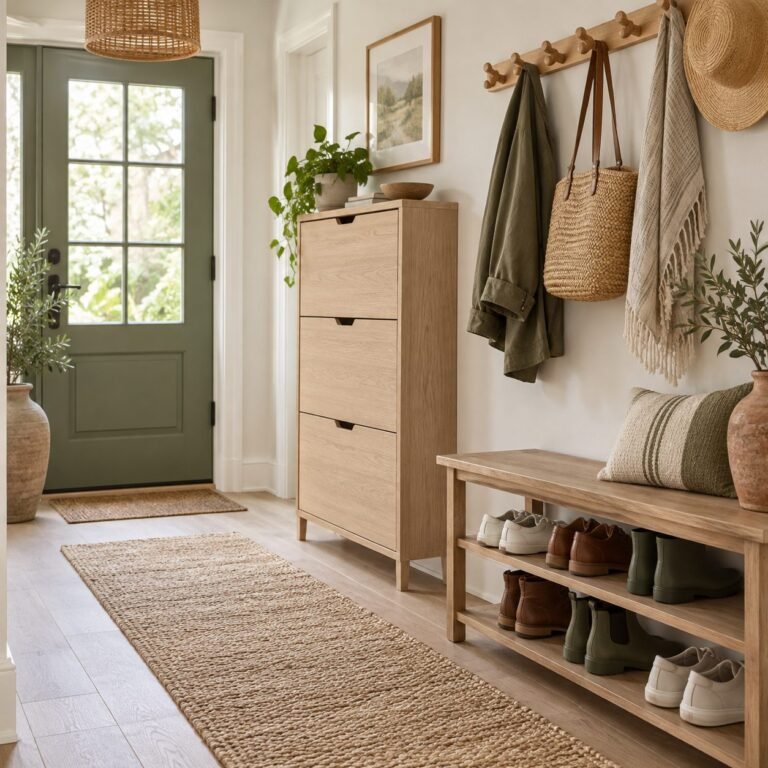
Small entryway shoe storage ideas start here. A tilt-out shoe cabinet stores shoes at an angle, so it can be much shallower than a regular cabinet, often only 7 to 10 inches deep. It hides the mess completely and the top works as a surface for keys or a plant.
2. Add a bench with baskets underneath
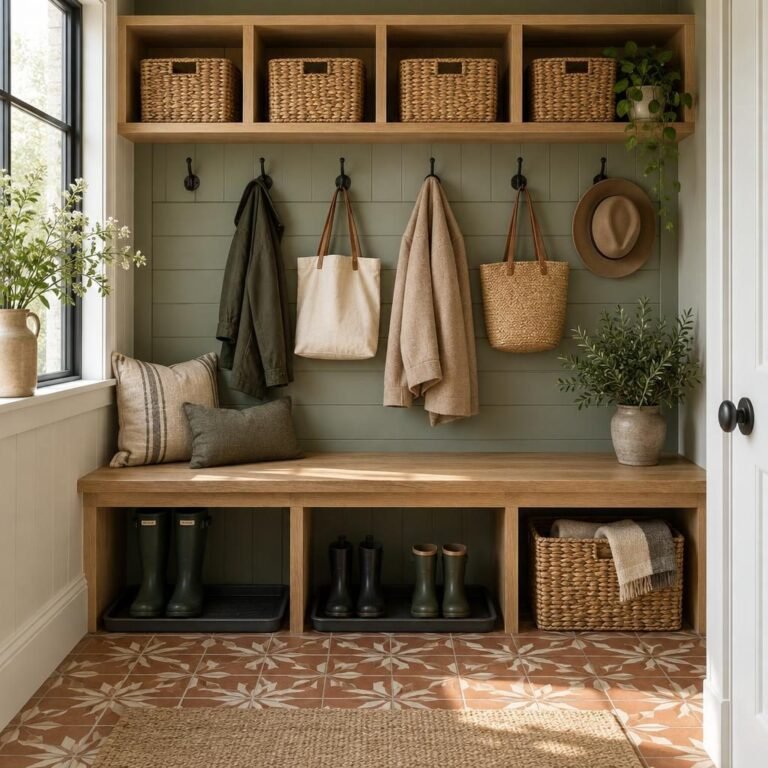
A slim bench gives you a place to sit while you put shoes on, and the space underneath fits two or three baskets. Give each person their own basket for everyday shoes, and the pile by the door disappears.
3. Keep a boot tray for wet shoes
A washable tray by the door catches rain and snow before it reaches the floor. It also sets a clear limit: if the tray is full, some shoes need to go back to the closet.
4. Limit shoes by the door
A small entry can’t hold every pair. Keep one or two everyday pairs per person by the door and store the rest in bedroom closets. It’s the simplest rule that makes the biggest difference.
5. Hang a peg rail or a row of hooks
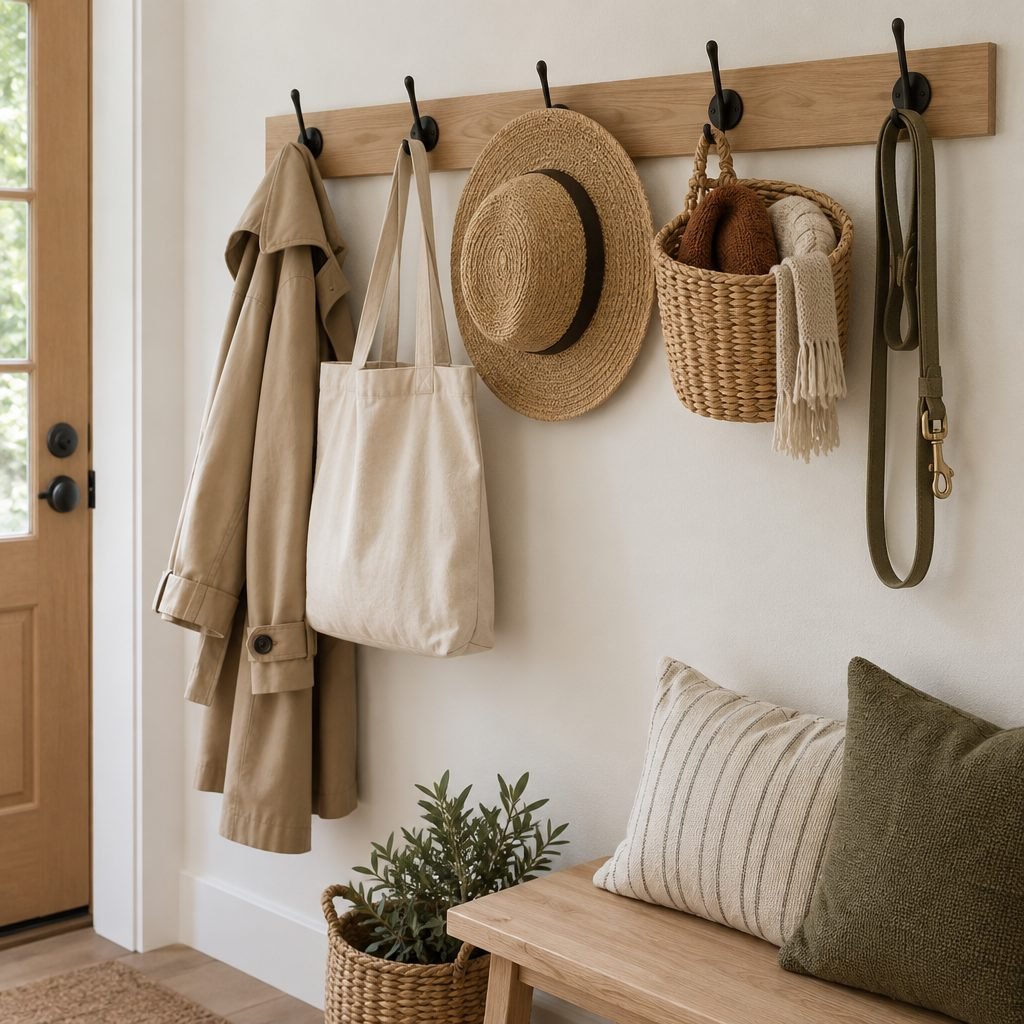
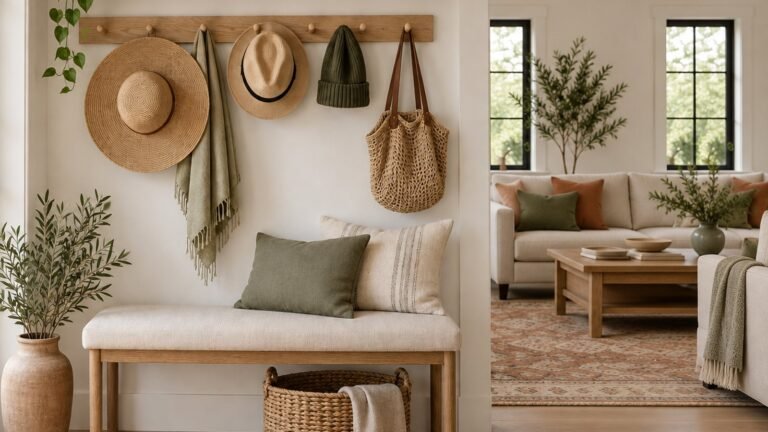
Hooks take up almost no floor space and are faster to use than hangers, which is why coats actually get hung up. A wooden peg rail looks tidy and holds coats, bags, hats and even a dog leash.
6. Add a second row of hooks for kids
If kids can’t reach the hooks, their coats end up on the floor. A lower row of hooks, or a separate low rail, lets them put their own things away.
7. Use the back of the door
An over-the-door hook rack on a nearby closet door holds bags, umbrellas or reusable shopping bags without using any wall or floor space.
8. Hang baskets for small things
Gloves, hats and scarves get lost in drawers. A small woven basket hung on a hook keeps them together and within reach in cold months.
9. Create a drop zone on a floating ledge
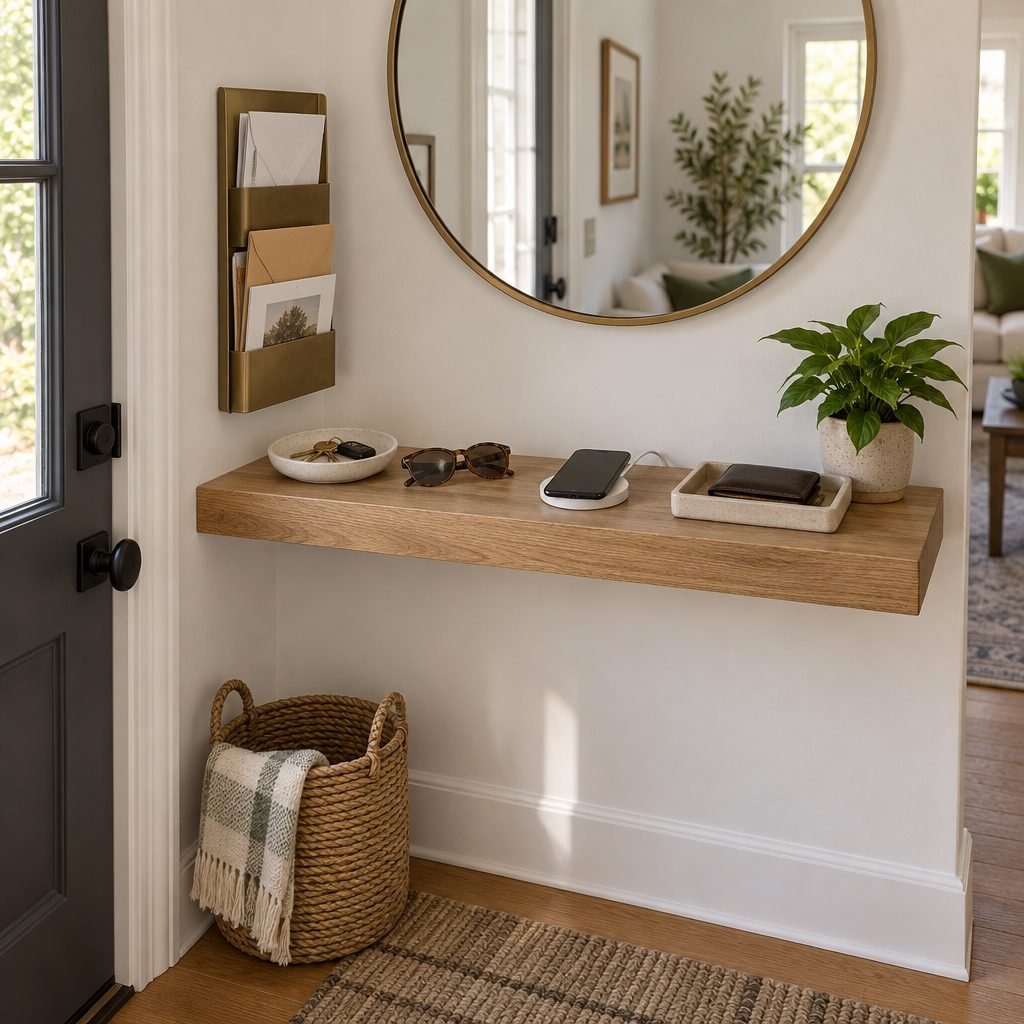
A narrow floating shelf by the door is the perfect landing spot for keys, wallets and sunglasses. It takes only a few inches of depth. If you want to build one, our DIY floating shelves guide shows how to hang it securely.
10. Mount a slim mail organizer
Mail is one of the biggest sources of entry clutter. A wall-mounted organizer keeps letters off every surface and reminds you to sort them before they pile up.
11. Give keys one home
A small dish or a set of key hooks in the same spot every day means you’ll stop searching for keys on the way out.
12. Add a charging spot
If your phone always ends up by the door, plan for it: a small tray near an outlet keeps phones and earbuds charged and ready to grab.
Narrow Entryway Ideas
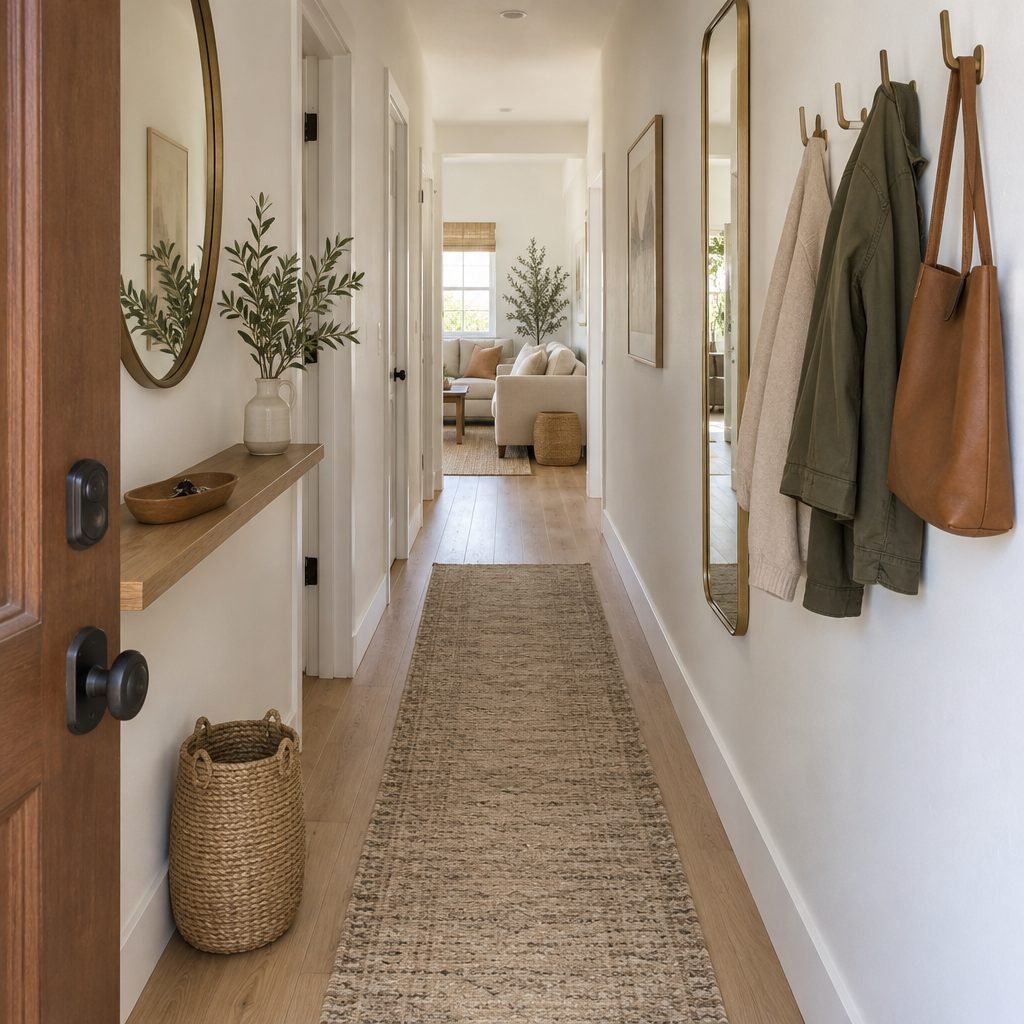
Narrow entryway ideas all come back to one rule: build up the walls, not out into the path.
13. Pick a shallow ledge instead of a console table
A standard console table can eat up a big part of a narrow hallway. A wall ledge only 4 to 6 inches deep still holds keys and a small plant, without blocking the way.
14. Use a long runner rug
A runner protects the floor from dirt and leads the eye down the hallway, which makes a narrow entry look longer and more finished.
15. Hang a tall mirror
A tall or round mirror on the long wall bounces light around and makes a narrow entry feel wider. It also gives you a last outfit check.
16. Keep everything off the floor
In a narrow entry, every item on the floor narrows the path. Wall hooks, a wall-mounted shoe cabinet and hanging baskets keep the floor clear.
Apartment Entryway Ideas (No Foyer)
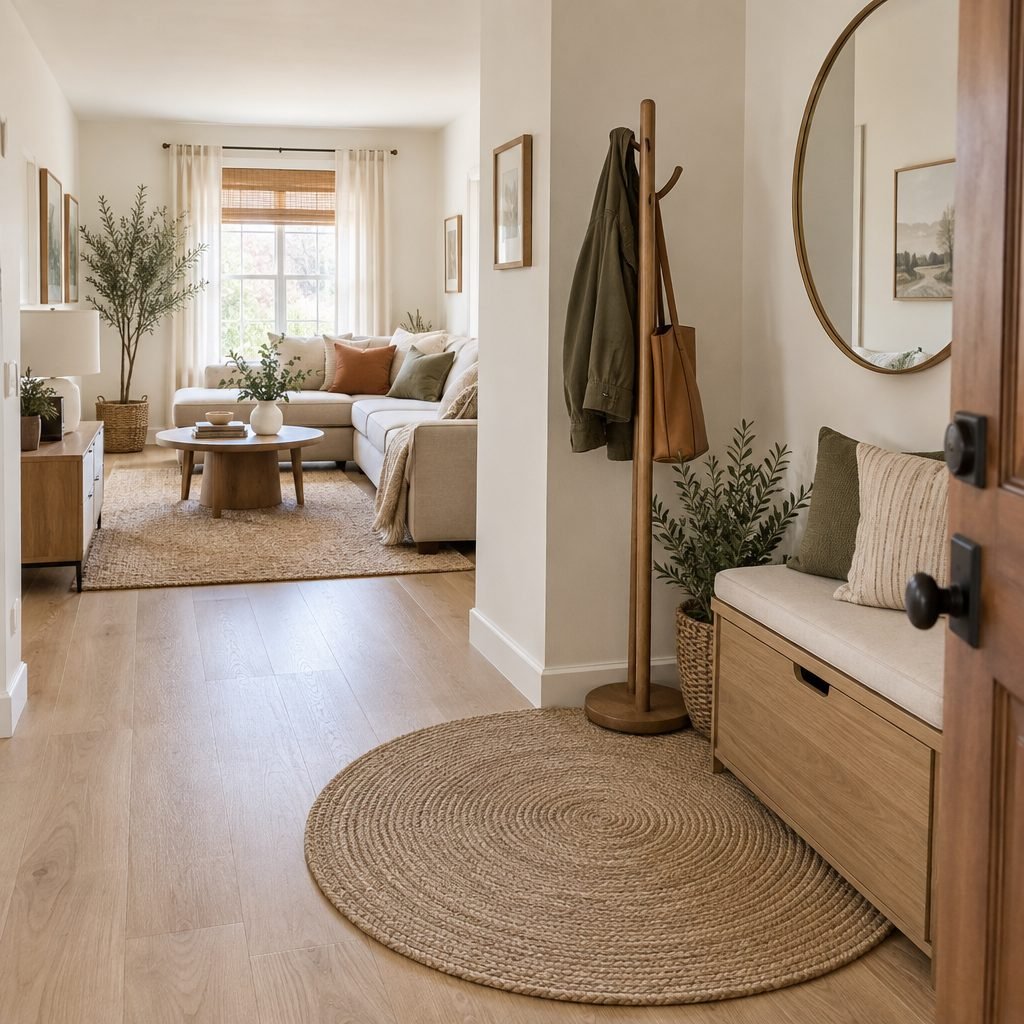
17. Mark an entry zone with a rug
If your front door opens straight into the living room, a small round rug next to the door creates a visual entryway. It tells everyone where shoes and bags belong.
18. Use a freestanding coat rack
Renters who can’t drill can still hang coats. A slim freestanding coat rack holds several coats and bags in a small footprint.
19. Let furniture act as a divider
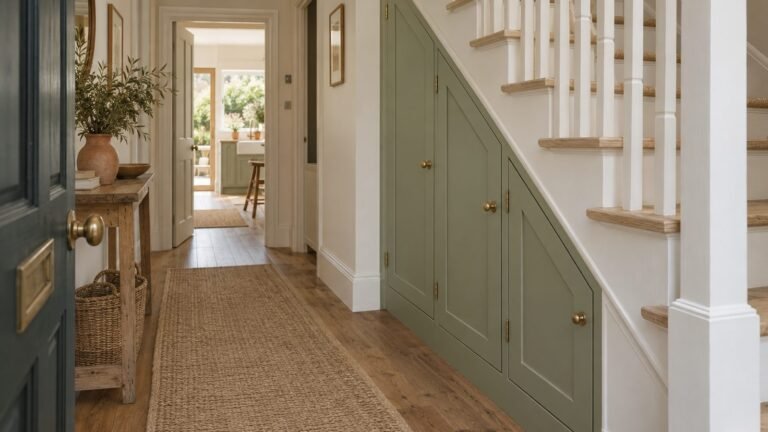
A storage bench or a low console placed with its back to the sofa separates the entry from the living area and adds storage at the same time. If your stairs are close to the door, our under stairs storage ideas show how to turn that space into extra entry storage.
Small Entryway Decor Ideas
20. Finish with a mirror, a plant and good light
Once storage is sorted, small entryway ideas for decor can be simple. A few finishing touches make the entry feel welcoming: a mirror, a small plant or vase, and a plug-in wall sconce if the entry is dark. Keep decor to two or three pieces so the space stays calm.
How to Organize a Small Entryway in 5 Steps
- Clear it out. Move everything that doesn’t belong by the door back to where it belongs.
- Measure. Note the wall width and how much floor you can use without blocking the path or the door swing.
- Zone the wall. Shoes low, coats at shoulder height, keys and mail at waist height, mirror at eye level.
- Choose slim pieces. Hooks, ledges and shallow cabinets before bulky furniture.
- Reset daily. Take two minutes each evening to put shoes, bags and mail back in their zones.
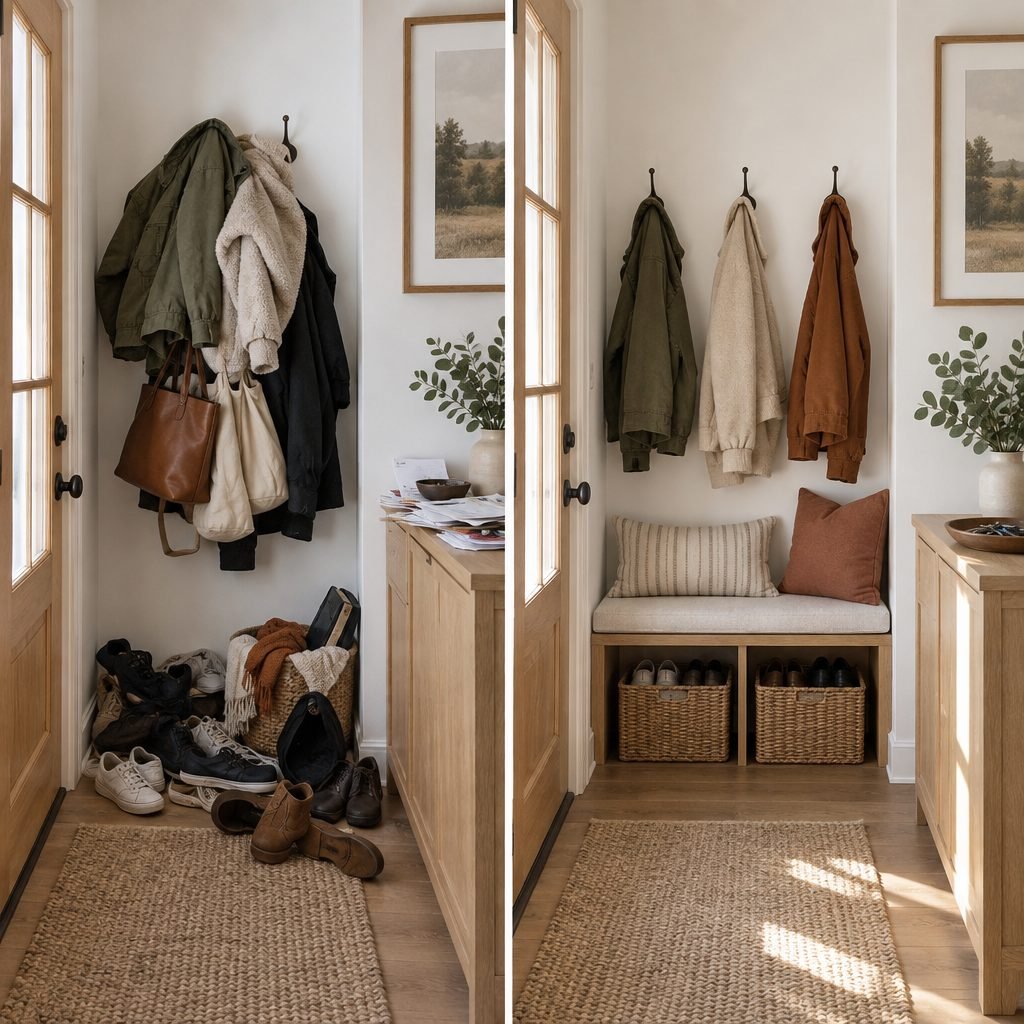
The before-and-after above shows the same small entry. The only difference is a place for everything: shoes in baskets, coats on separate hooks and keys on the ledge. That’s what all of these small entryway ideas are really about.

Save the checklist
Everything a tiny entry needs, on one page. Pin it so you have it when you set up your drop zone.
Save to PinterestCommon Small Entryway Mistakes
- Choosing furniture that’s too deep. A bulky console or cabinet makes a small entry hard to walk through.
- Too few hooks. One hook per person is rarely enough. Plan for coats and bags.
- Keeping every shoe by the door. Store off-season and rarely worn pairs elsewhere.
- No spot for keys and mail. Without a drop zone, they end up on every surface.
- Blocking the door swing. Check that the front door can open fully before placing furniture.
Small Entryway Ideas FAQ
How do you organize a very small entryway?
Go vertical. Use hooks or a peg rail for coats, a slim shoe cabinet or baskets for shoes, and a floating ledge for keys and mail. Keep the floor as clear as possible.
What can I put in a narrow entryway?
Choose shallow, wall-mounted pieces: a 4 to 6 inch ledge, slim hooks, a tall mirror and a runner rug. Avoid deep consoles that narrow the path.
How do you create an entryway when the door opens into the living room?
Mark a zone with a small rug, add a coat rack or wall hooks by the door, and use a bench or console as a divider between the entry and the rest of the room.
Where should shoes go in a small entryway?
Low and close to the door: in a slim tilt-out shoe cabinet, in baskets under a bench, or on a boot tray for wet shoes. Keep only everyday pairs there.
Have a back door or side entry too? Our mudroom ideas show how to set up lockers, shoe benches and hooks, with key measurements for benches and hook heights.
Need more room for shoes? Our shoe storage ideas cover slim tilt-out cabinets, benches, under-stairs drawers and closet shelves, with the depth each one needs.
Want the top of your console to look styled, not cluttered? See our entryway table decor ideas for a simple five-part formula with a mirror, a lamp, a tray and a basket.
Hats and bags are often what overflows a small entry first. Our hat storage ideas and purse storage ideas show how to store them by the door without the clutter.
Living in the UK or dealing with muddy boots every day? Our boot room ideas turn a corner by the back door into a hard-working drop zone.
No foyer at all, and the front door opens straight into the living room? A slim shelf, a folding screen or a curtain can create an entry zone. See our room divider ideas for apartments without a hallway.
Final Thoughts
The best small entryway ideas are simple: give shoes, coats, keys and mail their own zone, build up the walls instead of into the path, and keep only what you use every day by the door. If coats are overflowing, our small walk-in closet ideas can help you make room for them elsewhere.
Save this guide to Pinterest for the next time your entry needs a reset.
How this guide was made: researched and written with the help of AI tools, fact-checked against trusted sources and published by Mohamed Elber. Images are AI-generated illustrations. See our Editorial Policy.