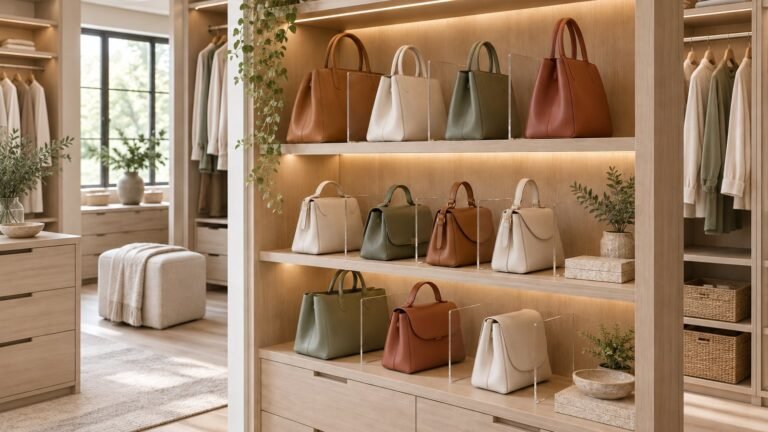
The best shoe storage ideas solve one problem first: the pile by the front door. Shoes are bulky, they come in pairs, and everyone in the house kicks them off in the same spot, so a few pairs quickly turn into a heap you trip over. The fix is a simple system with a small daily spot at the door and a proper home for everything else.
This guide covers 20 ideas for shoe storage in an entryway or hallway, a closet, under the stairs, on doors and under the bed, including shoe storage for small spaces and rentals. We include sizes in inches and centimeters so you can measure before you buy, and most ideas work whether you call it a closet or a wardrobe, sneakers or trainers. If shoes are only one part of a cluttered entry, see our small entryway ideas too.
Key Takeaways
- Quick answer: Keep only two pairs per person by the door on a bench or slim tilt-out cabinet, store the rest on angled shelves or in clear boxes in the closet, and move off-season shoes under the bed or under the stairs.
- Measure first. Most shoes need 12 to 14 inches (30 to 35 cm) of shelf depth, but a tilt-out cabinet fits in 7 to 10 inches (17 to 25 cm).
- Let wet shoes and boots dry on a tray before they go into a closed cabinet.
Time: 1–2 hours · Cost: $0–$150 (£0–£120) · Difficulty: Easy
How Much Space Do Shoes Need?
Most shoe storage fails because it’s the wrong size. A rack that’s too shallow lets heels hang off the edge, and a shelf gap that’s too low won’t fit boots. Check the depth of the spot, the height between shelves and how many pairs you really need to store before you buy anything.
Moisture matters as much as space. Wet boots shut straight into a cabinet stay damp, smell and can grow mold. The U.S. Environmental Protection Agency advises drying damp materials and furnishings within 24 to 48 hours to prevent mold growth, and keeping indoor humidity between 30% and 60%. In practice: give wet shoes a boot tray by the door, let them dry overnight, then put them away.
Quick Pick: Shoe Storage Ideas by Space
| Your space | Start with these ideas |
|---|---|
| Narrow entryway or hallway | Slim tilt-out cabinet (#1), wall ledges (#6) |
| Family pile by the door | Two-pair rule (#2), cubby bench (#4), boot tray (#5) |
| Space under the stairs | Pull-out drawers (#8), a low boot shelf (#9) |
| Small closet or wardrobe | Angled shelves (#10), clear boxes (#11), a slim tower (#12) |
| No floor space at all | Over-the-door pockets (#14), hanging shelves (#15) |
| Renting or small budget | Over-the-door pockets (#14), shoes you no longer wear (#20) |
How to Organize Your Shoes in 5 Steps
- Gather every pair from the door, the closets and under the beds.
- Edit. Let go of pairs that hurt, are worn out or haven’t been worn in a year.
- Sort by season and use: daily pairs, occasional pairs, off-season pairs and boots.
- Give each group a home: daily pairs by the door, occasional pairs in the closet, off-season pairs under the bed or up high.
- Measure and buy last. Check depth, height and width, then choose racks, cabinets or boxes that fit.
20 Shoe Storage Ideas
These ideas are grouped by where they go, so start with the spot that bothers you most.
Entryway and Hallway Shoe Storage
1. Fit a slim tilt-out shoe cabinet
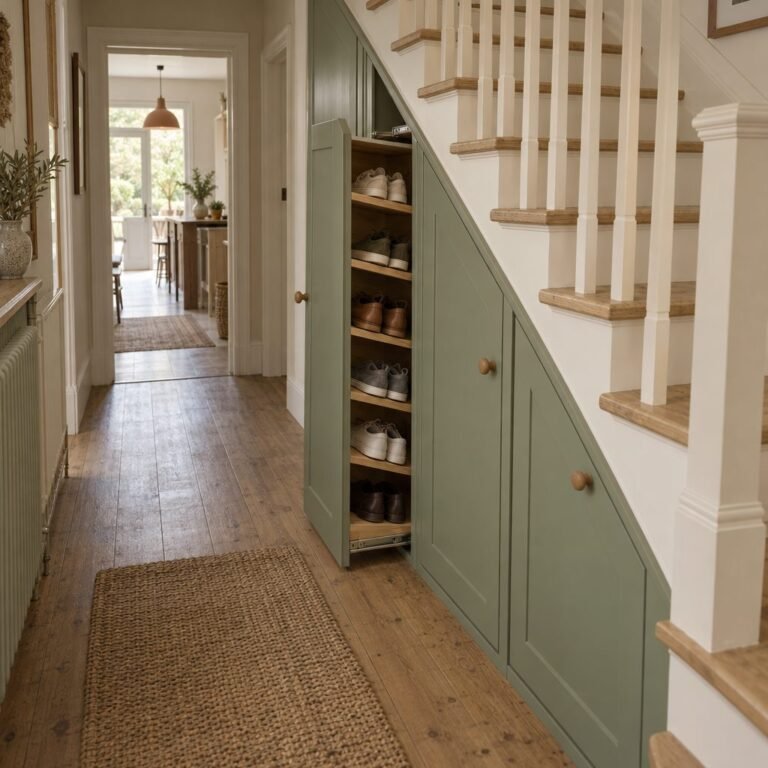
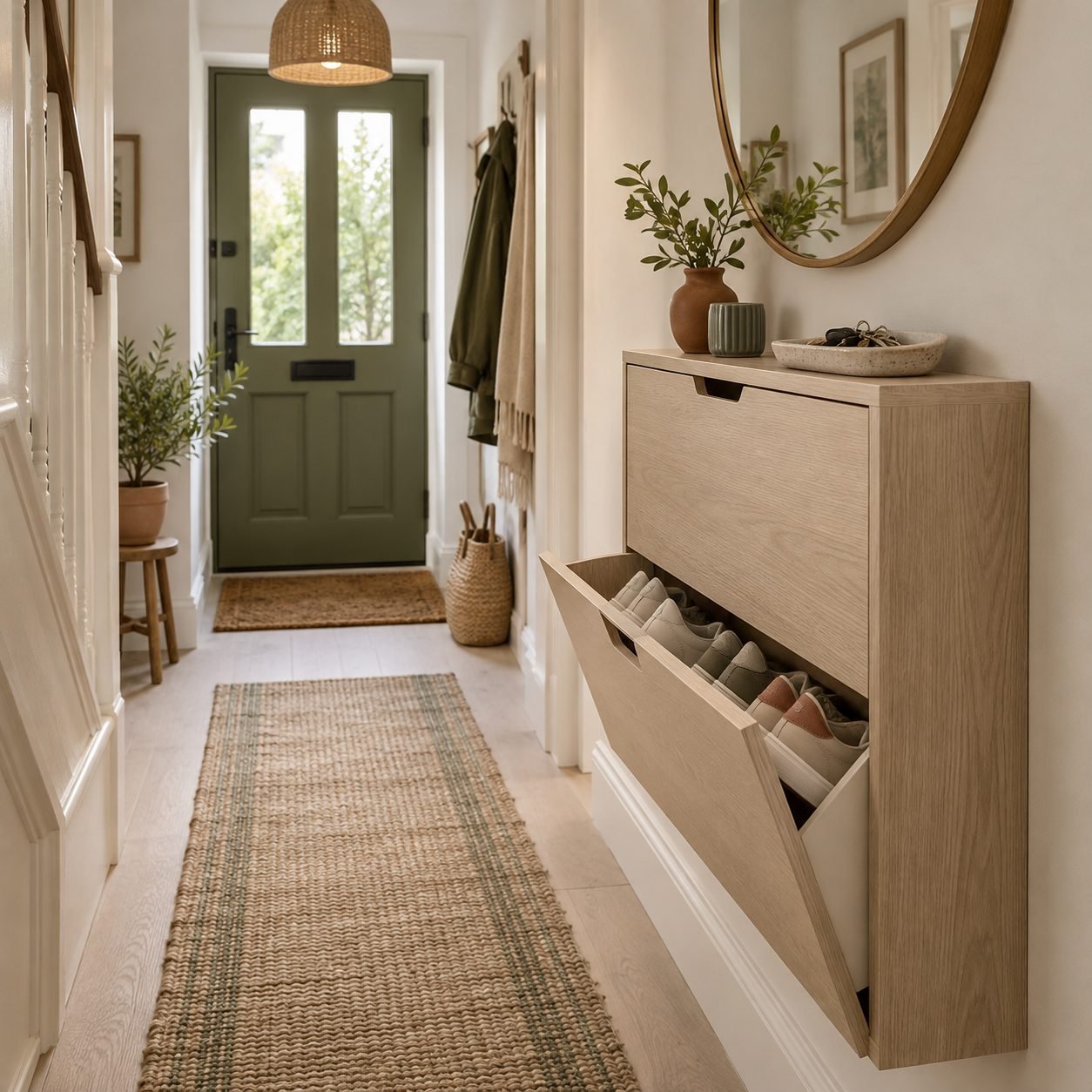
A tilt-out cabinet stores shoes at an angle, so it needs only 7 to 10 inches (17 to 25 cm) of depth. That makes it the best entryway shoe storage for a narrow hallway, including the long, thin halls of terraced houses. Each drawer holds two or three pairs, and the top becomes a landing spot for keys. Wall-mount it to keep the floor clear and anchor freestanding ones to the wall.
2. Keep only two pairs per person at the door
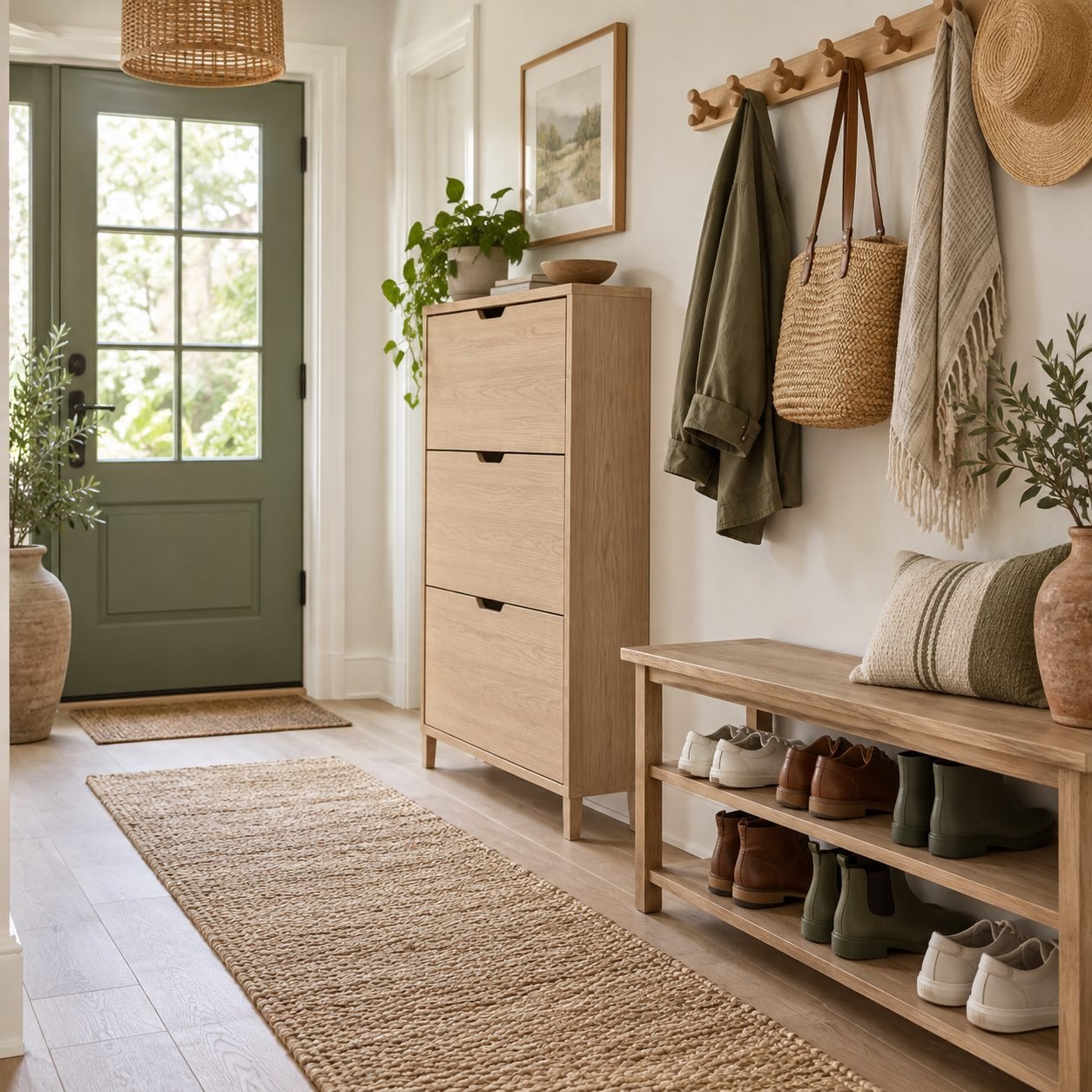
Shoe storage by the door should hold today’s shoes, not every pair you own. Set a limit of two pairs per person, and move the rest to a closet. This one rule keeps even a tiny entry tidy and makes any rack or cabinet you choose last longer.
3. Add a bench with shoe shelves
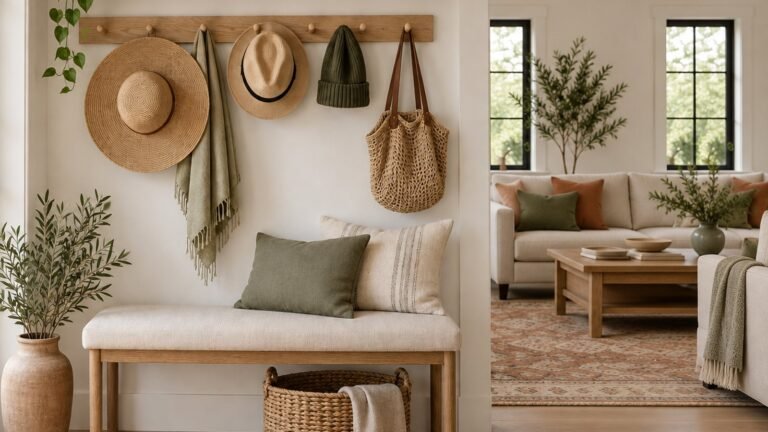
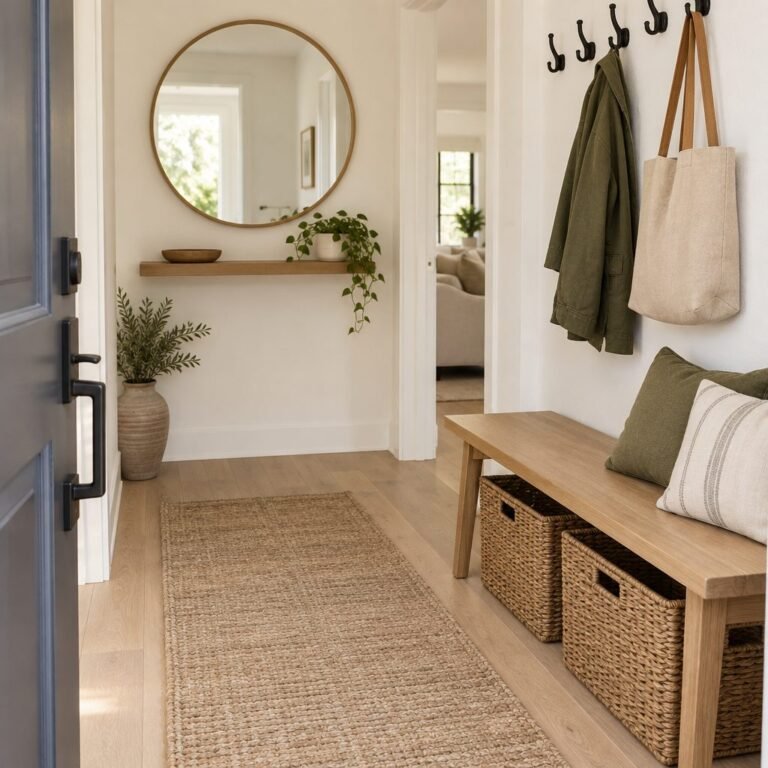
A bench with one or two shelves underneath gives everyone a place to sit and take off shoes, and the shoes land right below. Slatted shelves let dirt fall through and air reach damp soles. Look for a seat height around 18 inches (45 cm).
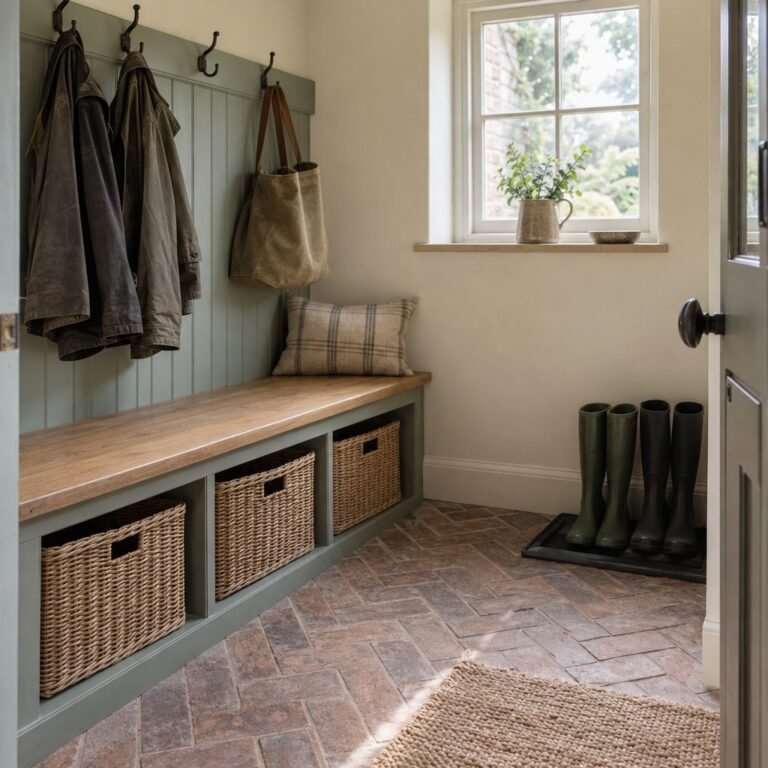
4. Choose a cubby bench with baskets
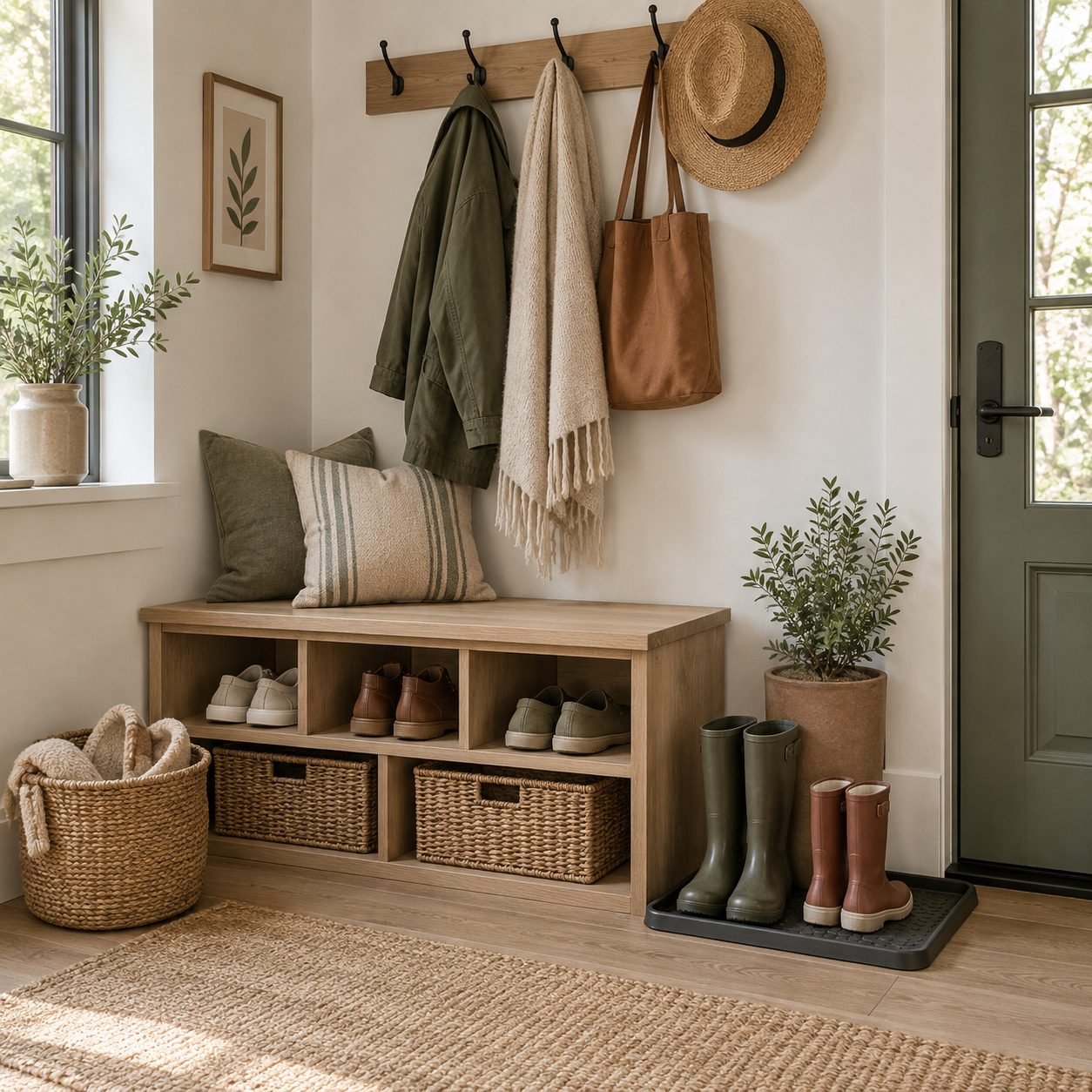
Open cubbies give each person one square for their shoes, and baskets below hide slippers, hats and gloves. It’s a simple way to stop arguments over whose shoes are whose. Our mudroom ideas show how to build a full drop zone around a bench like this.
5. Put a boot tray by the door
A rubber or metal boot tray catches water, mud and grit from rain boots, wellies and winter boots. Wet shoes dry there overnight before they go into a cabinet. A tray about 15 by 30 inches (38 by 76 cm) holds two or three pairs.
6. Mount floating ledges on the wall
Two or three slim shelves, about 8 inches (20 cm) deep, mounted low on an entry wall hold sneakers without taking any floor space. They work well in a hallway too narrow for a cabinet. Keep them out of the door swing and the main walkway.
7. Slide a two-tier rack under a console table
If you already have a console table in the hall, a low two-tier rack fits underneath it and hides behind a basket or two. It’s a cheap way to add shoe storage without adding another piece of furniture.
Under-Stairs Shoe Storage
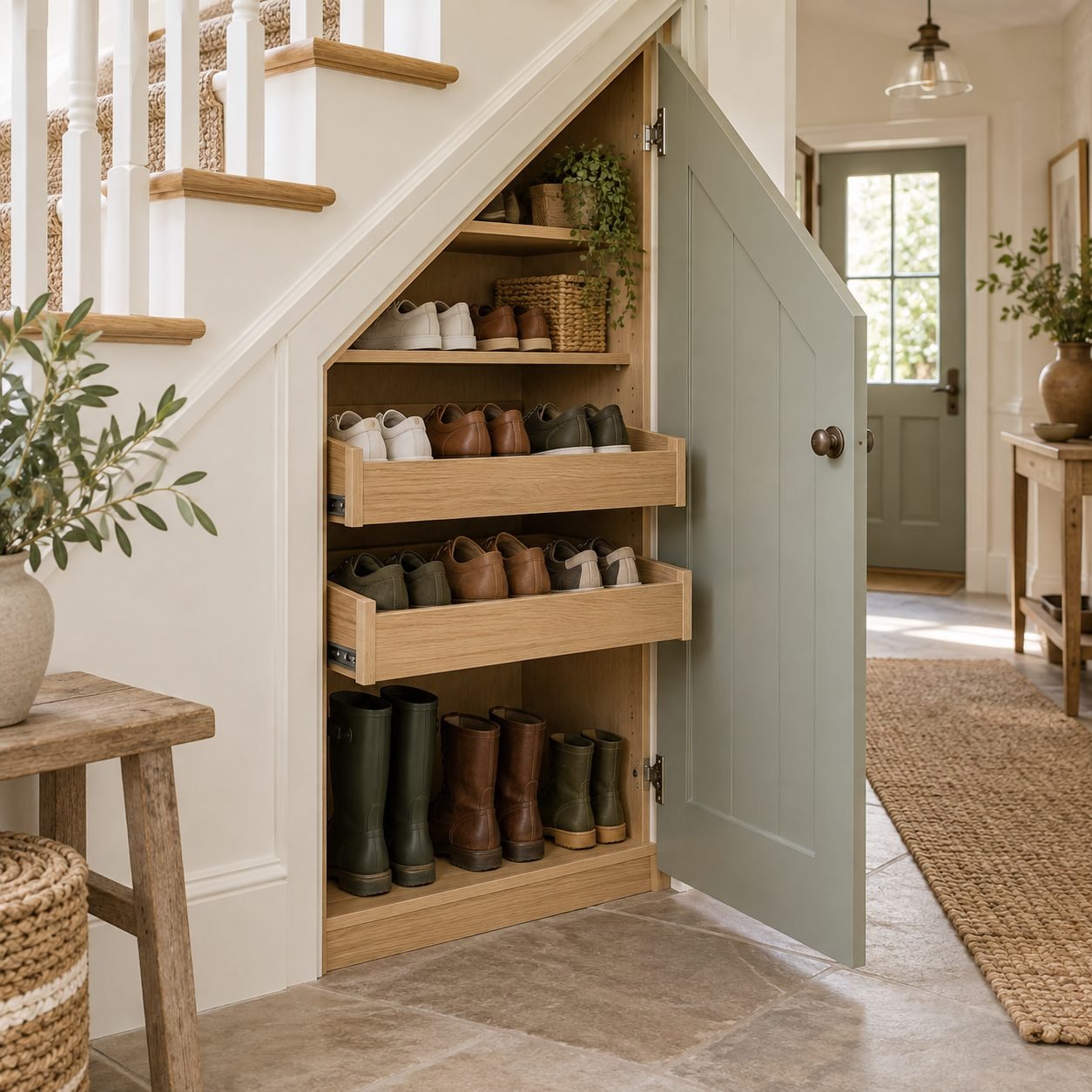
8. Fit pull-out drawers under the stairs
An under-stairs cupboard is one of the best places for family shoe storage, and in many British homes it’s right by the front door. Pull-out drawers bring shoes from the back of the space into the light, so nothing gets lost in the dark corner. Read our under stairs storage ideas for the full layout. Our under stairs shoe storage guide shows what fits in the low, middle and tall parts of the space.
9. Keep a low shelf for boots
Use the tallest part of the space for boots and the shorter end for flat shoes. Ankle boots need 10 to 12 inches (25 to 30 cm) of height and tall boots 18 to 20 inches (45 to 50 cm), so one low, tall shelf is better than several short ones.
Closet Shoe Storage Ideas
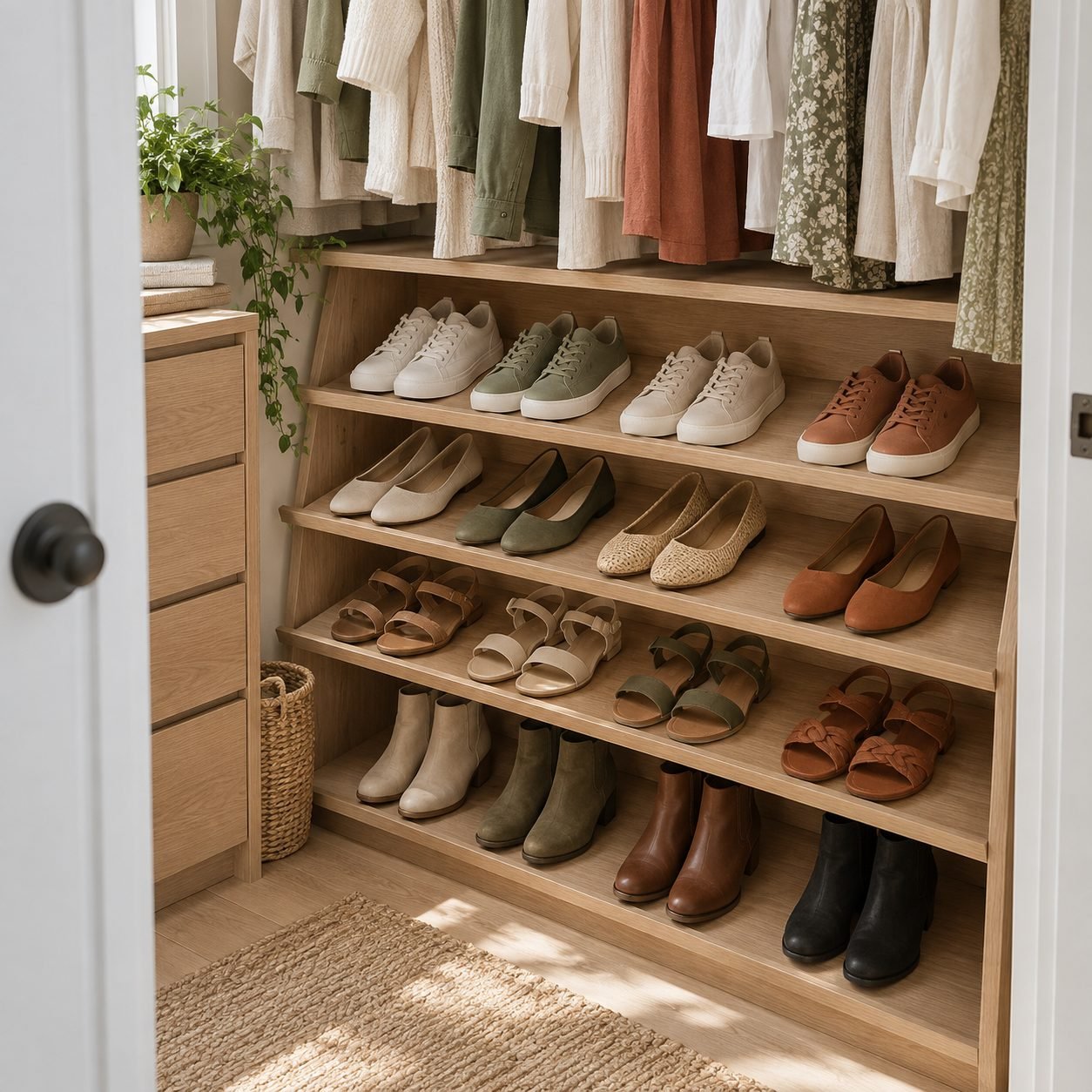
10. Install angled shoe shelves
Angled shelves with a small front lip show every pair at a glance, like a little shop display. They suit a walk-in closet or the side of a wardrobe. Leave 8 to 9 inches (20 to 23 cm) between shelves for most shoes. Our small walk-in closet ideas show where they fit best.
11. Stack clear drop-front shoe boxes
Clear boxes with a front door keep dust off and let you see each pair, and you can open the bottom box without unstacking the rest. They’re great for heels and special-occasion shoes on a closet shelf.
12. Use a slim shoe tower in a narrow gap
A tall, narrow shoe tower fits in the 10 to 12 inch (25 to 30 cm) gap beside a wardrobe or a door. It turns wasted vertical space into storage for eight or more pairs.
13. Keep the closet floor for one rack
Instead of letting shoes pile on the closet floor, put one stackable rack there and nothing else. Two or three tiers fit under hanging shirts. Find more space-savers in our small closet organization ideas.
Door and Hanging Shoe Storage
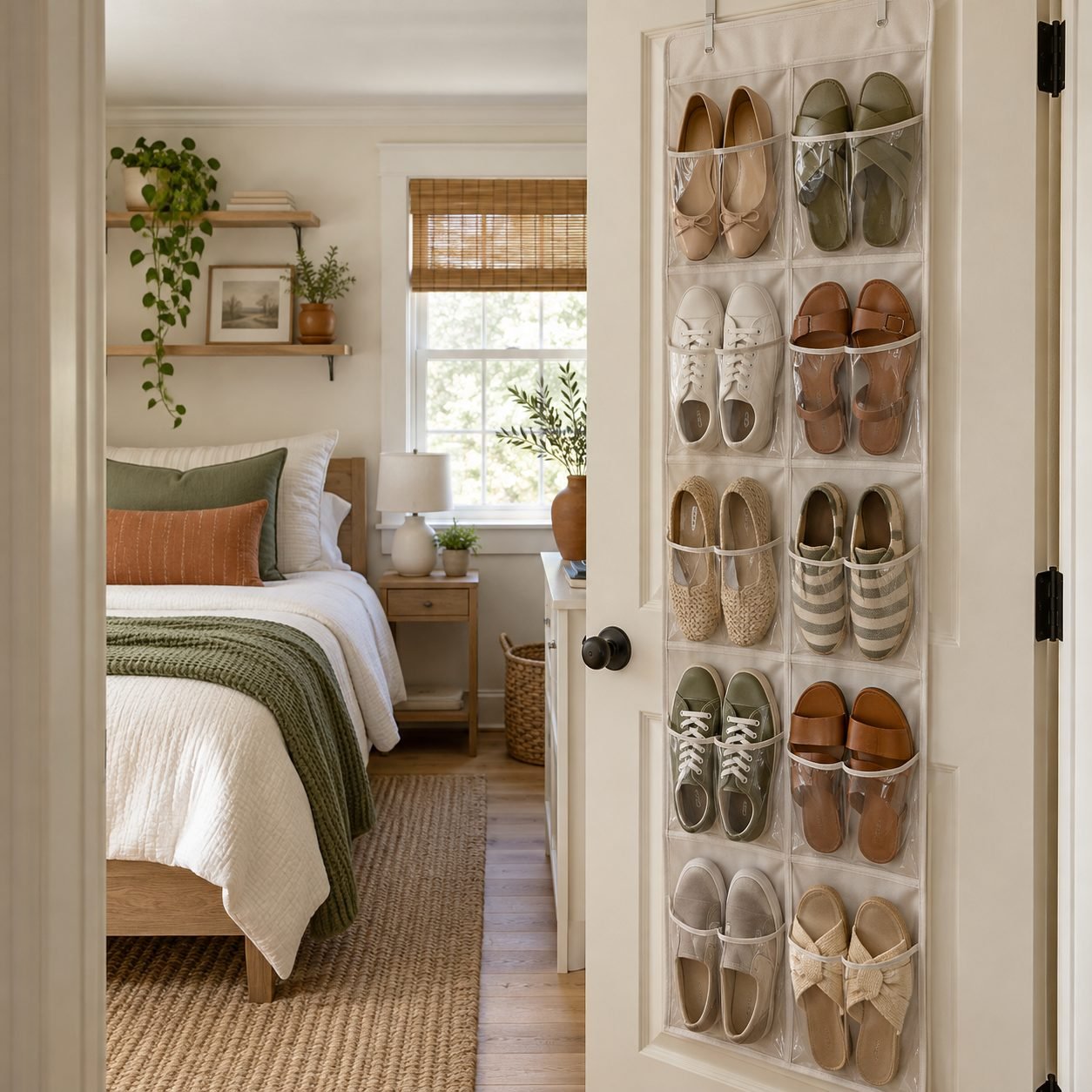
14. Hang an over-the-door organizer
An over-the-door organizer with clear pockets holds 12 to 24 pairs of flats, sandals and sneakers on the back of a bedroom or closet door. It needs no tools, so it’s one of the best shoe storage ideas for renters. Check that the door still closes with the hooks in place.
15. Add hanging shelves to the closet rod
Fabric hanging shelves hook over the clothes rod and hold a pair in each section. They’re light, cheap and easy to move, which makes them useful in a shared closet or a dorm.
Bedroom and Off-Season Shoe Storage
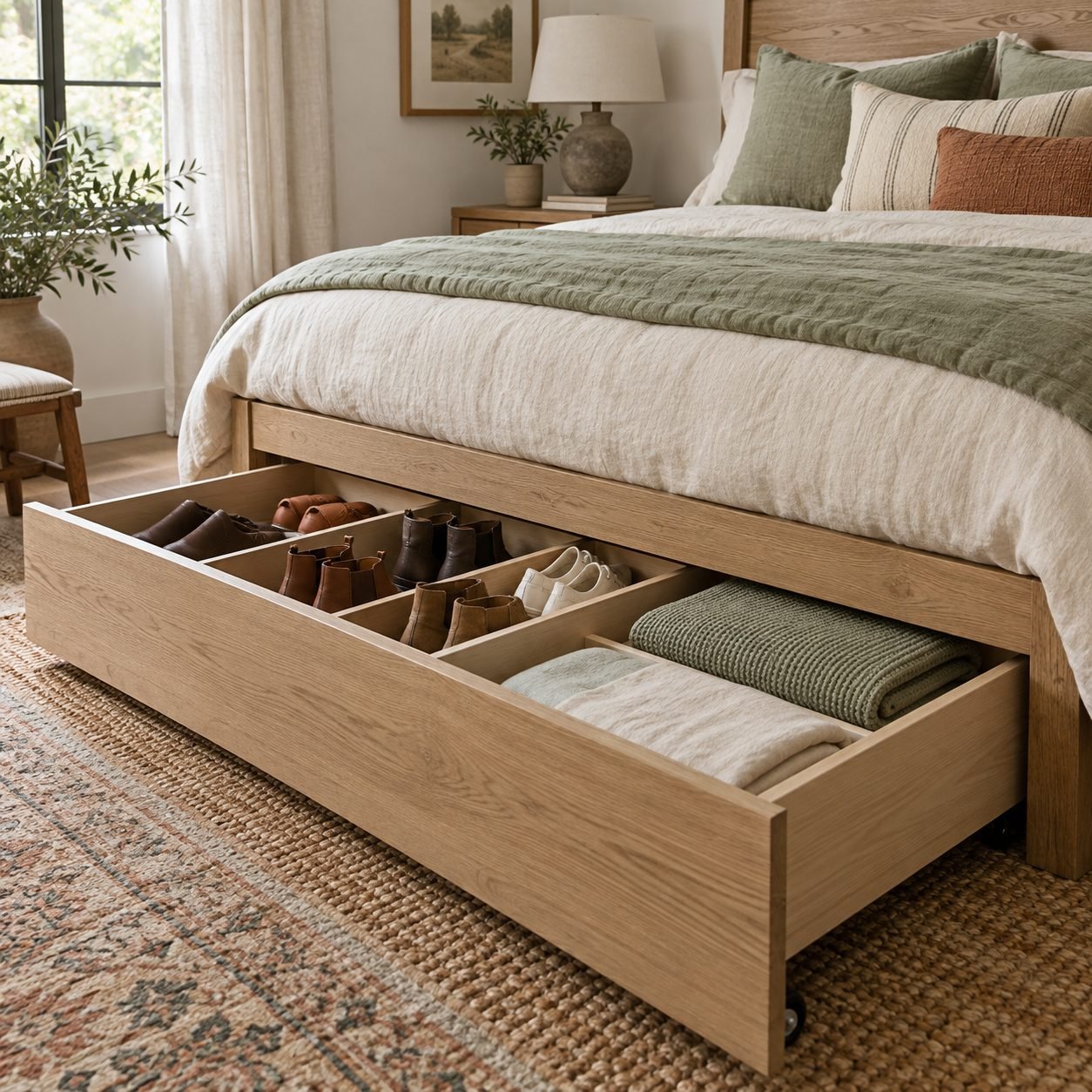
16. Roll an under-bed drawer out
A rolling under-bed drawer with dividers keeps off-season shoes in pairs and dust-free. Measure the height under your bed first; most drawers need about 6 to 7 inches (15 to 18 cm). Our small bedroom storage ideas have more ways to use that space.
17. Use a storage bench at the end of the bed
A bench with a lift-up lid or a shelf below holds shoes you wear often and gives you a seat to put them on. Choose one with a slow-close hinge if children use it.
18. Store tall boots upright
Tall boots slump and crease when they lie flat. Stand them up with boot shapers or rolled magazines inside, or hang them from clip hangers in the closet.
19. Rotate shoes with the seasons
Twice a year, swap summer sandals and winter boots between your daily spot and long-term storage. Label boxes by season so the swap takes minutes, and make sure everything is clean and dry before it goes away.
20. Let go of shoes you no longer wear
The cheapest shoe storage is fewer shoes. Donate pairs that don’t fit or haven’t been worn in a year, and recycle worn-out ones where you can. Our closet clean out guide walks you through the keep-or-donate decision.

Save the checklist
Pin this shoe storage checklist so you have it handy the next time you clear the pile by the door.
Save to PinterestCommon Shoe Storage Mistakes
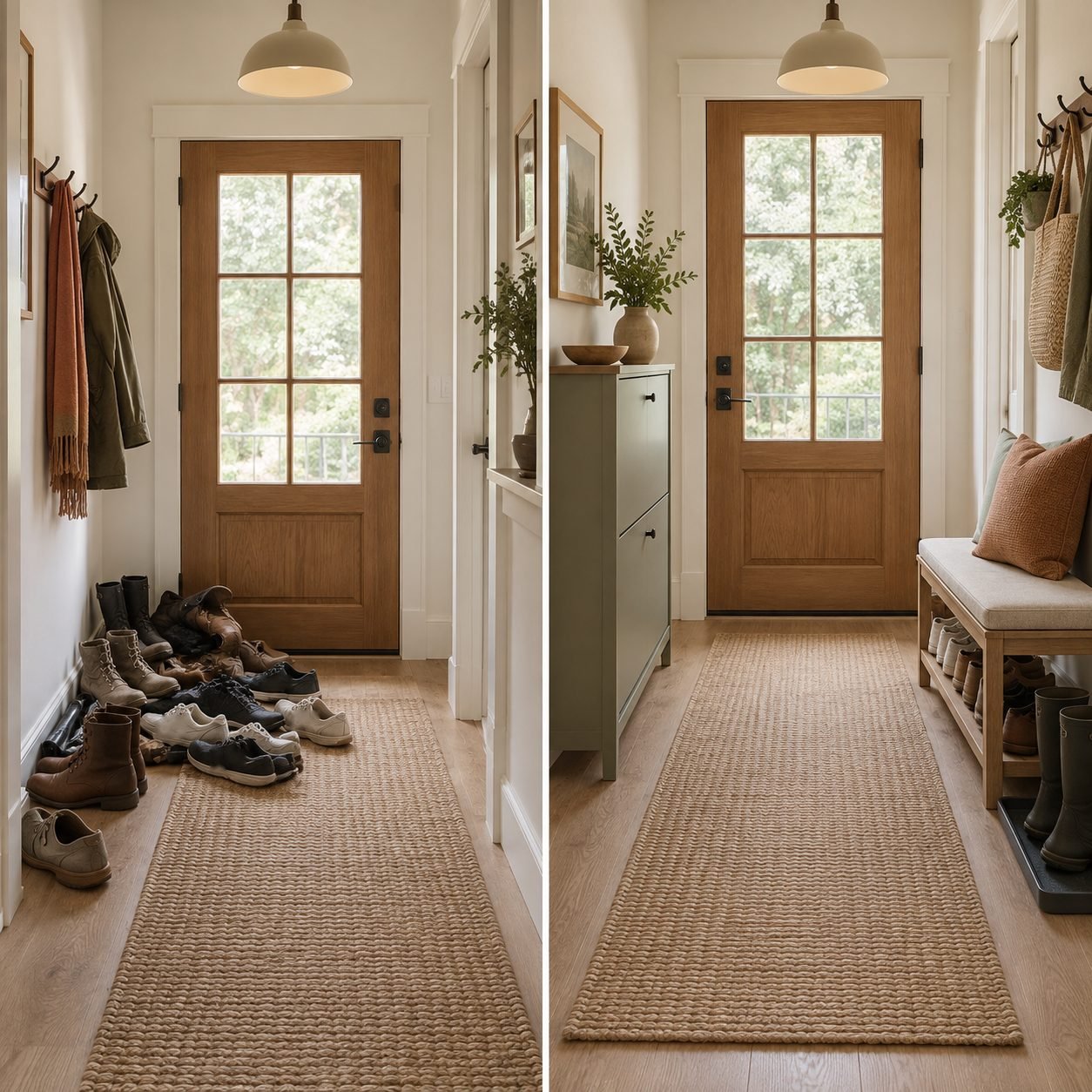
- Every pair by the front door. Keep daily shoes there and move the rest.
- Buying a rack before measuring. Check depth, shelf height and width first.
- Shutting wet shoes in a cabinet. Let them dry on a tray to stop smells and mold.
- Shelves too low for boots. Plan one tall shelf instead of squeezing boots in sideways.
- Freestanding cabinets not anchored. Tall shoe cabinets and towers can tip; fix them to the wall, especially with children at home.
FAQ
What is the best way to store shoes in a small space?
The best shoe storage ideas for small spaces use vertical and hidden space: a slim tilt-out cabinet in the hallway, an over-the-door organizer, a narrow shoe tower and an under-bed drawer for off-season pairs. Keep only two pairs per person by the door.
How do you store shoes in a narrow hallway?
Choose a tilt-out shoe cabinet only 7 to 10 inches (17 to 25 cm) deep, or mount slim ledges low on the wall. Both keep the walkway clear, which matters in narrow halls in apartments and terraced houses.
How deep should a shoe rack be?
Most adult shoes need 12 to 14 inches (30 to 35 cm) of depth on a flat shelf. Larger men’s shoes and boots may need a little more, while tilt-out cabinets need less because shoes stand at an angle.
Where should you store boots?
Dry them on a boot tray first, then store them upright on a tall, low shelf or in an under-stairs cupboard. Use boot shapers for tall boots so they don’t crease.
Final Thoughts
Good shoe storage ideas start at the front door. Keep two pairs per person there, give the rest a home in the closet, under the stairs or under the bed, and let wet shoes dry before you put them away. Measure first, pick the one idea that fits your space, and the pile by the door will finally go. For more space-saving ideas, see our guides to coat closet organization and storage ideas for small spaces.
How this guide was made: researched and written with the help of AI tools, fact-checked against trusted sources and published by Mohamed Elber. Images are AI-generated illustrations. See our Editorial Policy.