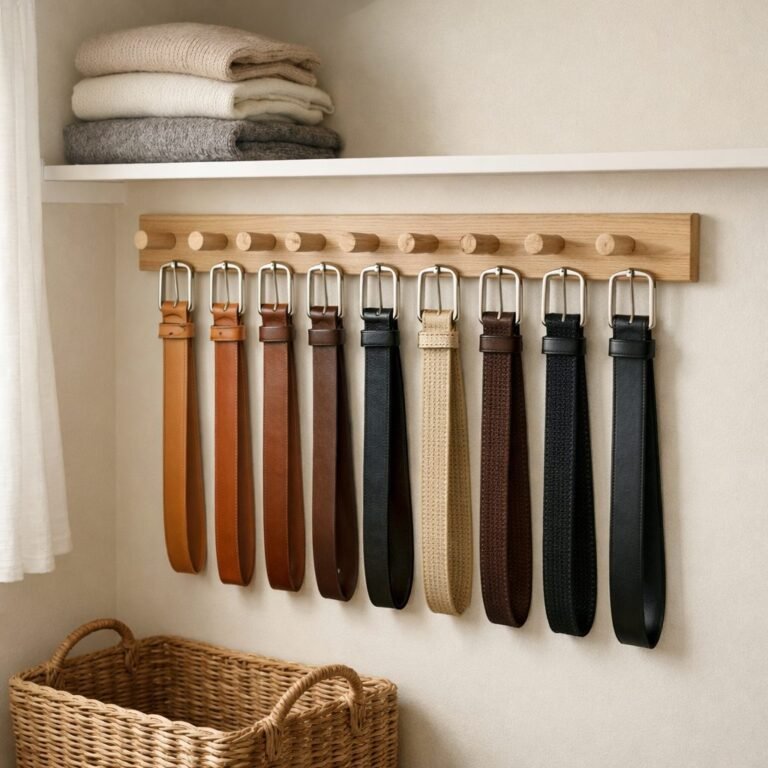
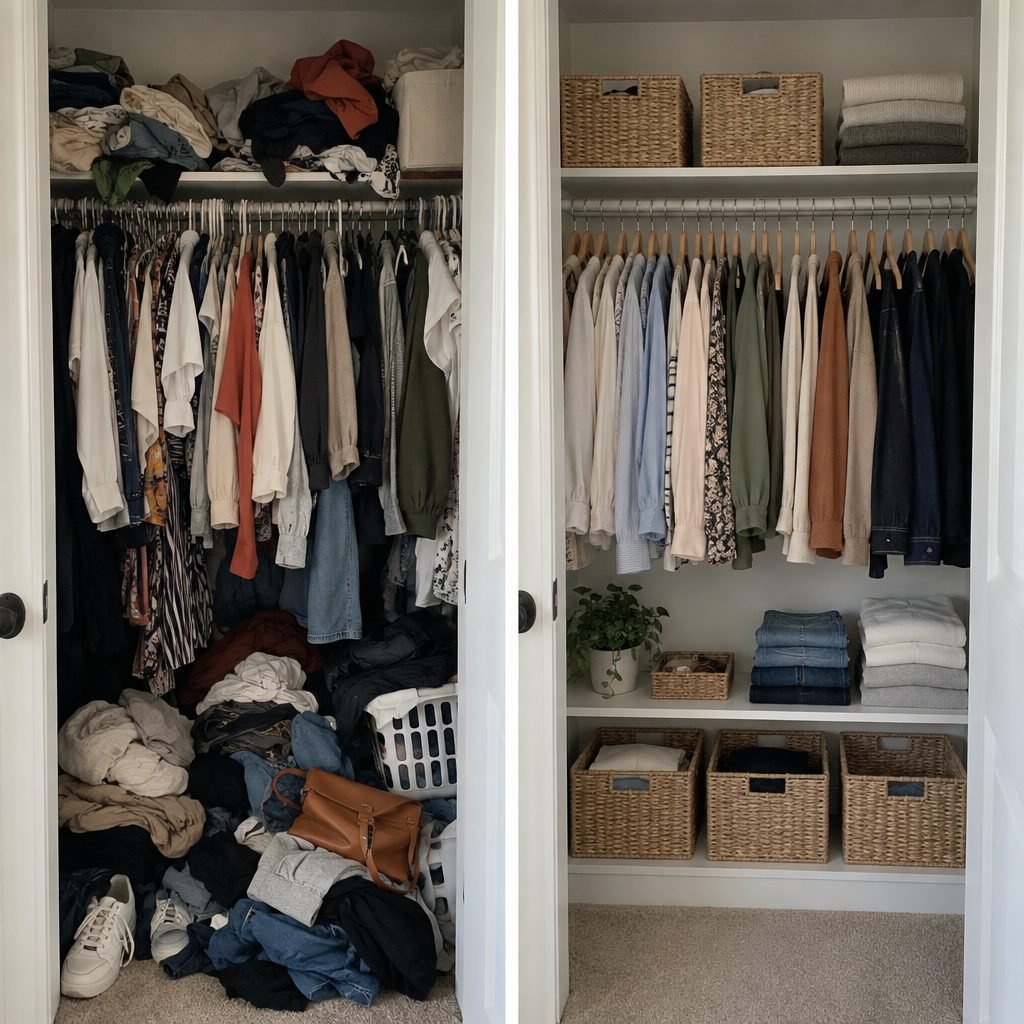
A full closet with nothing to wear is one of the most common home frustrations. The problem usually isn’t a lack of space. It’s that the clothes you love are squeezed between things that don’t fit, don’t suit you anymore or haven’t been worn in years.
A proper closet clean out fixes that in a single afternoon. This guide gives you a simple decision tree for every item, an 8-step method, and a plan for what to do with everything that doesn’t stay.
Key Takeaways
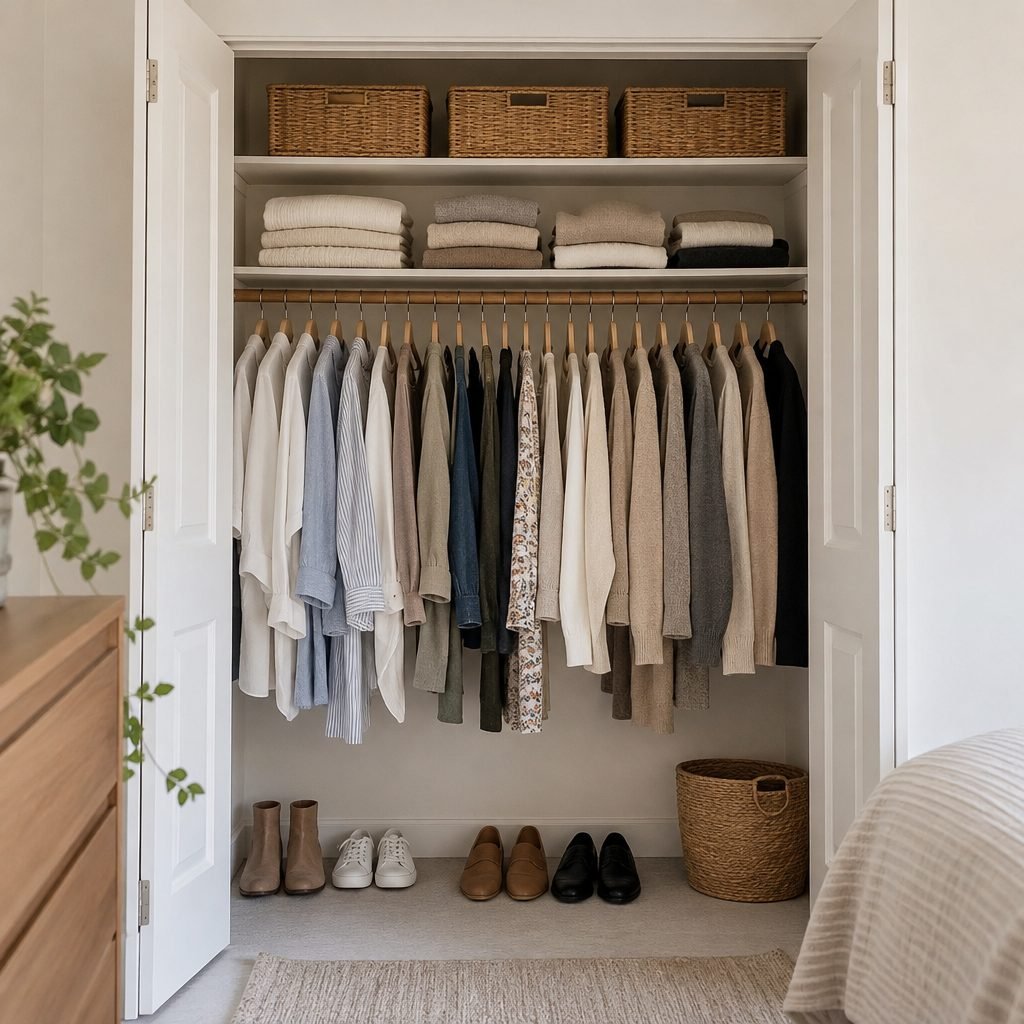
- Quick answer: To do a closet clean out, empty the closet and decide on each piece: keep, donate, sell or toss. Use the reverse hanger trick for maybes, put keepers back by category, and get donations out of the house the same day.
- Wipe the empty shelves and rod before anything goes back, then return keepers by type and color.
- The reverse hanger trick shows what you actually wear.
- Use the reverse hanger trick for maybes and give each one a 90-day deadline.
Time: 2–4 hours · Cost: $0 · Difficulty: Easy
Before You Start: What You Need
- Two to four hours. Block the time. A clean out that stops halfway leaves your bedroom worse than before.
- Four baskets, boxes or bags labeled Keep, Donate, Sell and Toss.
- A full-length mirror for anything you need to try on.
- Trash bags and a damp cloth to wipe the shelves and rod once the closet is empty.
The Keep, Donate, Sell or Toss Test
The hardest part of a closet clean out is deciding. Instead of agonizing over each piece, run it through the same few questions every time:
The “keep for 90 days” option is for the items you genuinely can’t decide on. It gives you a real deadline instead of a permanent maybe pile.
How to Clean Out Your Closet in 8 Steps
1. Set up four sorting spots
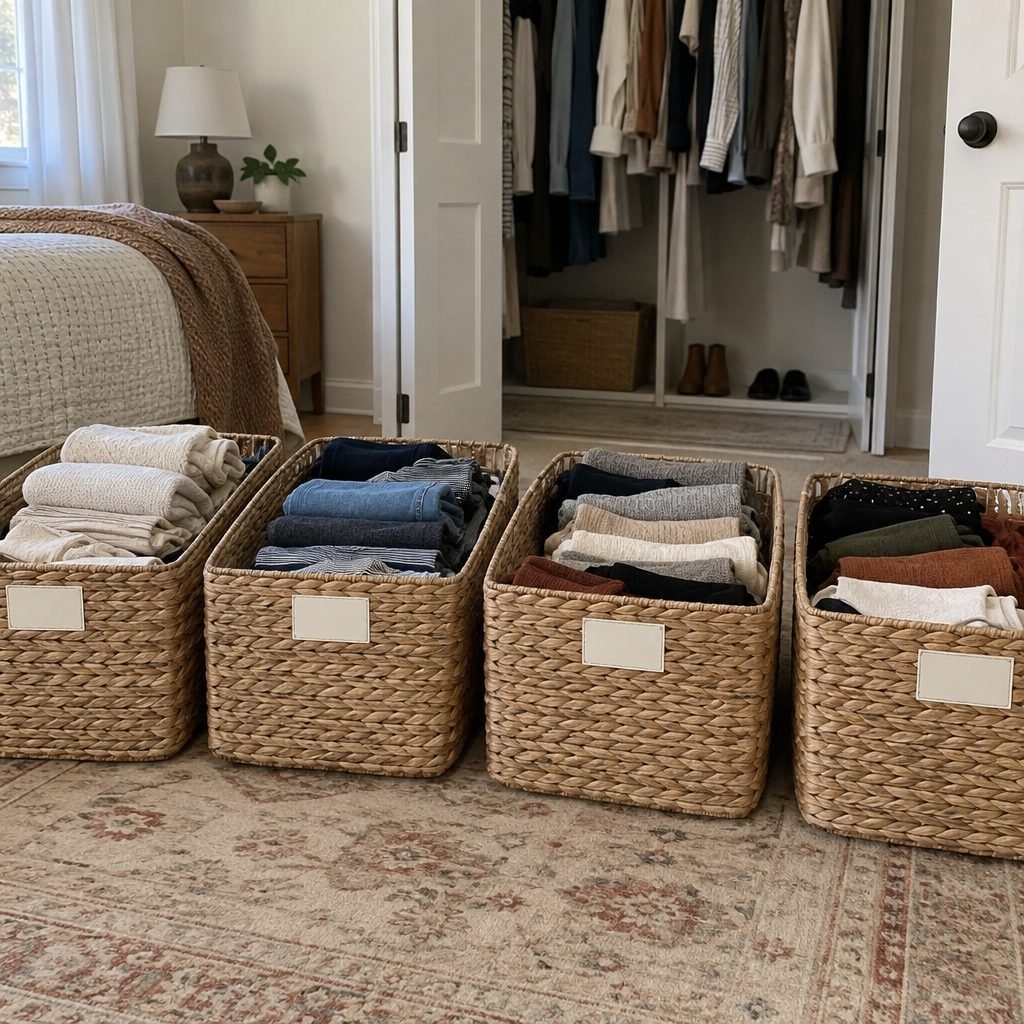
Put your four baskets or bags somewhere you can reach them easily, like the bed or the floor in front of the closet. Label them, even with a sticky note, so nothing ends up in the wrong pile.
2. Empty the closet
Take everything out. Seeing all of your clothes in one place is what makes you realize how many black T-shirts you really own. If you’re short on time, work one section at a time: hanging clothes first, then shelves, then shoes.
3. Clean the empty space
Wipe the shelves, dust the rod and vacuum the floor. It takes ten minutes and it’s the only time the closet will be completely empty.
4. Sort every item with the decision tree
Pick up one piece at a time and follow the questions above. Try on anything you’re unsure about. Trust your first instinct and don’t spend more than a few seconds on each decision.
5. Use the reverse hanger trick for the maybes

Hang every maybe item back with the hanger facing the opposite direction. When you wear something, turn its hanger the normal way. After 90 days, anything still hanging backwards goes to the donate pile.
6. Put the keepers back by category

Group clothes by type (tops, pants, dresses, jackets), then by color within each group. Fold heavy knits and jeans on shelves so they don’t stretch on hangers, and use shelf dividers to keep stacks from toppling. Our guide on how to fold clothes to save space helps the stacks fit.
7. Bag donations and take them out the same day

Pack donations right away and put them in your car or by the door. Donation bags that sit in the closet for weeks have a way of getting unpacked again.
8. Recycle what can’t be worn
Stained, torn or worn-out clothes usually shouldn’t go in donation bags unless the charity says it accepts textiles for recycling, but they don’t have to go in the trash either. According to the U.S. EPA, landfills received 11.3 million tons of textiles in 2018, and only about 14.7 percent of textiles were recycled. Look for a textile recycling drop-off or a retailer take-back program in your area.
Questions to Ask When You Can’t Decide
- Am I keeping it only because it was expensive? The money is already spent. Keeping it doesn’t get it back.
- Do I have several of the same thing? Keep your favorites and let the rest go.
- Does it need a repair I keep putting off? Book the repair this week or let it go.
- Am I saving it for an occasion I have no plans for? One special outfit is enough.
- Would I be happy to wear it tomorrow? If the honest answer is no, it’s not a keeper.
Where to Take What You Don’t Keep
- Donate: local charity shops, shelters and community clothing drives. Check what each accepts before you go, since many won’t take stained or damaged items.
- Sell: consignment shops and resale apps work best for good brands, outerwear and items in excellent condition. Set a deadline, and donate anything that hasn’t sold by then.
- Recycle: many textile recycling bins and some store take-back programs accept clothes that are too worn to donate. Check the rules first.
How to Keep Your Closet From Filling Up Again
- One in, one out. Every new piece replaces an old one.
- Keep a donation bag in the closet. When something doesn’t fit or you stop liking it, it goes straight in the bag.
- Do a mini clean out each season. When you switch from summer to winter clothes, run everything through the decision tree again.
- Use a set number of matching hangers. A fixed number of hangers sets a natural limit on how much you can keep.
The same sort-first approach works in every room, from the bathroom to the pantry: decide what stays before you buy any organizers.
Common Closet Clean Out Mistakes
- Buying organizers first. You don’t know what you need until you know what you’re keeping.
- Keeping a giant maybe pile. Maybes need a deadline, which is what the reverse hanger trick gives you.
- Doing it when you’re rushed. Rushed decisions lead to regret, or to a half-finished mess on the bed.
- Letting donations sit. Take them out the same day, while you still feel good about the decision.
Closet Clean Out FAQ
How often should you clean out your closet?
Do a full clean out once or twice a year, and a quick check each time the season changes. Keeping a donation bag in the closet makes the full clean outs much faster.
How long does a closet clean out take?
For an average reach-in closet, plan for two to four hours. A large walk-in closet or a closet that hasn’t been sorted in years can take longer, so split it into sections over a weekend.
What should I get rid of first?
Start with the easy wins: anything stained, torn, uncomfortable or that no longer fits. Clearing those first gives you space and momentum for the harder decisions.
What is the reverse hanger trick?
Hang your clothes (or just the maybes) with the hangers facing backwards. When you wear something, turn its hanger the right way. After a set time, often 90 days or a season, anything still backwards is a good candidate to donate.
Once the clean out is done, give what’s left a smart home. If you have a reach-in, see our small closet organization ideas. If you have a small walk-in, our small walk-in closet ideas show which layout fits your space and how to use every wall.
Ready to keep going after the closet? Our guide on how to declutter your home uses the same keep-or-let-go approach for every room, from the entryway to the kitchen.
Cleaning out your closet before a move? Use our moving box calculator to see how many wardrobe boxes and other moving boxes you need for what is left.
Final Thoughts
A closet clean out isn’t about owning as little as possible. It’s about keeping only the clothes you actually wear, so getting dressed takes seconds instead of minutes.
Set aside one afternoon, use the decision tree for every item, and get the donation bags out of the house the same day. Save this guide to Pinterest for your next seasonal clean out.
How this guide was made: researched and written with the help of AI tools, fact-checked against trusted sources and published by Mohamed Elber. Images are AI-generated illustrations. See our Editorial Policy.