A messy fridge costs more than space. Food gets pushed to the back and forgotten, leftovers go bad before anyone eats them, and you buy another jar of mustard because you couldn’t see the first one.
Good fridge organization fixes all three. This guide starts with a simple zone map that shows where each food belongs, then walks you through a 6-step reset and 15 ideas to keep your fridge organized, easy to use and food-safe.
Key Takeaways
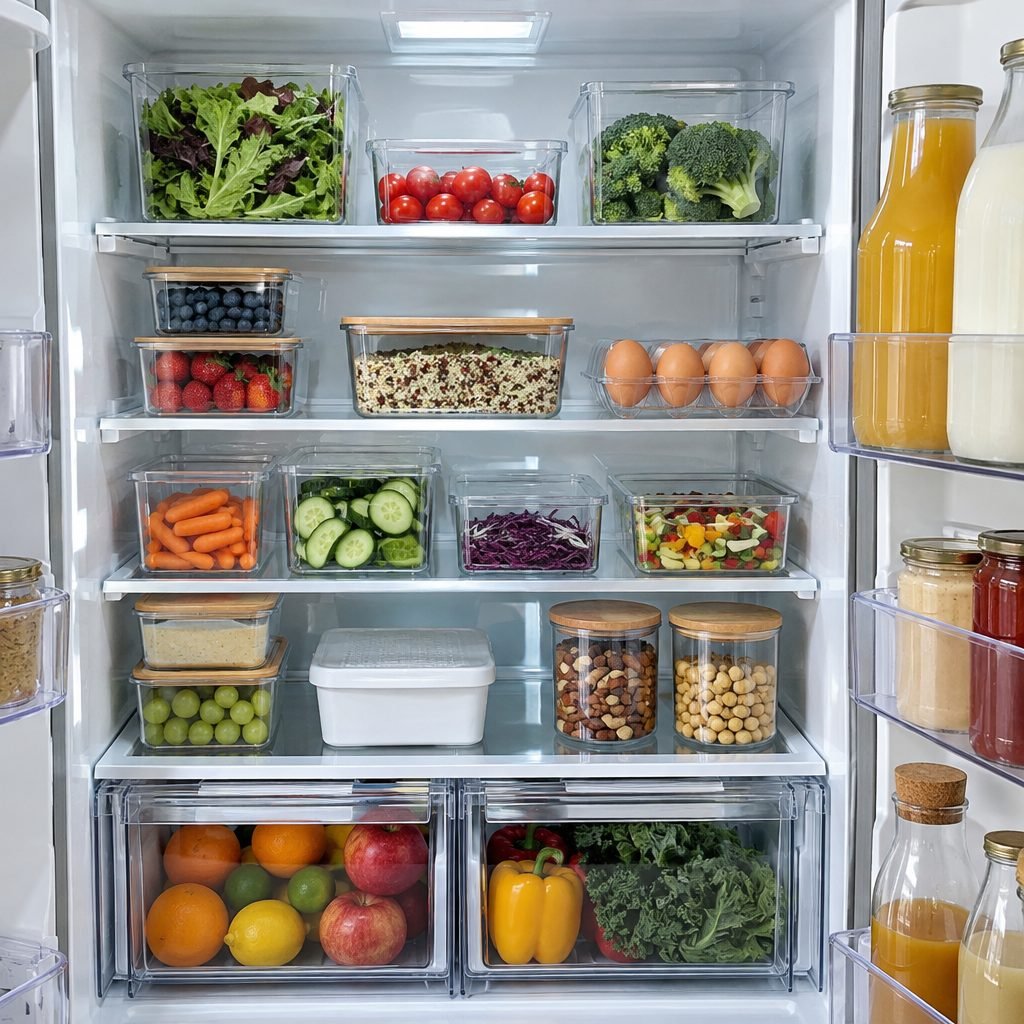
- Quick answer: For good fridge organization, store food by zone: ready-to-eat food on the top shelf, dairy and eggs in the middle, raw meat sealed on the bottom shelf, produce in separate crisper drawers and condiments in the door. Keep it at or below 40°F (4°C).
- Every part of the fridge has a job: store food by zone, not by where it fits.
- Eat or freeze leftovers within 3 to 4 days, and check the fridge with an appliance thermometer.
- Clear bins and an “eat first” bin cut down on forgotten leftovers.
Time: 1 hour · Cost: $0–50 · Difficulty: Easy
The Fridge Zone Map: Where Everything Goes
Every fridge has zones. Some are colder, some are warmer, and some should never hold certain foods. Once you know them, organizing your fridge is mostly about putting things back in the right zone.
- Top shelf: ready-to-eat food like leftovers, drinks, herbs and an eat-first bin.
- Middle shelves: dairy, deli items and eggs in their original carton.
- Bottom shelf: raw meat, poultry and seafood, sealed and in a tray, so nothing can drip onto food below or beside it.
- Crisper drawers: vegetables in one drawer and fruit in the other.
- Door: condiments, sauces, butter and juice. It’s the warmest part of the fridge, so it’s not the place for eggs.
Temperature matters as much as placement. The U.S. Food and Drug Administration recommends keeping the refrigerator at or below 40°F (4°C) and the freezer at 0°F (-18°C), and notes that an inexpensive appliance thermometer is the best way to check.
How to Organize Your Fridge in 6 Steps
- Empty it and check the temperature. Take everything out, put a cooler bag nearby for perishables, and place an appliance thermometer inside to confirm the fridge holds 40°F (4°C) or below.
- Toss what’s past its prime. Check dates, throw out leftovers older than 3 to 4 days and anything spoiled, moldy or forgotten.
- Clean the shelves and drawers. Pull out removable shelves and drawers, wash them with warm soapy water and dry them before they go back.
- Sort by zone. Group everything on the counter: ready-to-eat, dairy and deli, raw meat, vegetables, fruit, condiments.
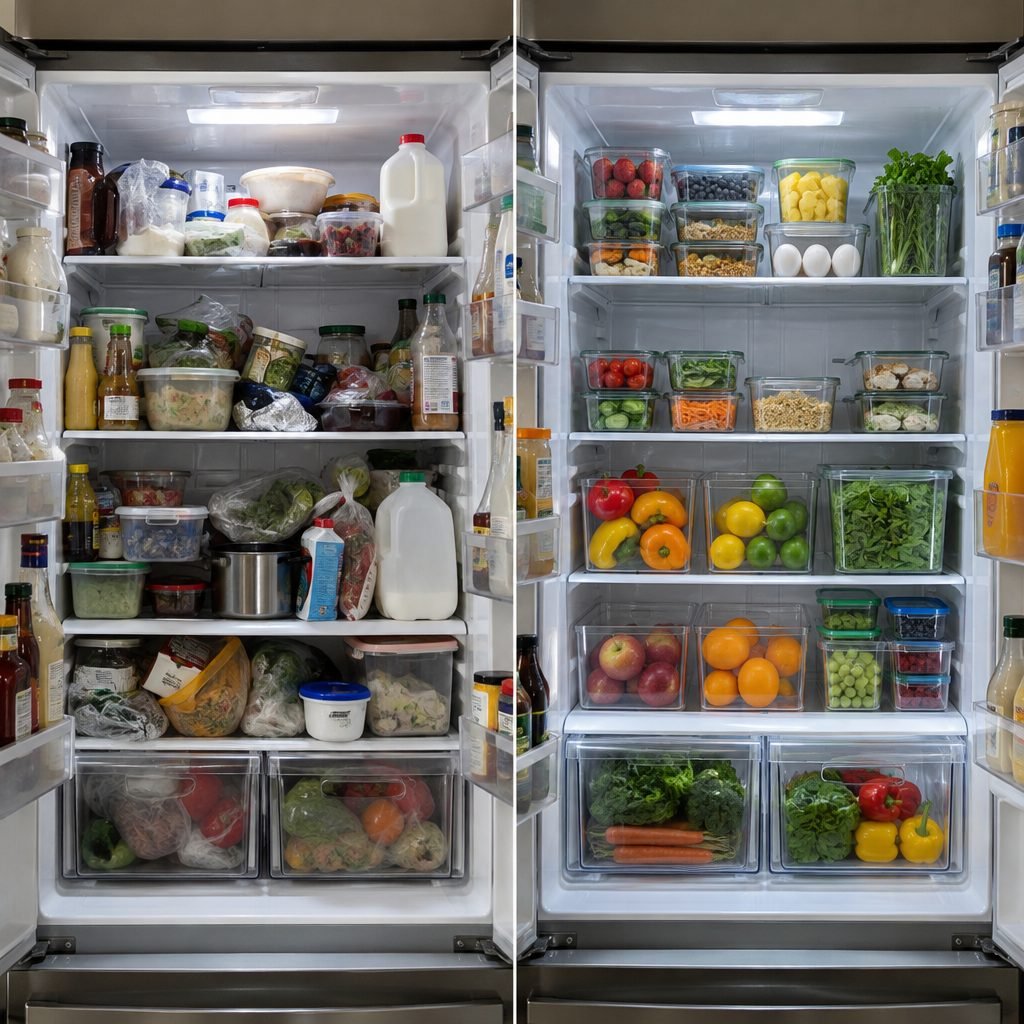
- Contain each group. Clear bins keep categories together and make cleaning easier, because you wipe one bin instead of a whole shelf.
- Label the bins and add an eat-first bin. Labels help everyone put things back. An eat-first bin keeps leftovers and opened food in plain sight.
15 Fridge Organization Ideas
Bins and Containers
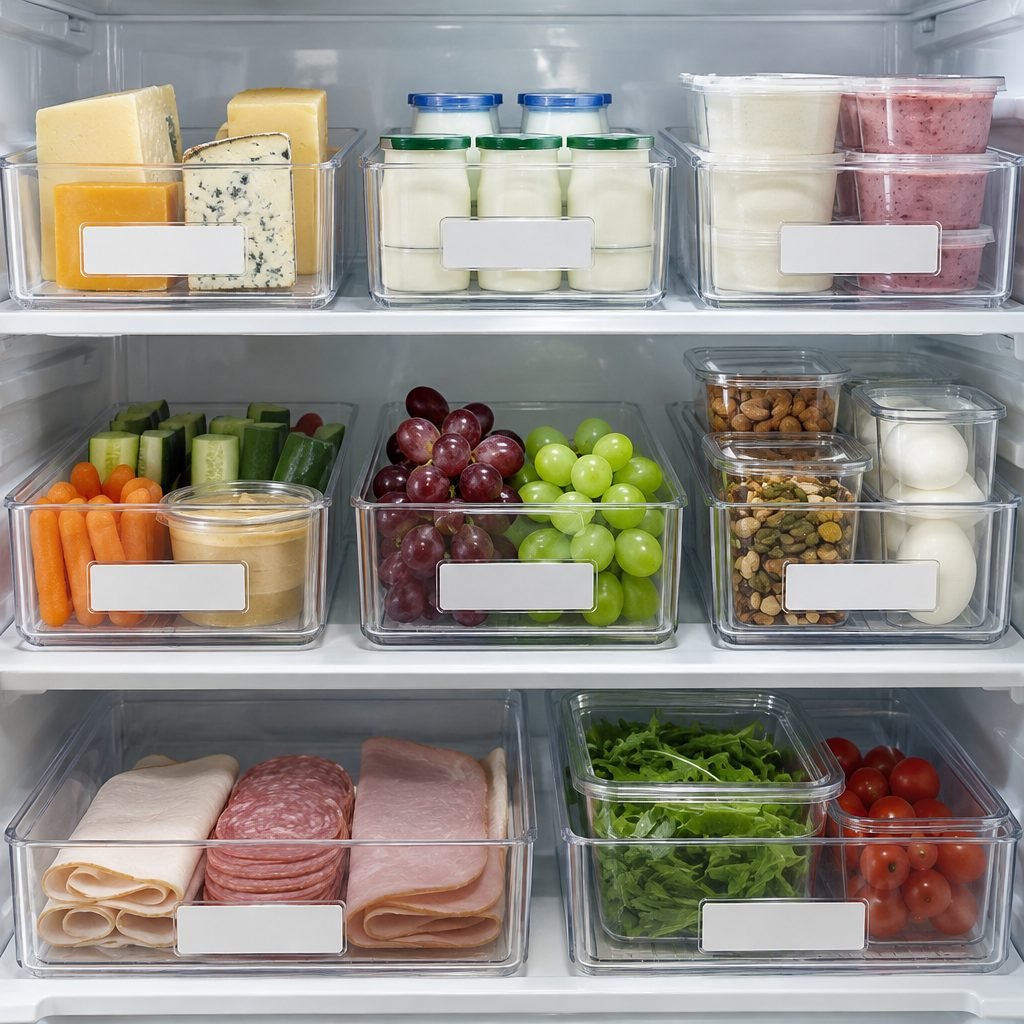
1. Use clear bins for categories. Cheese, yogurt, snacks and deli meat each get their own bin. Pull out the bin, grab what you need and put it back. Items are less likely to get lost behind taller ones.
2. Store leftovers in shallow, clear containers. FoodSafety.gov recommends shallow containers for leftovers so they cool quickly. Clear or glass containers also let you see what’s inside without opening every lid.
3. Keep eggs in their original carton. FoodSafety.gov advises keeping eggs in their carton in the main compartment, not in the door. The carton also protects them and shows the date.
4. Stack only what you can see. Stackable containers save space, but keep stacks to about two high so the bottom container stays visible.
Raw Meat and Food Safety
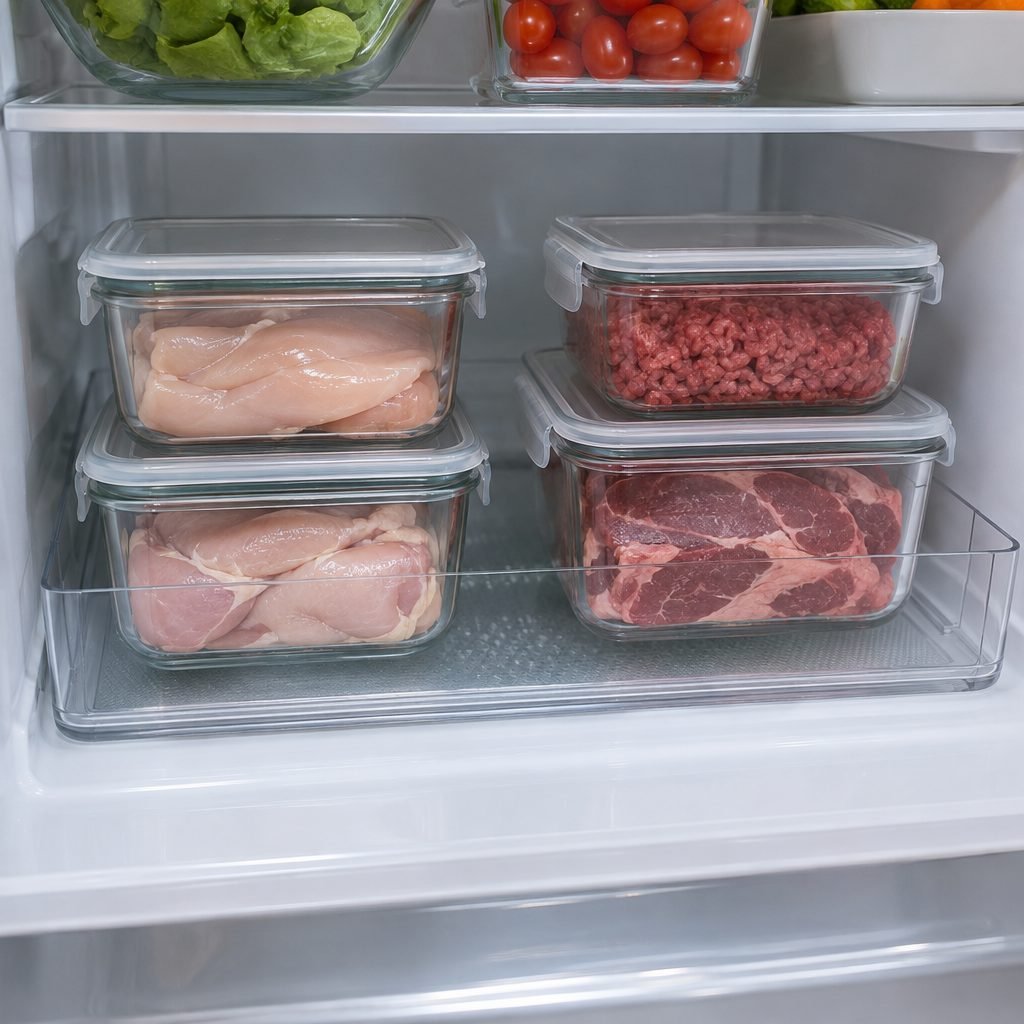
5. Keep raw meat on the bottom shelf. The University of Illinois Extension recommends storing raw meat, poultry and seafood on the bottom shelf so juices can’t drip onto other foods. Keep it in sealed containers or leakproof bags, and add a tray underneath as a backup.
6. Keep a thermometer in the fridge. Built-in dials don’t always tell you the actual temperature. A small appliance thermometer on a middle shelf shows you at a glance whether your fridge is cold enough.
7. Don’t overpack the shelves. The FDA advises not crowding the fridge so tightly that air can’t circulate. Cold air needs space to move, or some areas stay warmer than others.
The Door and the Drawers
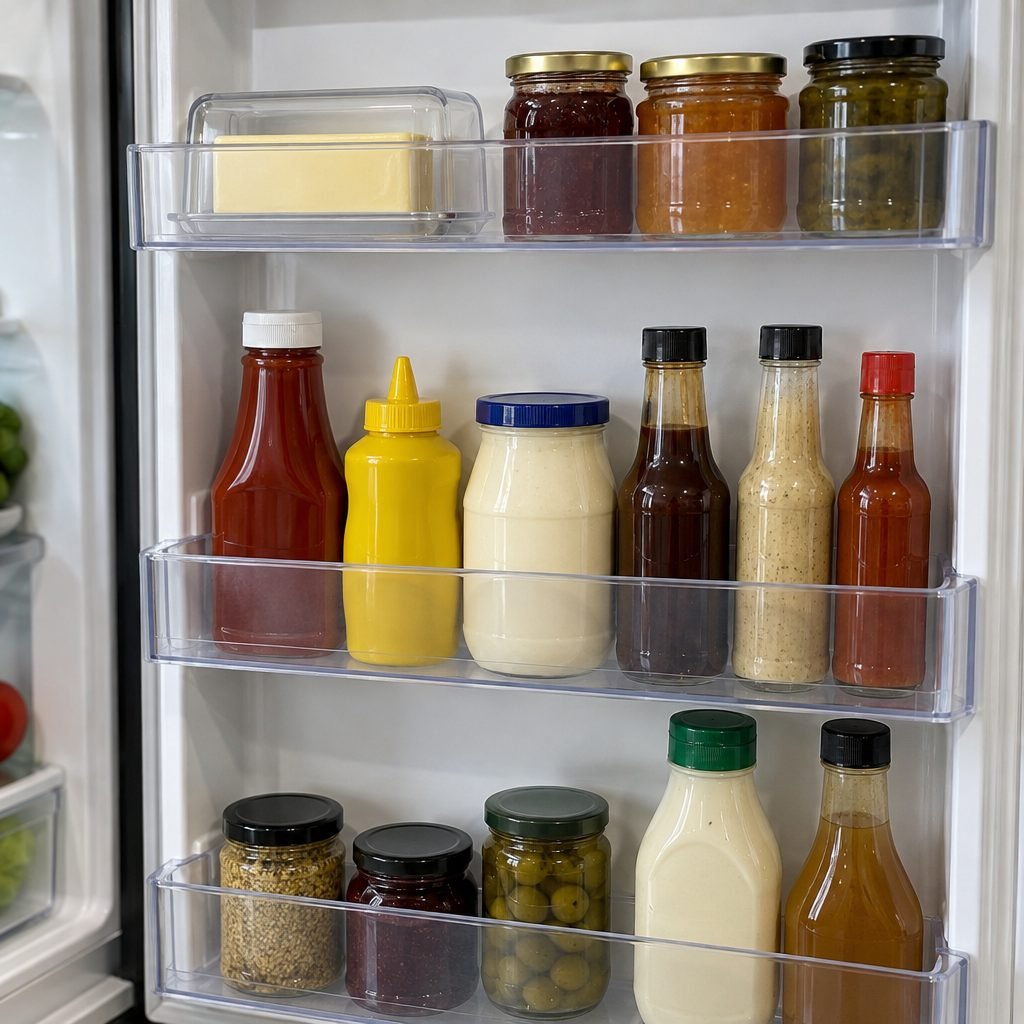
8. Save the door for condiments. The door gets the most temperature changes every time it opens, so use it for sturdy items like condiments, sauces, dressings, butter and juice.
9. Group door items by use. Put breakfast items like jam and butter together, and cooking sauces on another shelf. You’ll grab what you need without scanning every bottle.
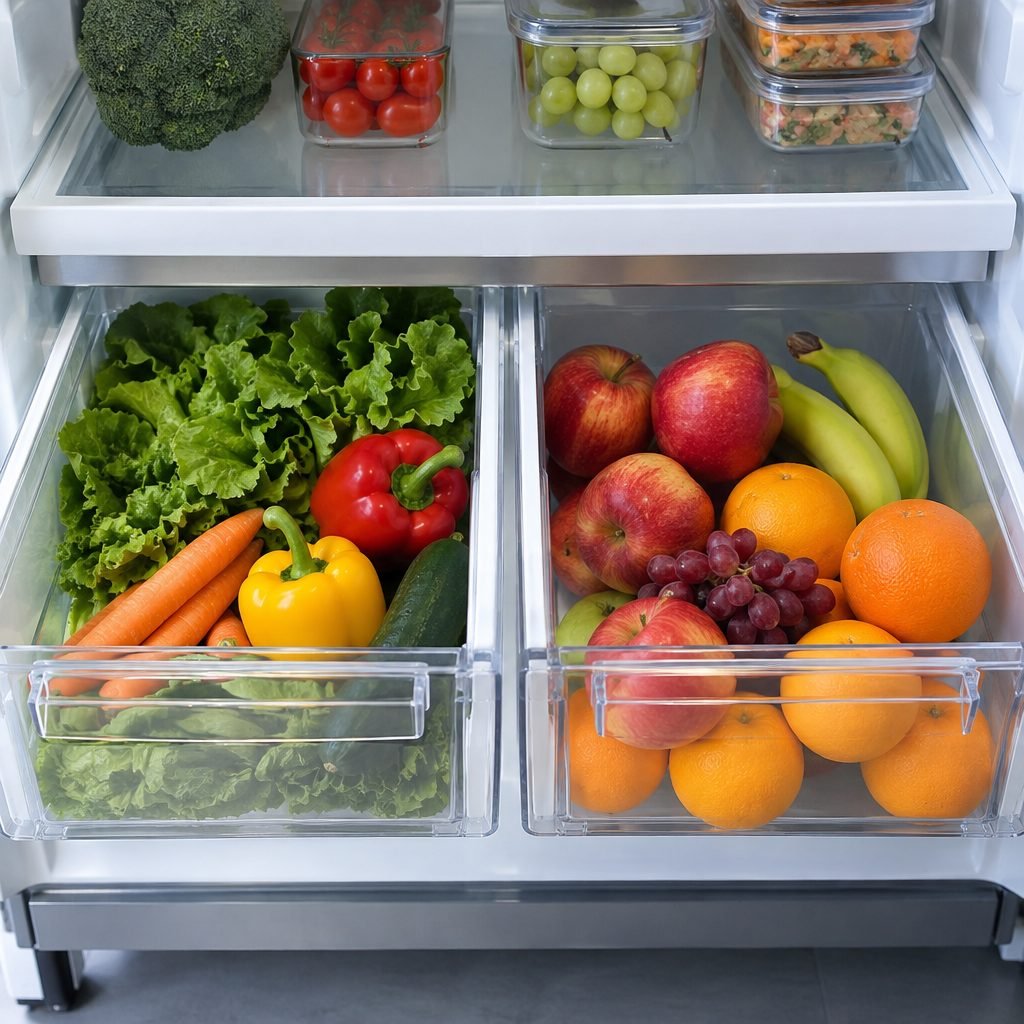
10. Separate fruit and vegetables. Give fruit and vegetables their own drawers. Many fruits, like apples, give off ethylene gas, which can make some vegetables spoil faster.
11. Use the humidity settings. If your crisper drawers have a slider, a common rule is to set the vegetable drawer to higher humidity for leafy greens and the fruit drawer to lower humidity.
Habits That Keep It Organized
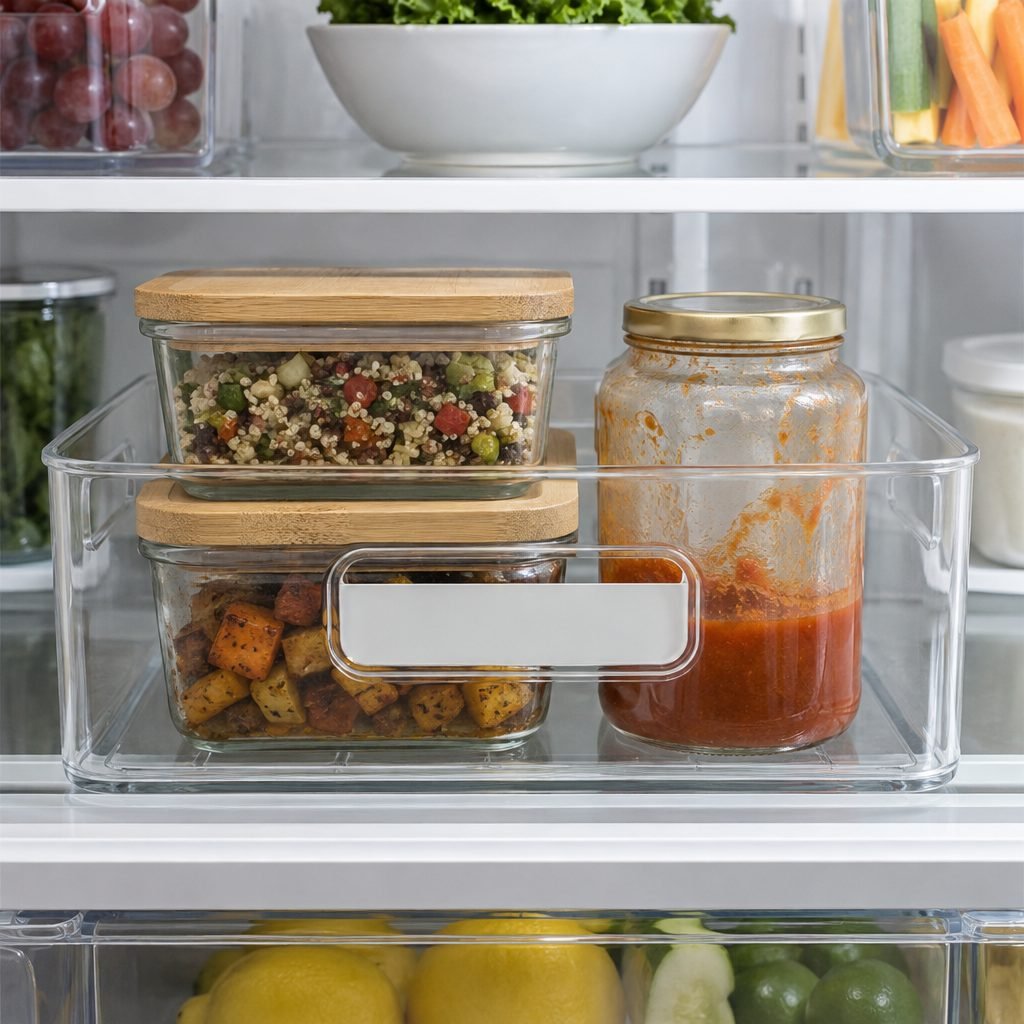
12. Add an eat-first bin. One clear bin at eye level holds leftovers, half-used jars and anything that needs to be eaten soon. Check it before you cook or order takeout.
13. Put new groceries behind old ones. When you unpack, move older items to the front and put new ones behind them. It’s the same first in, first out rule we use in our pantry organization guide.
14. Use a turntable in the back corners. Deep fridge shelves have the same problem as deep pantry shelves: the back disappears. A small turntable brings jars and sauces from the corner to the front with one spin, a trick that works in our kitchen storage ideas too.
15. Label shelves as well as bins. A small label on the shelf edge, like “dairy” or “raw meat only”, tells everyone in the house where things go back.
The 10-Minute Weekly Fridge Reset
Do this the day before you shop, so there’s room for new groceries and nothing gets forgotten:
- Minutes 1–3: check the eat-first bin and toss anything that’s gone bad.
- Minutes 4–6: move older items to the front and put things back in their zones.
- Minutes 7–8: wipe any spills, especially on the bottom shelf.
- Minutes 9–10: check the thermometer and write your shopping list from the empty spots.
Common Fridge Organization Mistakes
- Storing raw meat above ready-to-eat food. Even a sealed package can leak. Raw meat always goes on the lowest shelf.
- Keeping eggs in the door. The door is the warmest part of the fridge. Use it for condiments instead.
- Packing every shelf full. A crowded fridge doesn’t cool evenly, and you can’t see what you have.
- Buying bins before measuring. Measure shelf depth and height first, so bins fit and drawers still close.
Fridge Organization FAQ
What is the correct way to organize a fridge?
Store ready-to-eat food on the top shelf, dairy and eggs on the middle shelves, raw meat, poultry and seafood on the bottom shelf, fruit and vegetables in separate crisper drawers, and condiments in the door.
Where should raw meat go in the fridge?
On the bottom shelf, in sealed containers or leakproof bags, ideally with a tray underneath. That way juices can’t drip onto food that won’t be cooked.
Should eggs go in the fridge door?
No. FoodSafety.gov recommends keeping eggs in their original carton in the main compartment, not in the door. The door is also the warmest part of the fridge, and its temperature changes every time it opens.
What temperature should a fridge be?
At or below 40°F (4°C), with the freezer at 0°F (-18°C), according to the FDA. An appliance thermometer is the easiest way to check.
Final Thoughts
An organized fridge comes down to zones: ready-to-eat food up top, raw meat at the bottom, produce in the drawers and condiments in the door. Add a few clear bins, keep an eat-first bin at eye level, and spend ten minutes a week putting things back.
Once your fridge is done, keep going with the rest of the kitchen. Our guide on how to organize kitchen cabinets is a good next step.
How this guide was made: researched and written with the help of AI tools, fact-checked against trusted sources and published by Mohamed Elber. Images are AI-generated illustrations. See our Editorial Policy.