Coat closet organization matters more than it seems, because this is the closet everyone uses every single day. When it’s overstuffed, coats slide off hangers, shoes pile up on the floor and the door won’t close. A few simple changes make it easy to grab what you need on the way out and put it back when you come home.
This guide covers a simple zone map, how many coats to keep, a 6-step method for organizing a coat closet, and 16 ideas for shelves, doors, floors, small closets and off-season storage.
Key Takeaways
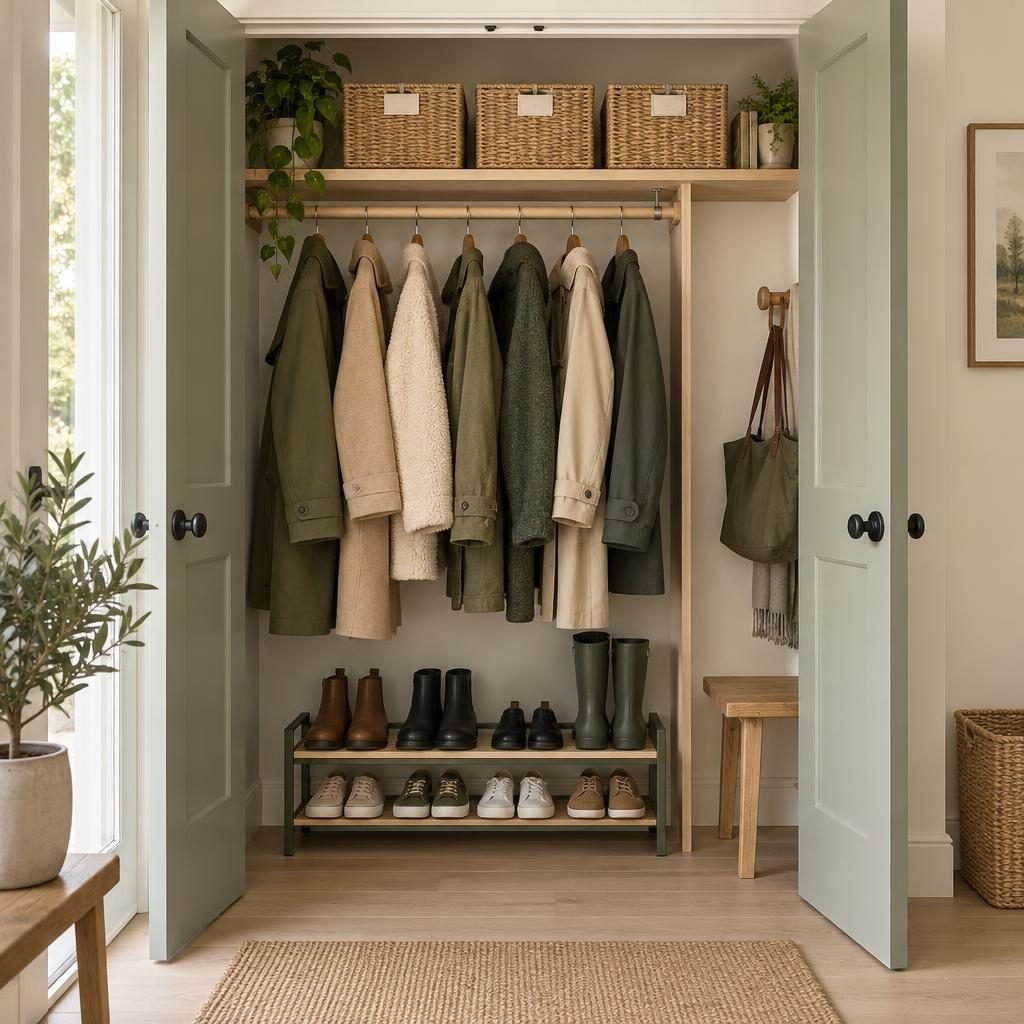
- Quick answer: For coat closet organization, keep only in-season coats on the rod, one or two per person, and give each zone one job: baskets on the top shelf, shoes on the floor and small items on the door. Clean off-season coats before storing them.
- Keep only in-season coats on the rod, one or two per person, and store the rest.
- Give each zone one job: baskets up top, coats in the middle, shoes on the floor, small items on the door.
- Clean coats before storing them for the season and use breathable garment bags.
Time: 1–2 hours · Cost: $30–120 · Difficulty: Easy
Start With a Coat Closet Zone Map
Every part of a coat closet can do one job. When each zone has a clear purpose, it’s obvious where things go back, even for kids and guests.
Off-season coats need a little care before they go into storage. According to New Mexico State University Extension, cleaning clothes before storing them removes food stains and body oils that attract clothes moths and carpet beetles, and textiles should be kept in tight-fitting containers or carefully sealed boxes. The same guide notes that cedar loses its protective oils after a few years, so it’s a helper, not a guarantee.
Quick Pick: Coat Closet Organization Ideas by Problem
| Your problem | Start with these ideas |
|---|---|
| Too many coats | Seasonal edit (#1), one-in-one-out (#2), off-season storage (#15) |
| Hats and gloves everywhere | Baskets per person (#4), shelf dividers (#5) |
| Bags and umbrellas on the floor | Door organizer (#7), hooks on the side walls (#8) |
| Shoe pile | Shoe rack (#9), boot tray (#10), shoe limit (#11) |
| Small or shallow closet | Slim hangers (#12), side wall hooks (#13), front-facing hooks (#14) |
| Guests have nowhere to hang coats | Leave guest space (#3) |
How to Organize a Coat Closet in 6 Steps
- Empty it completely. Take out every coat, bag, shoe and basket so you can see what you really have.
- Sort by season and person. Make piles for in-season coats, off-season coats and things that belong somewhere else.
- Edit. Donate coats nobody has worn in a year and anything that no longer fits. Our closet clean out guide walks through keep, donate or toss decisions.
- Store off-season coats. Clean them first, then move them to garment bags in another closet or a bin.
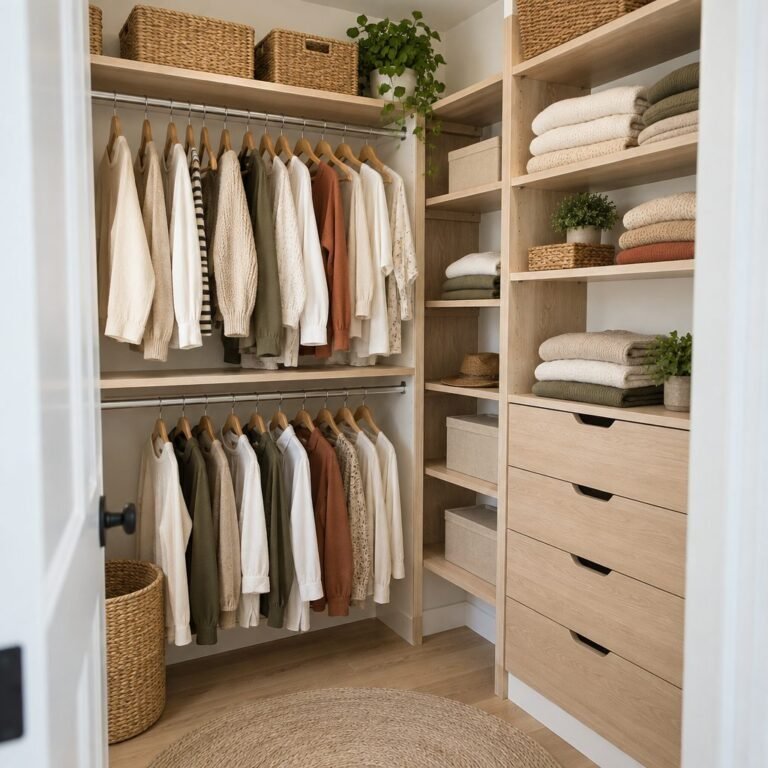
- Set up the zones. Baskets on the shelf, coats on the rod, shoes on the floor and small items on the door.
- Hang coats the same way. Matching hangers, all facing one direction, with a little space between them.
16 Coat Closet Organization Ideas
These coat closet organization ideas are grouped by zone, so you can start with the part that bothers you most.
The Hanging Rod
1. Do a seasonal edit
Only in-season coats belong on the rod. In spring, winter parkas move out; in fall, they come back. This one habit frees up more space than any organizer.
2. Use one-in, one-out
When someone gets a new coat, an old one goes. It keeps the closet from slowly filling up again.
3. Leave room for guests
Keep a few empty hangers at one end of the rod. Guests will have a place to hang their coats, and your own coats won’t get crushed.
The Top Shelf
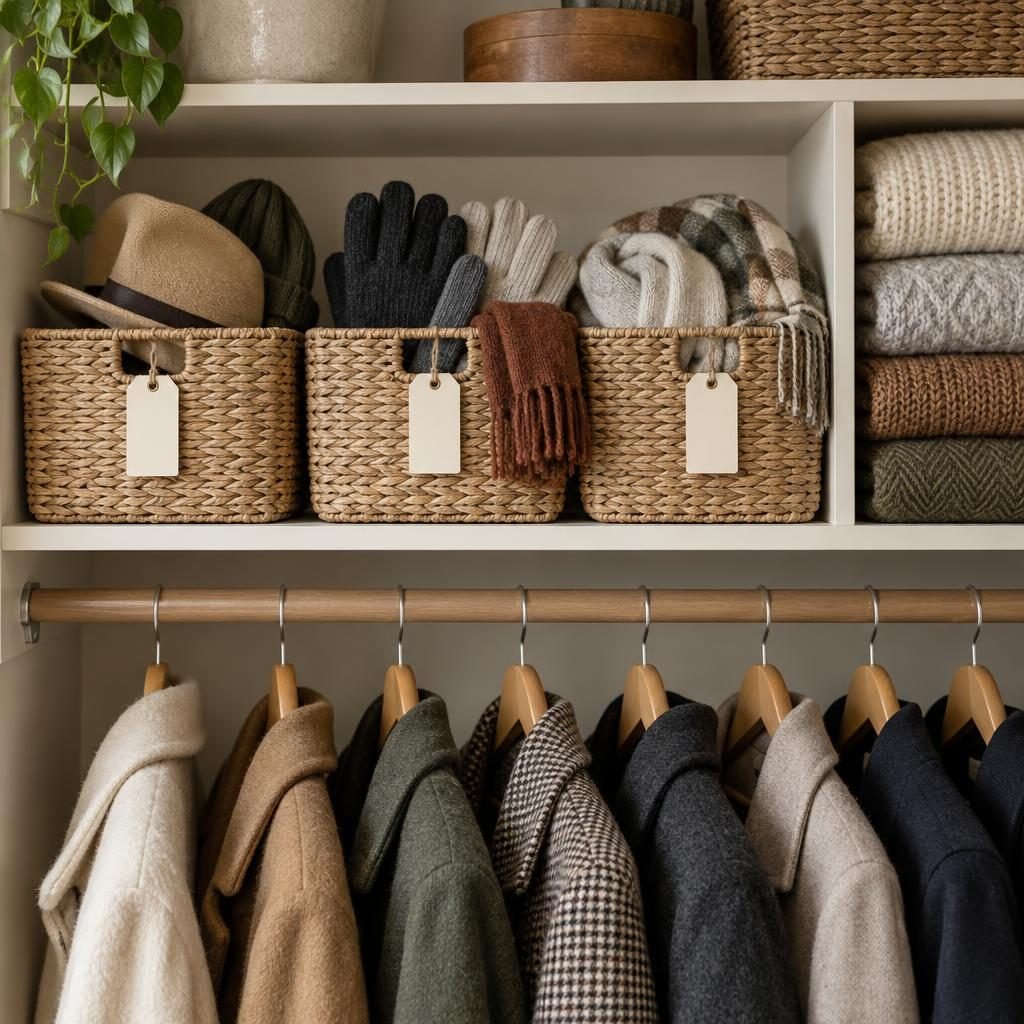
4. Give each person a basket
One basket per person for hats, gloves and scarves stops the tangle of mismatched mittens. Add a tag label with each name so everyone knows which basket is theirs.
5. Add shelf dividers
Dividers keep folded throws, knit hats or reusable bags in neat stacks instead of sliding into one pile.
6. Use the space above the shelf
If there’s room above the shelf, add a second shelf or a stacking bin for rarely used items like ski gear or spare umbrellas.
The Door and Walls
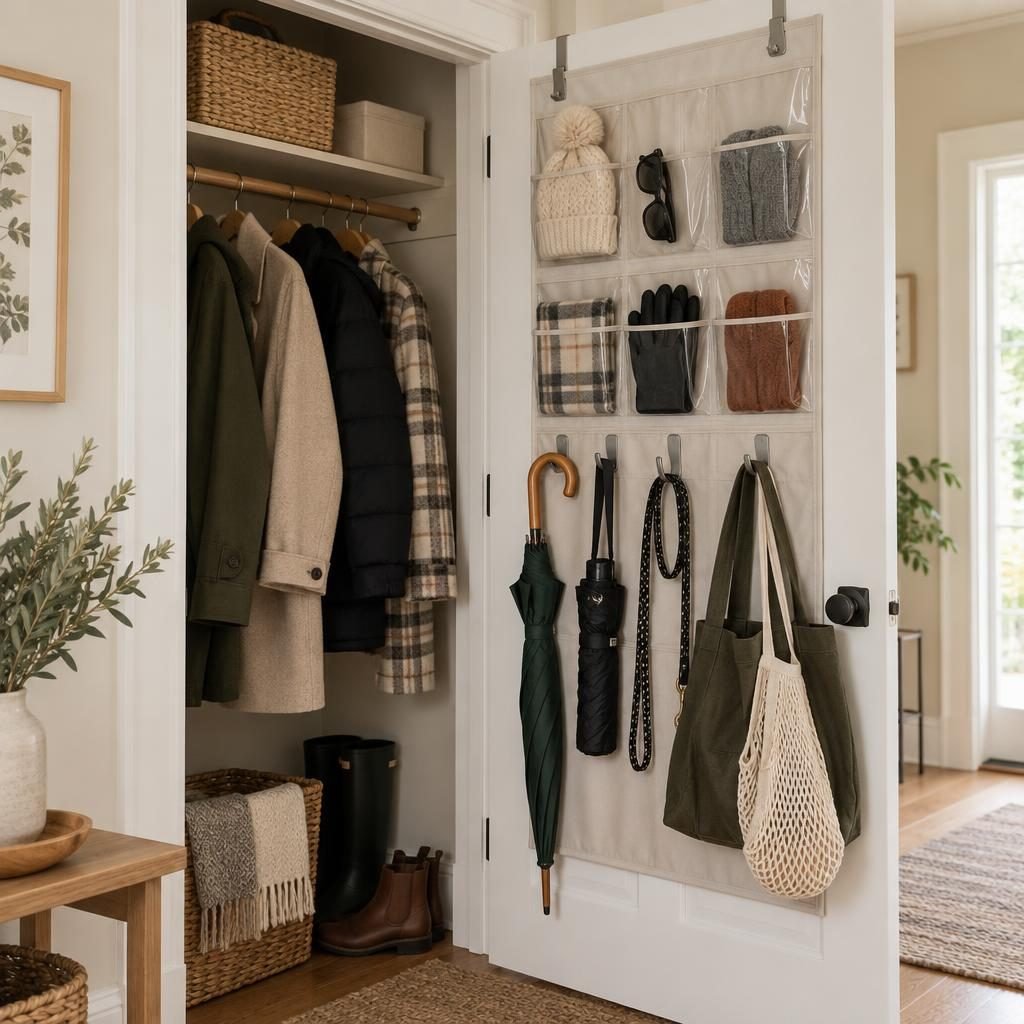
7. Hang an over-the-door organizer
A pocket organizer on the back of the door holds sunglasses, gloves, dog bags and keys. Choose clear pockets so you can see what’s inside, and check that the door still closes.
8. Add hooks to the side walls
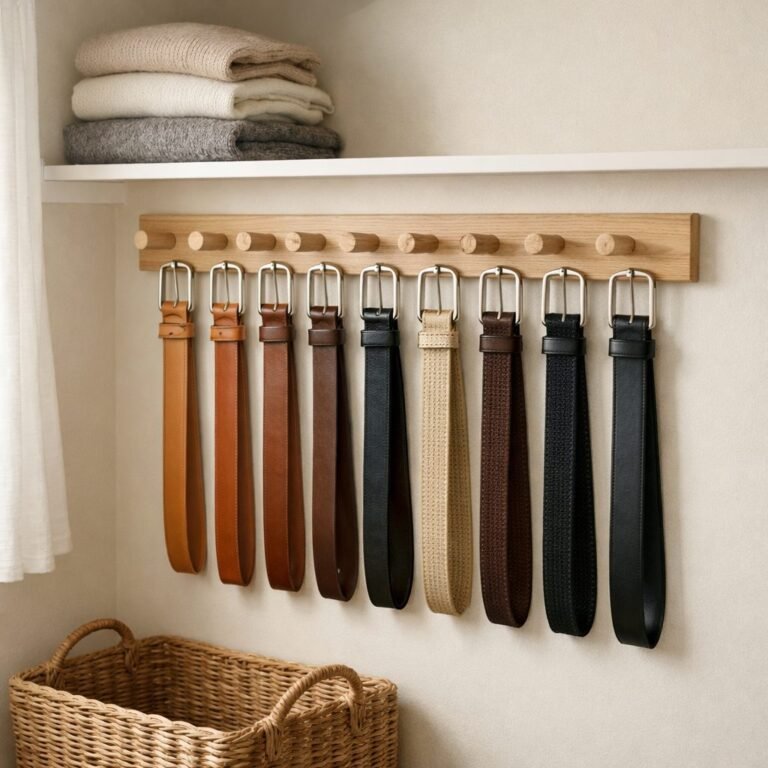
The narrow side walls of a coat closet are usually empty. A few hooks there hold tote bags, backpacks and dog leashes.
The Closet Floor
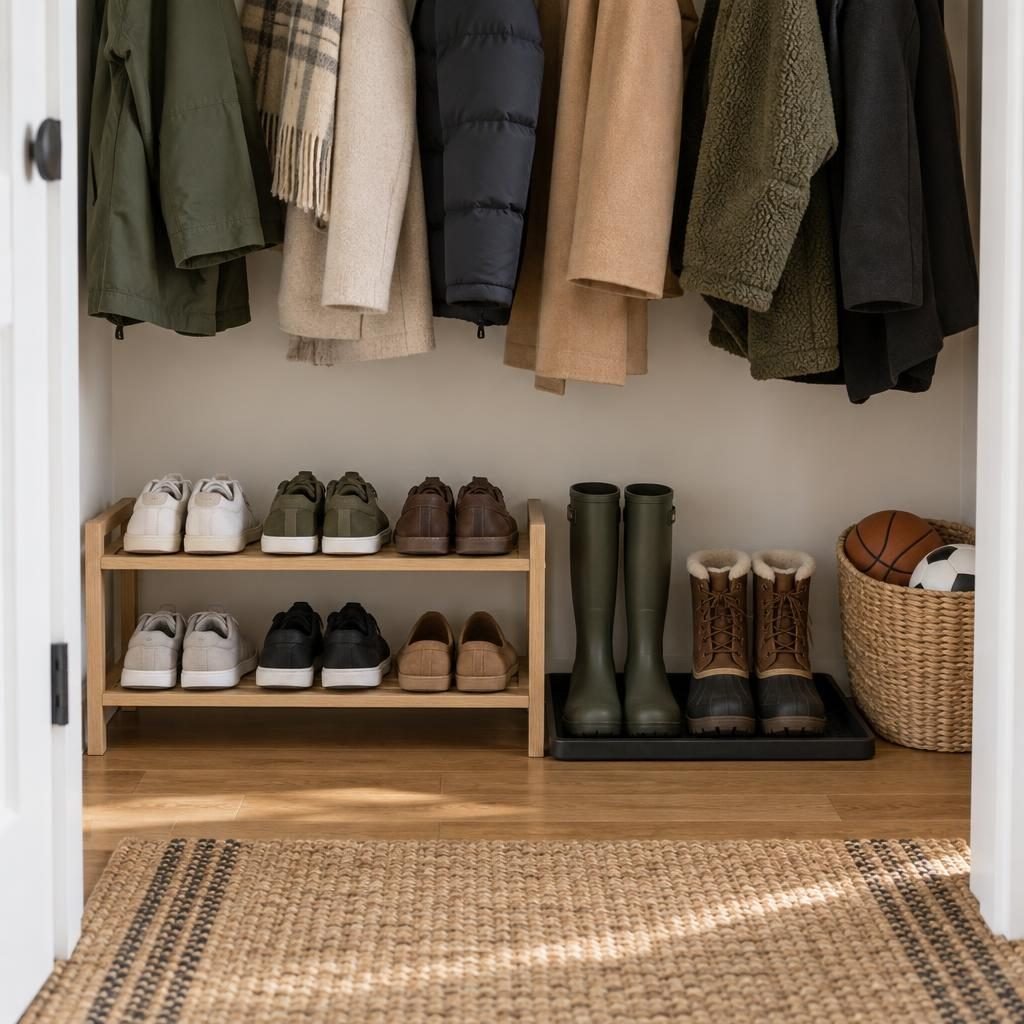
9. Add a shoe rack
A two-tier rack keeps everyday shoes in pairs and off the floor. Leave the rest of the floor for boots and bigger items.
10. Use a boot tray
A tray catches water, mud and snow from wet boots so the closet floor stays dry and clean.
11. Set a shoe limit
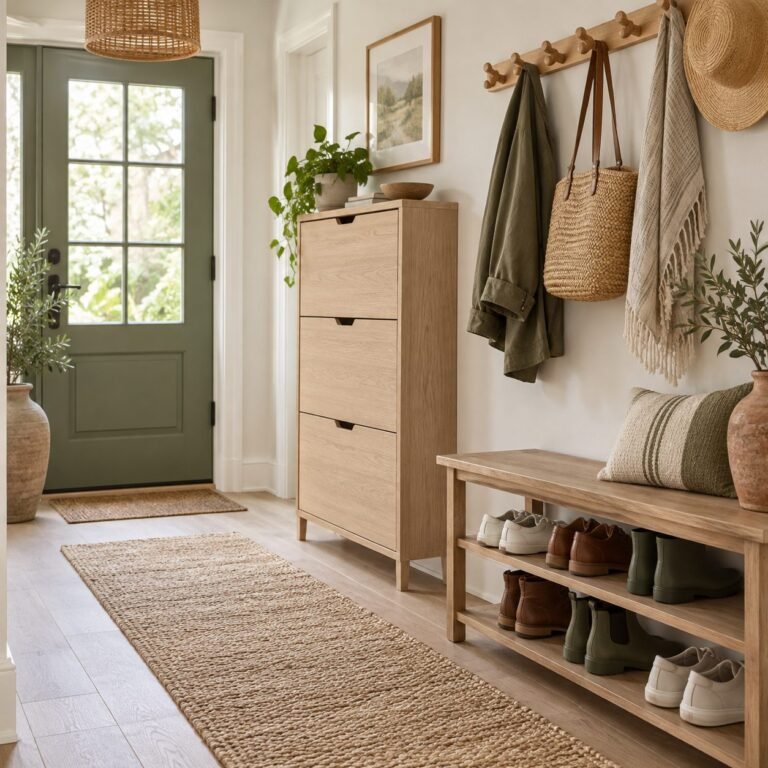
Keep one or two pairs per person in the coat closet. Everything else goes back to bedroom closets. If you have a back door, our mudroom ideas show how to create a second drop zone for shoes and bags.
Small Coat Closet Organization
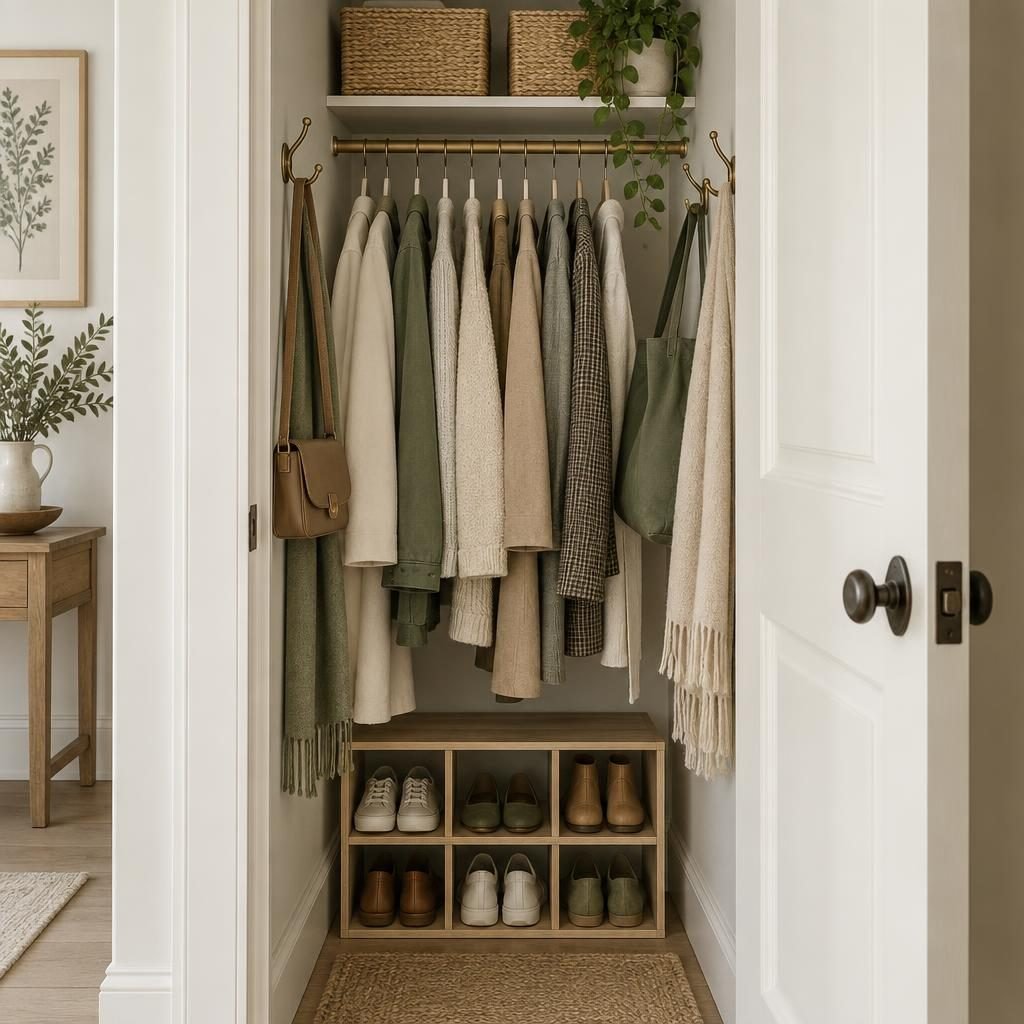
12. Switch to slim hangers
Slim velvet or thin wooden hangers take up far less rod space than bulky plastic ones. In a small coat closet, that can mean room for several more coats.
13. Use every wall
Hooks on both side walls, a narrow shelf above and a small shoe cubby below turn even a tiny closet into a full drop zone.
14. Try front-facing hooks in a shallow closet
If your closet is too shallow for hangers, replace the rod with a row of hooks on the back wall. It’s also a great option for a front hall with no closet at all. See our small entryway ideas for more.
Off-Season Coat Storage
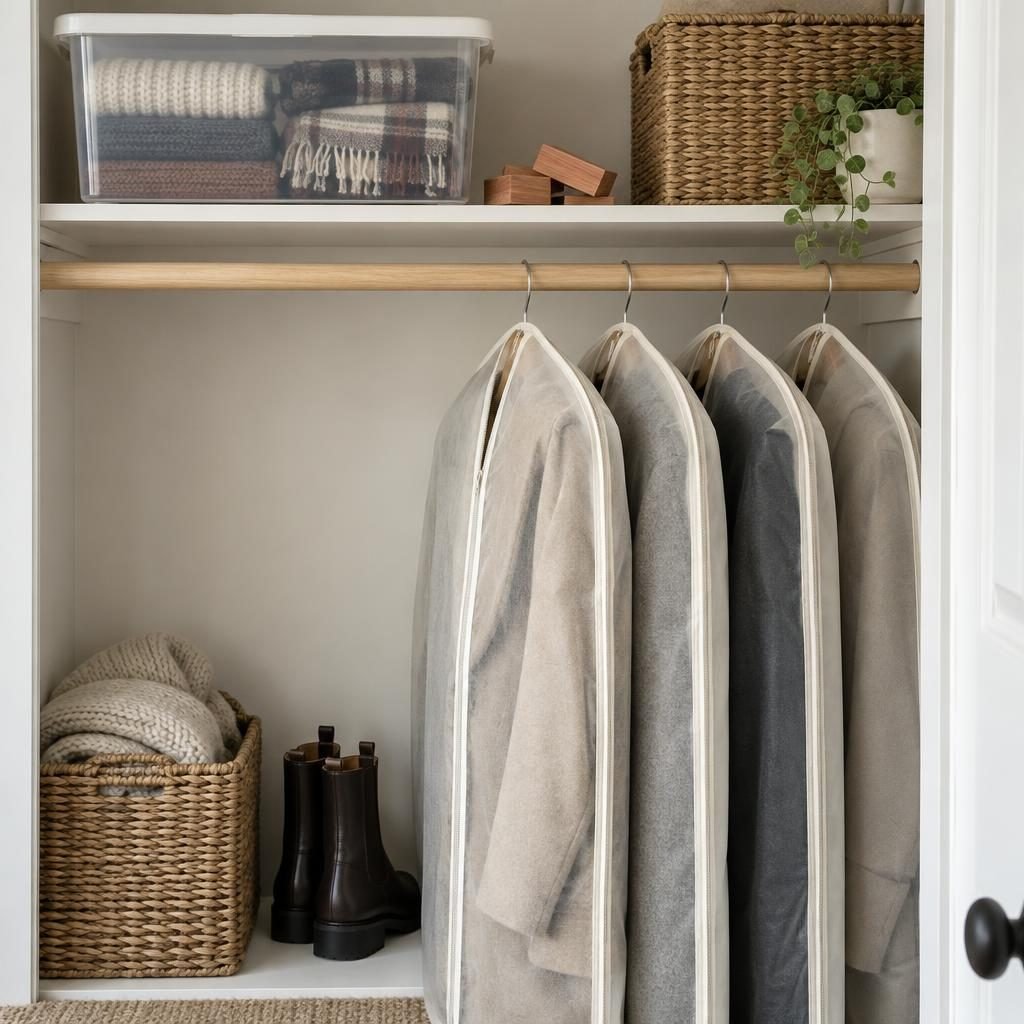
15. Store off-season coats in breathable bags
Clean coats before storing them, then use fabric garment bags. Skip the thin plastic bags from the dry cleaner, which are meant for transport, not long-term storage.
16. Keep winter accessories in a labeled bin
At the end of the season, wash hats, scarves and gloves and store them in one labeled bin. Next fall, everything is ready in one place.
Common Coat Closet Mistakes
- Keeping every coat year-round. Off-season coats crowd out the ones you need.
- Mismatched hangers. Bulky hangers waste space and coats slide off.
- No home for small items. Hats and gloves end up on the floor without baskets.
- Blocking the door. An organizer that’s too deep stops the door from closing.
- Storing dirty coats. Stains and body oils attract moths during storage.
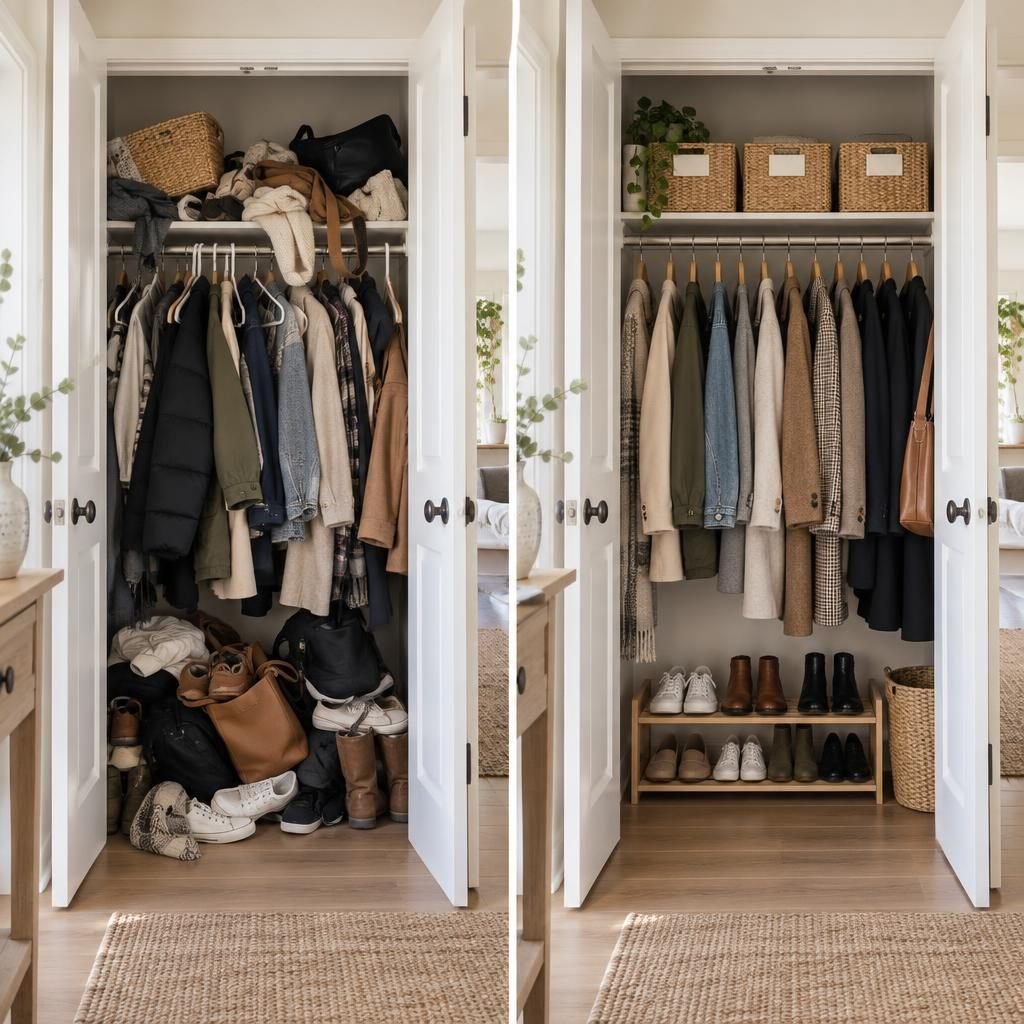
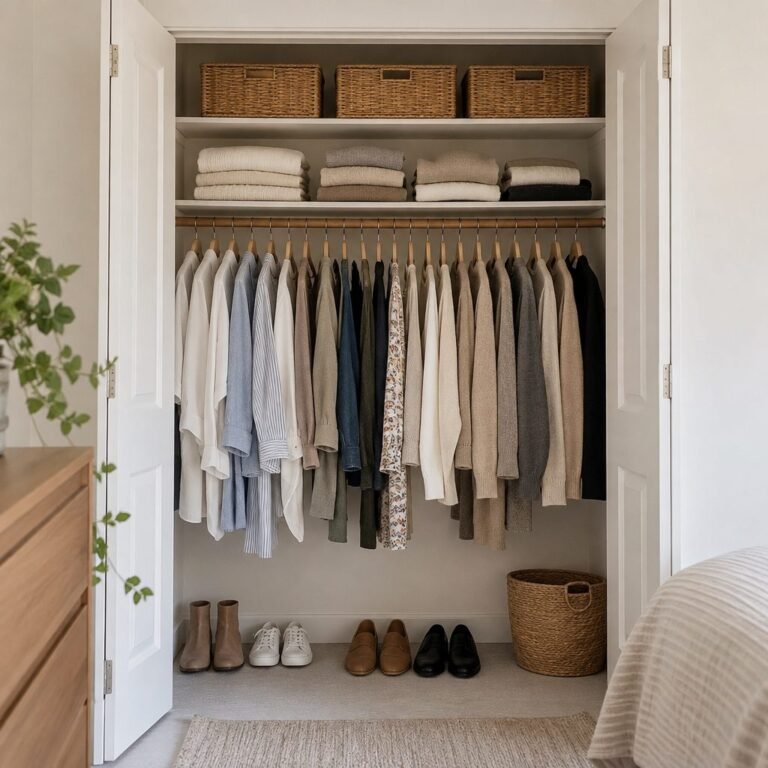
The before-and-after above is the same coat closet. Fewer coats, matching hangers, baskets on the shelf and a shoe rack on the floor are all it took. That’s the core of good coat closet organization.
Coat Closet FAQ
How do you organize a coat closet?
Empty it, keep only in-season coats, and give each zone one job: baskets on the shelf, coats on the rod, shoes on the floor and small items on the door.
How many coats should be in a coat closet?
One or two in-season coats per person is a good target, plus a little space for guests. Store the rest until the season changes.
How do you organize a small coat closet?
Use slim hangers, add hooks to the side walls, put a narrow shelf with baskets above the rod and keep only a few pairs of shoes on the floor.
What can you put on the door of a coat closet?
An over-the-door organizer with clear pockets or hooks works well for gloves, sunglasses, umbrellas, leashes and tote bags.
Hats and caps piling up on the closet shelf? Our hat storage ideas show how to store caps, felt hats, straw hats and beanies without crushing them.
Many homes have the coat closet tucked under the stairs. If yours does, our under stairs storage ideas show how to use the low, sloped space at the back.
The back of a coat closet door is also a handy spot for wrapping supplies; our gift bag storage guide shows how to keep rolls and bags neat there.
Final Thoughts
Coat closet organization comes down to three habits: keep only in-season coats on the rod, give every zone one job, and clean coats before you store them. Start with a quick seasonal edit today, and the rest of the closet will fall into place.
Save this guide to Pinterest for your next closet reset.
How this guide was made: researched and written with the help of AI tools, fact-checked against trusted sources and published by Mohamed Elber. Images are AI-generated illustrations. See our Editorial Policy.