Learning how to organize kitchen drawers is one of the fastest ways to make cooking easier. When every spatula, measuring cup and pair of scissors has its own spot, you stop digging through a jumble of tools while dinner burns on the stove.
This guide shows which drawer each item should live in, a simple 6-step method, and 16 kitchen drawer organization ideas for cutlery, cooking tools, deep drawers, spices, knives and the catch-all drawer every kitchen has.
Key Takeaways
- Quick answer: To organize kitchen drawers, empty one drawer at a time, sort by task and donate duplicates, then store each tool in the drawer closest to where you use it: small daily tools up top, pots and bowls in deep bottom drawers.
- Store every tool in the drawer closest to where you use it.
- Small daily tools go in top drawers; pots and bowls go in deep bottom drawers.
- Declutter duplicates and measure before you buy any organizer.
Time: 1–2 hours · Cost: $0–60 · Difficulty: Easy
The Kitchen Drawer Map
Before you buy a single organizer, decide what goes in each drawer. The easiest rule is to store every tool in the drawer closest to where you use it: cutlery near the dishwasher, knives near the prep area and cooking utensils next to the stove.
Professional organizer Nicole Gabai explains this idea as zoning your kitchen in an interview with The Kitchn: the items you use most often belong in the closest, easiest spots, while things you use only now and then move farther away. For drawers, that usually means small daily tools in the top drawers and bulky, heavy items like pots and mixing bowls in the deep bottom drawers.
Quick Pick: Kitchen Drawer Organization Ideas by Problem
| Your problem | Start with these ideas |
|---|---|
| Utensils jumbled together | Cutlery tray (#1), adjustable dividers (#4) |
| A drawer full of kitchen tools | Sort by task (#5), keep only favorites (#6) |
| Pots and lids everywhere | Deep drawer pegs (#8), lids upright (#9) |
| Knives loose in a drawer | In-drawer knife block (#11) |
| A messy catch-all drawer | Modular bins (#14), one-in, one-out rule (#16) |
How to Organize Kitchen Drawers in 6 Steps
- Empty one drawer at a time. Take everything out and wipe the drawer clean.
- Sort by task. Group items by what they do: eating, prepping, cooking, baking and storing.
- Declutter duplicates. Keep your favorite version of each tool and donate the extras.
- Assign each drawer a zone. Use the drawer map: store items where you use them.
- Measure, then buy organizers. Measure the drawer width, depth and height before choosing inserts.
- Put the daily tools in front. The things you use every day go in the most reachable spot.
16 Kitchen Drawer Organization Ideas
These ideas are grouped by drawer, starting with the one you open most: the cutlery drawer.
Cutlery and Utensil Drawers
1. Use a cutlery tray that fits the drawer
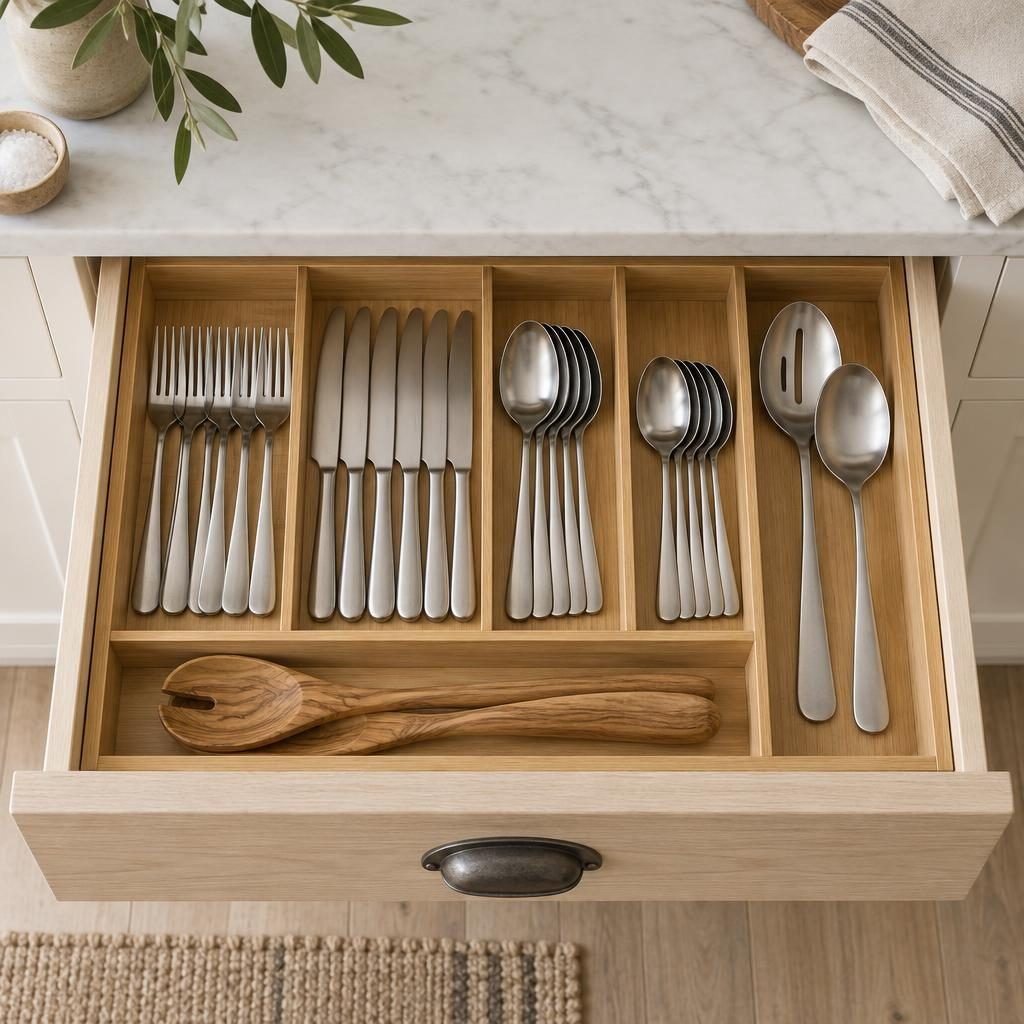
A tray with separate slots for forks, knives and spoons is the simplest kitchen drawer organizer there is. Choose one that fills the drawer from side to side so it doesn’t slide around.
2. Keep the cutlery drawer near the dishwasher
Unloading clean forks and spoons takes seconds when the drawer is right next to the dishwasher. It’s a small change you’ll notice every single day.
3. Give serving pieces their own section
Serving spoons, salad tongs and cake servers don’t get used daily. Put them in a long side section or a second drawer so they don’t crowd everyday cutlery.
The Drawer Full of Kitchen Tools
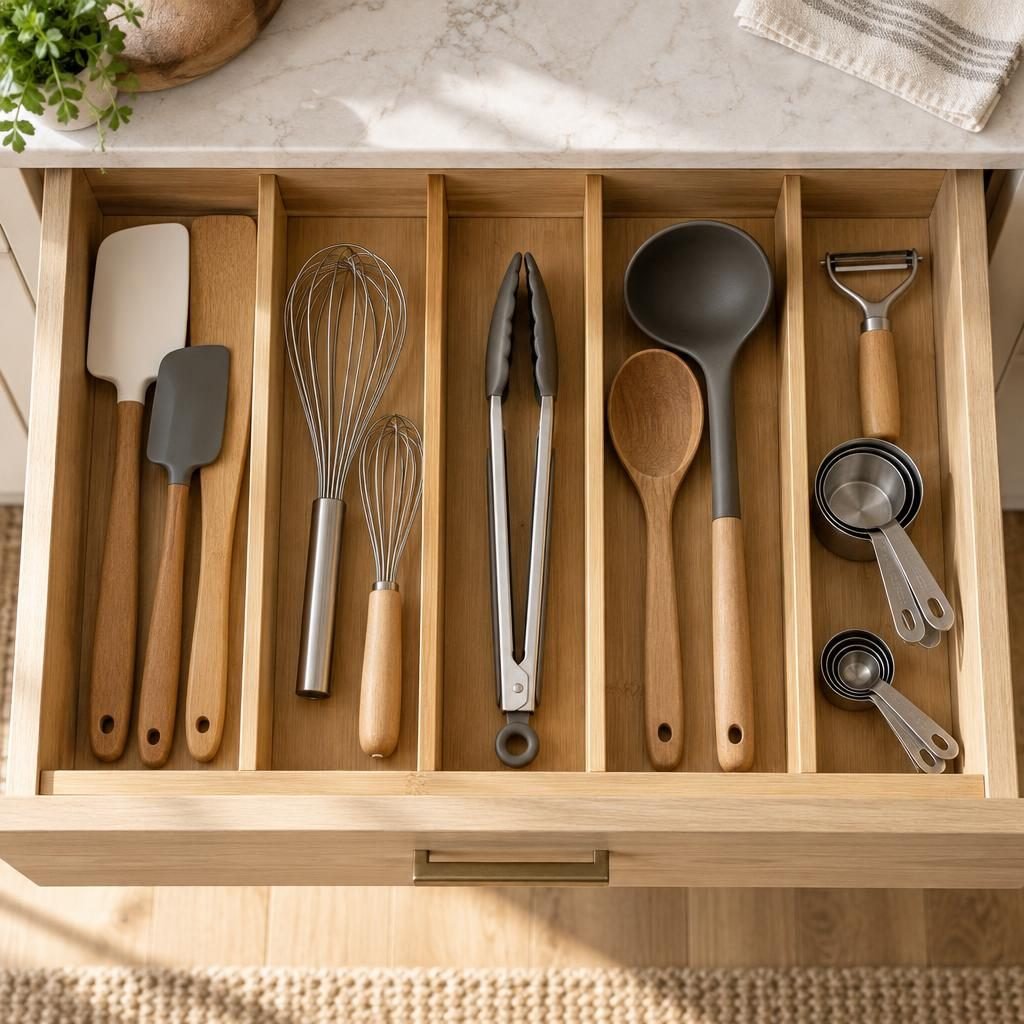
4. Use adjustable dividers
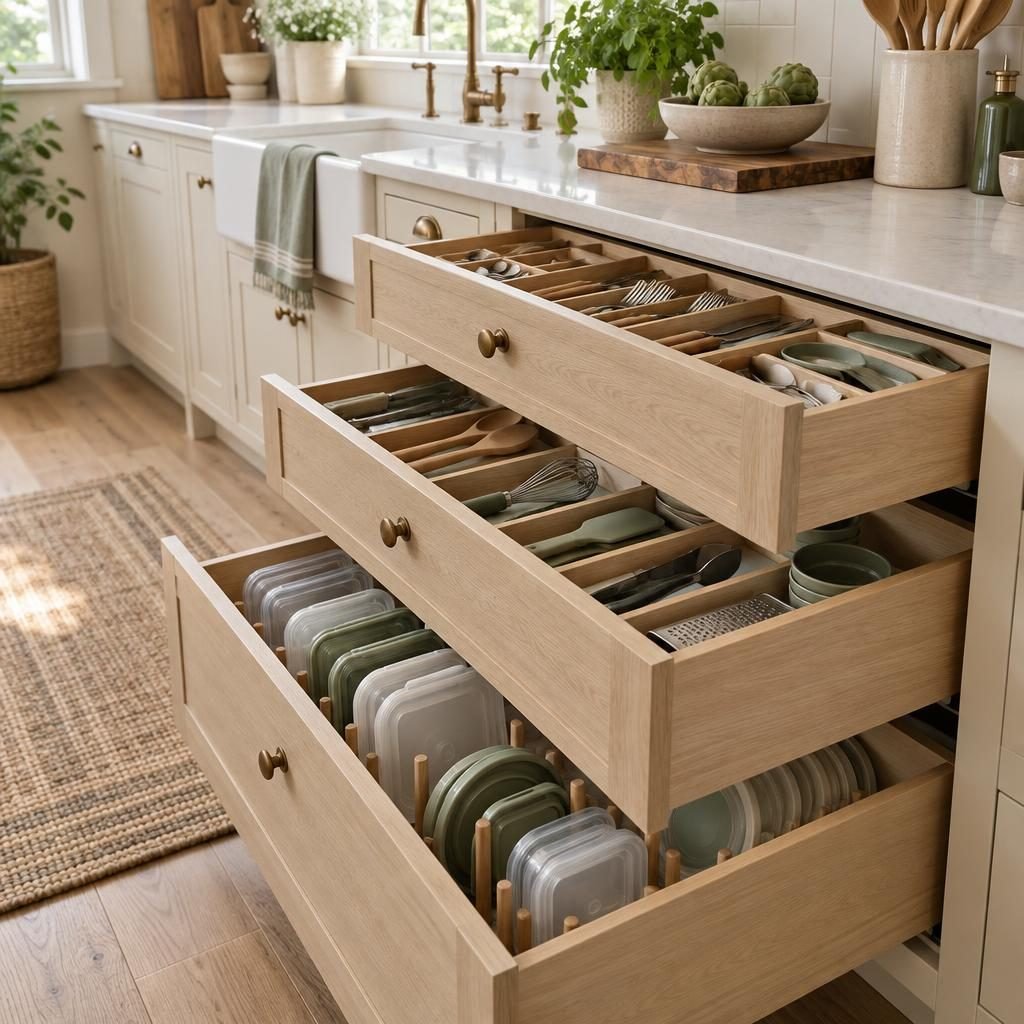
Expandable bamboo dividers let you build sections that fit your own tools, which works better than a fixed tray for long spatulas and whisks.
5. Sort cooking tools by task
If you’re wondering how to organize a drawer full of kitchen tools, group them by job: stirring and flipping, measuring, and gadgets like peelers and can openers. Then give each group its own section.
6. Keep only the tools you use
Most kitchens have three spatulas and two whisks. Keep your favorites in the drawer and store or donate the rest so the drawer closes easily.
7. Stand tall tools in a crock
If a tool doesn’t fit well in a drawer, like a large ladle or a long wooden spoon, stand it in a crock next to the stove instead.
Deep Drawers for Pots and Pans
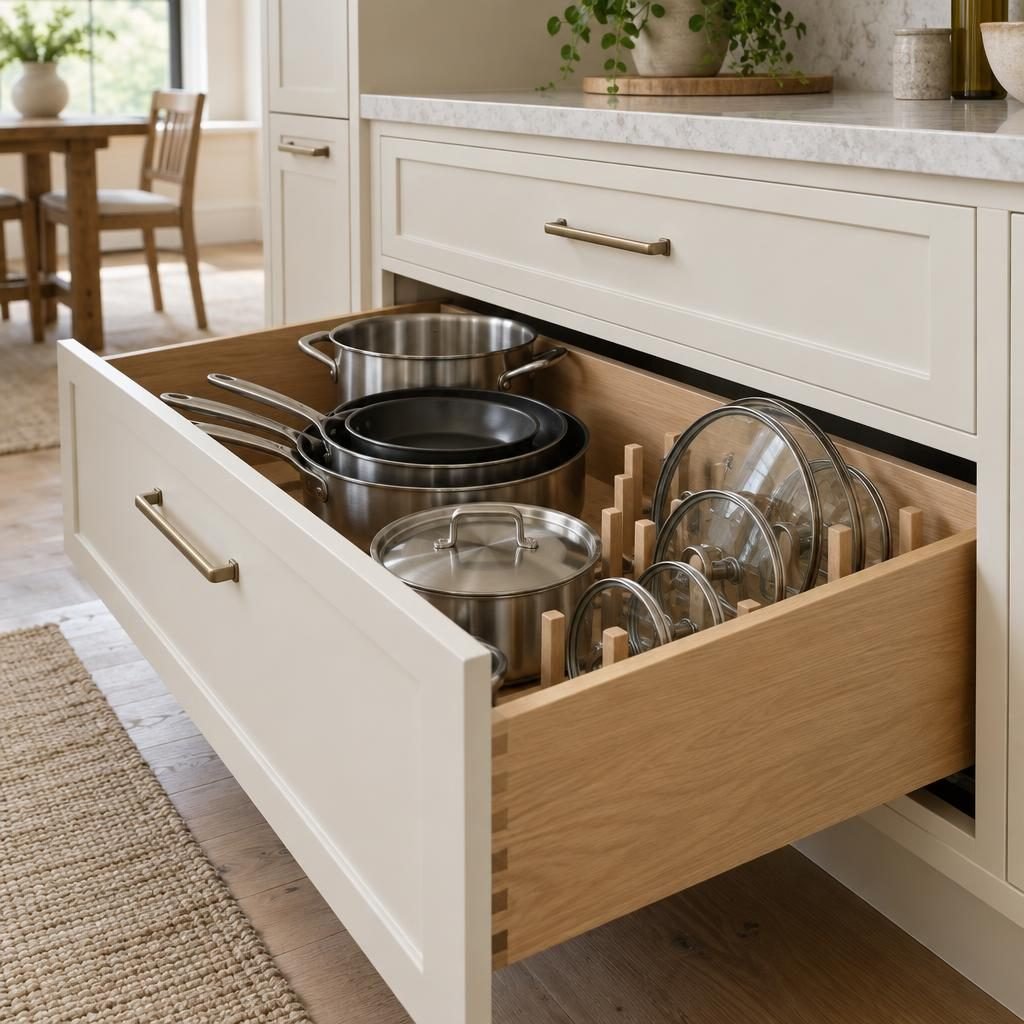
8. Add a peg system to deep drawers
Adjustable pegs keep stacks of pots and pans from sliding every time you open the drawer. You can move them as your cookware changes.
9. Store lids upright
Lids take up far less space standing on their edge than stacked flat. A divider or a row of pegs keeps them in line and easy to grab.
10. Nest pots by size
Stack pots from largest to smallest, and keep the ones you use most on top. If you want more ideas for pans and bakeware, our guide on how to organize kitchen cabinets covers deep base cabinets too.
Knives and Spices
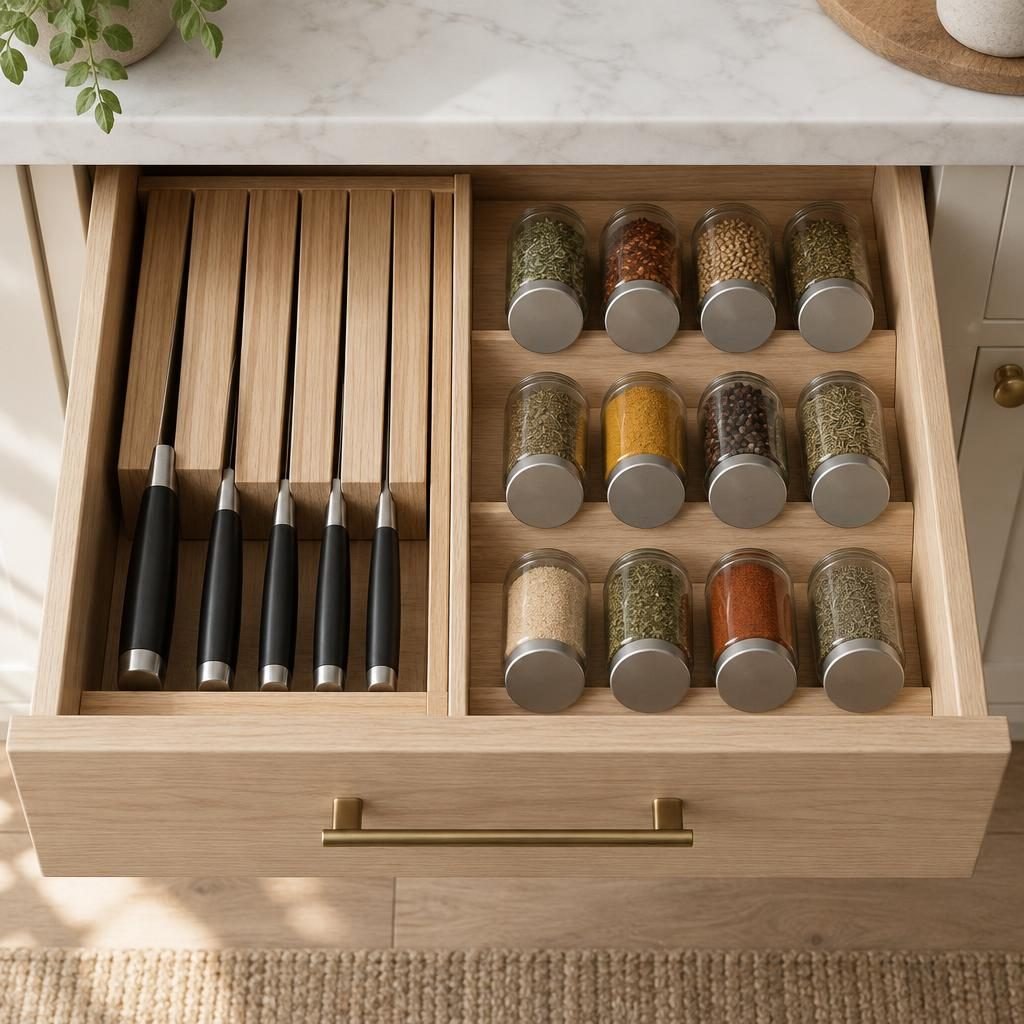
11. Use an in-drawer knife block
Loose knives in a drawer are dangerous and get dull quickly. An in-drawer knife block holds each blade in its own slot, keeps edges protected and frees up counter space.
12. Lay spices flat in a tiered insert
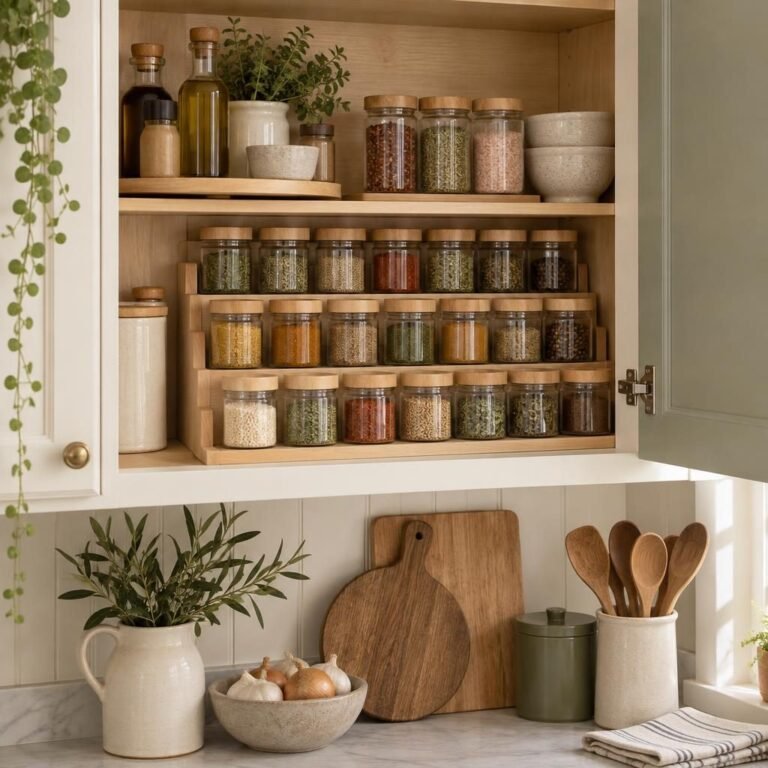
A drawer near the stove is a great spot for spices. A tiered insert lets you read every label at a glance, so you never buy a third jar of cumin.
13. Label the tops of spice jars
When jars lie flat in a drawer, labels on the lids make it easy to find what you need without lifting each one.
The Catch-All Drawer
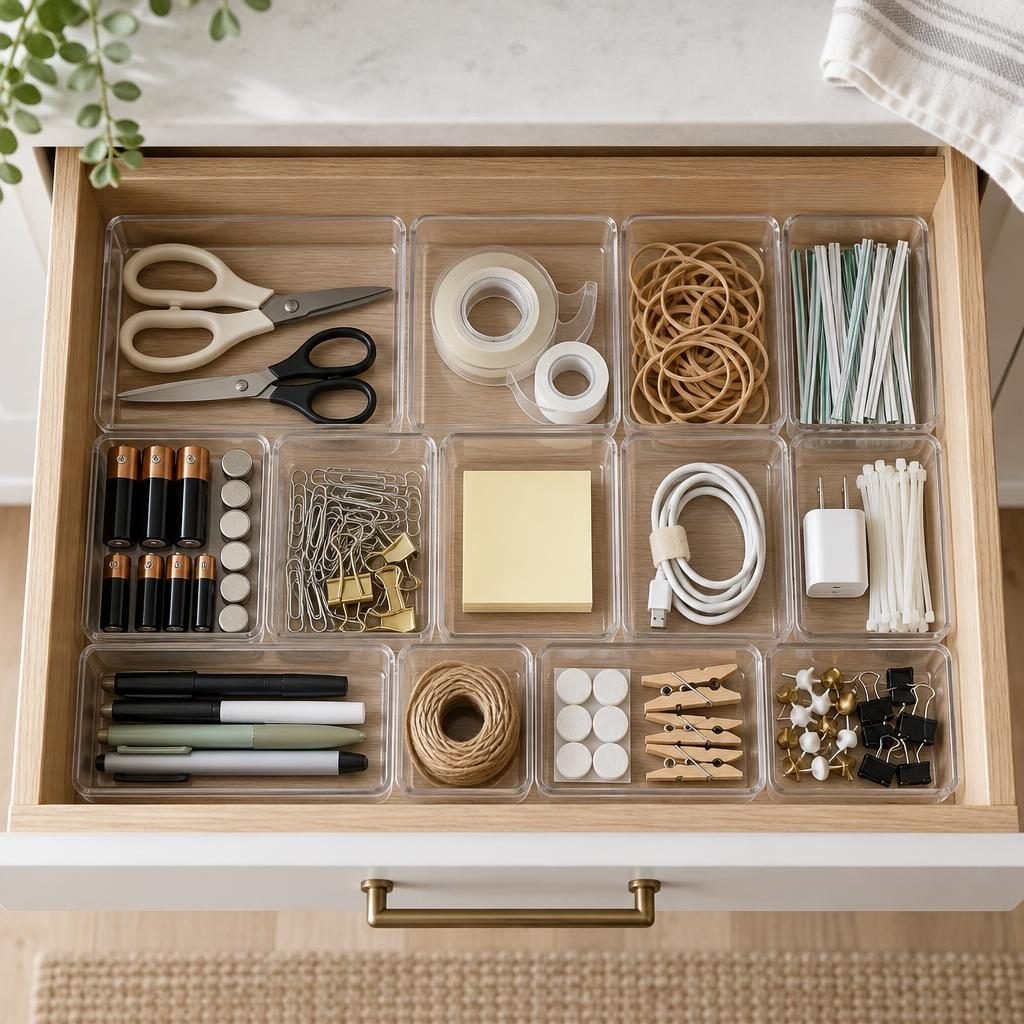
14. Use small modular bins
Clear modular bins give every small item a home: scissors, tape, batteries, rubber bands, pens and chargers. Mix and match sizes to fill the drawer.
15. Keep only kitchen essentials
The catch-all drawer works best when it holds things you actually use in the kitchen. Move everything else to where it belongs in the house.
16. Use the one-in, one-out rule
When something new goes into the drawer, something old comes out. It’s the easiest way to keep a catch-all drawer from turning into a junk drawer again.
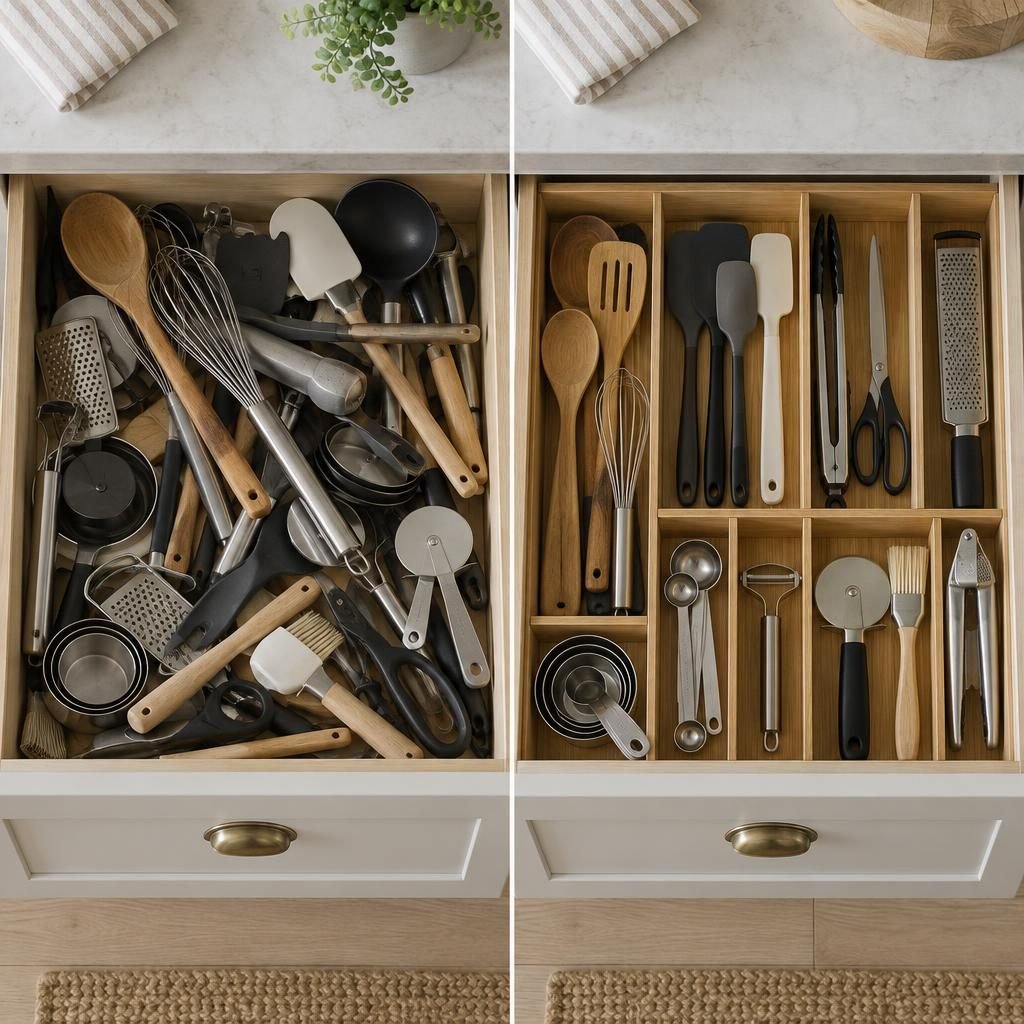
The before-and-after above is the same drawer. Nothing new was bought except a set of dividers; the difference is fewer tools, each in its own section.
Once your drawers are sorted, keep the momentum going with our kitchen counter organization ideas and pantry organization ideas.
Common Kitchen Drawer Mistakes
- Buying organizers before measuring. Inserts that don’t fit slide around and waste space.
- Keeping duplicates. Extra tools are the number one reason drawers won’t close.
- Storing knives loose. It’s unsafe and dulls the blades.
- Putting heavy items in shallow drawers. Pots and bowls belong in deep drawers.
- No home for new items. Without a spot, new gadgets end up in the catch-all drawer.
Kitchen Drawer Organization FAQ
What is the best way to organize kitchen drawers?
Store items in the drawer closest to where you use them, sort each drawer by task, keep daily tools in the top drawers and put bulky items like pots in deep bottom drawers.
How do you organize a drawer full of kitchen tools?
Empty it, remove duplicates, then group tools by job, such as stirring, measuring and small gadgets. Adjustable dividers give each group its own section.
What should go in the top kitchen drawers?
Small items you use every day: cutlery, cooking utensils, measuring cups, knives in a block and kitchen scissors.
Where should spices go if there is no cabinet space?
A drawer next to the stove with a tiered insert works well. Label the lids so you can find each spice quickly.
Got one drawer that collects everything? Our junk drawer organizer guide shows what to keep, how to zone it and how to store batteries safely.
Organized drawers free up the counter above them. To style that clear space without crowding it, see our kitchen counter decor ideas.
Final Thoughts
Now you know how to organize kitchen drawers the simple way: store every tool where you use it, sort by task and keep only what you really need. Start with the drawer you open most, and the rest of the kitchen will follow.
Save this guide to Pinterest for your next kitchen reset.
How this guide was made: researched and written with the help of AI tools, fact-checked against trusted sources and published by Mohamed Elber. Images are AI-generated illustrations. See our Editorial Policy.