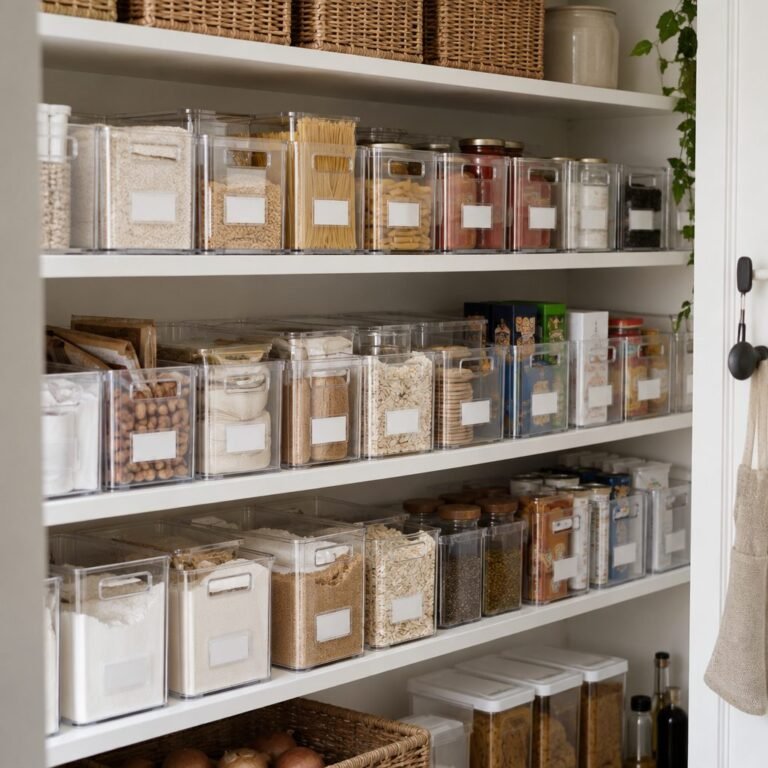
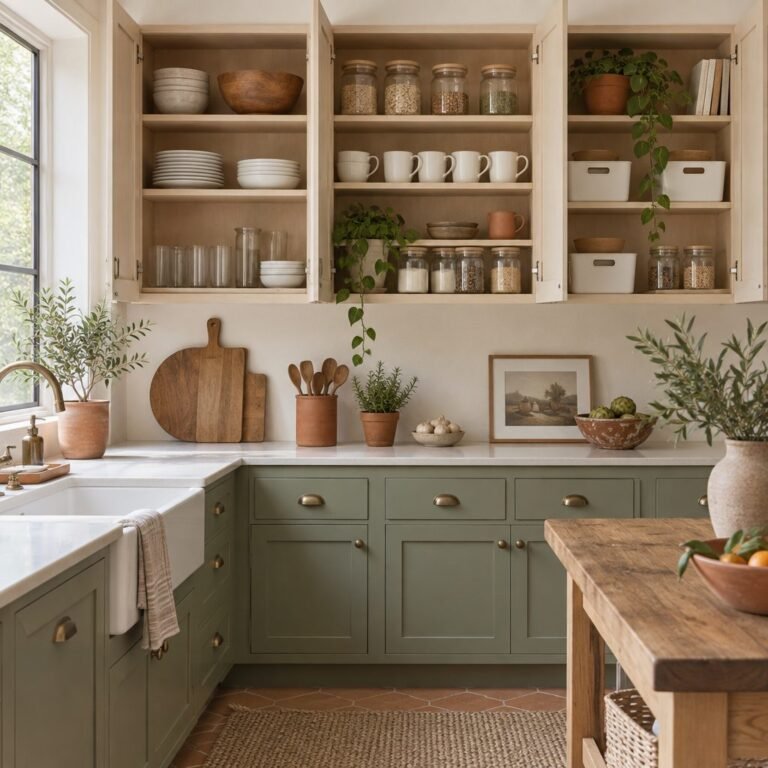
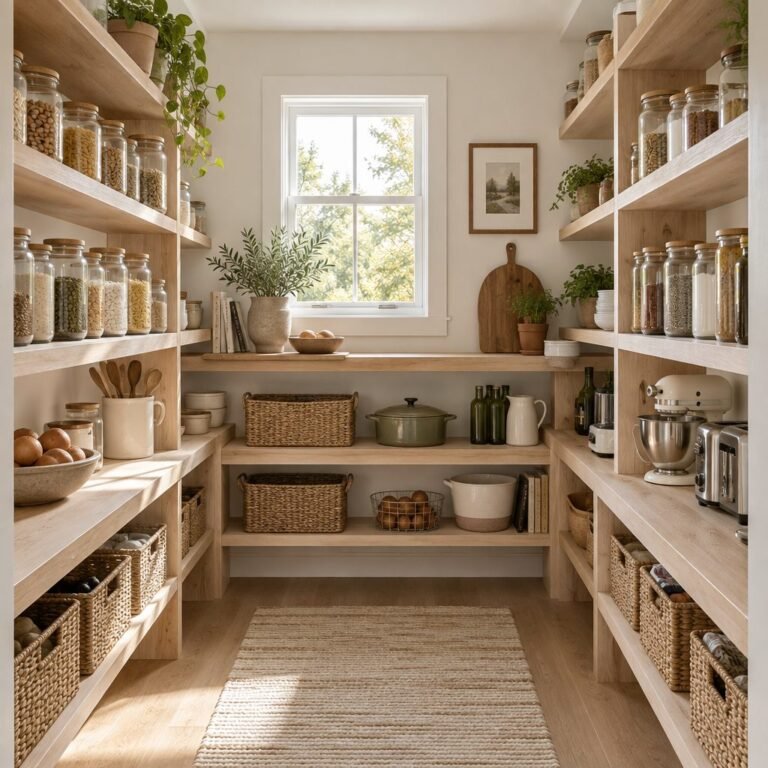
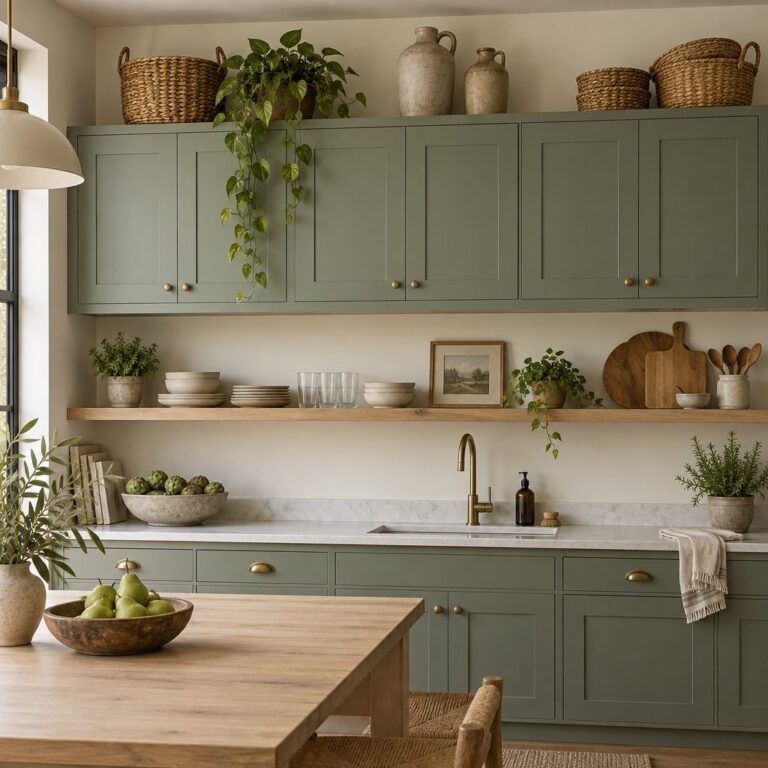
Spice cabinet organization is one of those small jobs that changes how cooking feels. When every jar has a spot, you stop buying a third jar of cumin, dinner goes faster, and you can actually see what you have. The trick is not a perfect label system. It’s a setup that lets you grab any spice in a few seconds and put it back just as fast.
Below you’ll find where to keep spices so they stay fresh, a simple 6-step method, and 18 spice organization ideas for upper cabinets, corners, doors, drawers and small kitchens.
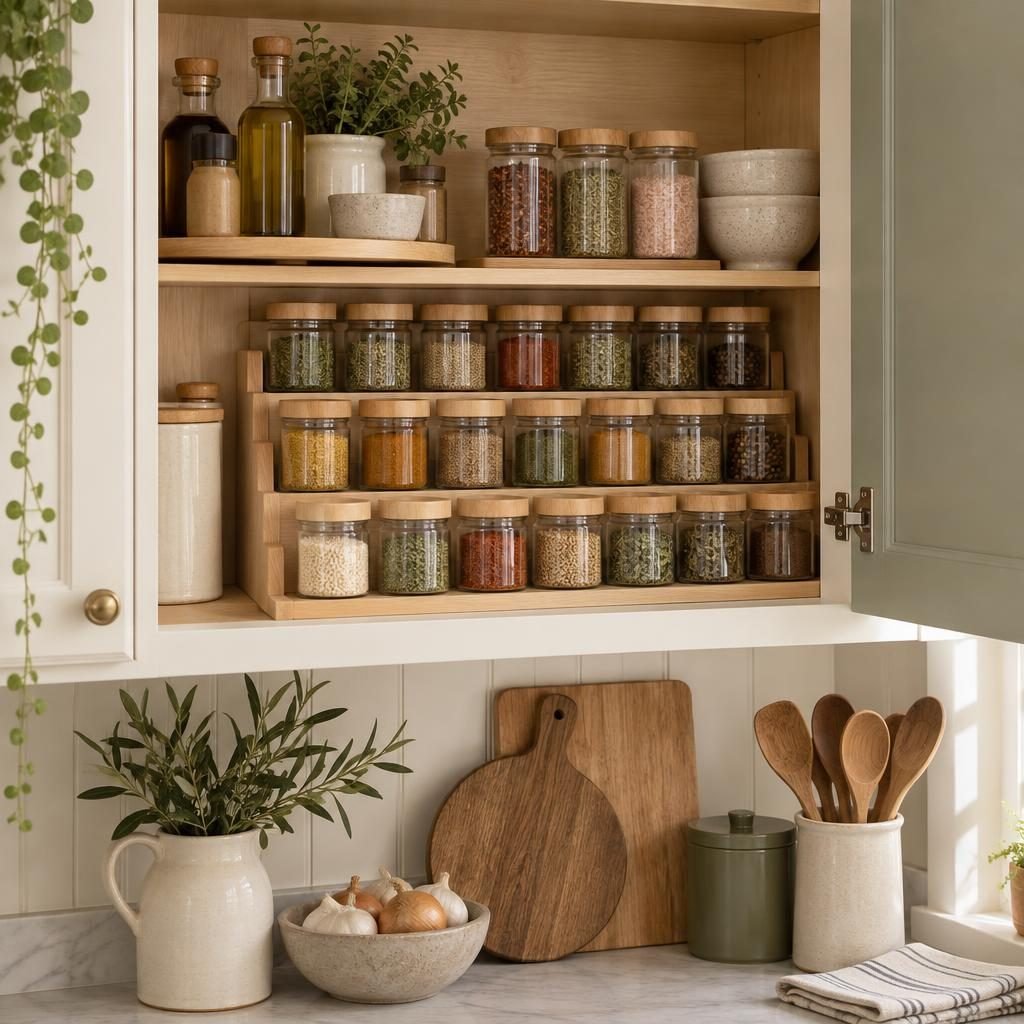
Key Takeaways
- Quick answer: For spice cabinet organization, store spices in a cool, dark cabinet near your prep space, not above the stove, toss any that have lost their smell, and use a tiered riser on standard shelves or a lazy susan in corners.
- Store spices in a cool, dark cabinet near your prep space, not above the stove.
- Use a tiered riser for standard shelves and a lazy susan for corners, so every label is visible.
- Toss spices that have lost their smell, and write the open date on every new lid.
Time: 1–2 hours · Cost: $10–80 · Difficulty: Easy
Where to Keep Spices (and How Long They Last)
Before you buy a single organizer, pick the right cabinet. Spices lose flavor faster with heat, light and moisture, so the cabinet right above the stove is usually the worst choice, even though it feels convenient.
According to the McCormick guide to spice shelf life, whole spices keep their best flavor for about 3 to 4 years, ground spices for 2 to 4 years, and dried herbs and seasoning blends for 1 to 3 years. The same guide warns against storing spices on the ledge above the stove, because repeated heat wears down their flavor. Spices rarely become unsafe, they just fade, so a quick smell test tells you more than the date.
Quick Pick: Spice Organization Ideas by Situation
| Your situation | Start with these ideas |
|---|---|
| Jars hidden behind jars | Tiered riser (#1), front row for daily spices (#4) |
| Tall cabinet, short jars | Stacking shelf (#5), tiered riser (#1) |
| Corner or deep cabinet | Lazy susan (#6), two-tier turntable (#7), bins (#8) |
| No spare cabinet at all | Pull-out rack (#10), door rack (#11), drawer (#12) |
| Mixed bottles and bags | Matching jars (#14), square jars (#15), labels (#2) |
| Too many old spices | Date the lids (#17), buy small (#18) |
How to Organize a Spice Cabinet in 6 Steps
- Empty the cabinet. Pull out every jar, bag and packet, including the ones hiding in the pantry and drawers.
- Smell and sort. Rub a pinch between your fingers. If there’s almost no smell, toss it. Combine duplicates.
- Group what’s left. Daily spices, baking spices, herbs, blends and backstock refills.
- Choose your organizers. Measure the shelf depth and height first, then pick risers, turntables or racks that fit.
- Label and load. Label lids if you look down, fronts if you look straight in. Put daily spices at the front.
- Set a reset date. A quick check twice a year keeps the system working.
If you’re working through the whole kitchen, our guide to organizing kitchen cabinets shows how to zone every cabinet so spices sit right next to your prep space.
18 Spice Cabinet Organization Ideas
These spice cabinet organization ideas are grouped by where they fit: standard upper shelves, corner and deep cabinets, spots outside the cabinet, and the jars themselves. Mix and match what suits your kitchen.
Ideas for Upper Spice Cabinets
1. Add a tiered riser
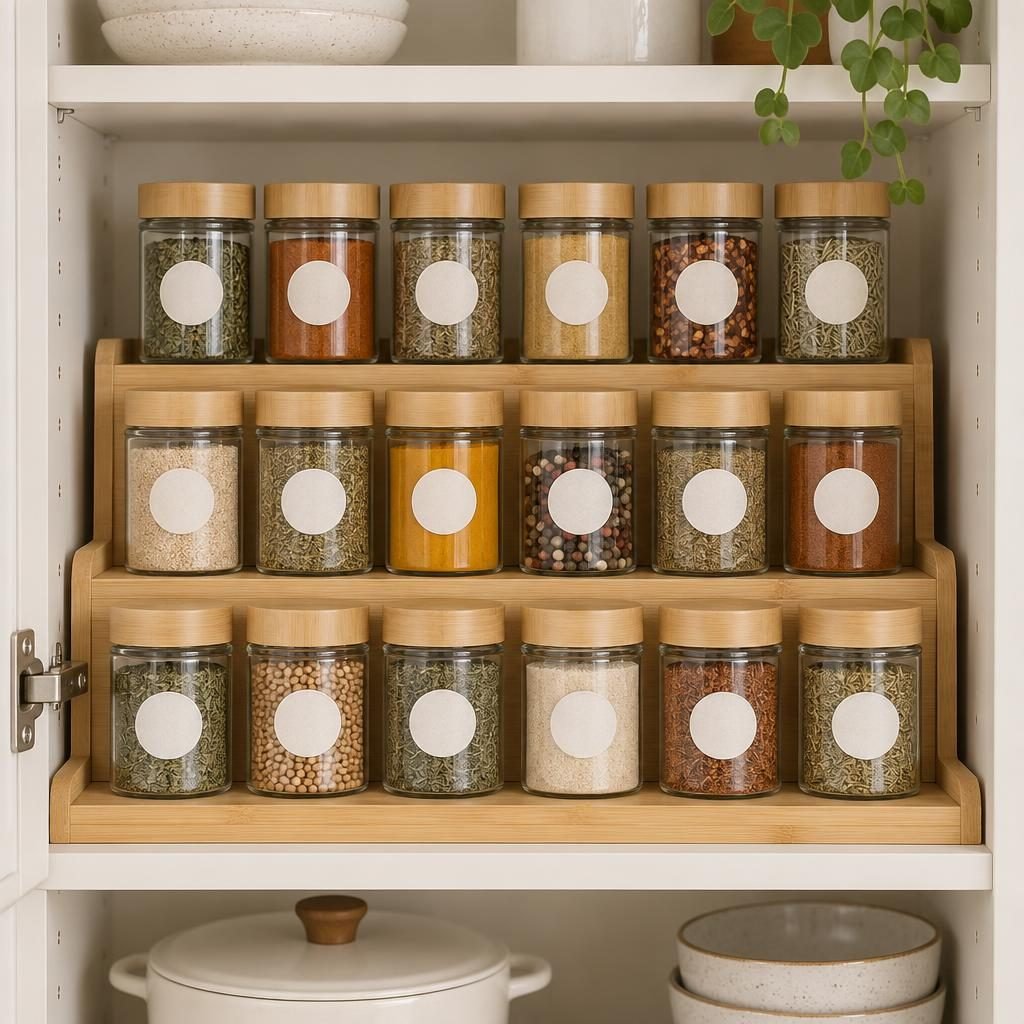
A three-step riser lifts the back rows so you can read every label at once. It’s the single most useful piece of spice cabinet organization for a standard upper shelf. Expandable bamboo risers fit most cabinet widths.
2. Label jars where you look
If the cabinet is above eye level, label the fronts. If jars live in a drawer, label the lids. Simple printed or handwritten labels work fine, as long as they’re easy to read.
3. Put them in order
Alphabetical order works best for big collections. Grouping by cuisine or use, like baking, Mexican or Italian, works better if you cook the same dishes often.
4. Keep a front row for daily spices
Salt, pepper, garlic powder and your top five spices belong in the front row. Everything else can sit higher on the riser or further back.
5. Use a stacking shelf in tall cabinets
Spice jars are short, so tall shelves waste space. A small wire or bamboo shelf insert creates a second level and doubles the room without new cabinets.
Ideas for Corner and Deep Cabinets
6. Spin a lazy susan
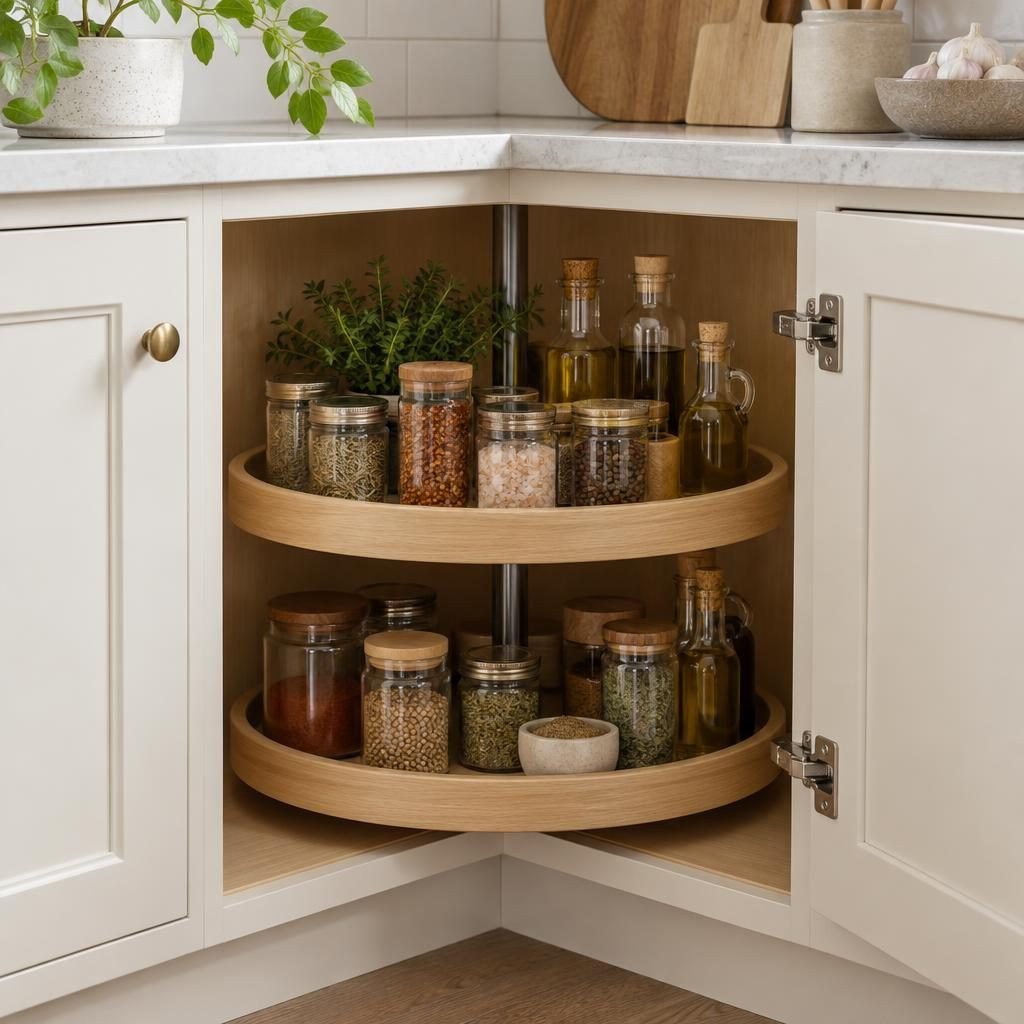
A turntable is the best fix for a corner or deep cabinet. One spin brings the back jars to the front, so nothing gets lost. Choose one with a raised edge so jars don’t slide off.
7. Go for a two-tier turntable
A two-tier lazy susan holds twice as many jars in the same footprint. Put small jars on top and taller bottles like oils and vinegars below.
8. Use clear bins for groups
In deep cabinets, a narrow clear bin works like a drawer. Put all baking spices or all packet mixes in one bin and pull the whole thing out when you need it.
9. Keep backstock in one place
Bulk bags and extra jars shouldn’t crowd the main shelf. Keep refills in a single labeled bin in the pantry. Our pantry organization ideas show how to set up a backstock zone.
Spice Organization Ideas Beyond the Cabinet Shelf
10. Install a pull-out spice rack
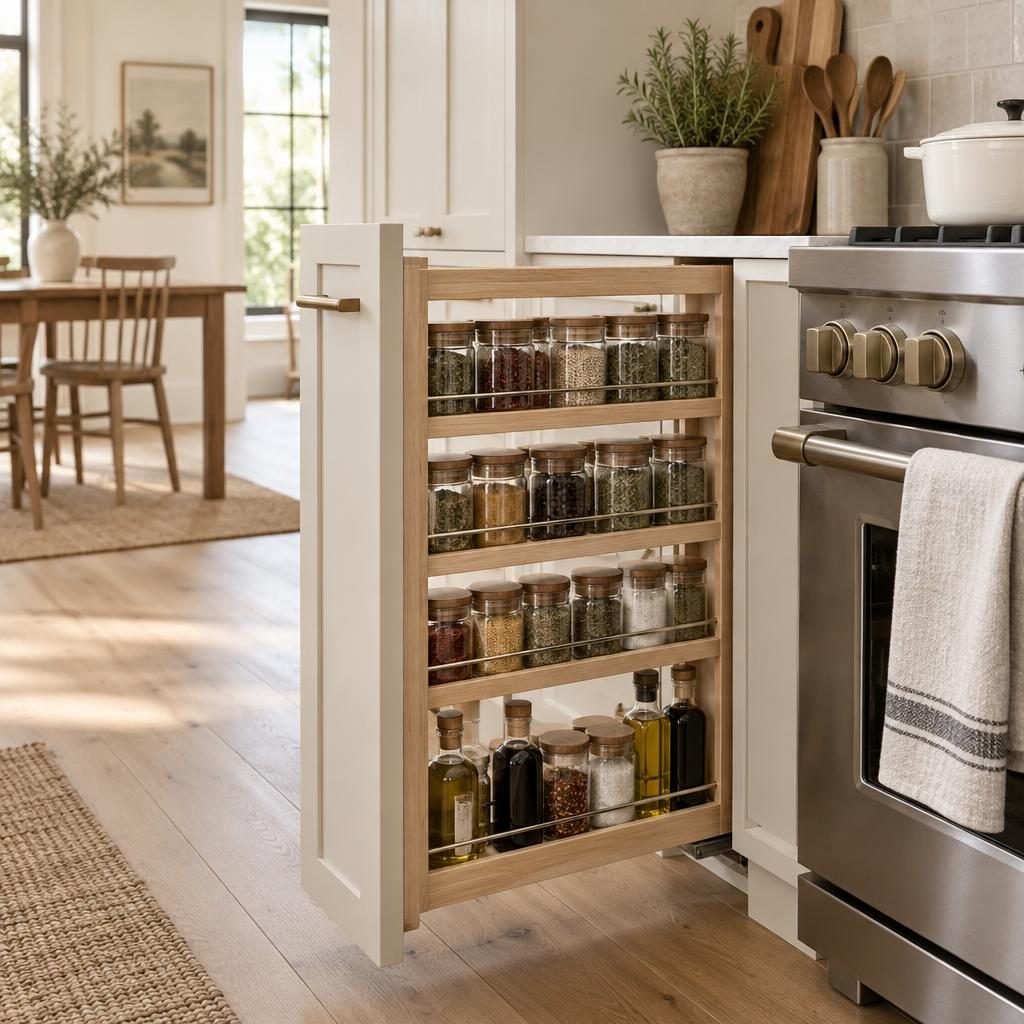
A narrow pull-out rack turns a skinny gap next to the stove or fridge into storage for dozens of jars. You can see every jar from the side, which makes it one of the most practical spice organization ideas for a small kitchen.
11. Hang a rack on the cabinet door
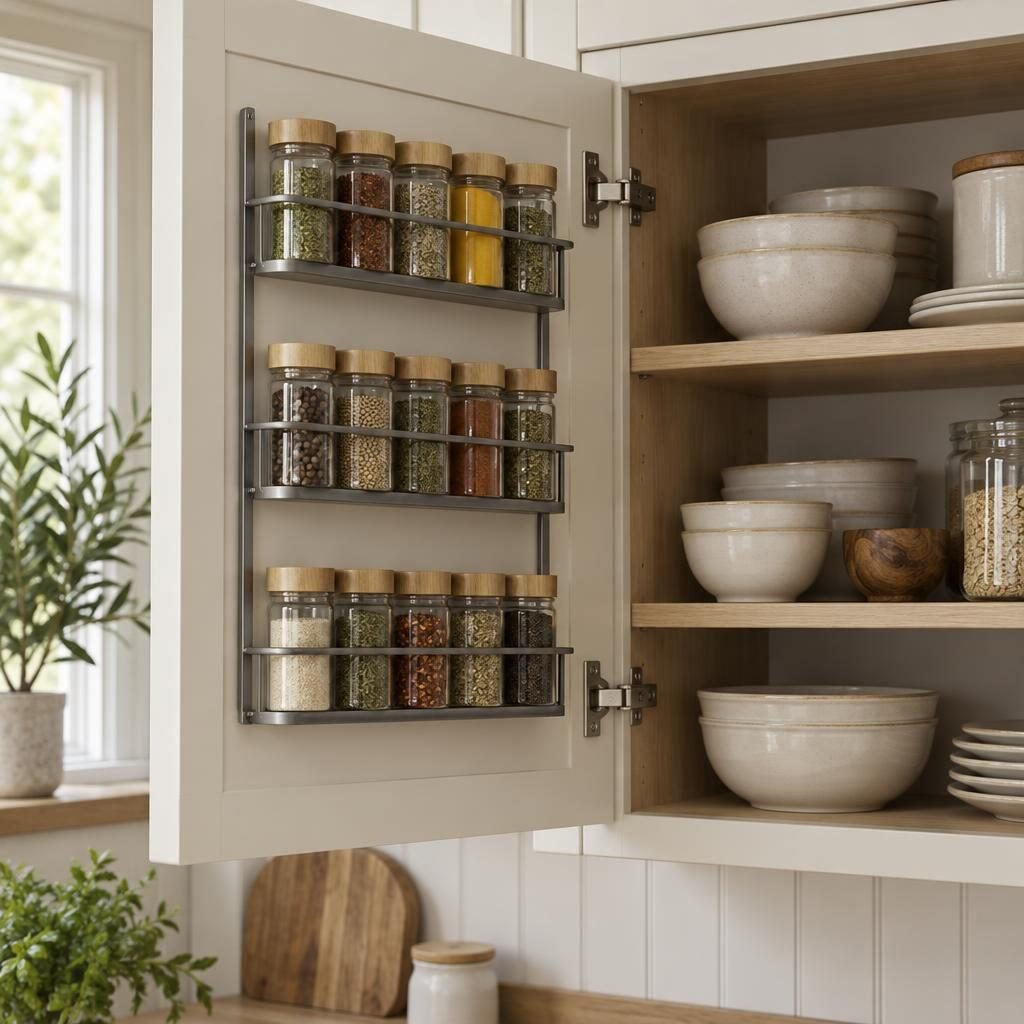
A door-mounted rack uses space that’s usually empty. Measure the gap between the door and the shelves first so the jars don’t hit anything when the door closes.
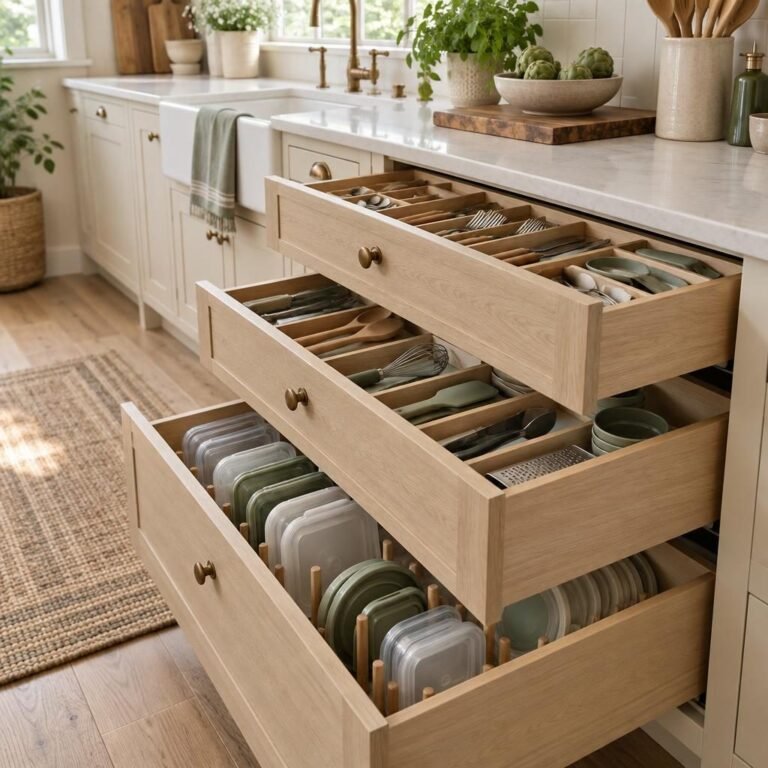
12. Move spices to a drawer
A drawer near the stove with an angled insert lets you read every lid from above. Our guide to organizing kitchen drawers shows how to set up a spice drawer next to your cooking tools.
13. Try magnetic tins
Small magnetic tins with clear lids can stick to the inside of a metal door panel or the side of the fridge, away from the stove’s heat.
Matching Jars, Labels and Refills
14. Decant into matching jars
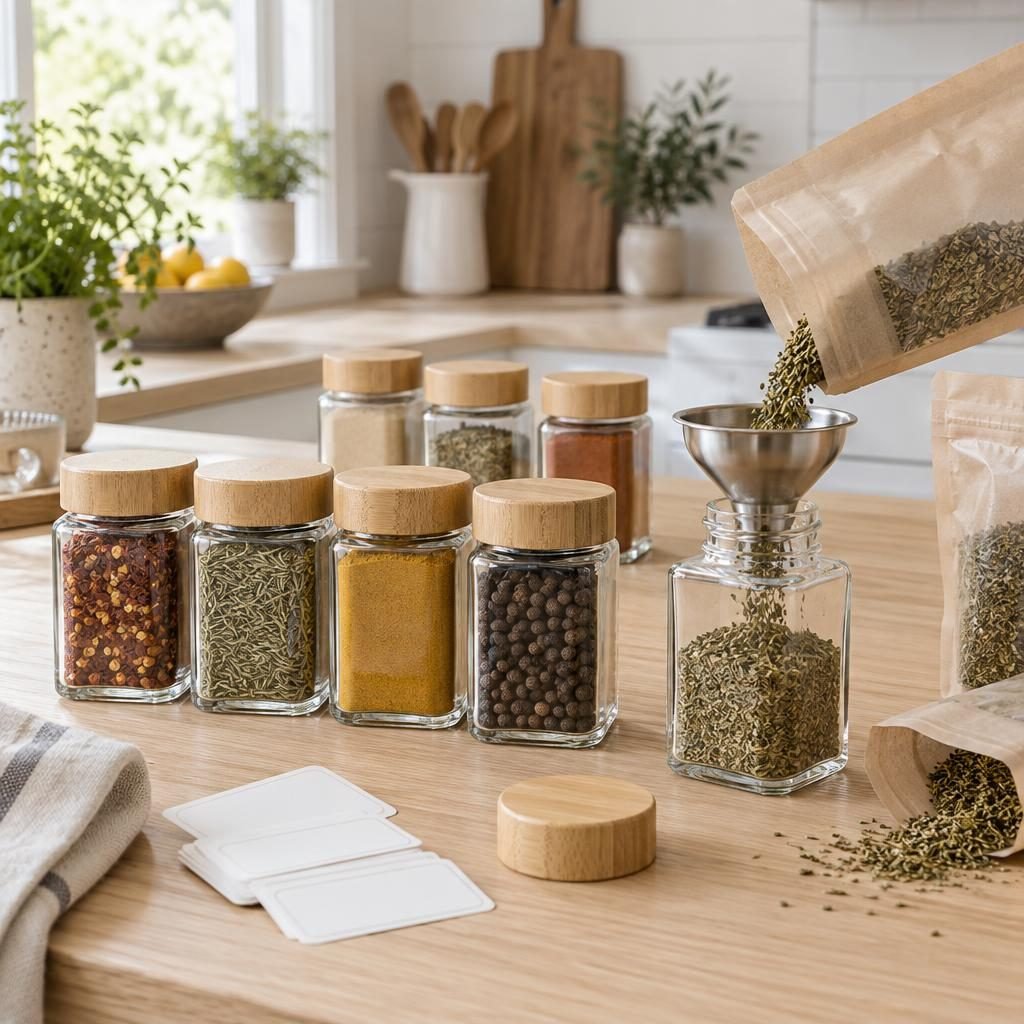
Matching glass jars take up less space than a mix of bottles and bags, and they make the whole cabinet look calmer. Keep one small funnel with your labels so refills stay quick and mess-free.
15. Choose square jars
Square jars sit side by side without the gaps that round jars leave, so you fit more on every shelf.
16. Make a refill station
Keep a funnel, spare labels and a marker in one small box. When you bring home a new bag, you refill the jar right away instead of leaving the bag on the shelf.
17. Date the lid
Write the month and year on the lid when you open a new spice. At your next reset, you’ll know which ones to smell first.
18. Buy smaller amounts
For spices you use once or twice a year, buy the smallest size. Big jars look like a deal but usually fade before you finish them.
Common Spice Cabinet Mistakes
- Storing spices above the stove. Heat and steam fade flavor faster.
- Buying organizers before measuring. Check shelf depth, width and door clearance first.
- Keeping every old jar. Faded spices take space and add little flavor.
- Labels you can’t see. Match the label spot to how you look at the jars.
- Mixing refills with daily jars. Backstock belongs in its own bin.
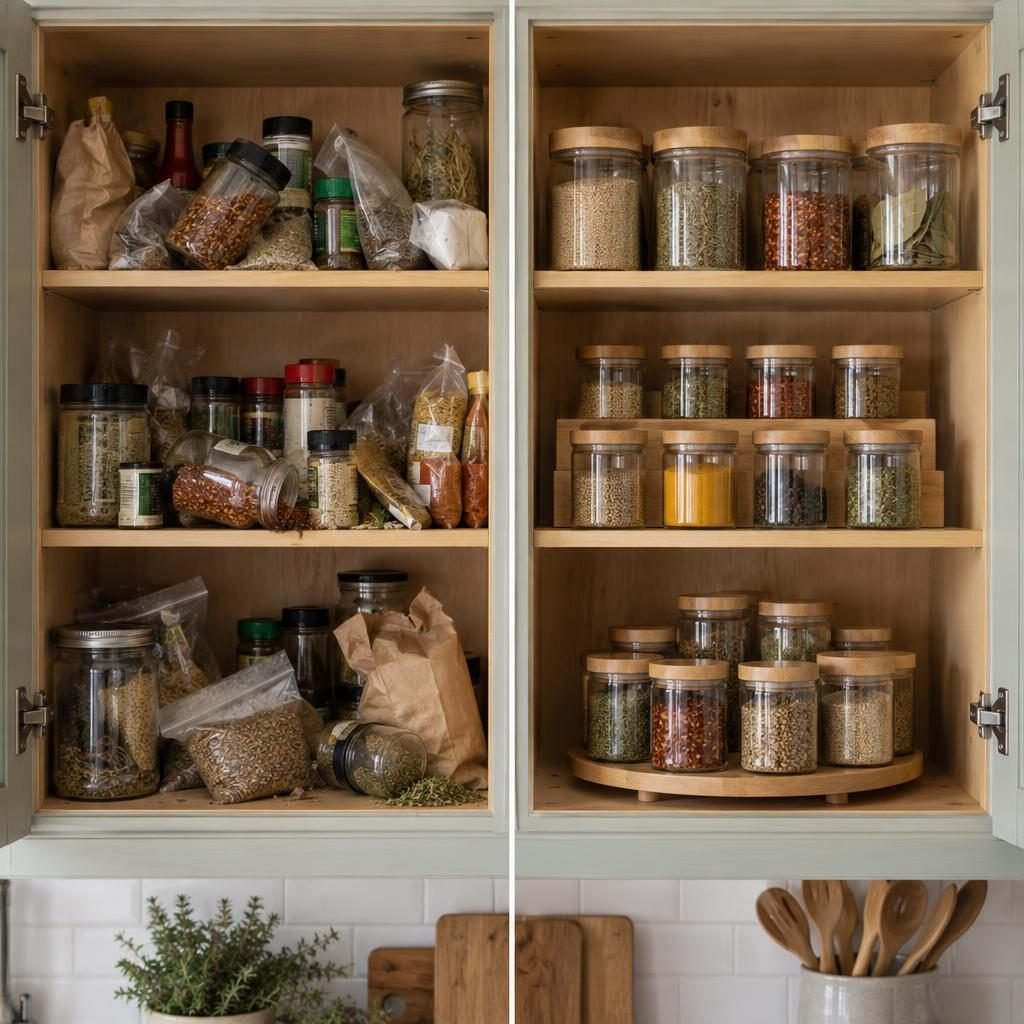
The before-and-after above is the same cabinet. The only changes are fewer duplicates, matching jars, a riser and a turntable. Good spice cabinet organization doesn’t need more space, just a better use of it.
Spice Cabinet Organization FAQ
What is the best way to organize a spice cabinet?
Start by removing old and duplicate spices, then use a tiered riser for standard shelves or a lazy susan for corners. Put daily spices in front and label every jar.
Should spices be in alphabetical order?
Alphabetical order works well for large collections. For a smaller set, grouping by how you use them, like baking or everyday cooking, is often faster.
Where is the best place to store spices in a kitchen?
A cool, dark cabinet or drawer close to your prep space but away from the stove, oven and dishwasher steam.
How do you organize spices without a spice cabinet?
Use a pull-out rack in a narrow gap, a rack on the inside of a cabinet door, a drawer with an angled insert or magnetic tins on the side of the fridge.
Final Thoughts
Spice cabinet organization comes down to three things: fewer, fresher spices, a spot where you can see every jar, and a cabinet that stays away from the heat. Start with one riser or turntable, clear out what’s faded, and the rest falls into place.
Save this guide to Pinterest for your next kitchen reset.
How this guide was made: researched and written with the help of AI tools, fact-checked against trusted sources and published by Mohamed Elber. Images are AI-generated illustrations. See our Editorial Policy.