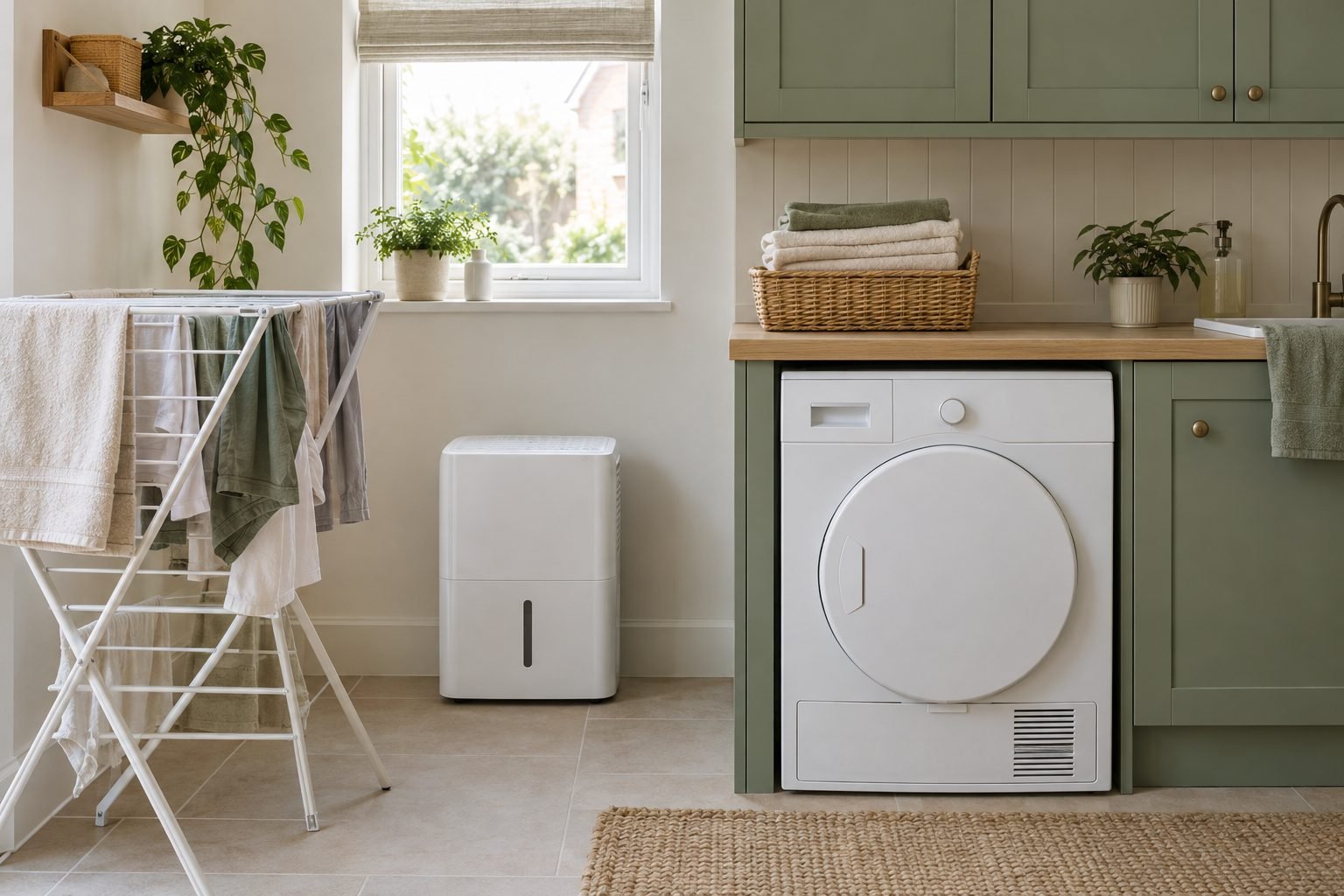
For drying clothes, a heat pump tumble dryer is usually cheaper per load and faster than a dehumidifier, but a dehumidifier is cheaper to buy, takes up less space and also dries out a damp home. Which? tested both and found a dehumidifier would still cost more and take longer than the most cost-effective tumble dryers. Over five years, though, our sums put a dehumidifier and airer within about £20 of one of the cheapest heat pump dryers, and about £130 cheaper than a more typical £500 model.
- Choose a heat pump tumble dryer if you wash most days, need clothes dry in hours, and have room for one.
- Choose a dehumidifier if you rent, have no space for a dryer, or also battle condensation and mould.
- Avoid a new condenser dryer if running costs matter; it costs the most to run of the three.
Dehumidifier vs Tumble Dryer at a Glance
| Dehumidifier + airer | Heat pump dryer | Condenser dryer | |
|---|---|---|---|
| Cost per load | about 52p (our estimate: Which?’s 26p a litre x about 2 litres) | about 35p | about 89p |
| Yearly running cost (3 loads a week) | about £81 (our estimate) | £54.32 | £138.91 |
| Typical price to buy | about £140 to £400 | £327 to £1,699 (avg £727) | £220 to £529 |
| Drying time | Slower; Which? found it almost halves drying time | Hours | Hours |
| Also dries the house | Yes | No | No |
| Space | Small, moves room to room | Needs a dedicated spot | Needs a dedicated spot |
Tumble dryer running costs are from Which? at the October to December 2026 price cap of 26.32p per kWh. The dehumidifier cost per load uses Which?’s average of 26p per litre of water extracted.
What Five Years Actually Costs
Our estimate adds the price to buy to five years of running costs at three loads a week. A heat pump dryer at around £350, the price of a handful of good heat pump dryers according to Which? (most cost £500 or more), comes to about £622; at £500 it is about £772. A 20-litre compressor dehumidifier with a laundry mode, listed at £234.90, plus 52p a load comes to about £640. A condenser dryer is cheapest to buy but about £915 over five years. Prices and energy rates will change, so use these as a guide.
Dehumidifier: Best for Small Homes and Damp
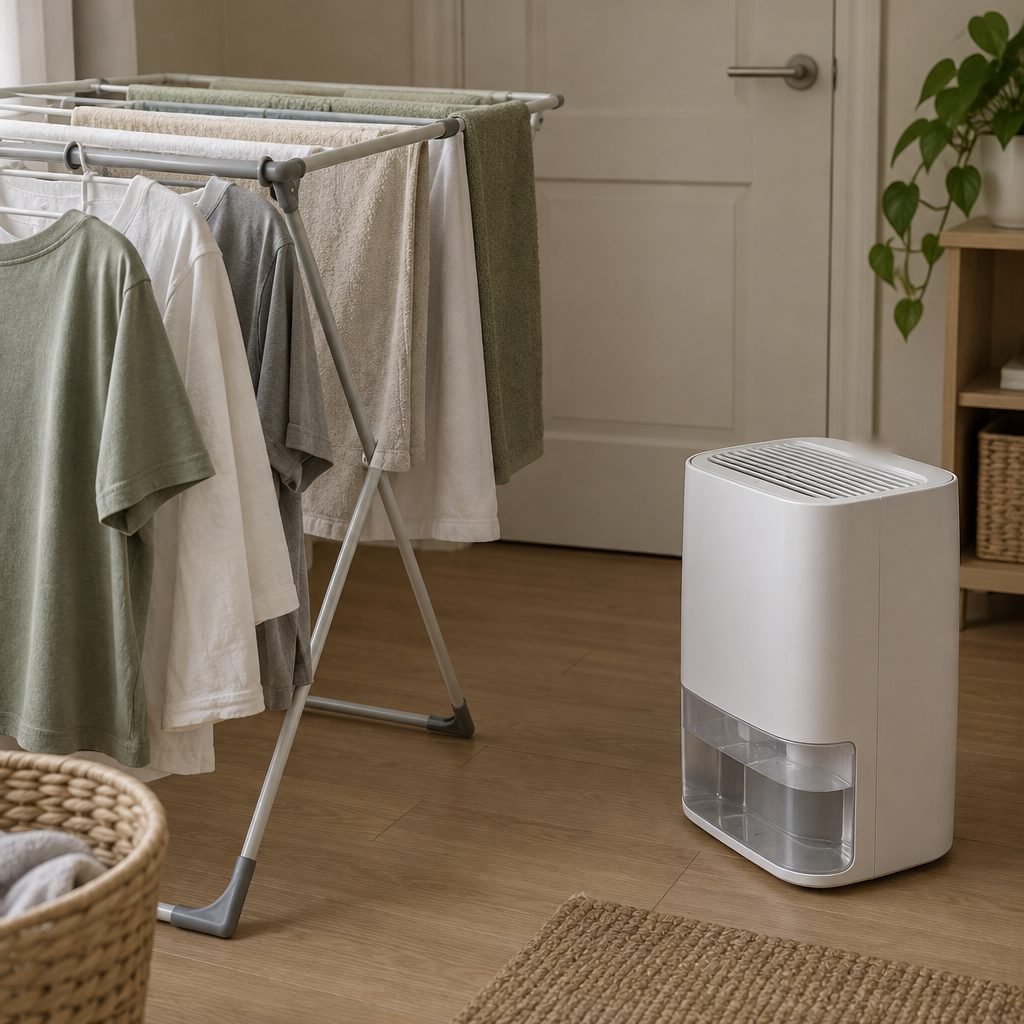
Best for: flats and rentals with no room or venting for a dryer, homes with condensation, and anyone who dries washing on airers already.
A dehumidifier does two jobs. Which? found it almost halved the drying time compared with an identical load dried without one, and it also pulled around two litres of water out of the air. Manchester City Council says drying clothes indoors can add 10 to 15 litres of water a week, and that a dehumidifier helps reduce moisture. Dorset Council puts normal indoor humidity at around 40 to 55%, with the risk rising above 60%.
Pick the right type. Meaco says a desiccant dehumidifier is better for temperatures below 10°C, such as an unheated utility room or garage, while compressor models are generally cheaper to run in a heated home. Which? advises keeping the unit at least 20cm from walls or furniture, and Meaco’s manual says to place it on a flat stable surface with the air vents clear.
Avoid if: you need a full load dry in a couple of hours, or you dry several loads a day. Our guide on how to dry clothes indoors covers the rest of the routine.
Heat Pump Tumble Dryer: Best for Speed and Running Costs
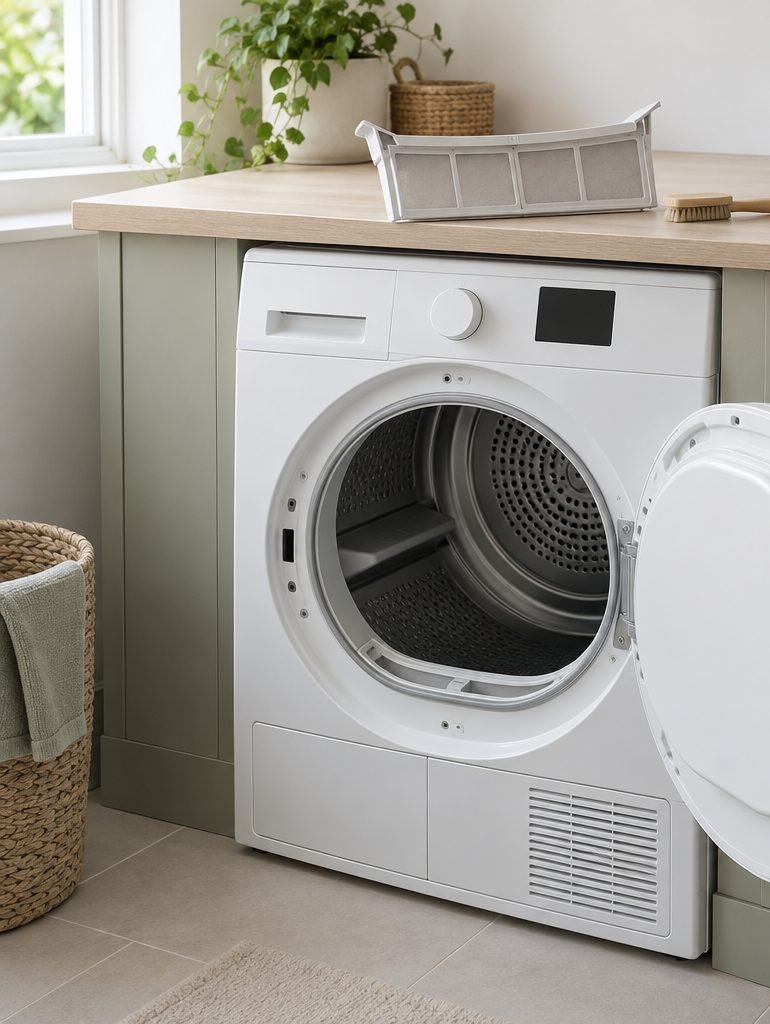
Best for: families, people with no outdoor drying space, and anyone who wants towels dry the same evening.
A heat pump dryer is the cheapest tumble dryer to run. Which? puts it at about £54.32 a year for three loads a week at the current price cap, against about £139 for condenser and £140 for vented models. It costs more to buy: Which? lists heat pump dryers from £327 to £1,699. From 19 January 2027, new vented, condenser and gas-fired dryers will no longer be allowed onto the market in Great Britain, RETRA reports, so heat pump dryers will be the main choice for new machines. Our heat pump vs condenser dryer guide explains the rule and the running costs in detail.
Avoid if: you have no space, or you rent and cannot install one. Look after it safely: Cornwall Fire and Rescue advises you to clean the filter in your dryer after every use and never leave it unattended or running overnight.
Condenser Tumble Dryer: Cheapest to Buy
Best for: people who already own one, and anyone who needs a dryer now on the smallest upfront budget.
Condenser dryers are the cheapest to buy, with Which? listing them from £220 to £529, and they need no vent to the outside. But they cost the most to run: about £138.91 a year for three loads a week at the current price cap, more than twice a heat pump dryer. Over five years that makes them the most expensive option in our sums.
Avoid if: running costs matter to you, or you are buying a new machine after January 2027.
Our Pick
- Family, daily washing, a utility room: a heat pump tumble dryer. See our small utility room ideas for where it fits.
- One or two people in a flat: a compressor dehumidifier with a laundry mode and a good airer.
- Damp, mould or an unheated room: a dehumidifier, desiccant if the room is below about 10°C.
- Already own a condenser dryer: you can keep using and repairing it; RETRA says the rule covers new machines only, and second-hand sales stay allowed.
Decide in Five Questions
- Do you dry more than four loads a week? Yes: heat pump dryer.
- Do you have condensation or mould in winter? Yes: dehumidifier.
- Is there no space or venting for a dryer? Yes: dehumidifier.
- Do you need clothes dry in a few hours? Yes: heat pump dryer.
- Is your budget under about £250 and are running costs a worry? Yes: dehumidifier.
Short of room for an airer? Our laundry closet ideas and airing cupboard shelves show where drying space can hide.
How this guide was made: researched and written with the help of AI tools, fact-checked against trusted sources and published by Mohamed Elber. Images are AI-generated illustrations. See our Editorial Policy.