Good purse storage ideas solve two problems at once: they stop handbags from turning into a slumped pile, and they keep each bag in shape so it still looks good when you grab it. A leather tote left squashed under three other bags for a season gets creases that never fully come out. A crossbody with its strap tangled around everything else is the one you stop using.
This guide covers 18 storage ideas for purses and handbags, from shelf dividers and hanging organizers to door hooks, drawers and clear boxes for the bags you only carry a few times a year. You’ll find purse storage ideas for small spaces and renters too, plus ideas to store handbags in a bedroom when there is no closet to spare. If your closet is already full, start with our closet clean-out guide so you only make room for the bags you actually use.
Key Takeaways
- Quick answer: Stand structured handbags upright on a shelf with dividers, hang crossbody bags and totes on sturdy hooks or a hanging organizer, file clutches in a drawer, and keep special bags stuffed with tissue in a dust bag on a high shelf.
- Store bags by shape, not all in one pile. Structured bags need support; soft bags need space.
- Keep everyday bags near the door and move the rest to the closet or a box.
Time: 1–2 hours · Cost: $0–$60 · Difficulty: Easy
Store Each Bag by Its Shape
Most purse storage problems come from treating every bag the same. A structured handbag keeps its shape only if it stands on its base and nothing presses on it. A soft tote is happy on a hook. Crossbody bags need their straps controlled, and clutches and wallets disappear unless they have a drawer. Sort your bags into these four groups first, and the right storage becomes obvious.
Leather also needs the right conditions. The Canadian Conservation Institute recommends a stable relative humidity of 45 to 55% and a temperature of about 18 to 20°C (64 to 68°F) for leather, notes that mould needs humidity above 65% to grow, and advises keeping dyed leather in the dark or in boxes and padding folds with acid-free tissue. A bedroom closet usually comes close to those numbers; a damp basement or a hot attic does not.
Quick Pick: Purse Storage Ideas by Problem
| Your problem | Start with these ideas |
|---|---|
| Bags slump and lose their shape | Stand them upright (#1), shelf dividers (#2), stuff them (#3) |
| No shelf space left | Hanging purse organizer (#7), S-hooks on the rod (#8), door hooks (#9) |
| Clutches and wallets everywhere | File them in a drawer (#11), a divided box (#12) |
| Special-occasion bags | Dust bags (#4), clear boxes on the top shelf (#5) |
| Small space or renting | Door hooks (#9), under-bed bin (#14), a bookcase (#15) |
| The everyday bag ends up on a chair | One hook by the door (#17) |
How to Organize Your Purses in 5 Steps
- Pull out every bag from closets, hooks, chairs and the car, and empty each one.
- Edit. Donate bags you haven’t carried in a year, and repair or toss broken straps and zips.
- Sort by shape: structured handbags, soft totes, crossbody bags, and clutches and wallets.
- Split everyday from occasional. Two or three daily bags stay within reach; the rest go higher.
- Measure your space before buying dividers, boxes or organizers, then give every bag one home.
18 Purse Storage Ideas
These ideas are grouped by where they work best, so start with the space you have.
Shelves and Closet Storage
1. Stand handbags upright on a shelf
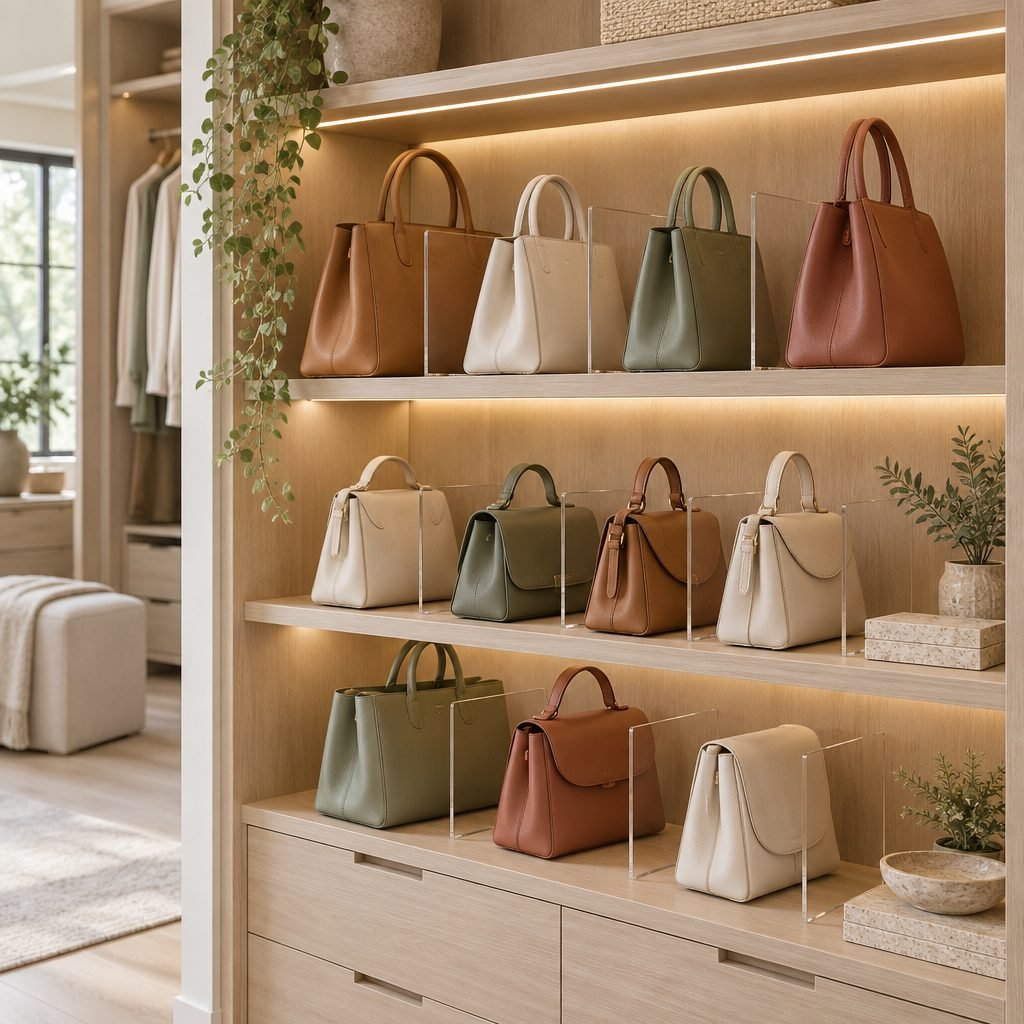
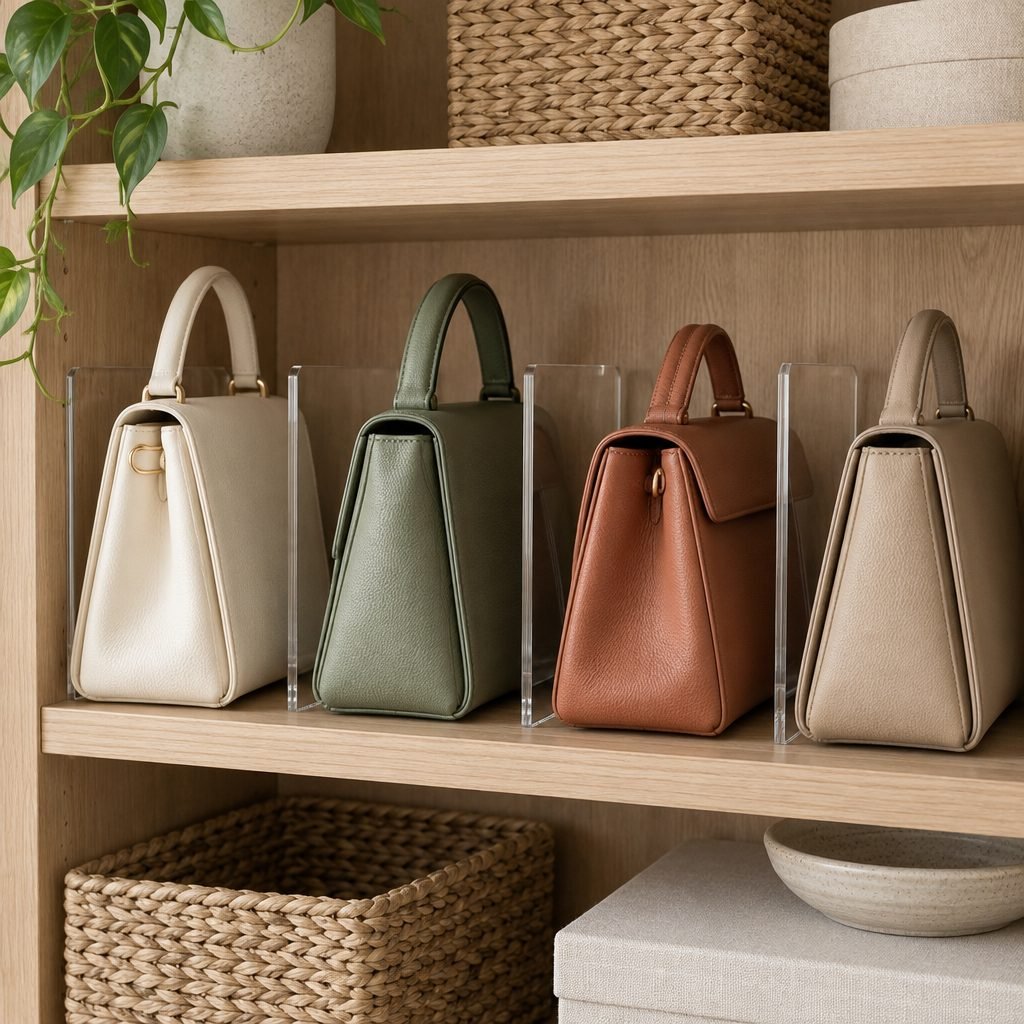
The simplest way to store purses well is to stand them on their base in a single row, like books. Bags hold their shape, you can see every one at a glance, and nothing gets crushed. A shelf about 12 to 14 inches (30 to 35 cm) deep fits most handbags.
2. Add clear shelf dividers
Acrylic shelf dividers keep bags from leaning into each other and give each one its own slot. Clear dividers almost disappear, so the shelf still looks open. Leave about an inch (2 to 3 cm) of space on each side so you can lift a bag out without knocking the others.
3. Stuff bags to keep their shape
An empty bag slowly collapses. Fill structured bags loosely with acid-free tissue or a small pillow insert and tuck the handles in so they don’t press marks into the leather. Skip newspaper, because the ink can transfer.
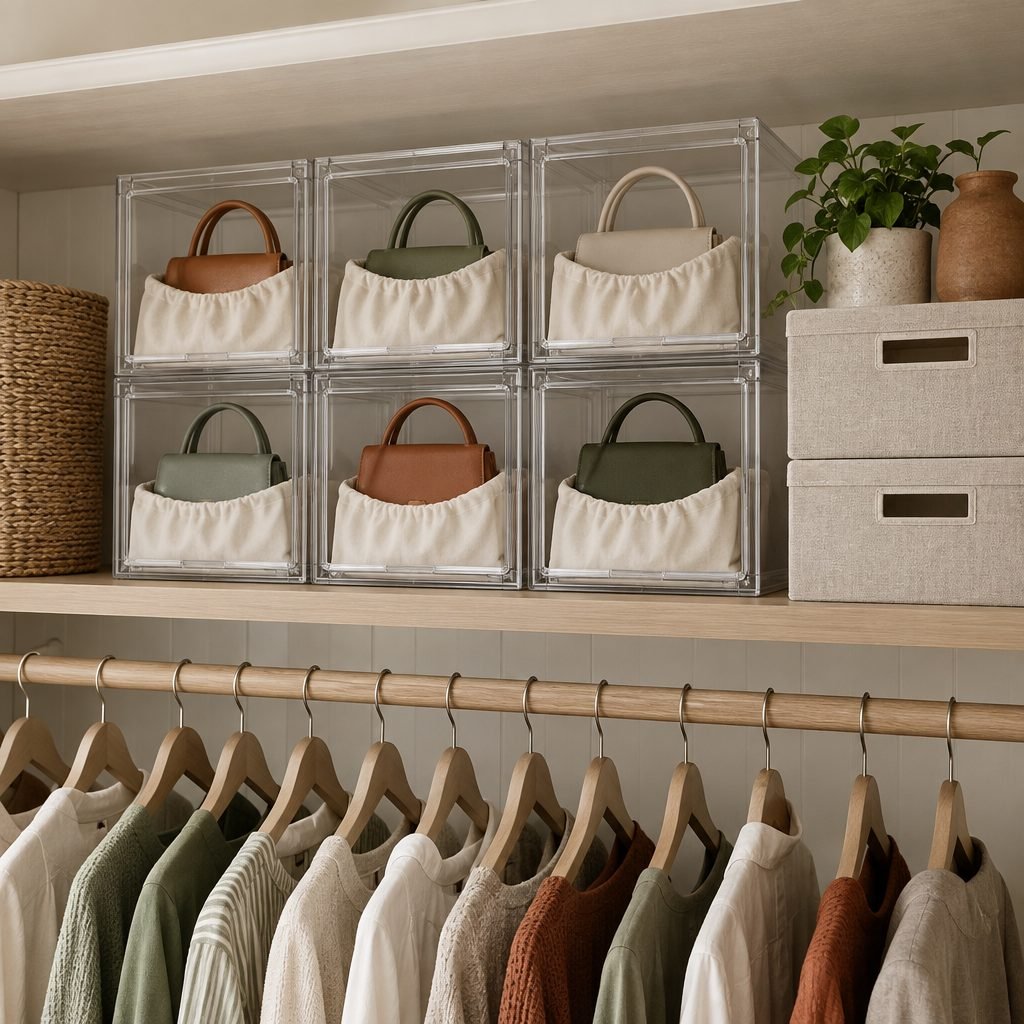
4. Keep the dust bags
The cotton bag your purse came in is worth keeping. It lets leather breathe while keeping dust and light off it. An old cotton pillowcase works just as well. Avoid sealing leather in plastic for long periods, since it can trap moisture.
5. Use clear boxes for special-occasion bags
Clear drop-front boxes stack on the top shelf and let you see each bag without unstacking anything. They’re ideal for evening bags and the handbags you only carry a few times a year. Our small walk-in closet ideas show how to plan the shelves above the rod.
6. Give purses their own zone
Even in a shared closet, one dedicated shelf or section for bags stops them from spreading onto chairs and the floor. When the zone is full, that’s your cue to let one go before buying another. If hats share the same closet, our hat storage ideas show how to use the shelf above.
Hanging Purse Storage
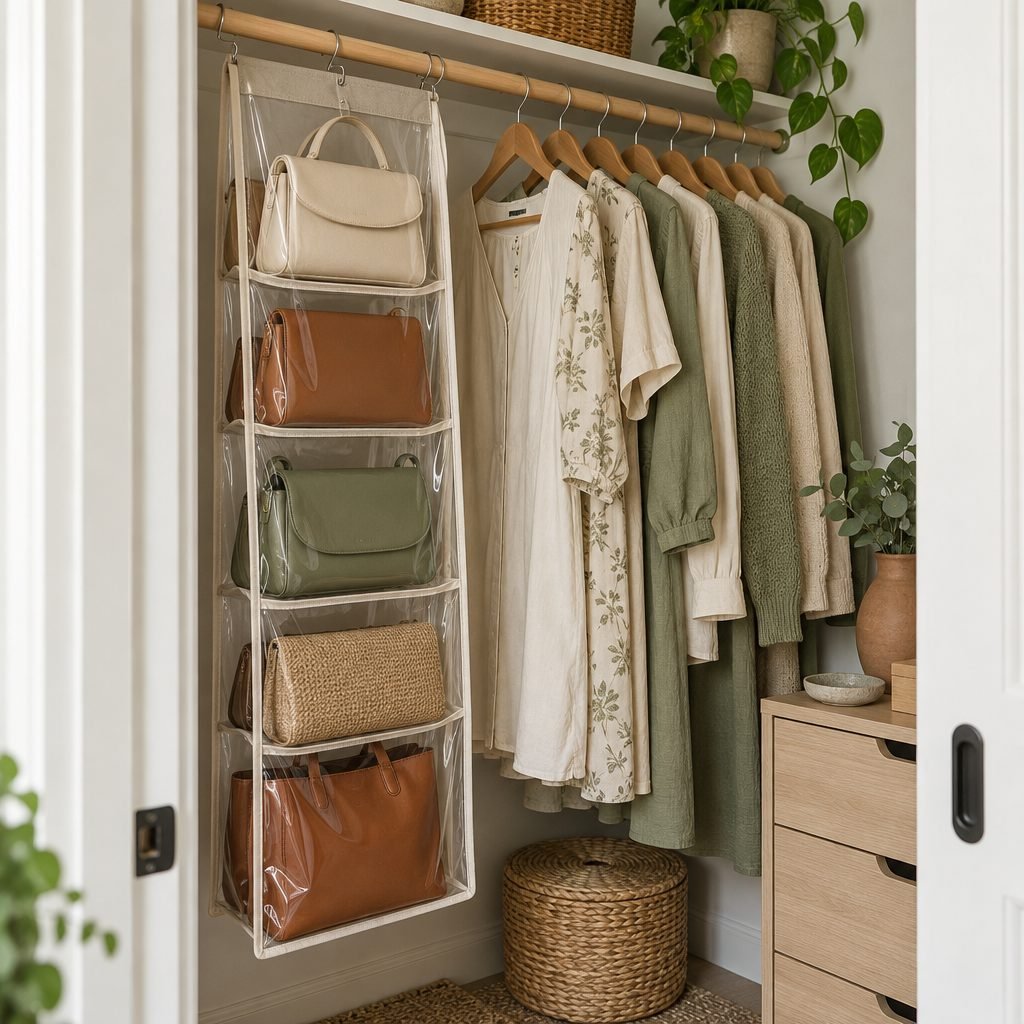
7. Hang a purse organizer on the closet rod
A hanging organizer with clear pockets holds five or six bags in the width of a few hangers. It’s one of the best purse storage ideas for small spaces because it uses hanging space you already have. Choose one with stiff shelves so bags sit on their base instead of hanging by their handles.
8. Use S-hooks on the rod for light bags
Smooth S-hooks on the closet rod are an easy home for light crossbody bags and fabric totes. Keep heavy leather bags off thin hooks, though; the weight can stretch the strap and leave a dent where it hangs.
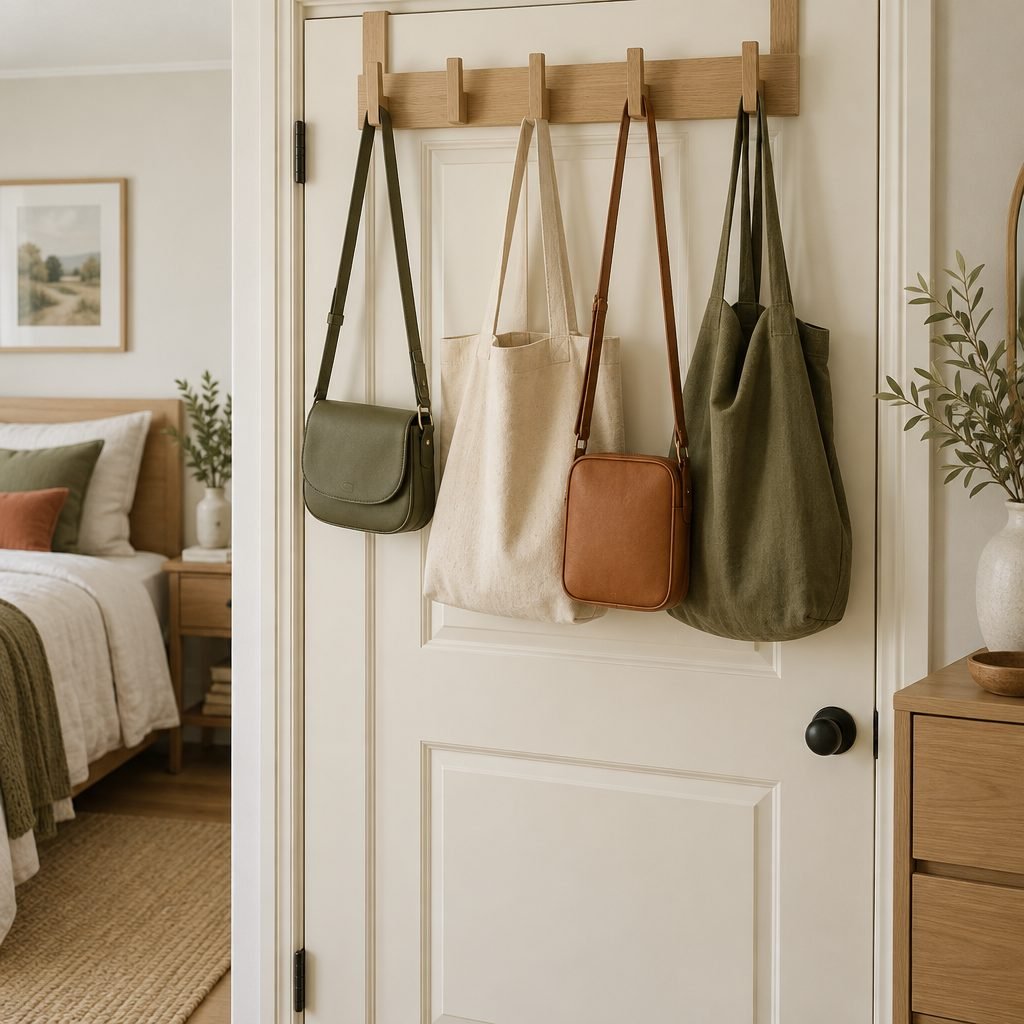
9. Add hooks to the back of a door
An over-the-door hook rack holds three to five bags without drilling, which makes it a good fit for renters. Space the bags so they don’t rub, and check that the door still closes easily. See more door tricks in our small closet organization ideas.
10. Tuck straps inside
Long straps tangle and scratch other bags. Before you hang or shelve a crossbody, tuck the strap inside the bag or loop it loosely around itself. It also keeps the shelf looking neat.
Drawers for Clutches and Wallets
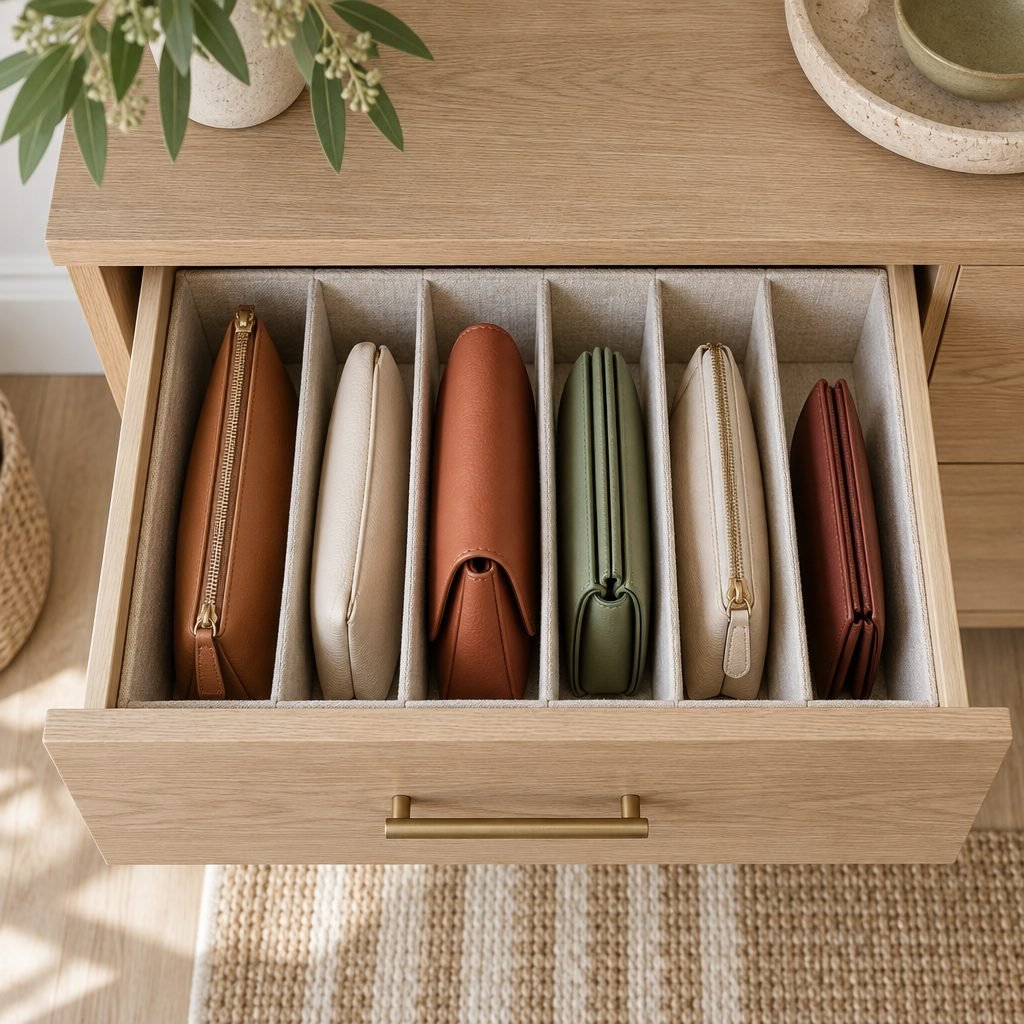
11. File clutches upright in a drawer
Clutches and wallets disappear in a pile but work beautifully filed on their sides in a drawer, like folders. Fabric or wooden dividers keep them standing, and you can see the whole collection in one glance.
12. Use a divided box on a shelf
No spare drawer? A shallow lidded box with a few dividers does the same job on a closet shelf. Label it so small bags, wallets and pouches always go back in the same place.
13. Nest small pouches in a tote
Cosmetic pouches and tiny bags can live together inside one soft tote. Only nest bags that won’t be crushed, and never stuff a structured handbag inside another.
Purse Storage Ideas for Small Spaces
No walk-in closet? These ideas use spots most small homes already have. For more, see our guide to storage ideas for small spaces.
14. Use a flat bin under the bed
Off-season bags and straw summer totes can wait in a flat, breathable bin under the bed. Stuff each one, wrap it in its dust bag, and keep heavy things off the lid.
15. Turn a bookcase into a bag display
No closet shelf to spare? A small bookcase or cube unit in the bedroom makes a pretty handbag display. Keep it out of direct sun, which fades leather. Find more ideas in our small bedroom storage guide.
16. Add hooks inside a wardrobe door
The inside of a wardrobe door can hold two or three removable hooks for light bags. Check the weight limit on the package and use the hooks for crossbody bags, not heavy totes.
Everyday Bags by the Door
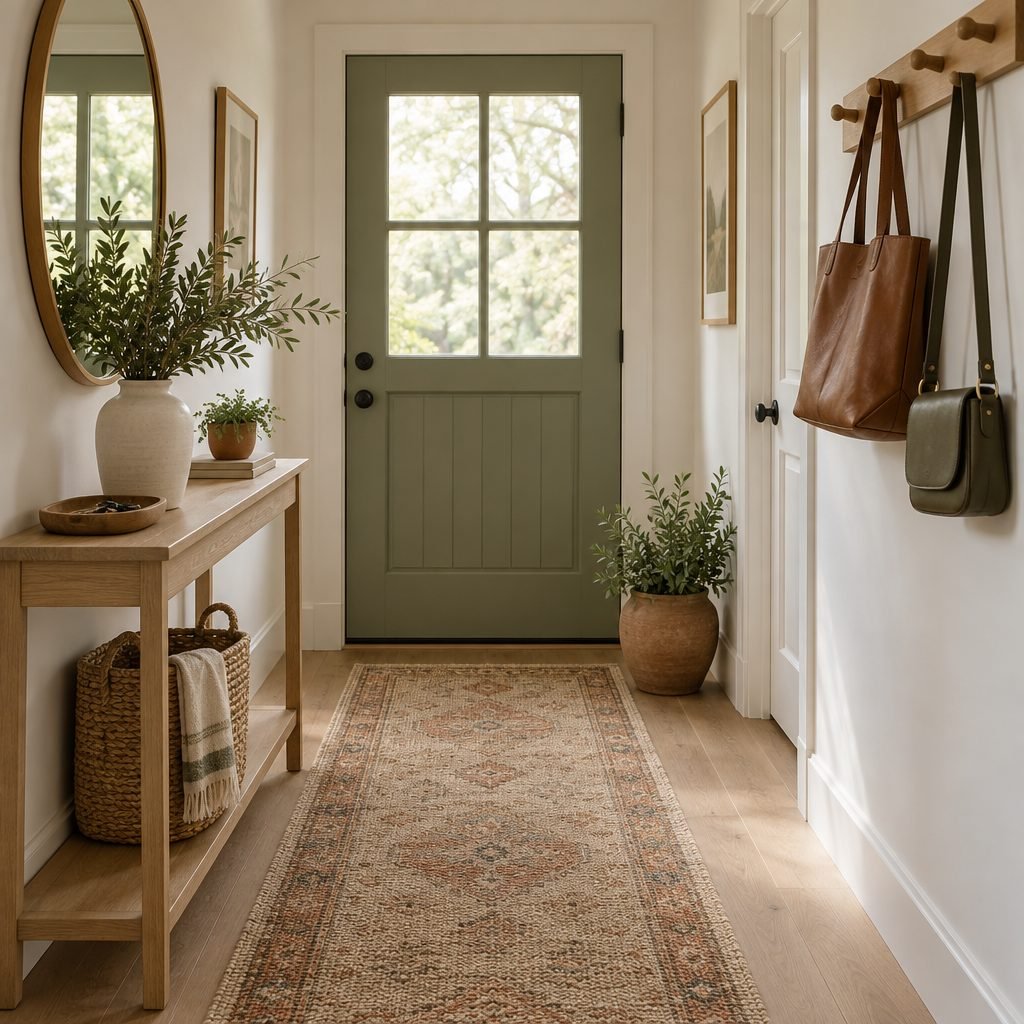
17. Give your everyday bag one hook by the door
The bag you carry daily shouldn’t go back to the closet every night. A peg rail or one sturdy hook near the front door, with a small tray below for keys, ends the search before you leave. Our small entryway ideas show how to fit it into a tight space.
18. Empty your bag once a week
Receipts, snacks and loose change make a bag heavy and pull it out of shape. Empty your everyday bag once a week, and use the moment to swap bags or let go of one you never carry. It keeps all your purse storage ideas working long term.

Save the checklist
Pin this purse storage checklist so you have it handy the next time you sort your closet.
Save to PinterestCommon Purse Storage Mistakes
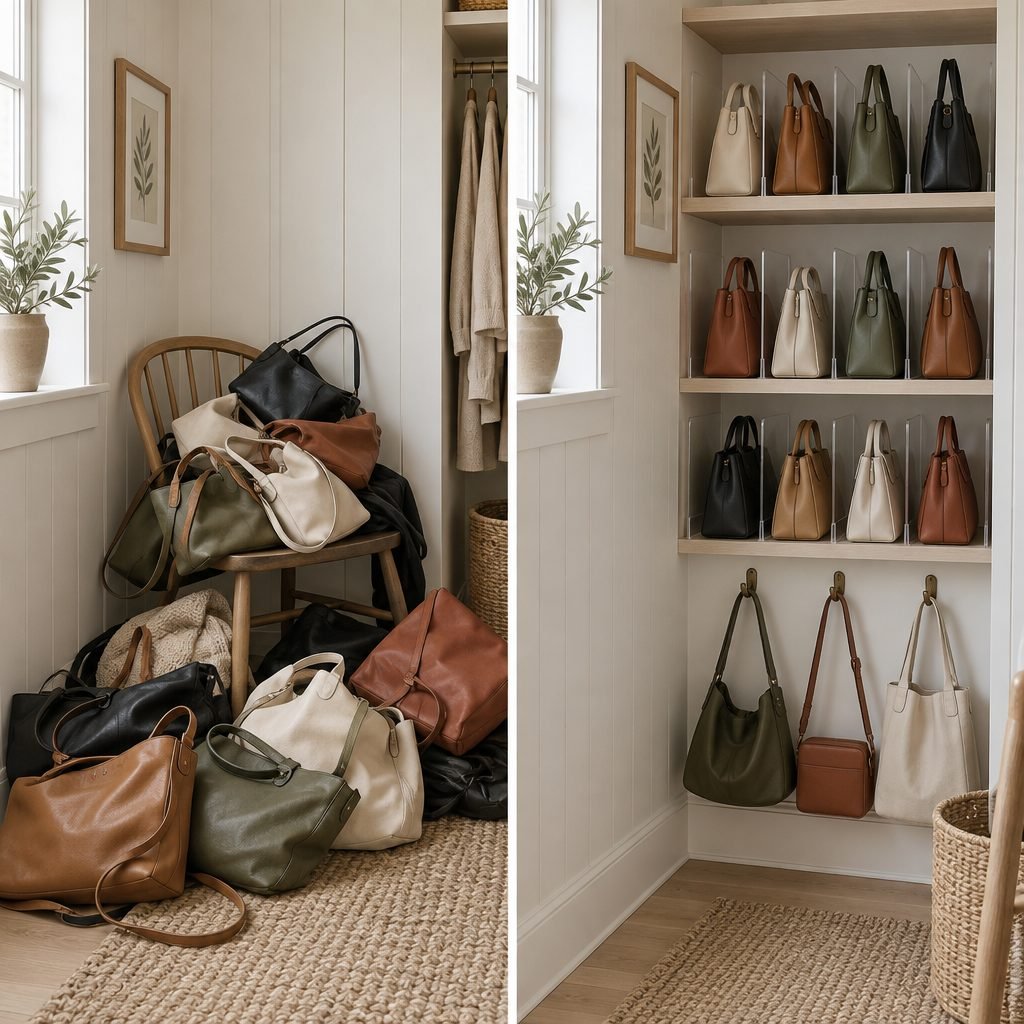
- Piling bags on top of each other. The bags at the bottom crease and lose their shape.
- Hanging heavy leather bags by thin straps. Use a shelf or a wide hook instead.
- Storing leather in damp or hot spots. Basements invite mould and attics dry leather out.
- Sealing bags in plastic. Cotton dust bags let leather breathe.
- Leaving bags full. Empty them before storing, and stuff them with tissue instead.
Purse and Handbag Storage FAQ
How do you store purses so they keep their shape?
Stand them upright on a shelf, fill them loosely with acid-free tissue, and keep space between them with shelf dividers. Don’t stack bags or hang heavy structured bags by their handles for long periods.
How do you store a lot of purses in a small space?
Use vertical and hidden space: a hanging purse organizer on the closet rod, hooks on the back of the door, clutches filed in a drawer and off-season bags in a flat bin under the bed.
What are the best handbag storage ideas for a closet?
Give handbags one shelf or section: stand structured bags upright between shelf dividers, hang light crossbody bags and totes on hooks or a hanging organizer, file clutches in a drawer and keep special bags in dust bags or clear boxes on the top shelf.
Is it bad to hang purses?
Hanging is fine for light crossbody bags and fabric totes. Heavy leather bags are better on a shelf, because their weight can stretch the strap and leave a dent where it hangs.
Should handbags be stored in plastic?
Not for long-term storage. Leather does best in a breathable cotton dust bag or an old pillowcase. Clear boxes are fine as long as the bag inside sits in its dust bag and the room stays dry.
Where should I store handbags in a bedroom?
Good spots are a shelf inside the wardrobe, a small bookcase or cube unit away from a sunny window, hooks on the inside of the wardrobe door for light bags, and a flat breathable bin under the bed for off-season bags. Avoid the floor and the top of a radiator, and keep leather out of direct sun so it does not fade.
Next stop, the small stuff: our jewelry storage ideas show how to keep necklaces, rings and earrings tangle-free.
Final Thoughts
The best purse storage ideas start with the shape of each bag. Stand structured handbags upright, give crossbody bags and totes a hook, file clutches in a drawer, and keep special bags stuffed and covered up high. Pick one shelf or door this weekend, and your bags will finally stop living on the chair.
How this guide was made: researched and written with the help of AI tools, fact-checked against trusted sources and published by Mohamed Elber. Images are AI-generated illustrations. See our Editorial Policy.