The best kitchen storage ideas don’t need a bigger kitchen. They help you use the space you already have: the back of a deep cupboard, the inside of a door, the empty wall above the counter and the narrow gap beside the fridge. In most kitchens, that hidden space adds up to more than another full cabinet.
Below you’ll find 20 kitchen storage ideas for cabinets and cupboards, drawers, walls and those awkward gaps, plus a simple zone plan, a quick-pick table and the mistakes that waste space. Most ideas work for renters and small kitchens, and many cost less than a takeaway dinner.
Key Takeaways
- Quick answer: The best kitchen storage ideas start with zones: keep everyday items 15 to 48 inches from the floor, add pull-outs, door racks and shelf risers inside cabinets, then use walls and gaps beside the fridge or under the sink.
- Keep everyday items between 15 and 48 inches (38 to 122 cm) from the floor, and move rarely used things up high or out of the kitchen.
- Pull-outs, door racks and shelf risers add more usable space than buying new cabinets or cupboards.
- Use the walls and the hidden gaps (beside the fridge, under the sink, above the cabinets) before you add furniture.
Time: 1 to 3 hours per area · Cost: $0 to $150 · Difficulty: Easy
Start With Storage Zones
Before you buy a single organizer, decide what goes where. The easiest rule is to store things by how often you use them. Daily items belong in the prime zone, the area you can reach without bending or stretching. Weekly items go just above it, and rarely used things go up high or out of the kitchen entirely.
The numbers come from the Kitchen Planning Guidelines of the National Kitchen & Bath Association (NKBA), which recommend storing frequently used items 15 to 48 inches above the floor and fitting at least one corner cabinet with a functional storage device. The same guidelines suggest about 1,400 inches of total shelf and drawer frontage for a small kitchen under 150 square feet. You don’t need to measure every shelf, but if your kitchen always feels full, it usually means storage is missing or poorly used, not that you own too much.
Quick Pick: The Best Fix for Your Problem
| Your problem | Best kitchen storage idea |
|---|---|
| Can’t reach the back of deep cabinets | Pull-out shelves or baskets (idea 1) |
| Dead corner cupboard | Lazy Susan or corner pull-out (idea 2) |
| Pans and lids everywhere | Deep drawer with peg dividers (idea 6) |
| Cluttered countertops | Wall rail and magnetic knife strip (ideas 9 and 10) |
| No pantry | Slim rolling cart beside the fridge (idea 14) |
| Messy under-sink cupboard | Two-tier sliding drawers (idea 16) |
How to Plan Your Kitchen Storage in 6 Steps
- Empty one area at a time. Start with the cupboard that annoys you most, not the whole kitchen.
- Remove what you don’t use. Duplicates, broken gadgets and expired food go first.
- Group by task. Baking, cooking, coffee, food storage and cleaning each get their own spot.
- Assign zones. Daily items in the prime zone, weekly items above, rarely used items high or elsewhere.
- Measure before you buy. Note the width, depth and height of each space and check for pipes and hinges.
- Add organizers last. Buy only what solves a real problem you found in steps 1 to 5.
Kitchen Cabinet and Cupboard Storage Ideas
Cabinets (or cupboards, if you’re in the UK) hold most of your kitchen, but standard fixed shelves waste a lot of space at the back and top. These ideas fix that. For a full step-by-step, see our guide on how to organize kitchen cabinets.
1. Add pull-out shelves to base cabinets
Deep base cabinets turn into black holes because you can’t see the back. Pull-out shelves or wire baskets bring everything to you, so the back half of the cabinet becomes usable space again. Many models screw into the existing cabinet floor and come out again when you move, which makes them renter friendly.
2. Fix the blind corner
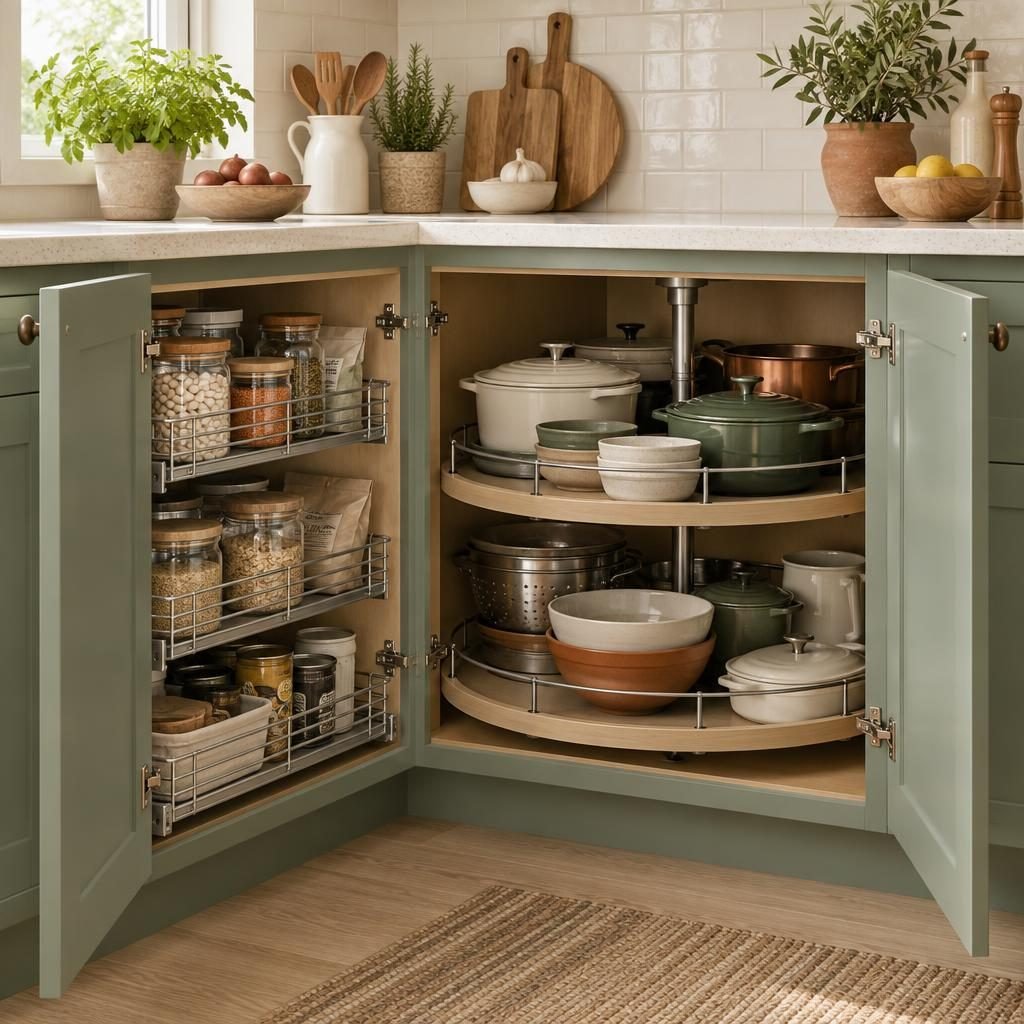
Corner cupboards often hold the most and get used the least. A two-tier lazy Susan works well in L-shaped corners, while pull-out wire baskets suit blind corners where the door opens to the side. Put pots, mixing bowls or bulk dry goods here so you spin or slide instead of reaching.
3. Use the inside of cupboard doors
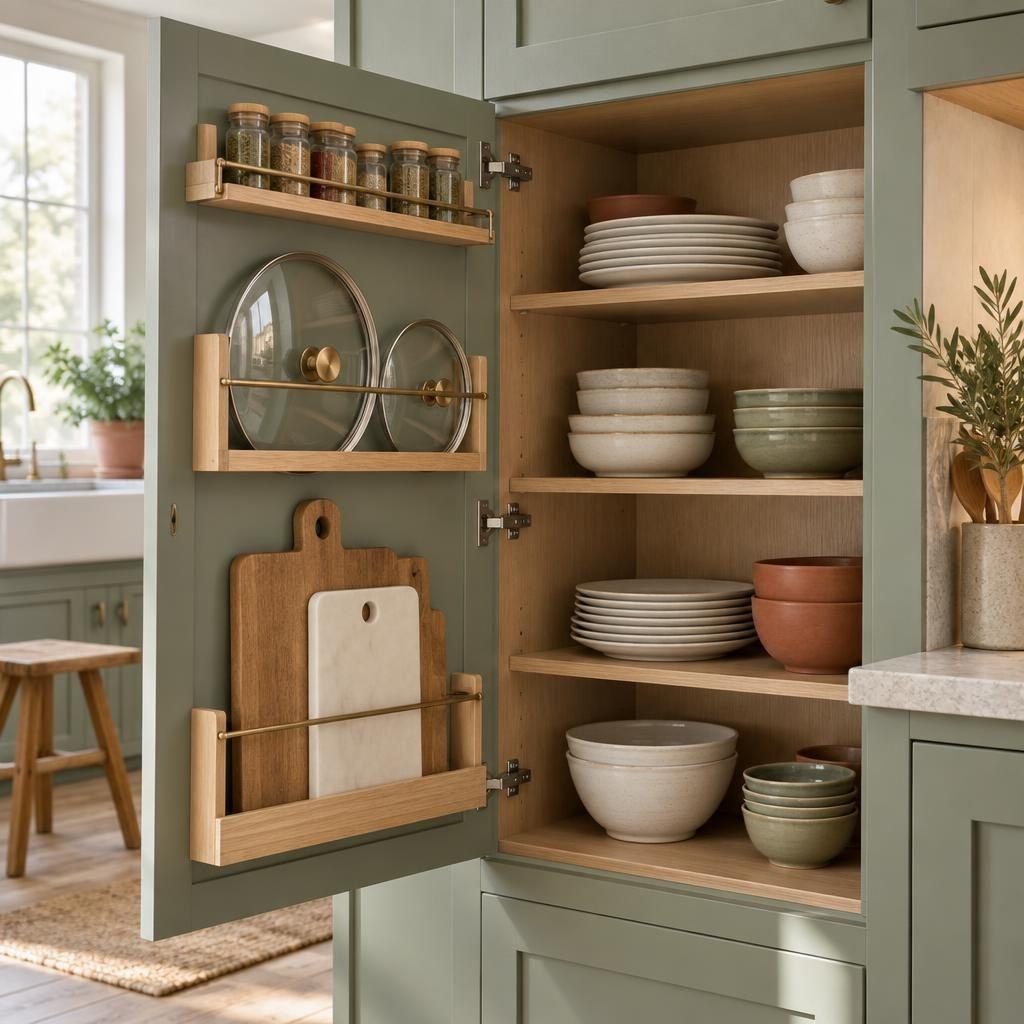
The back of a door is free vertical storage. Slim racks can hold pot lids, cutting boards, foil and wrap or small spice jars. Leave a little gap so the door still closes against the shelves. If spices are your biggest mess, our spice cabinet organization guide covers racks, tiers and labels.
4. Double your shelves with risers
Most cupboard shelves have a big gap above plates and mugs. A simple wire shelf riser creates a second level, so you can stack side plates above dinner plates or mugs above glasses without tall, wobbly piles.
5. Store baking trays and boards upright
Baking trays, cooling racks and chopping boards are hard to pull out of a pile. A vertical divider or even a few tension rods in a cabinet lets you file them on their side like books, so you can take one without lifting the rest.
Kitchen Drawer Storage Ideas
Drawers are often better than cupboards because you see everything from above. These ideas make the most of them, and our kitchen drawer organization guide goes into dividers in detail.
6. Keep pots and pans in deep drawers
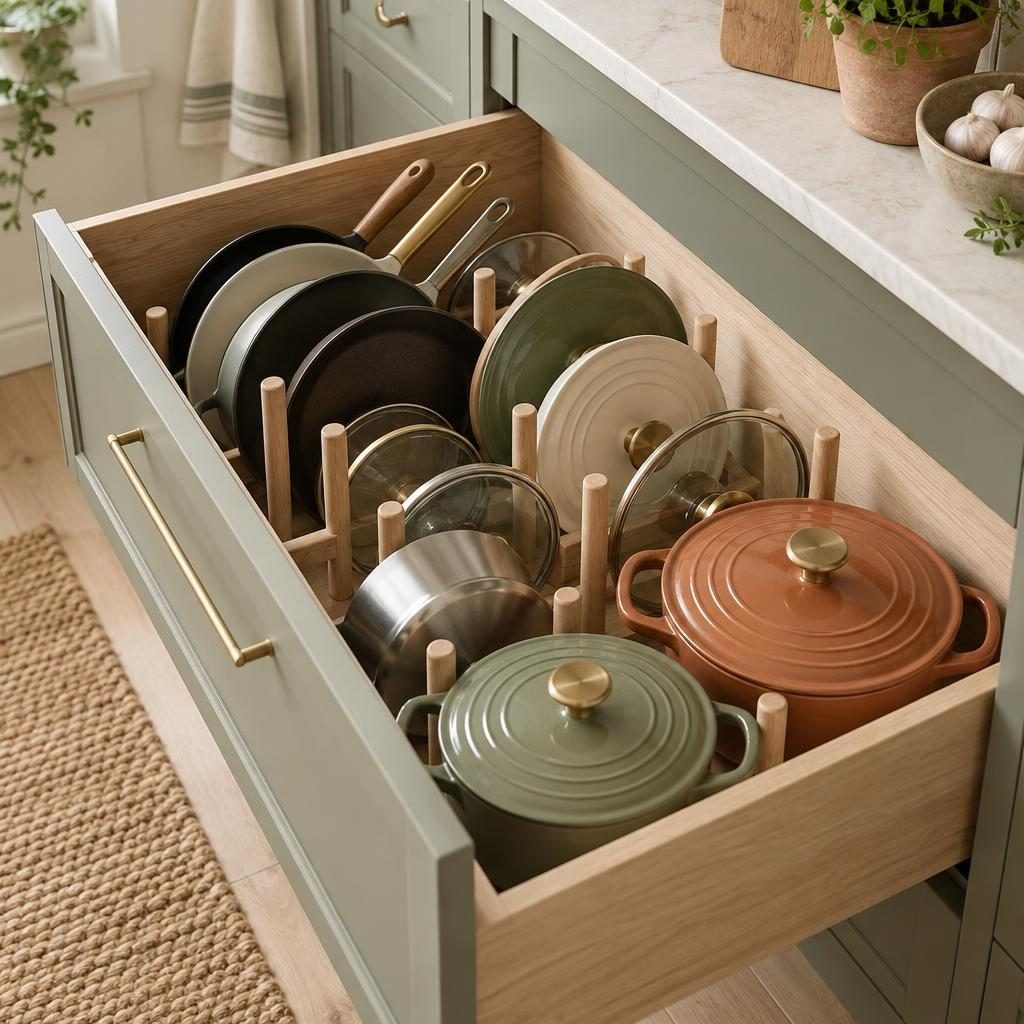
Deep drawers are ideal for heavy cookware because you lift down into them instead of crouching into a cupboard. Adjustable wooden pegs keep pans upright and stop them sliding when the drawer moves. Store lids standing up at the back.
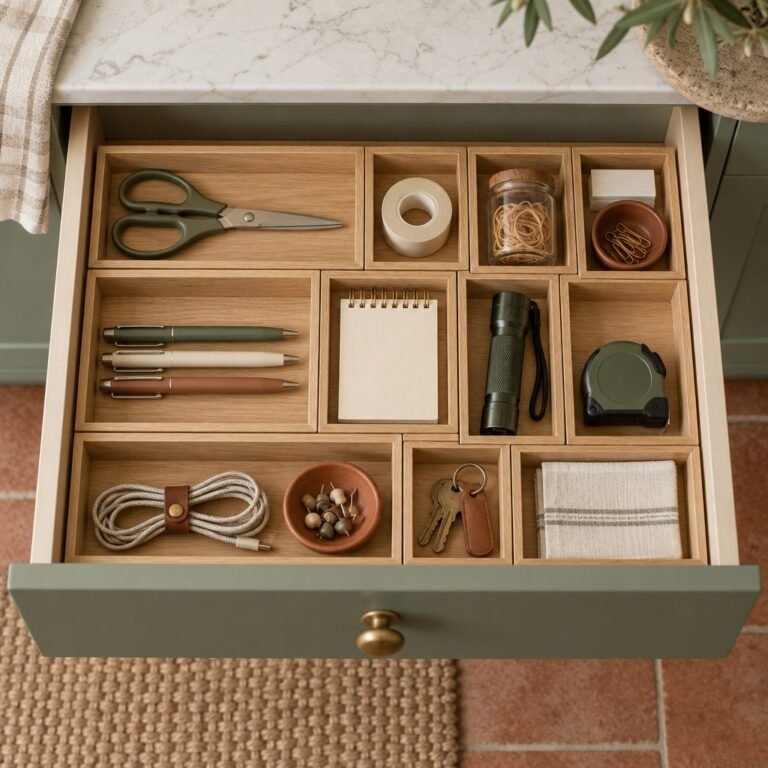
7. Divide every utensil drawer
Without dividers, utensil drawers become a tangle. Expandable bamboo trays fit most drawer widths, and a second sliding tray on top doubles the space in deep drawers.
8. Use the toe-kick space
The low space under base cabinets can hold slim drawers for baking trays, placemats or a step stool. It’s a bigger project, but in a small kitchen it adds storage you would never otherwise use.
Kitchen Wall Storage Ideas
Walls are the most underused storage in small kitchens. Getting tools off the counter and onto the wall frees space without adding any furniture.
9. Hang a rail with S-hooks
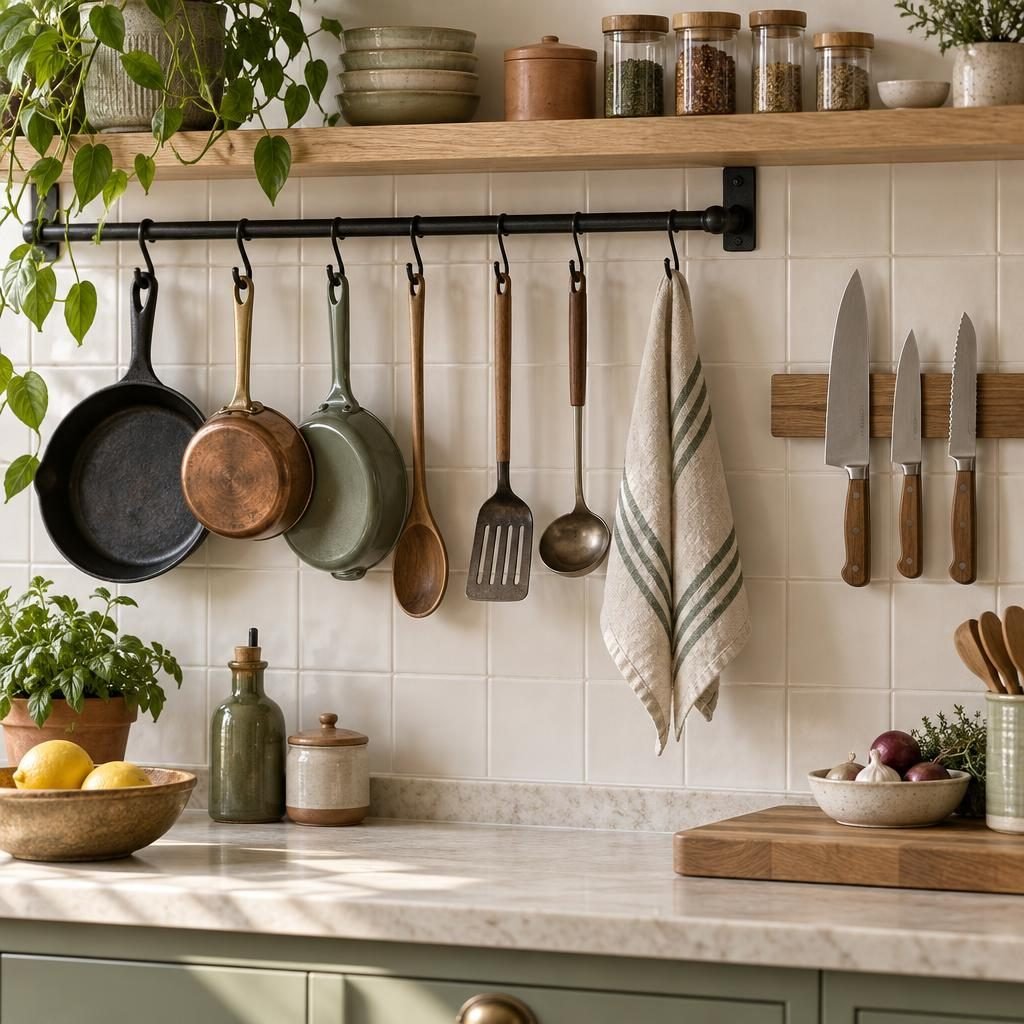
A metal rail along the backsplash holds pans, ladles, sieves and tea towels within reach of the hob. Keep it to items you use daily so it looks tidy, not crowded. Adhesive or tension options exist if you can’t drill.
10. Mount a magnetic knife strip
A knife strip frees up a whole drawer or the counter space a knife block takes. Mount it away from where children can reach and away from the edge of the counter.
11. Add open shelves
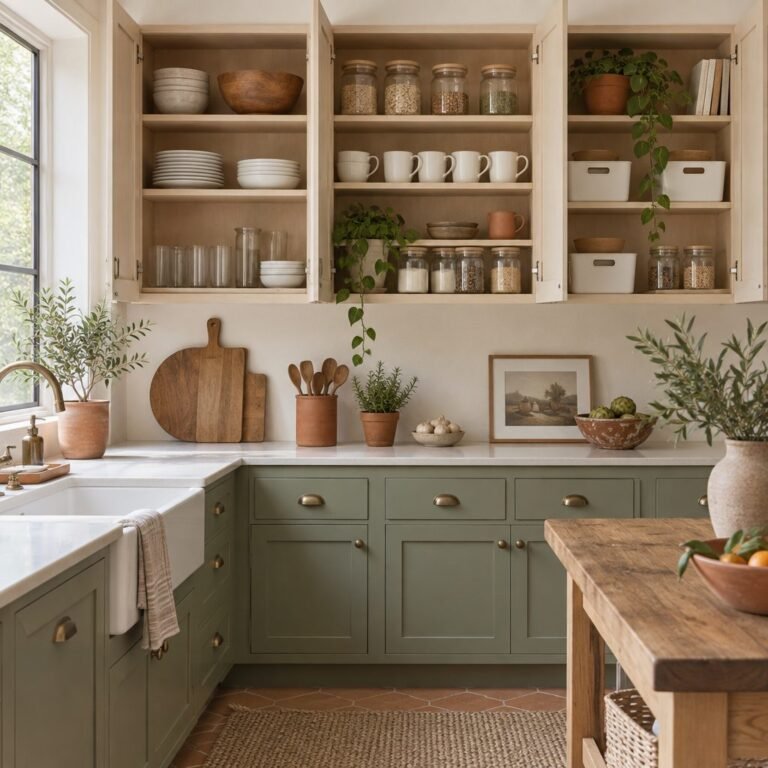
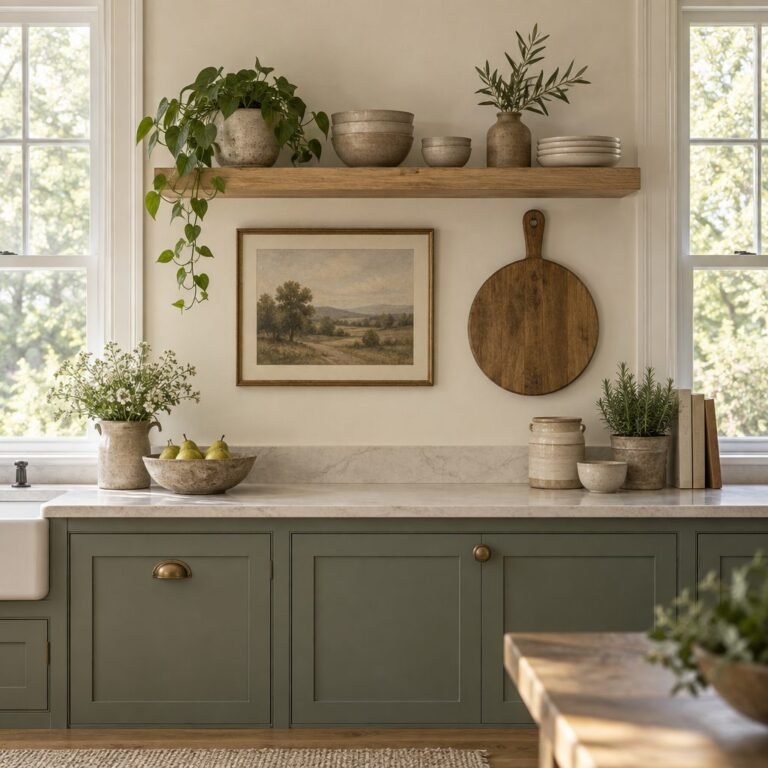
A couple of open shelves give you everyday storage for plates, jars and mugs, and they make a small kitchen feel bigger than wall cabinets do. Our DIY floating shelves tutorial shows how to build and hang them safely.
12. Use the space above the cabinets
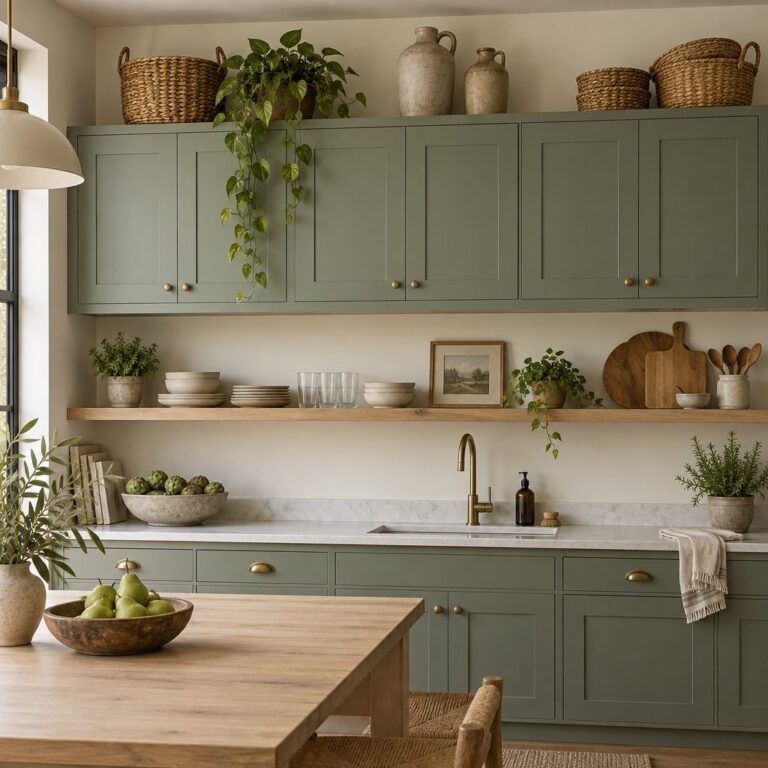
The gap between the top of wall cabinets and the ceiling is perfect for rarely used items like party platters, the big roasting tin or seasonal bakeware. Use lidded baskets so it looks neat and stays dust-free.
13. Hang a pegboard for small tools
A painted pegboard on a free wall holds measuring cups, scissors, sieves and small pans, and you can rearrange the hooks anytime. It’s a good fix if you have little drawer space.
Hidden Kitchen Storage Ideas
Every kitchen has awkward gaps. Turning them into storage is one of the smartest small kitchen storage ideas because it costs little and takes nothing away from the room.
14. Roll a slim cart beside the fridge
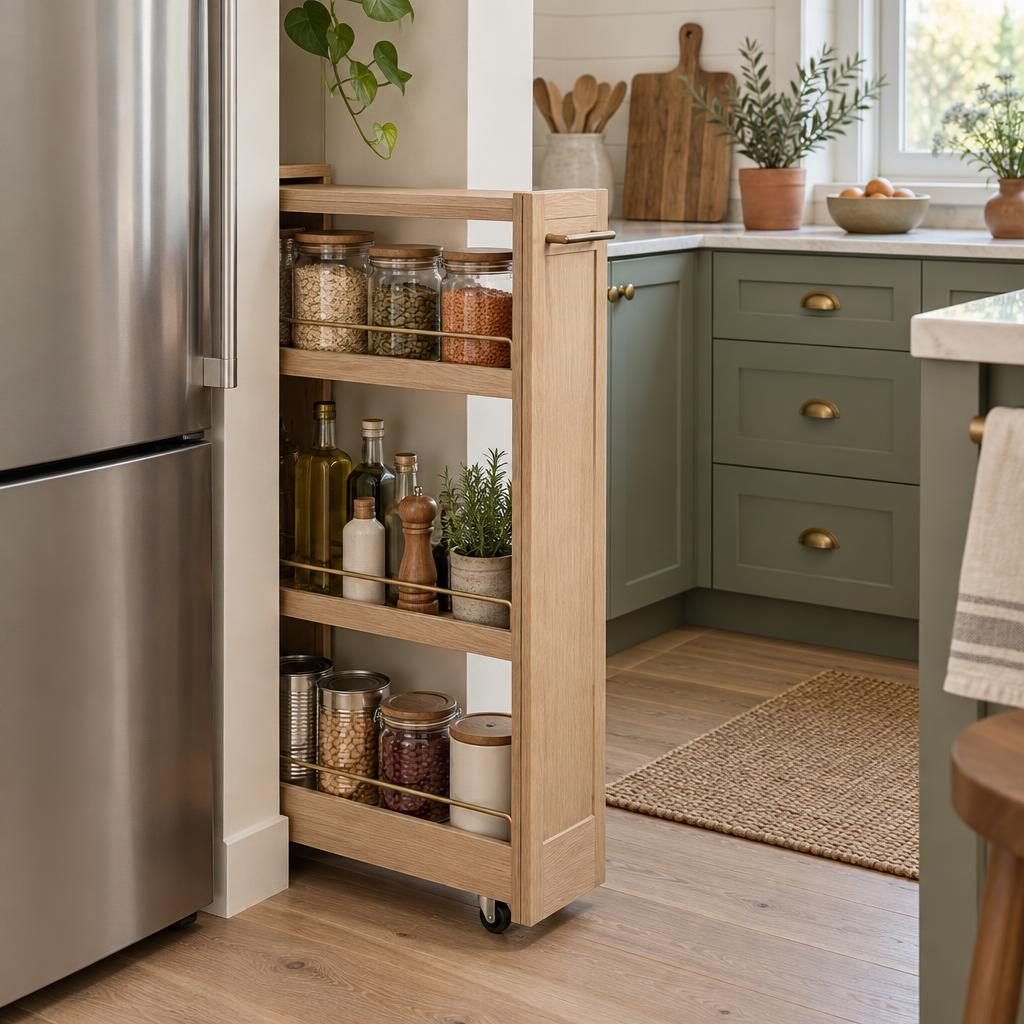
The narrow gap between a fridge and a wall or cabinet often fits a 5 to 7 inch (13 to 18 cm) rolling cart. Use it for oils, spices, tins and jars. If you don’t have a pantry, this is the closest thing to one, and our pantry organization ideas will help you set it up.
15. Add a rack to the side of a cabinet
The exposed end of a run of cabinets can hold hooks for oven gloves and aprons or a slim rack for paper towels and wrap.
16. Organize under the sink with sliding drawers
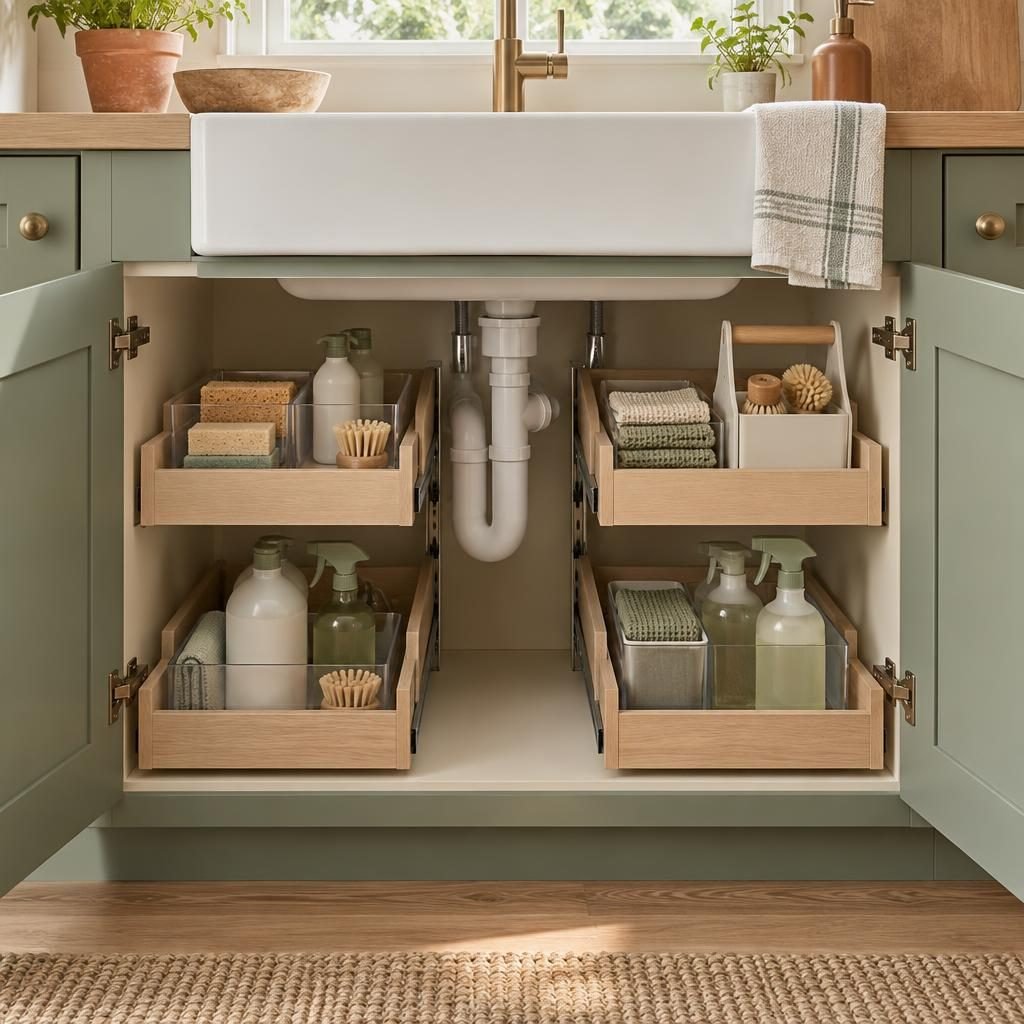
Under-sink cupboards are awkward because of the pipes. Two-tier sliding drawers fit around them and keep sponges, bin bags and cleaning products easy to reach. A tension rod across the top holds spray bottles by the trigger.
17. Store on top of the fridge, carefully
A lidded basket on the fridge can hold rarely used light items like extra napkins or lunch boxes. Avoid heavy things, keep air vents clear and check your fridge manual for any clearance rules.
Countertop and Small Kitchen Storage Ideas
18. Keep only daily items on the counter
Counters are work space, not storage. Keep the kettle, a utensil crock and maybe the coffee maker out, and store everything else. Our kitchen counter organization guide shows how to decide what stays.
19. Decant dry goods into matching containers
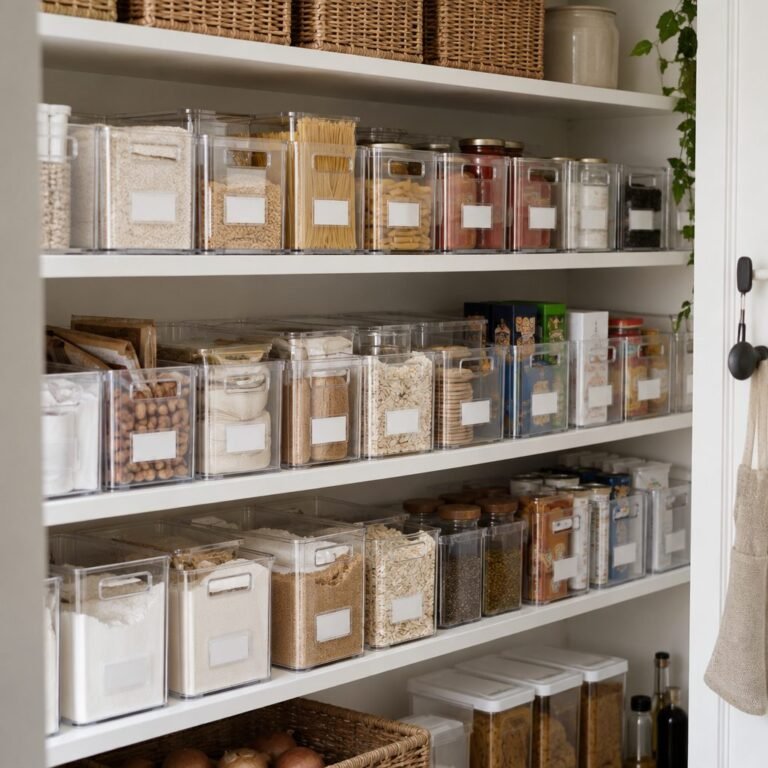
Square or rectangular containers use shelf space better than round bags and boxes, and you can see when you’re running low. Label the front and write the use-by date on the back.
20. Add a trolley or island with storage
If you have floor space, a kitchen trolley with shelves or drawers adds prep space and storage at the same time. Choose one with wheels so you can move it when you need more room.

Save the checklist
Six kitchen spaces most people forget to use, all on one page. Pin it so you have it when you open your cupboards this weekend.
Save to PinterestKitchen Storage Mistakes to Avoid
- Buying organizers first. Measure and declutter before you shop, or the bins won’t fit.
- Storing heavy items up high. Keep heavy pans and appliances low and close to where you use them.
- Forgetting pipes and hinges. Measure inside the frame, not the outside of the door.
- Filling every gap. Leave a little space on each shelf so things go back easily.
- Keeping duplicates. Three spatulas and five baking trays take space you could use better.
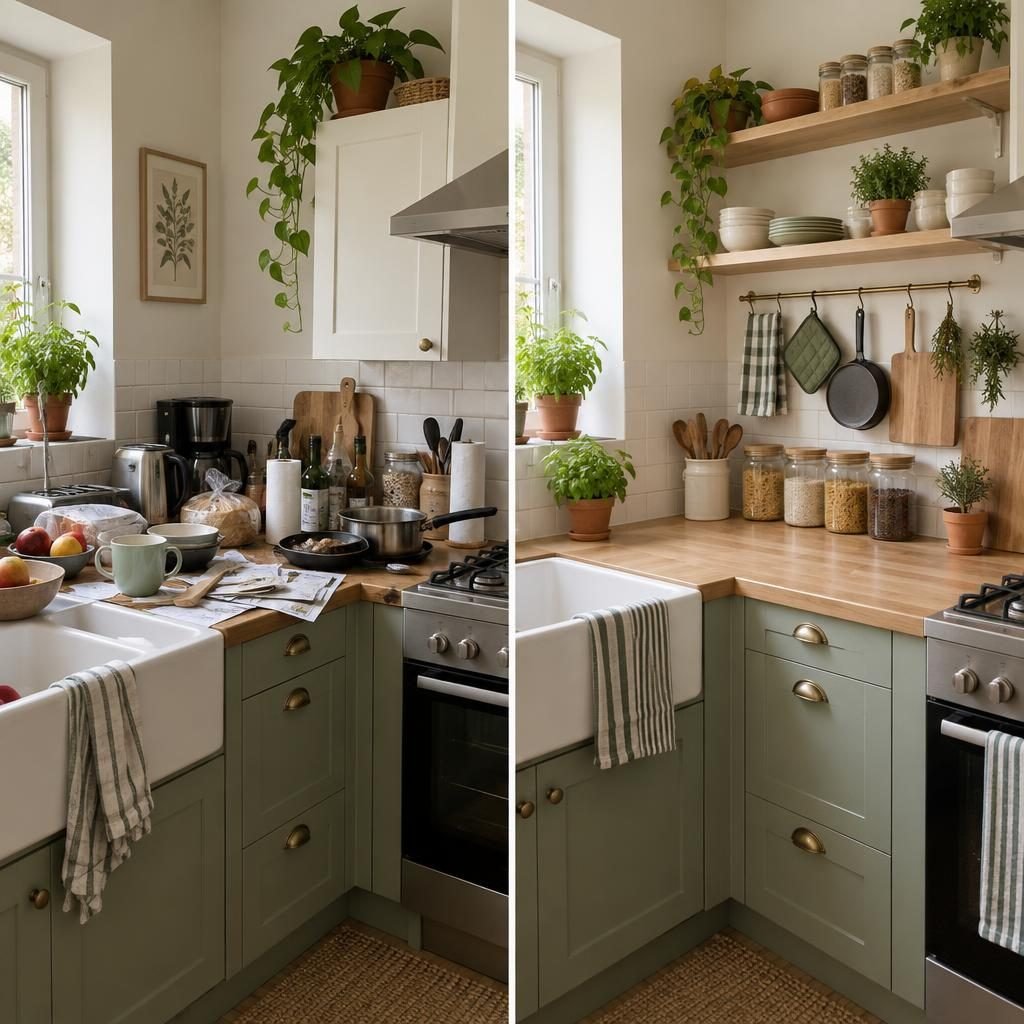
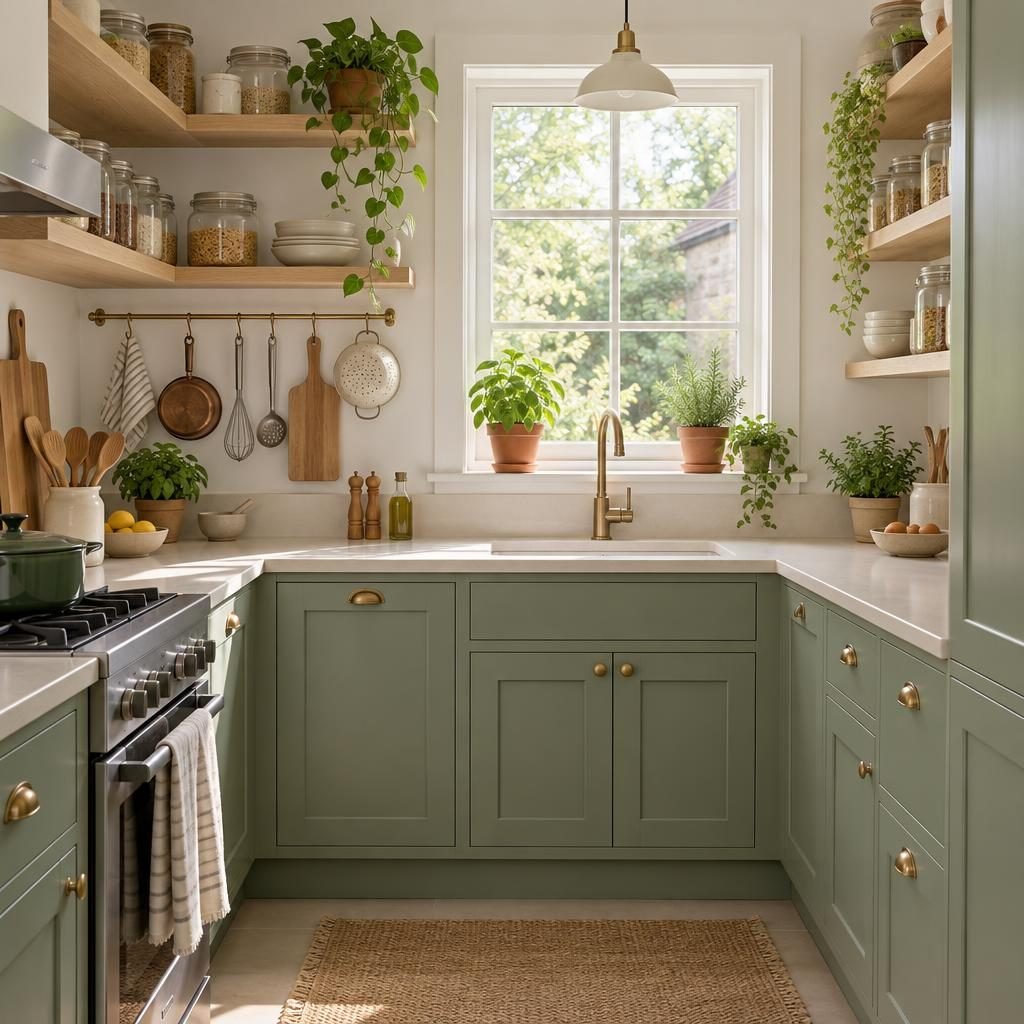
The before-and-after above is the same small kitchen. Nothing was rebuilt. The counter was cleared, daily tools went on a wall rail and open shelves, and everything else moved into the cupboards with pull-outs and door racks. That is what good kitchen storage ideas do: they give every item a home.
Kitchen Storage FAQ
How can I get more storage in a small kitchen?
Use vertical space first: wall rails, open shelves, shelf risers and door racks. Then use hidden gaps beside the fridge, under the sink and above the cabinets. Move rarely used items out of the kitchen to free the most reachable space.
What is the best storage for a corner cupboard?
A lazy Susan suits L-shaped corner cupboards, and pull-out or swing-out baskets suit blind corners. The NKBA recommends at least one corner cabinet with a functional storage device so the space isn’t wasted.
Where should pots and pans go in a kitchen?
Store them low and near the hob, ideally in a deep drawer with peg dividers or on pull-out shelves. Daily pans can also hang on a wall rail.
How do I add kitchen storage without drilling?
Choose freestanding shelf risers, over-the-door racks, tension rods, adhesive hooks, magnetic racks for the side of the fridge and a slim rolling cart. None of them needs a drill, and most come off cleanly when you move out.
Using the gap above your upper cabinets for storage? Our over kitchen cabinet decorating ideas show how to make that space look styled with baskets, crocks and greenery.
Final Thoughts
The best kitchen storage ideas start with zones: daily items within easy reach, rarely used items up high or elsewhere. Add pull-outs and door racks inside your cupboards, then use the walls and the hidden gaps before you buy any new furniture. Pick one problem area this week and fix it with one idea from this list.
Save this list to Pinterest so you have it ready for your next kitchen project.
How this guide was made: researched and written with the help of AI tools, fact-checked against trusted sources and published by Mohamed Elber. Images are AI-generated illustrations. See our Editorial Policy.