Learning how to fold clothes to save space is the cheapest storage upgrade there is. You do not need new furniture or a bigger closet; you just change the shape of what goes into the drawers you already have. A few simple folds can fit noticeably more into the same dresser, and, just as important, let you see every item at a glance instead of digging through a pile.
This guide walks through 12 easy methods for T-shirts, jeans, sweaters, socks, underwear, towels and sheets, including two ways to fold for a suitcase. Each one takes a minute to learn. Start with the clothes you wear most, and your drawers will look different by the end of one laundry day.
Key Takeaways
- Quick answer: To fold clothes to save space, file fold them into small rectangles that stand upright in the drawer instead of stacking them, roll stretchy items like leggings and pajamas, fold socks flat instead of balling them, and use drawer dividers so each row stays in place. For luggage, roll soft clothes tightly or use packing cubes.
- Fold each item to roughly the height of the drawer, minus about 1 in (2–3 cm).
- Fold only clean, completely dry clothes, especially before seasonal storage.
Time: 1–2 hours per dresser · Cost: $0–$30 (£0–£25) for dividers · Difficulty: Easy
Why Folding Upright Saves So Much Space
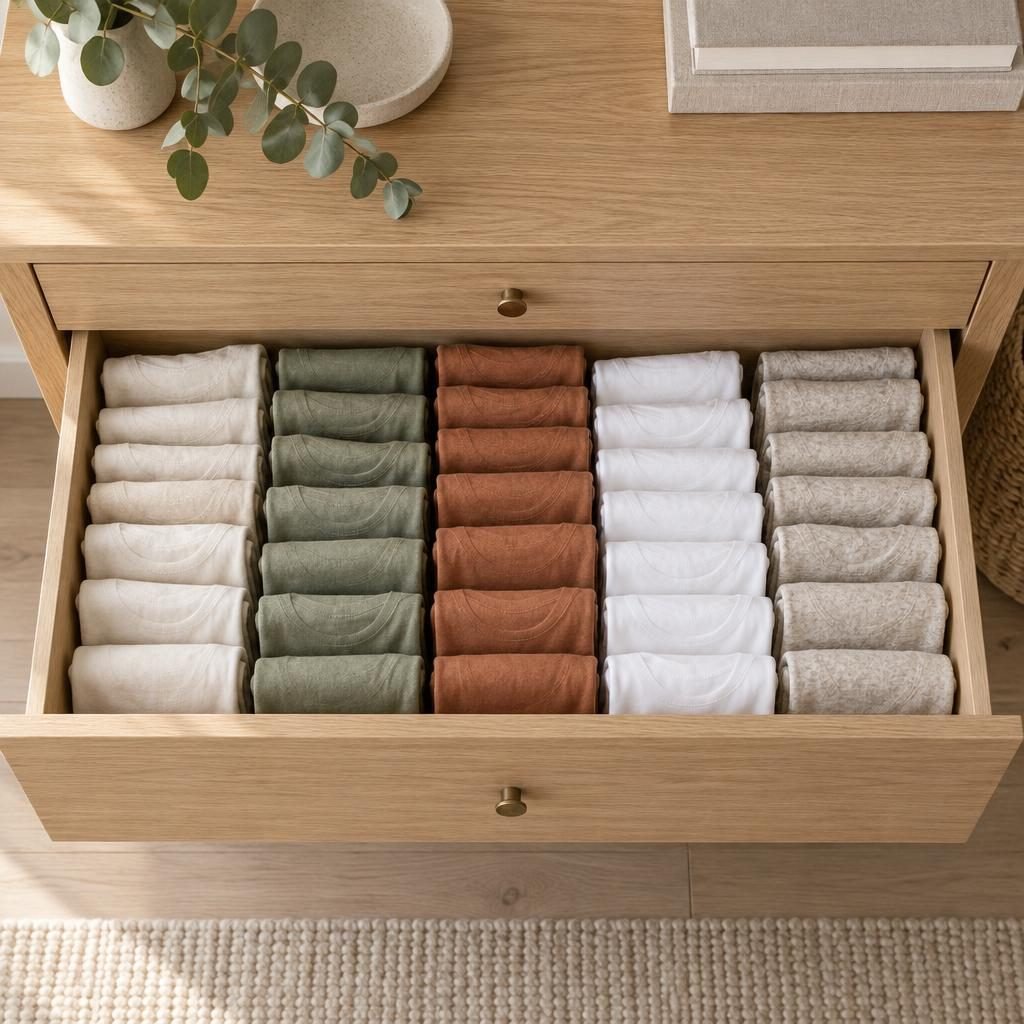
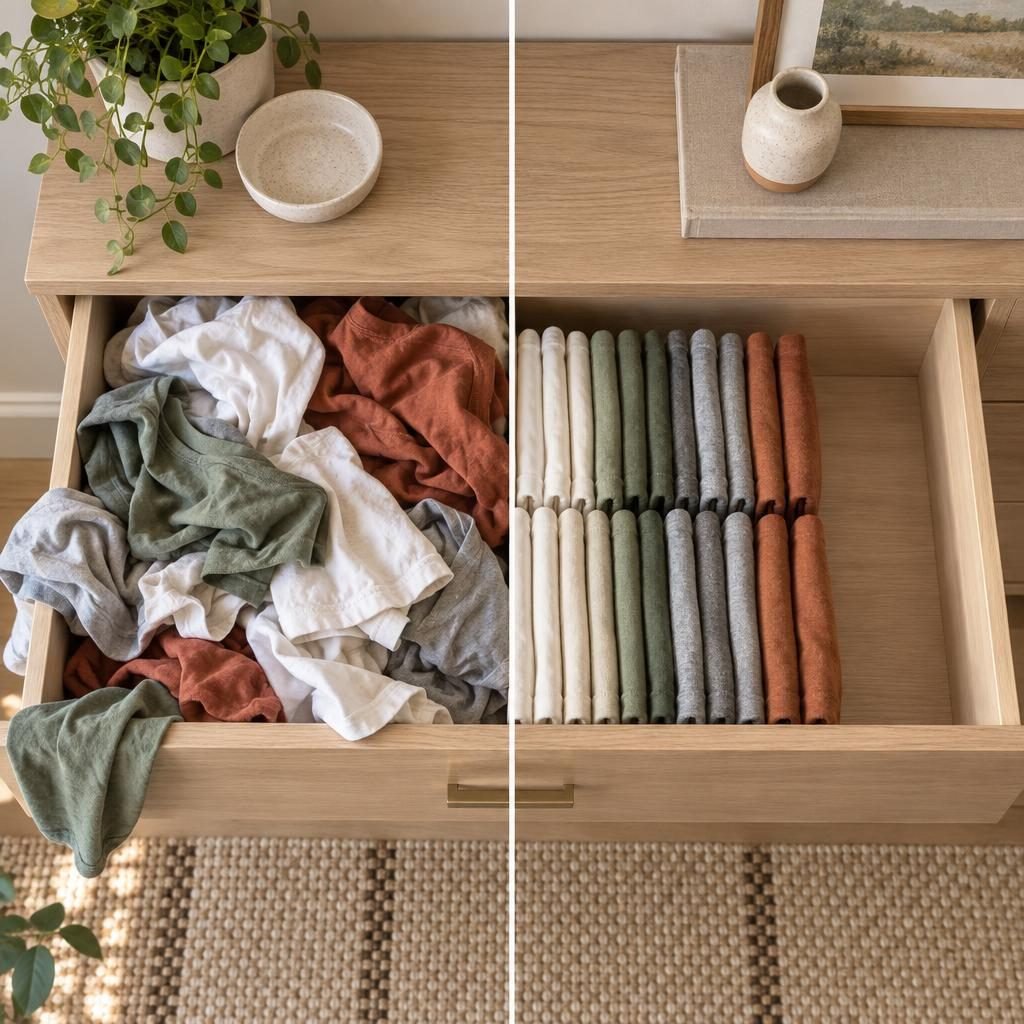
The real trick is direction, not size. When clothes are stacked flat, you only see the top item, and the pile collapses every time you pull something from the middle. File folding, the method made popular by Marie Kondo’s KonMari approach, turns each piece into a firm little rectangle that stands on its edge. Rows of upright clothes use the full height of the drawer, stay neat when you remove one, and show you everything you own.
Whatever fold you use, start with clean, dry clothes. Iowa State University Extension advises laundering clothes before you store them, so hidden stains from food or sweat do not show up later, and making sure items are completely dry to prevent mildew. For wool, it recommends storing sweaters clean in an airtight container to protect them from clothes moths (Iowa State University Extension: storing clothing).
Quick Pick: The Best Fold for Each Item
| Item | Best fold | Where it goes |
|---|---|---|
| T-shirts and tank tops | File fold (thirds) | Top or middle drawer |
| Jeans and trousers | Fold in half, then thirds | Deep bottom drawer |
| Leggings, gym wear, pajamas | Tight roll | Drawer or bin |
| Sweaters and knits | Compact rectangle | Shelf box or wide drawer |
| Socks | Folded flat in pairs | Divided shallow drawer |
| Travel clothes | Ranger roll or cubes | Suitcase |
How to Refold a Whole Dresser in 6 Steps
- Empty one drawer at a time onto the bed.
- Take out anything that does not fit, is worn out or has not been worn in a year.
- Group what is left by type: T-shirts, jeans, sleepwear, socks and so on.
- Measure the drawer height so you know how tall each fold should be.
- Fold each group using the methods below and file the pieces upright from back to front.
- Add a divider or a small box if rows tip over, then repeat with the next drawer.
How to Fold Clothes to Save Space in Drawers
These seven methods cover almost everything in a dresser. Practice each one a few times and it becomes automatic.
1. File fold T-shirts
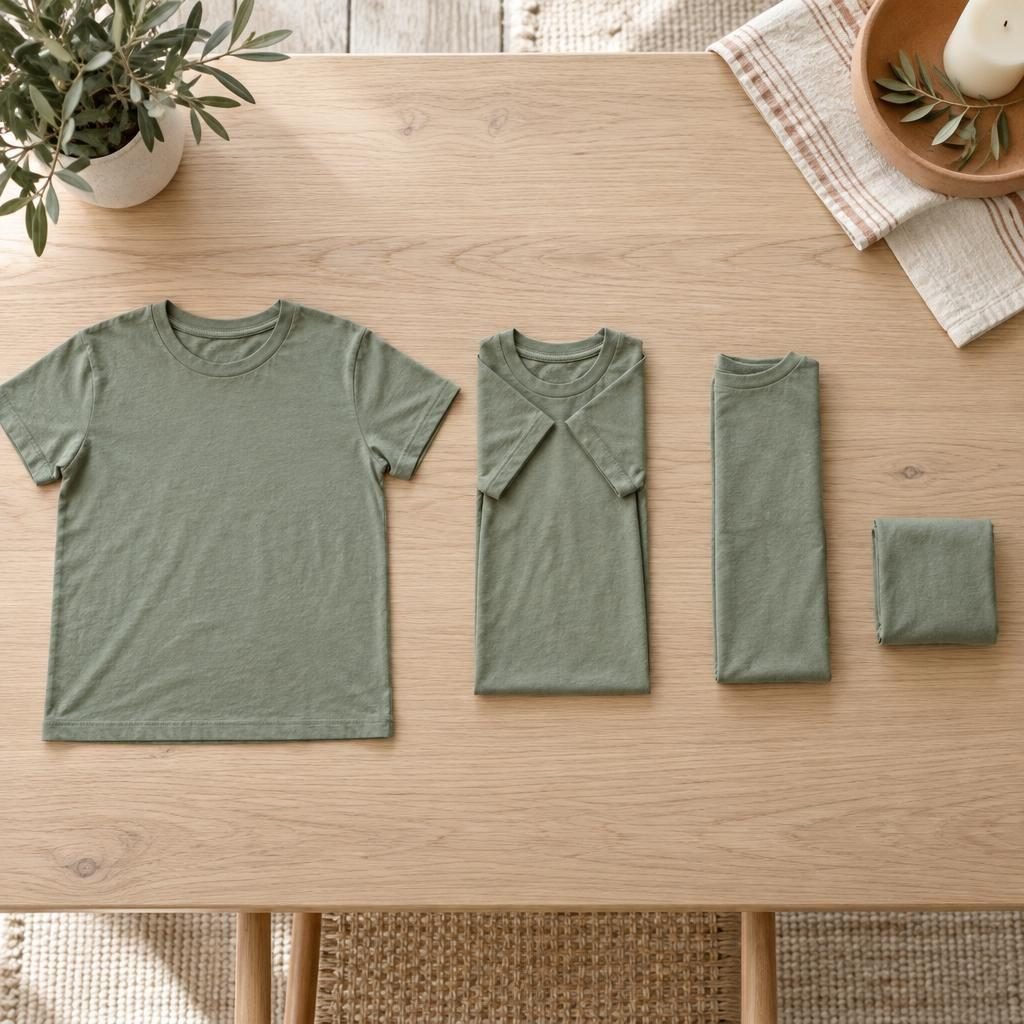
Lay the shirt face down and smooth it flat. Fold one side and its sleeve to the middle, then the other side, so you have a long rectangle. Fold it in half lengthwise into a long, narrow strip, then fold it into thirds from the bottom until it stands up on its own. Stand it on its edge in the drawer with the fold facing up, so you can see each shirt like a file in a cabinet.
2. Fold long-sleeve tops the same way
Long-sleeve tops follow the same steps, with one extra move: after folding each side in, fold the sleeve back down along the edge of the rectangle so it does not stick out. Thin knits fold smaller than you expect, so you can often fit two rows in a standard drawer.
3. Fold jeans and trousers into thirds
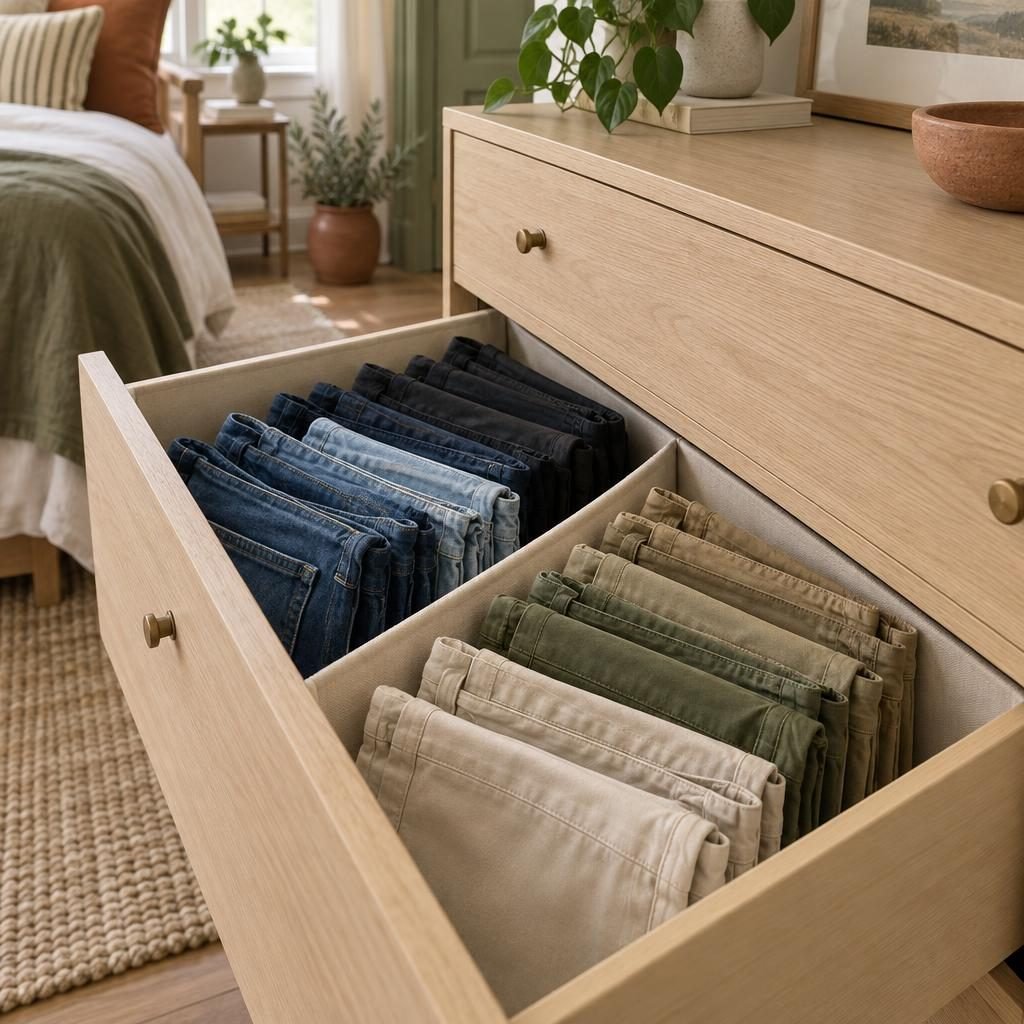
Fold jeans in half lengthwise so one leg lies on the other, tuck in the back seat point, then fold them into thirds from the hem up. They become a firm block that stands upright in a deep drawer. Group them by color or by fit so you can grab the right pair without unfolding a stack.
4. Roll leggings, gym clothes and pajamas
Stretchy fabrics slide out of flat folds, so roll them instead. Fold leggings in half lengthwise, then roll from the waist down into a tight cylinder. Pajama sets roll together, top around bottoms, so the matching pieces stay as one bundle.
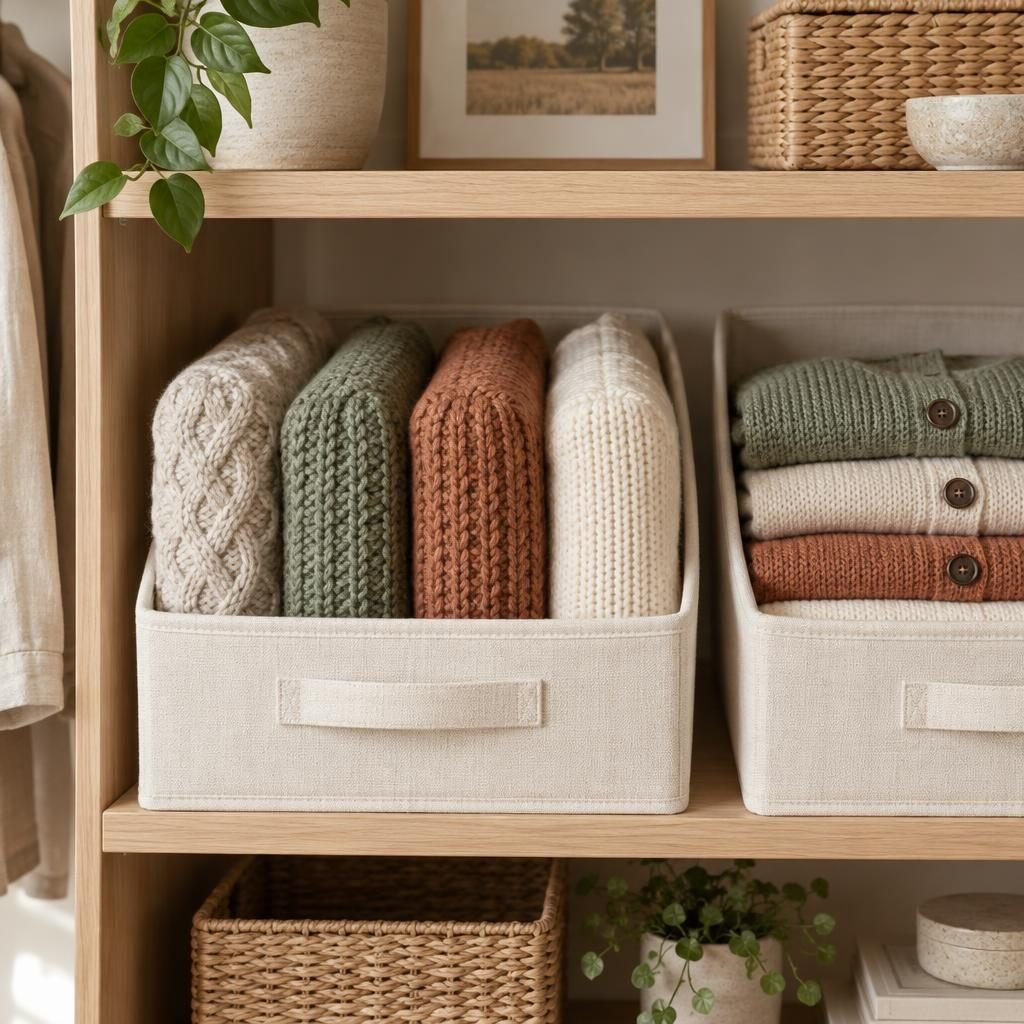
5. Fold sweaters into compact rectangles
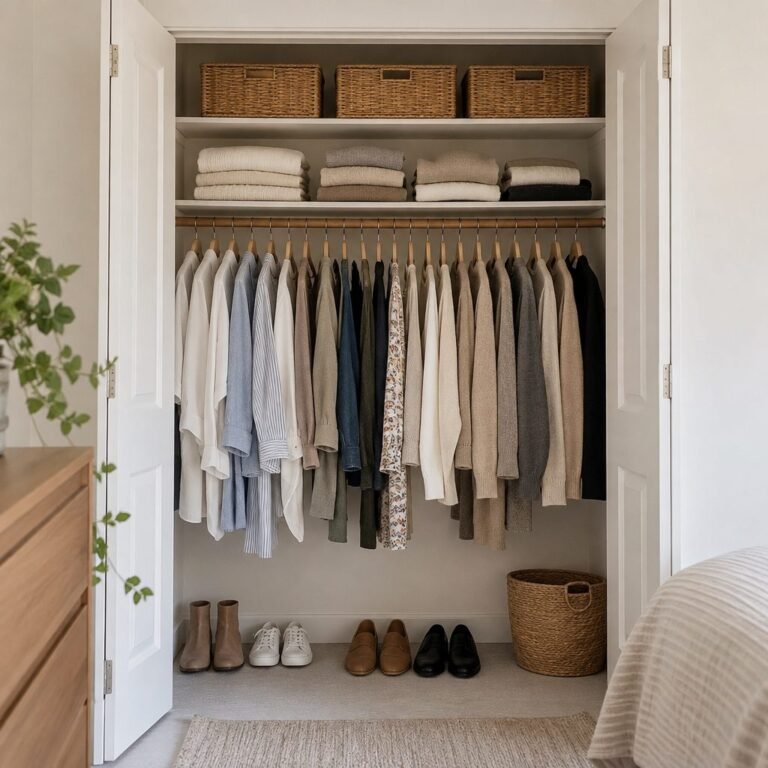
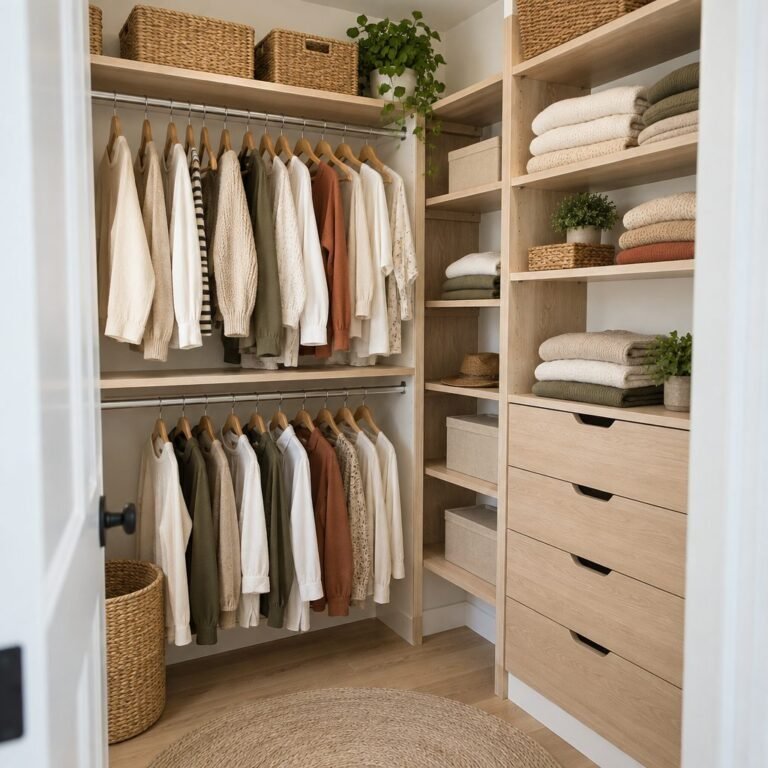
Heavy knits can stretch at the shoulders when they hang for months, so most sweaters are better folded. Fold the sleeves across the back, fold the sides in to make a neat column, then fold in half or thirds. Stand them upright in a fabric box on a shelf, or lay a few flat in a wide drawer; for more shelf ideas, see our small closet organization ideas.
6. Fold socks flat instead of balling them
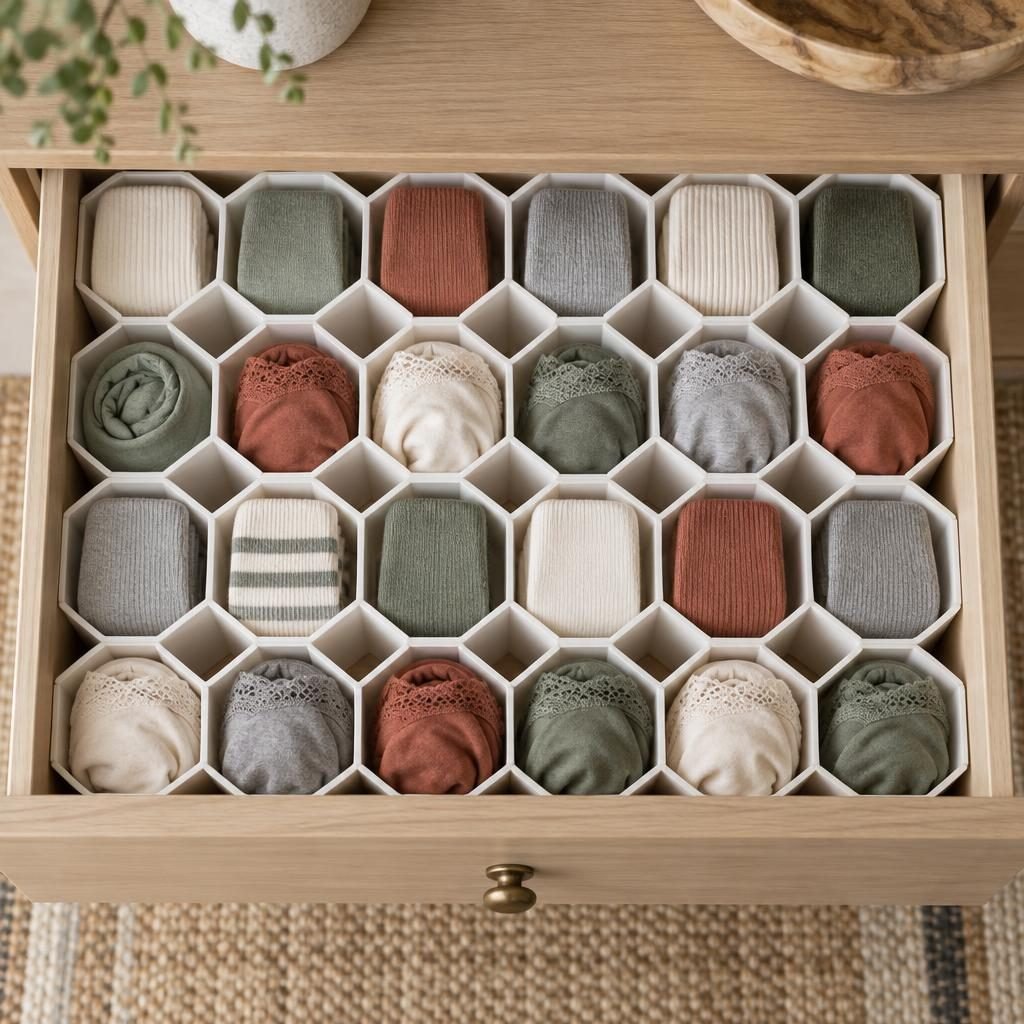
Balling socks by turning the cuffs over each other stretches the elastic. Lay the pair on top of each other and fold into halves or thirds, depending on length, so they form a small flat square. They file neatly into a divided drawer and keep their elastic longer.
7. Roll underwear and nest bras
Fold underwear in thirds lengthwise and roll it into a small cylinder, or fold it into a tiny square. Do not fold molded bras in half; nest them one inside the other in a row so the cups keep their shape. A honeycomb divider gives each item a home and stops the drawer from turning into a tangle.
How to Fold Towels and Bedding to Save Space
8. Fold towels in thirds, then roll or fold
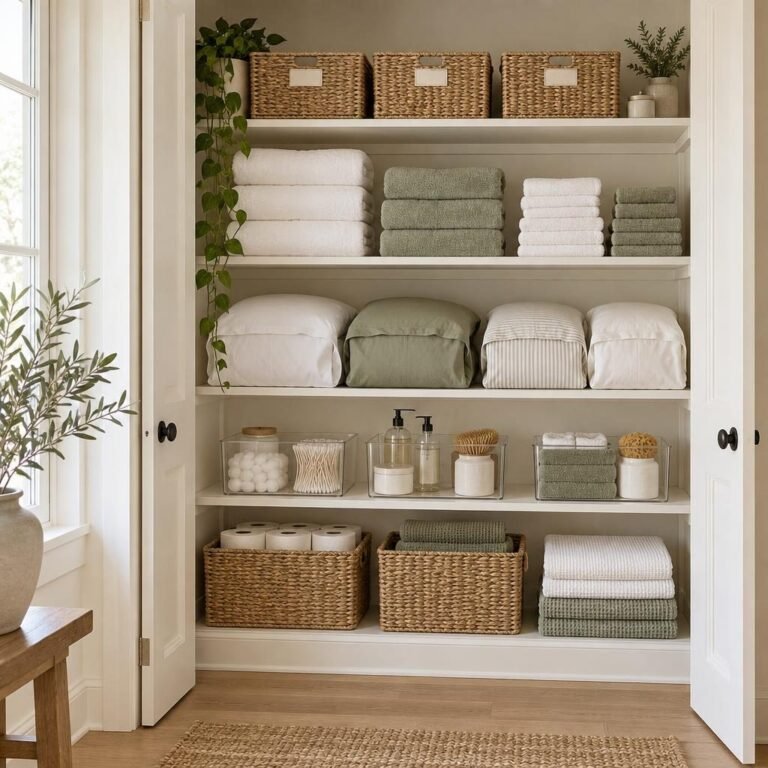
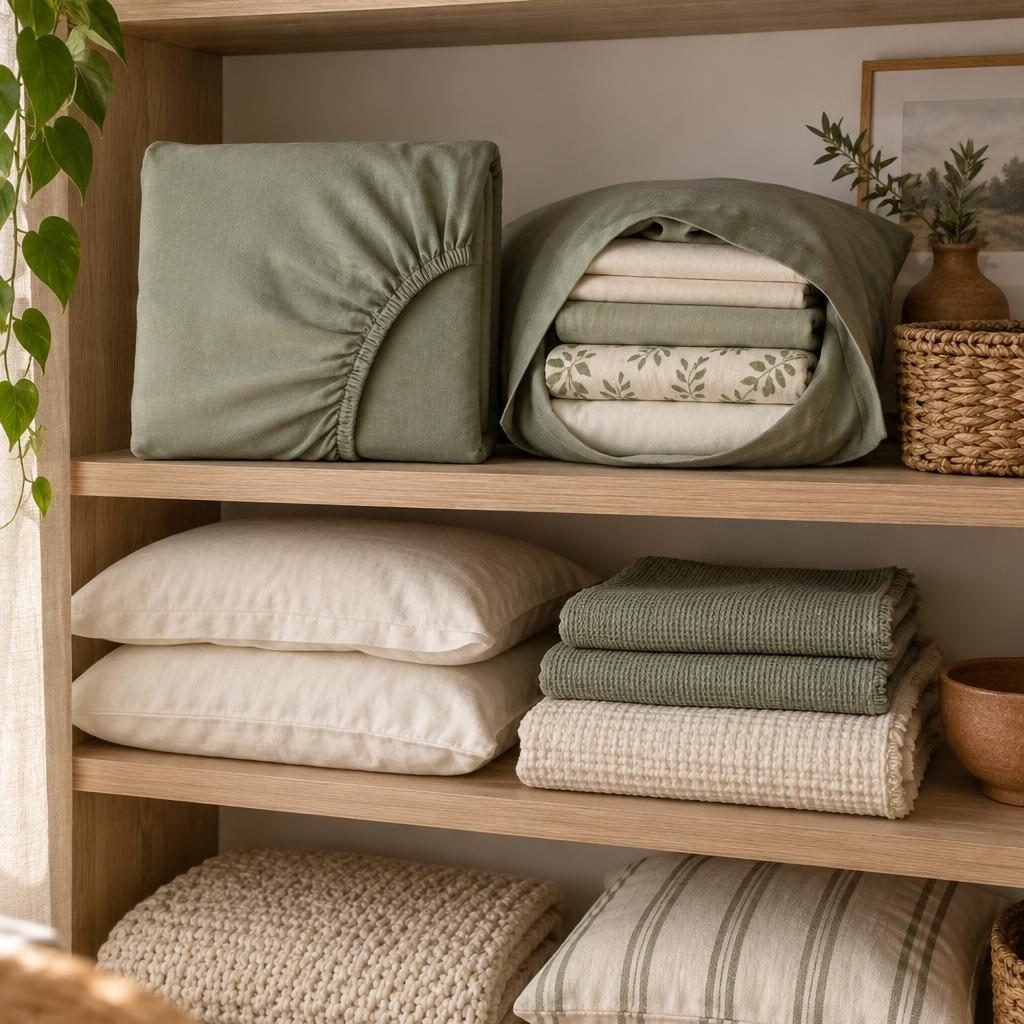
Fold bath towels in thirds lengthwise so the side edges are hidden, then fold into thirds again for a shelf, or roll them for a basket. Our linen closet organization guide shows how to fit towels and sheets on the same set of shelves.
9. Fold a fitted sheet and store sets in a pillowcase
Tuck the corners of the fitted sheet into each other so the elastic edges line up, lay it flat, and fold it into a rectangle, then a square. Fold the flat sheet and one pillowcase to the same size, and slide the whole set into the second pillowcase. One bundle per bed makes changing the sheets much faster.
How to Fold Clothes to Save Space in Luggage
10. Use the ranger roll for soft clothes
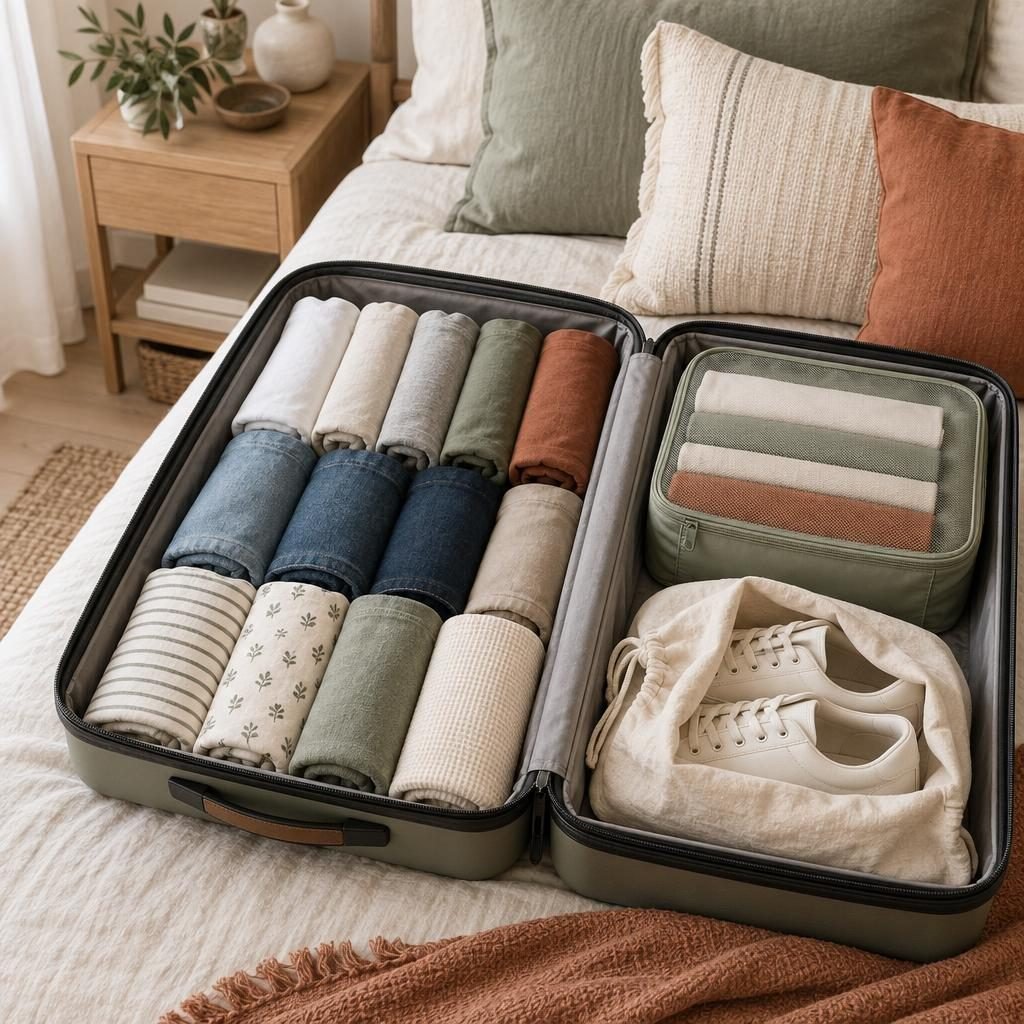
The ranger roll, sometimes called the army roll, packs T-shirts, leggings and pajamas into tight bundles that do not unroll. Fold the bottom hem up about 3 in (8 cm) inside out to make a pocket, fold the sides in, roll tightly from the collar down, then flip the pocket over the roll to lock it. Rolled clothes fill the gaps in a suitcase and wrinkle less than loose folds.
11. Combine folding with packing cubes
Packing cubes keep each type of clothing together and stop rolls from shifting. File fold shirts into one cube and roll underwear and socks into another. Put shoes in a cloth bag so they do not dirty your clothes.
12. Fold for seasonal storage
For out-of-season clothes, fold them loosely so creases do not set, and store them clean and dry in a lidded bin. Clear sides help you see what is inside. Slide bins under the bed or onto a high shelf; our small bedroom storage ideas and storage ideas for small spaces cover the best spots.
Common Folding Mistakes That Waste Space
- Folding to the wrong height. Too tall and the drawer will not close; too short and the rows flop over.
- Stacking instead of filing. Stacks hide most of your clothes and collapse when you pull from the middle.
- Overstuffing the drawer. You should be able to remove one item easily; if not, it is time for a closet clean-out.
- Folding damp laundry. Clothes that are not fully dry can smell musty or mildew in a closed drawer.
- Balling socks. It stretches the cuffs and takes more room than folding them flat.
Frequently Asked Questions
Is it better to fold or roll clothes to save space?
Both work, and the best way to fold clothes to save space depends on where they go. In a drawer, file folding is usually tidier because the pieces keep their shape and stand upright. Rolling suits stretchy fabrics, pajamas and suitcases, where rolls fill gaps and stay put. Many people use both: file folds for shirts and jeans, rolls for leggings and underwear.
What is the KonMari folding method?
The KonMari method, from organizing consultant Marie Kondo, folds each garment into a small, firm rectangle that stands on its edge. You store the pieces upright in rows so you can see everything in the drawer at once.
How do you fold clothes to save space in drawers?
The file fold is the simplest option. Fold each item into a rectangle about as tall as the drawer, minus about 1 in (2–3 cm), and file it upright from back to front. Use dividers or small boxes to keep rows straight, and keep the most-worn items at the front.
How do I fold clothes to fit more in a suitcase?
Roll soft items tightly with the ranger roll, file fold shirts into packing cubes, and use the gaps inside shoes for socks. Put heavier items at the wheel end of the case so it stays balanced.
Final Thoughts
Once you know how to fold clothes to save space, every drawer becomes easier to use. Start with T-shirts, usually the biggest category in a dresser, then move on to jeans, socks and towels. Within a weekend your dresser will hold more and look calmer, and folding laundry will take less time because every piece has a clear place to go.
If your laundry room is where the folding happens, our small laundry room ideas include space-saving folding counters and fold-down surfaces. And if you are short on closet space too, our small walk-in closet ideas are a good next read.
How this guide was made: researched and written with the help of AI tools, fact-checked against the source linked above and published by Mohamed Elber. Images are AI-generated illustrations. See our Editorial Policy.