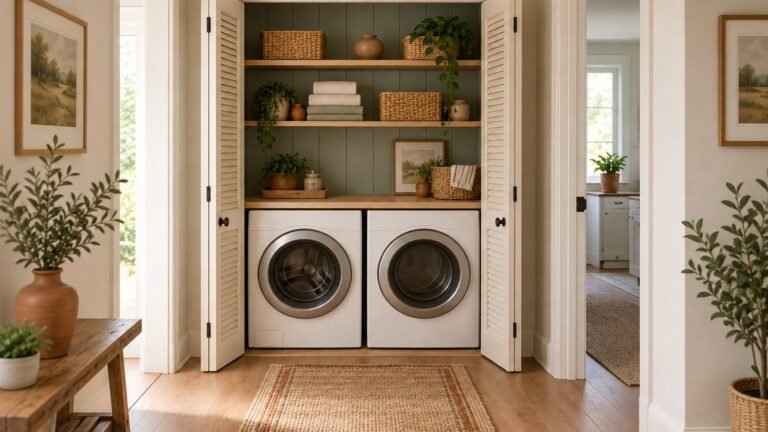
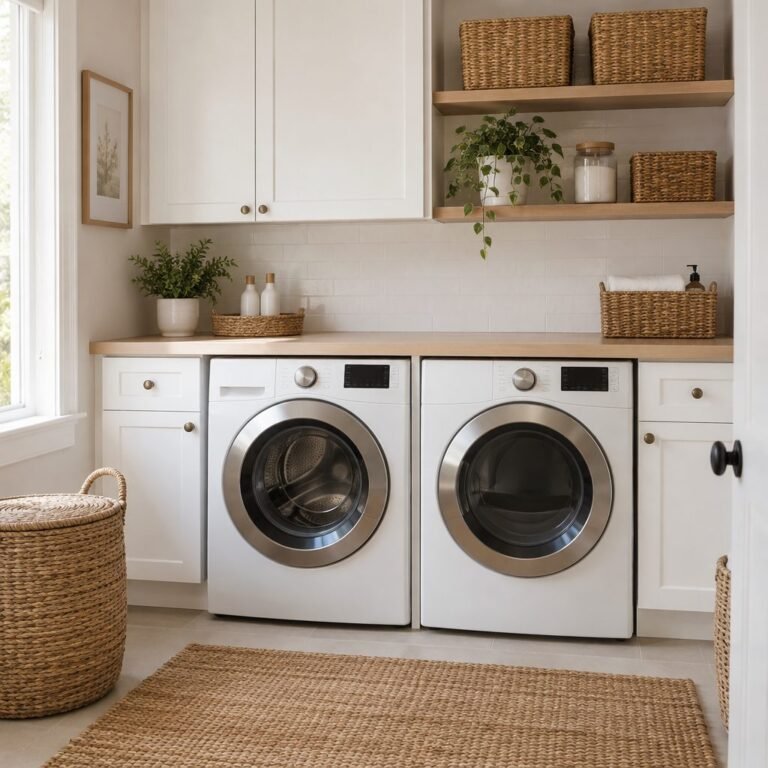
The best small laundry room ideas do two jobs at once: they find storage in places you are not using yet, and they make a cramped room feel calm enough that doing laundry is not a chore you dread. Most small laundry rooms have the same problems. The machines take up nearly all the floor, bottles pile up on top of the dryer, and there is nowhere to fold, hang or iron.
This guide covers 20 practical ideas for layouts, storage, design and budget DIY projects, from stacking your machines to a fold-down ironing board. Whether you have a narrow room, a hallway nook or a laundry cupboard, you will find ideas that fit. Measurements are in inches and centimeters so you can plan with any tape measure.
Key Takeaways
- Quick answer: To make a small laundry room work, stack the machines or put a counter over them, build storage up the walls with shelves or upper cabinets, use thin gaps for slim pull-out carts, and add a fold-down surface for folding or ironing. Light colors, good lighting and one closed cabinet keep it from feeling cluttered.
- Measure width, depth and door clearance before you buy shelves, pedestals or new machines.
- Clean the lint filter every load and keep the dryer vent clear; it matters even more in a tight room.
Time: 1 weekend · Cost: $50–$600 (£40–£480) · Difficulty: Easy to moderate
Plan Your Small Laundry Room Layout First
Before you try any small laundry room ideas or buy a single basket, decide on the layout. In a small laundry room the machines set the rules: how much wall is left for shelves, whether you can fit a counter, and where the door can swing. The three layouts below cover most small spaces, from a full room to a closet.
Safety matters in a tight space too. The National Fire Protection Association says the leading cause of home clothes dryer and washer fires is failure to clean them, and recommends cleaning the lint filter before or after each use, using rigid or flexible metal venting, and clearing lint from the vent pipe at least once a year, or more often if drying takes longer than usual (NFPA clothes dryer and washing machine safety tips). Keep baskets and bottles away from the back of the dryer so the vent can breathe.
Quick Pick: Small Laundry Room Ideas by Problem
| Problem | Best idea | Rough cost |
|---|---|---|
| Not enough floor space | Stack the washer and dryer | $30–$80 (stacking kit) |
| Nowhere to fold | Counter over side-by-side machines | $100–$300 |
| Bottles all over the dryer | Slim pull-out cart in the side gap | $40–$90 |
| No room for towels or spares | Pedestal drawers under the machines | $150–$400 |
| No space for an ironing board | Fold-down wall ironing board | $80–$250 |
| Room feels dark and messy | Light paint, closed cabinet and a curtain | $50–$200 |
How to Set Up a Small Laundry Room in 6 Steps
- Empty the room and measure the walls, the gap beside the machines and the space above them.
- Pick your layout: stacked, side by side under a counter, or a compact stack.
- Check the dryer vent, hoses and outlet before anything goes back against the wall.
- Add vertical storage: a shelf or upper cabinets above the machines and a tall slim cabinet if there is room.
- Fill the small gaps with a pull-out cart, an over-the-door organizer and wall hooks.
- Bring back only what you use each week, and store spares in a drawer or cabinet.
Small Laundry Room Layout Ideas
1. Stack the washer and dryer
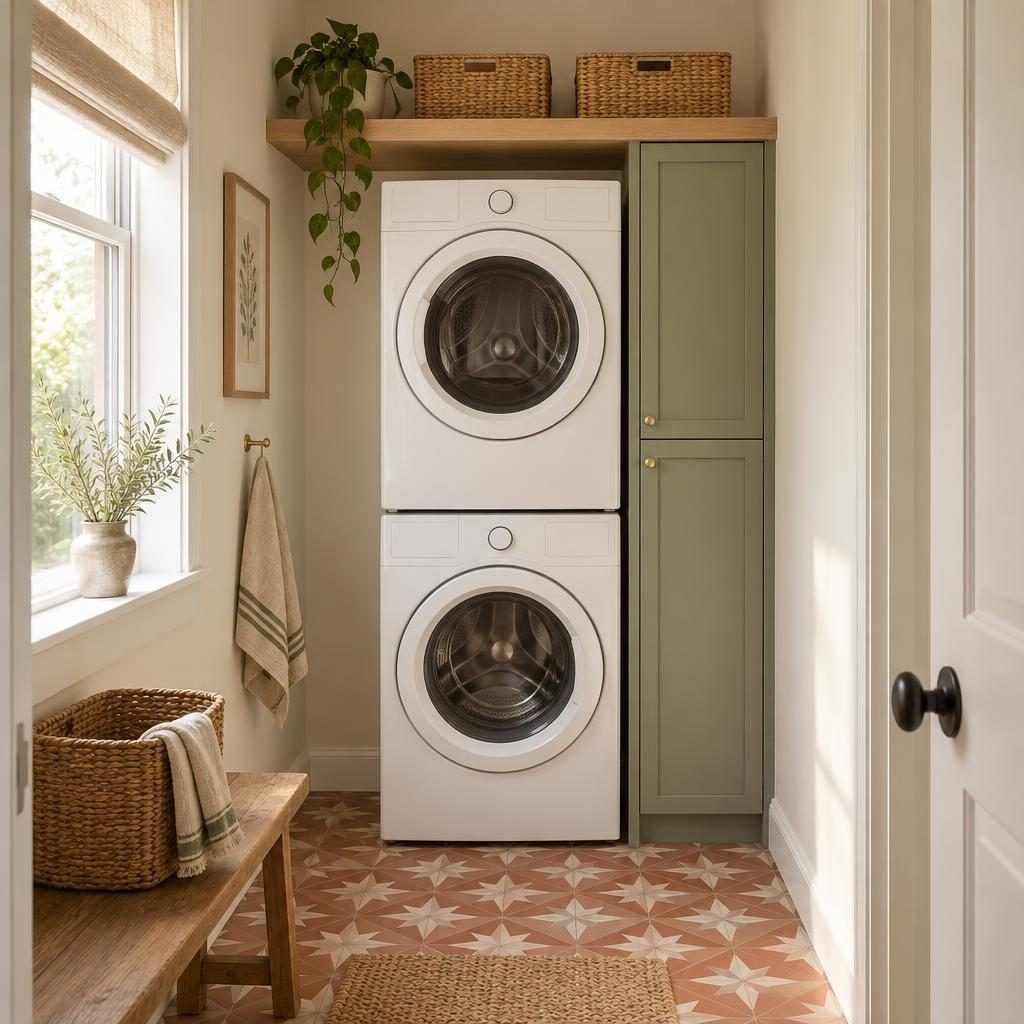
Stacking two front-loading machines frees up roughly half the floor, often enough for a tall cabinet, a hamper or a narrow bench. You need stackable models and the matching stacking kit, and the controls on the top machine should still be within easy reach.
2. Add a tall slim cabinet beside the stack
A cabinet 12–15 in (30–38 cm) wide next to a stacked tower holds detergent, an ironing board, a broom and a mop behind one door. Closed storage is the quickest way to make a small laundry room look tidy, because the bottles disappear.
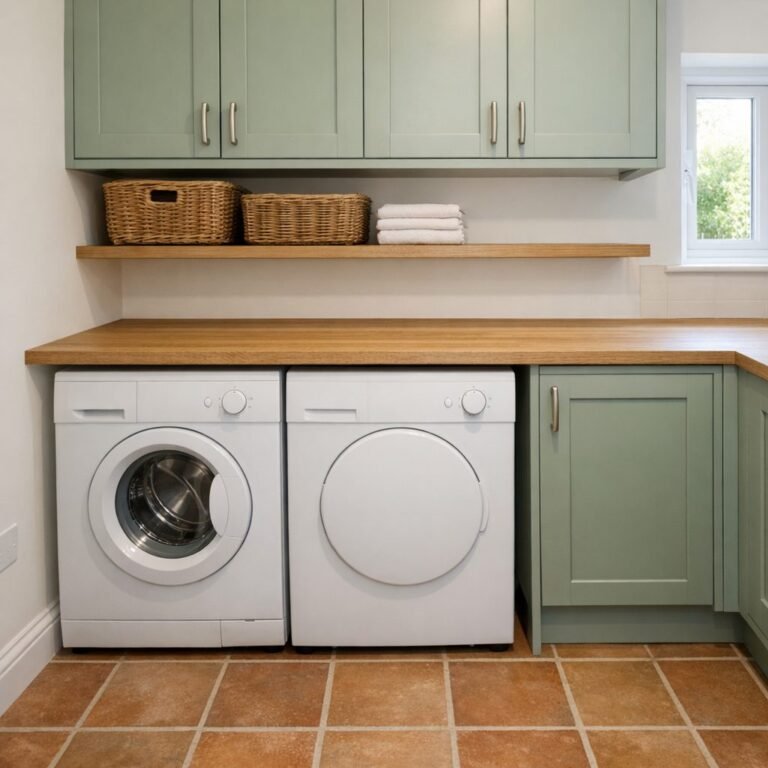
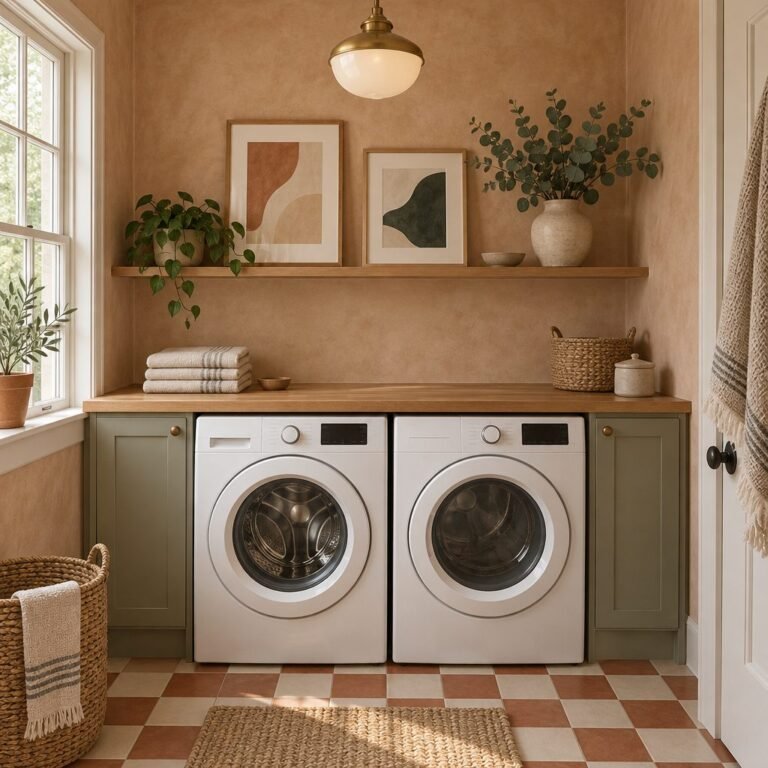
3. Put a counter over side-by-side machines
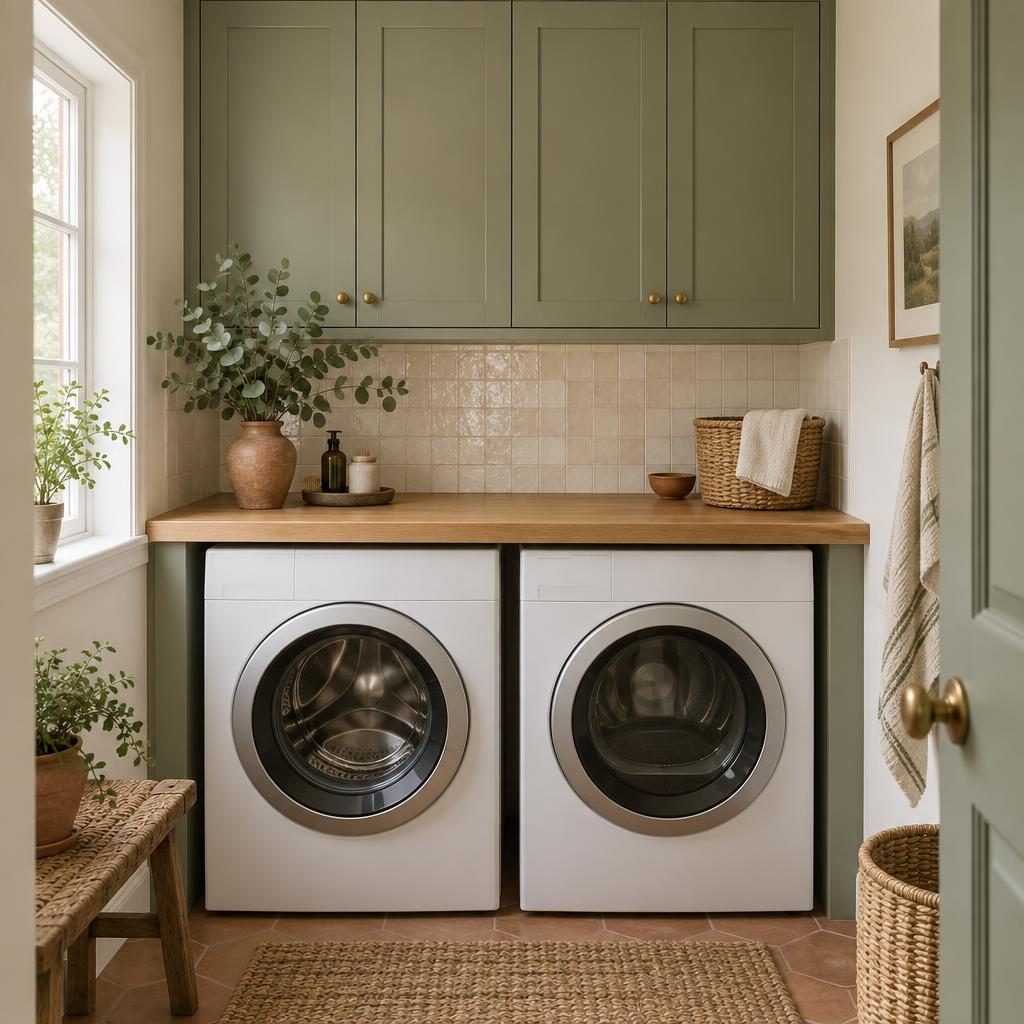
If your front-loaders sit side by side, a wood or laminate counter on top turns them into a folding station. Leave a little gap above the machines so vibration does not rattle the counter, support it on cleats or side panels rather than on the machines, and seal wood well against splashes.
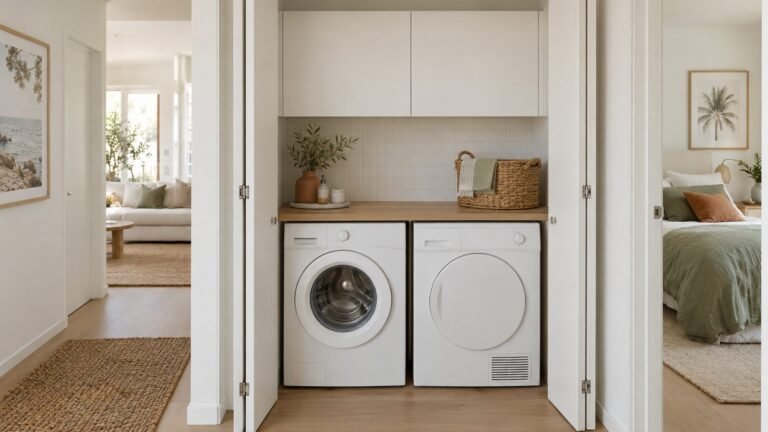
4. Choose compact 24-inch machines for a cupboard
Compact machines around 24 in (60 cm) wide can stack inside a closet or under-stairs cupboard where full-size models will not fit. They hold smaller loads, so they suit singles, couples and small apartments best.
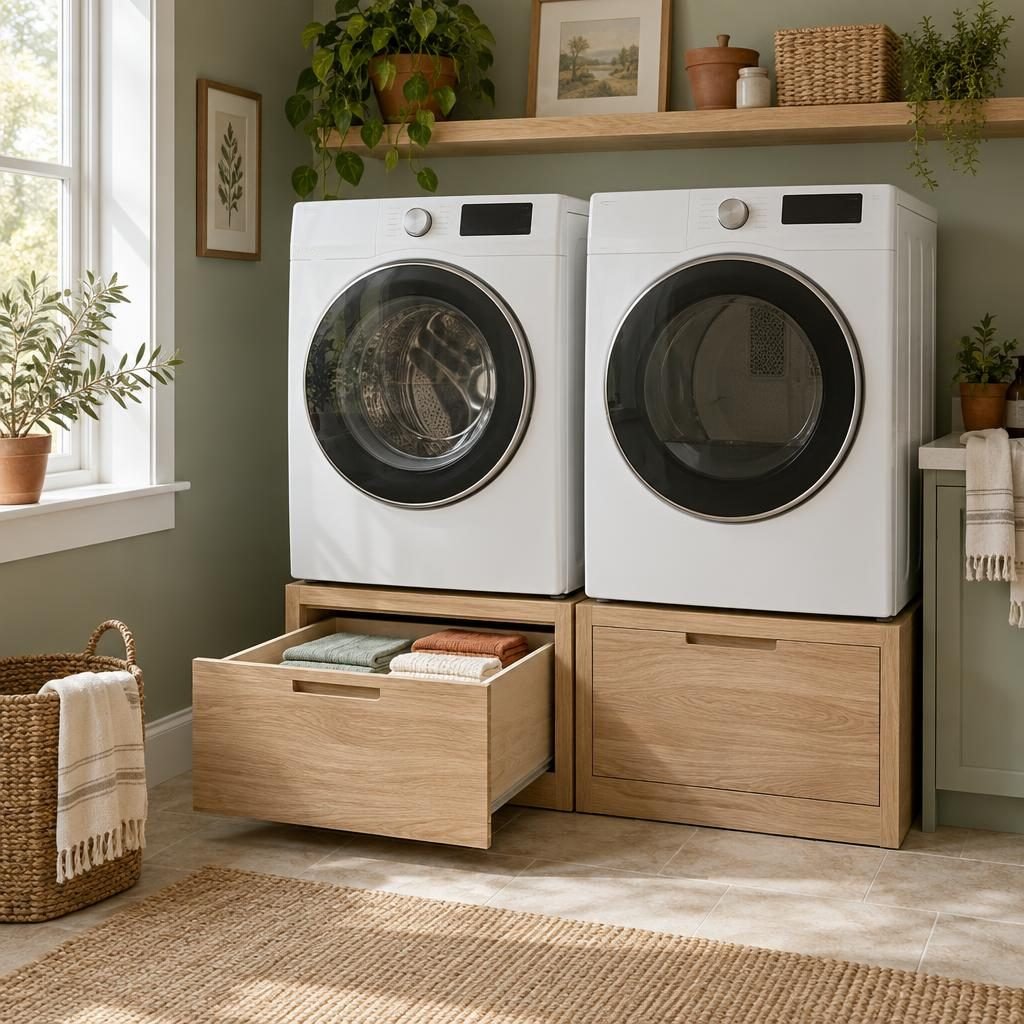
5. Raise the machines on pedestal drawers
Pedestals lift front-loaders to a kinder height for your back and add a deep drawer underneath for towels, cloths or spare detergent. Check that your machine maker sells or approves a pedestal for your model, since a washer must sit level and stable.
Small Laundry Room Storage Ideas
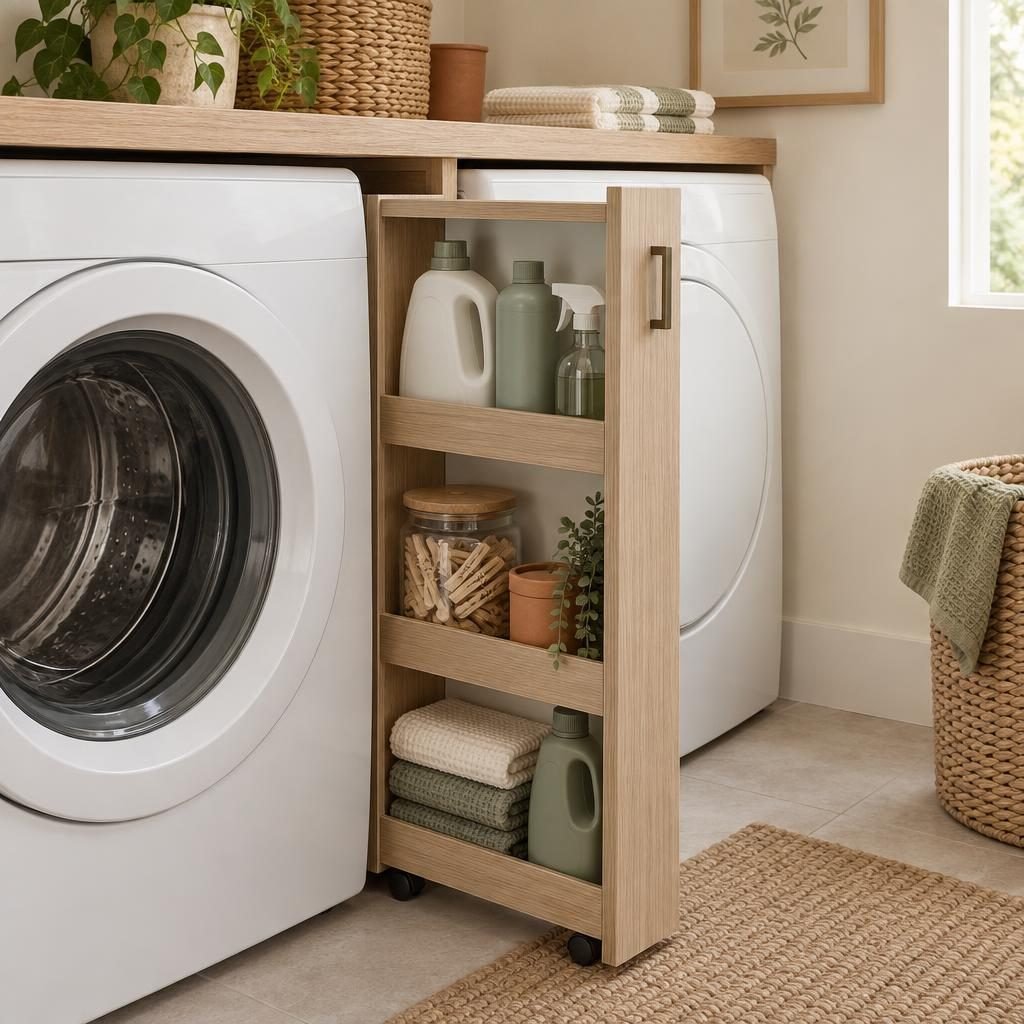
6. Slide a slim cart into the side gap
If you have a 6–8 in (15–20 cm) gap beside your washer or dryer, do not waste it. A slim rolling cart fits that space and holds detergent, stain spray and clothespins, then rolls out when you need it.
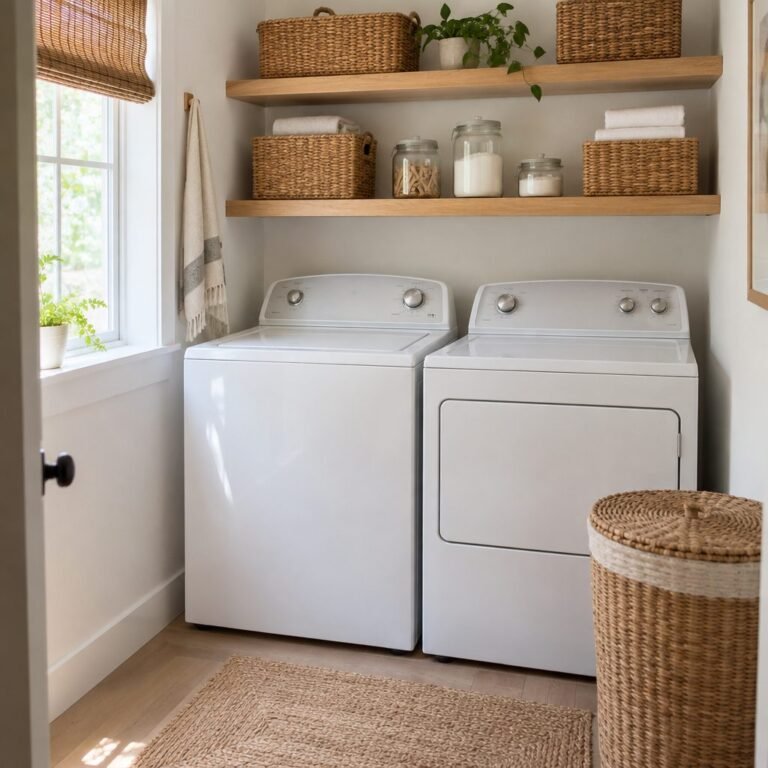
7. Install a shelf above the machines
One sturdy floating shelf above the washer and dryer holds matching baskets for supplies and spare towels. Our DIY floating shelves guide shows how to fix one securely. If you have a top-loader, mount it high enough to clear the open lid, as covered in our small laundry room ideas with a top loading washer.
8. Run upper cabinets to the ceiling
Upper cabinets that go all the way up give you a high shelf for rarely used items like spare bulbs, seasonal linens and bulk refills. Keep everyday products on the lowest shelf so you are not reaching over a running machine.
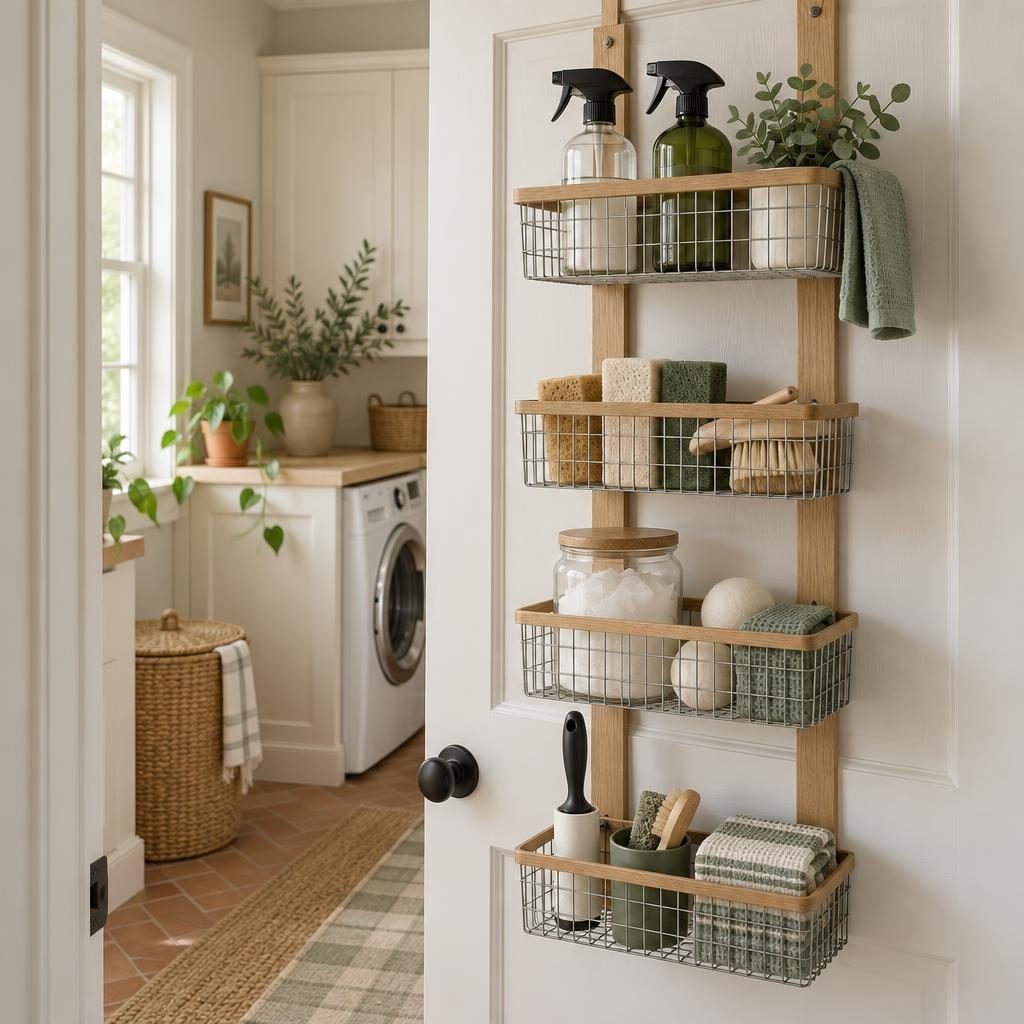
9. Use the back of the door
An over-the-door organizer with shallow baskets holds sprays, sponges, dryer balls and a lint roller without touching the floor. Pick one with closed sides so bottles cannot slide out when the door swings.
10. Hang a rail with hooks
A wooden rail with hooks holds a brush, a small bucket, a mesh bag of delicates and a few hangers. It costs very little and keeps tools off the counter. For more ideas on wall storage in tight rooms, see our storage ideas for small spaces.
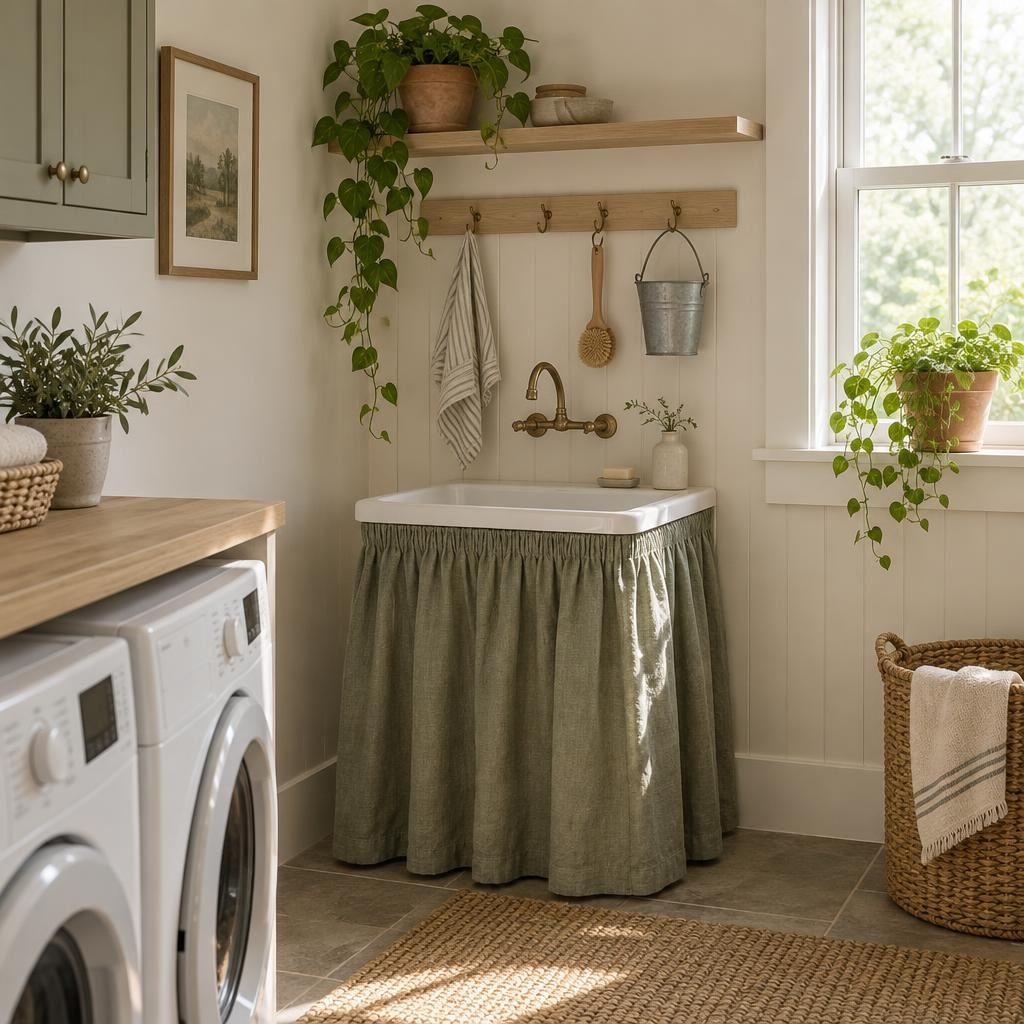
11. Hide the utility sink with a skirt
If you have a laundry sink, the space underneath often becomes a mess of buckets and bottles. A gathered linen skirt on a tension rod or adhesive track hides it all and adds softness to a room full of hard surfaces.
Small Laundry Room Design Ideas
12. Paint in light, warm colors
Cream, warm white and soft sage reflect light and make a small laundry room feel larger. Use a scrubbable satin or eggshell finish, because laundry rooms get damp and splashed.
13. Add patterned floor tiles
A patterned floor gives a plain room personality without using any wall space. Peel-and-stick vinyl tiles are a renter-friendly way to try the look, as long as the floor stays dry.
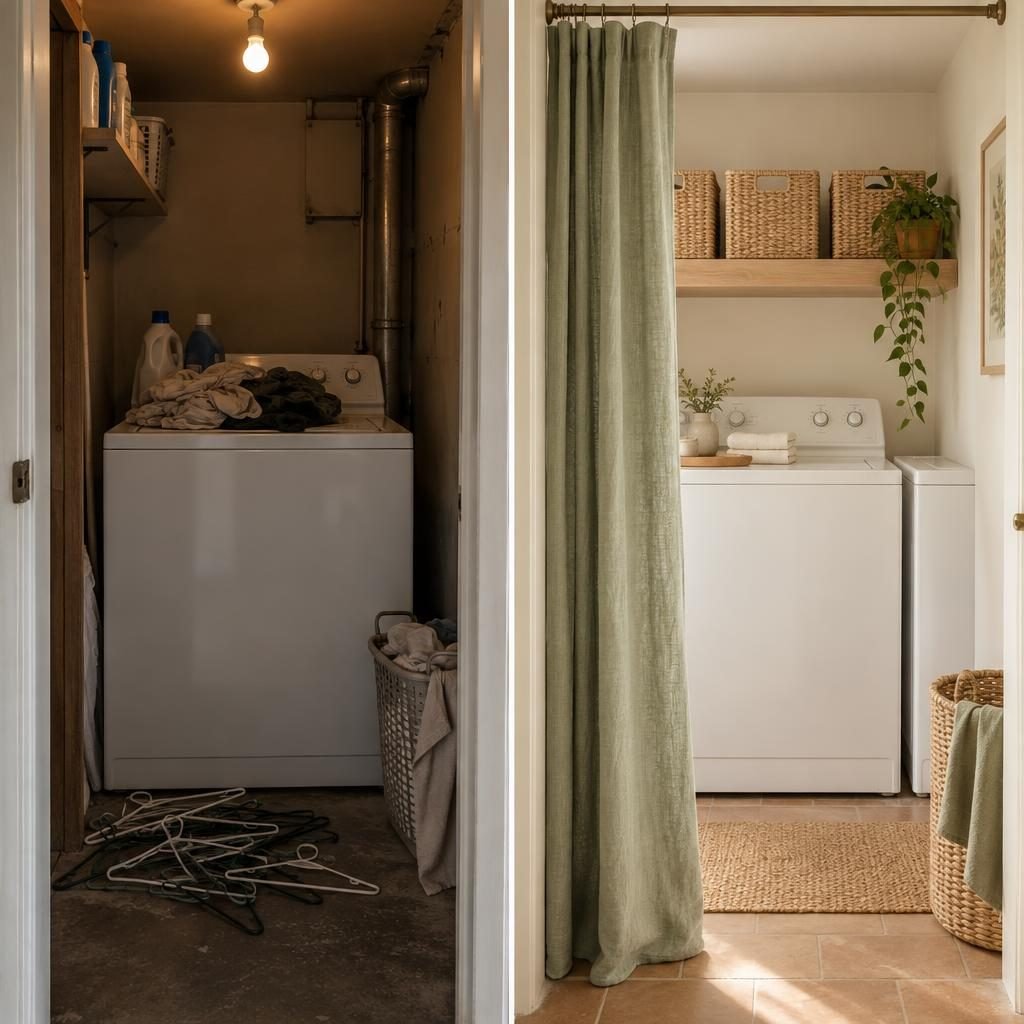
14. Swap the door for a curtain
In a laundry nook or closet, a linen curtain on a rod replaces swinging doors and saves the floor space they need to open. It softens the room and hides the machines when guests come over.
15. Upgrade the lighting
One bare bulb makes any small room feel like a cupboard. Add a ceiling light with a warm white bulb and a plug-in or battery light under the shelf so you can see stains clearly.
DIY and Budget Small Laundry Room Ideas
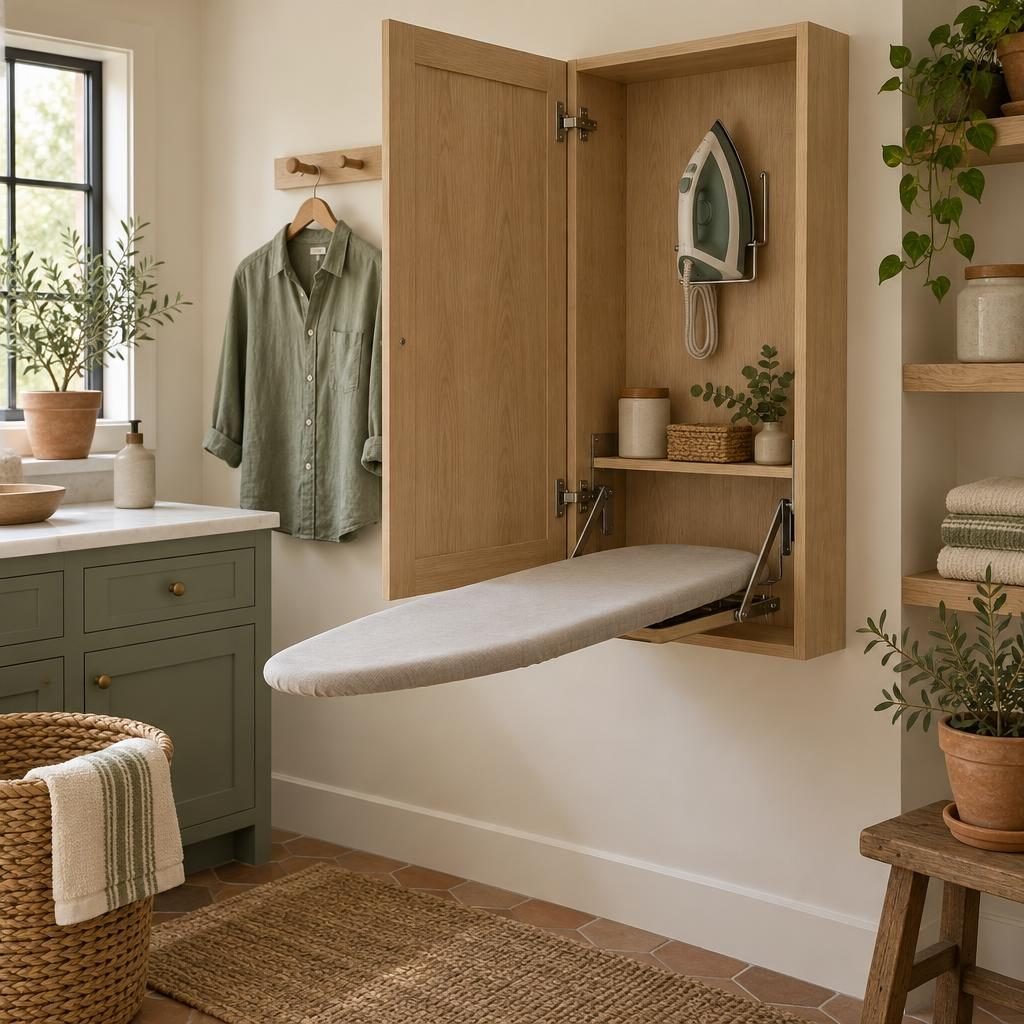
16. Build a fold-down ironing board cabinet
A shallow wall cabinet with a fold-down ironing board inside means no more wrestling a full-size board out from behind the door. Even a simple wall-mounted ironing board holder with a hook for the iron saves floor space.
17. Add a fold-down drying rack
A wall-mounted drying rack folds flat when you do not need it and gives you space for sweaters and delicates when you do. Mount it away from the dryer vent and over a surface that can handle drips.
18. Decant detergent into simple containers
Matching shatterproof dispensers look calmer than a row of bright bottles. Label them clearly, keep the original label or instructions for any product with special safety directions, and keep laundry pods in their original child-resistant container, out of reach of children.
19. Create a mini mudroom corner
If your laundry room is by the back door, add a narrow bench, a few hooks and a shoe tray. Muddy clothes go straight to the washer and coats stop piling up in the hallway. Our mudroom ideas show how to combine the two.
20. Keep only what you use each week
The cheapest small laundry room idea is to remove what does not belong: old paint, empty boxes, three half-used stain sprays. Store spares elsewhere, such as a linen closet, and keep only the week’s supplies in the room.
Common Small Laundry Room Mistakes
- Buying storage before measuring. A cart that is half an inch too wide is useless; measure gaps at the front and back.
- Blocking the dryer vent. Baskets or bottles pushed against the back of the dryer can crush the vent hose.
- Storing heavy items above the machines. Keep big refill jugs low, not on a high shelf over a vibrating washer.
- Leaving wet clothes in the washer. In a small, closed room damp loads quickly smell musty; leave the washer door ajar between uses so it can dry, and keep children and pets away from it.
- Skipping a plan for folding. Without a counter or fold-down surface, clean laundry ends up on top of the dryer again. Once you have the space, our guide on how to fold clothes to save space makes every load smaller.
If your room is already set up and you just need a routine to keep it tidy, read our guide on how to organize a laundry room.
No room for a separate laundry at all? Our European laundry ideas show how to hide the washer and dryer in a cupboard or hallway nook, with the sizes you need.
Frequently Asked Questions
How can I make a small laundry room look bigger?
Use light, warm paint, closed cabinets instead of open clutter, good overhead lighting and one or two matching basket colors. Stacking the machines or adding a counter over them also clears visual noise and frees the floor; these two small laundry room ideas make the biggest difference.
How do I add storage to a small laundry room?
Go vertical. Add a shelf or upper cabinets above the machines, a tall slim cabinet beside them, a pull-out cart in the side gap, an over-the-door organizer and pedestal drawers underneath. Together these add a lot of storage without taking floor space.
Can you put a counter over a washer and dryer?
Yes, if you have front-loading machines side by side. Leave a small gap above the machines, support the counter on cleats or side panels rather than on the machines, and keep the controls easy to reach.
What is the minimum size for a laundry room?
A stacked full-size pair needs about 29–31 in (74–79 cm) of width, while side-by-side machines need about 57–60 in (145–152 cm). Add about 6 in (15 cm) behind for hoses and the vent and about 36–48 in (90–120 cm) in front to load, and always check your model’s installation guide.
Planning closed storage around your machines? Our laundry room cabinet ideas cover upper, base and tall cabinets, with the heights and gaps to plan around.
Not sure your machines will fit? Enter your measurements in our free washer and dryer space calculator to check side-by-side, stacked, top-load and compact layouts.
If your washer and dryer live behind doors in a hallway, bathroom or kitchen, our laundry closet ideas guide covers the sizes that fit, vented door options and storage for tight closets.
Planning a utility room in the UK? See our small utility room ideas for sizes in centimetres, Belfast sinks, ceiling airers and UK ventilation rules.
Final Thoughts
The best small laundry room ideas start with the layout, then add storage up the walls and into the gaps you are not using yet. Pick two or three ideas that fix your biggest problems, such as no folding space or bottles everywhere, and you will feel the difference after one weekend.
Small rooms reward small habits too: clear the lint filter, put supplies back on their shelf and take folded laundry out the same day. If the rest of the house needs the same treatment, our room-by-room guide on how to declutter your home is a good next step.
How this guide was made: researched and written with the help of AI tools, fact-checked against trusted sources and published by Mohamed Elber. Images are AI-generated illustrations. See our Editorial Policy.