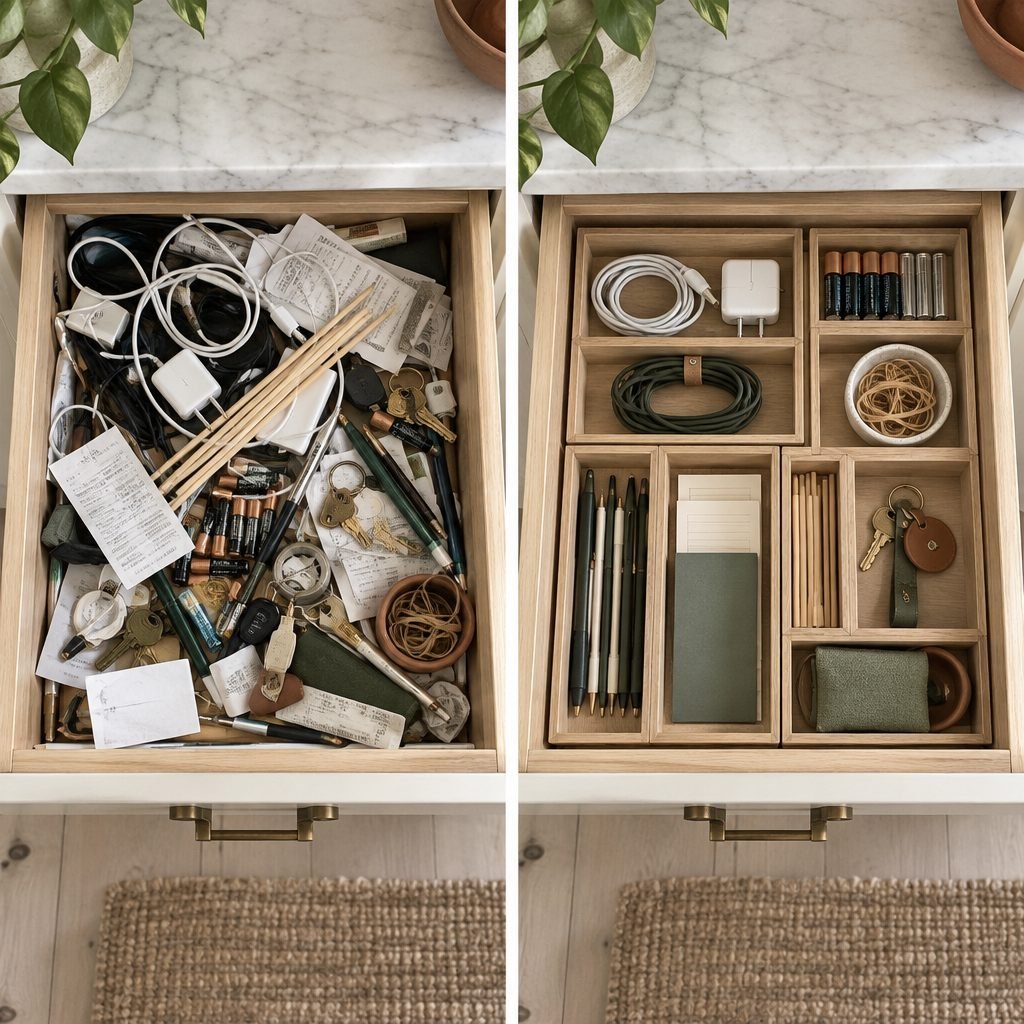
A good junk drawer organizer turns the most chaotic drawer in the house into one of the most useful. Every home has one: the drawer that holds the scissors, the tape, a dozen pens that may or may not work, takeout chopsticks, a tangle of cords and three mystery keys. It is not a failure. A junk drawer does an important job, because it keeps small, useful things close to where you need them.
The trick is to give it structure. This guide shows you what belongs in a junk drawer, how to organize it in six steps, and 16 junk drawer organization ideas, from simple trays to DIY dividers, plus battery safety tips from fire and poison safety experts. For the rest of the kitchen, see our guide on how to organize kitchen drawers.
Key Takeaways
- Quick answer: To organize a junk drawer, empty it, toss what is broken or dead, move anything that belongs elsewhere, then use a junk drawer organizer such as modular trays or an expandable insert to give each category its own spot, with daily items in front.
- Keep small bits in jars, coil cables with ties and store batteries in their packaging; 9-volt batteries should not be stored loose in a drawer.
- A five-minute reset once a month keeps the drawer from filling up again.
Time: 30–60 minutes · Cost: $0–40 · Difficulty: Easy
What Belongs in a Junk Drawer (and What Does Not)
A junk drawer works best as a small toolkit for everyday jobs: writing a note, opening a package, changing a battery, finding a spare key. Things you reach for every day go in front, and things you need now and then go in the back. Everything else, from old receipts to dried-out pens, should leave.
Batteries need extra care. The National Fire Protection Association’s 9-volt battery safety tip sheet says 9-volt batteries should not be stored loose in a drawer. It warns that a metal object, such as a key or paper clip, touching both posts can cause a short circuit, and it recommends keeping them in their original packaging, or covering the posts with masking, duct or electrical tape. For small button batteries, Poison Control’s button battery safety tips say to store spare batteries, and batteries waiting to be recycled, out of sight and reach of young children.
Quick Pick: Which Junk Drawer Organizer Fits Your Drawer?
| Your drawer | Best organizer | Ideas to start with |
|---|---|---|
| Standard kitchen drawer | Modular trays in mixed sizes | #1, #4, #7 |
| Odd width or wide drawer | Expandable wooden organizer | #2, #5 |
| Zero budget | DIY boxes and jars | #3, #4 |
| Deep drawer | Stacked or sliding trays | #6 |
| Drawer full of cords | Charging drawer with cable ties | #9 |
| Entryway or desk drawer | Drop zone with small dividers | #13, #14 |
How to Organize a Junk Drawer in 6 Steps
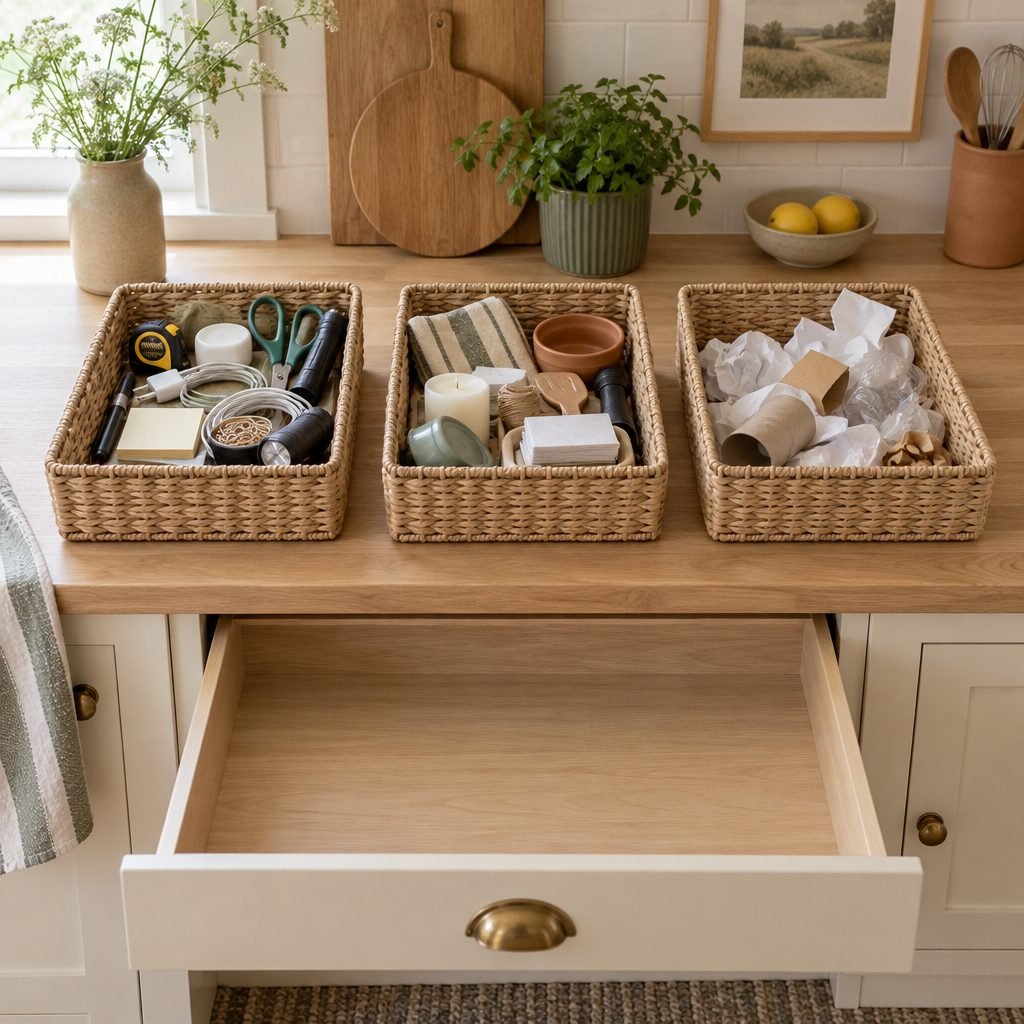
- Empty it completely. Dump everything onto a counter or towel so you can see what is really in there.
- Sort into three piles. Keep, move elsewhere and trash. Three baskets or boxes make this fast.
- Toss without guilt. Rechargeable, lithium, button and 9-volt batteries go to a battery collection point (tape the posts of 9-volts first, as NFPA advises); for ordinary alkaline batteries, check your local rules. Dried pens, broken rubber bands, old receipts and keys nobody can identify can go.
- Clean and line the drawer. Wipe out crumbs and add a non-slip liner so trays stay put.
- Measure, then choose an organizer. Measure the drawer’s inside width, depth and height before you buy trays.
- Put things back by zone. Daily items in front, rarely used items in back, small bits in jars.
Junk Drawer Organizer Ideas
The right organizer depends on your drawer and your budget. Here are the options to consider.
1. Modular Trays in Mixed Sizes
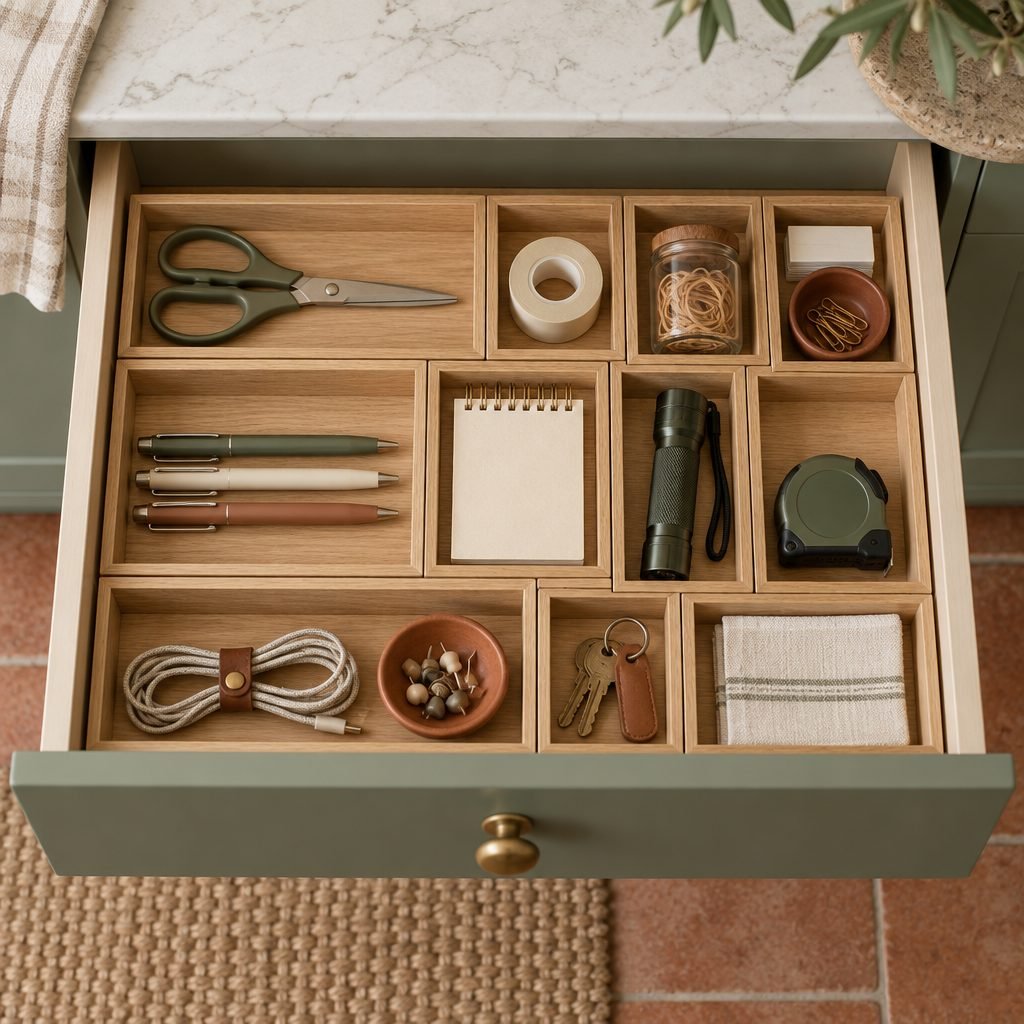
Modular trays are the most flexible junk drawer organizer. Long trays hold pens and scissors, square ones hold tape and notepads, and small ones hold clips and keys. Buy a set in mixed sizes and arrange them like a puzzle until the drawer floor is covered. Wood or bamboo trays look warm and stay put, while clear plastic lets you see everything at a glance.
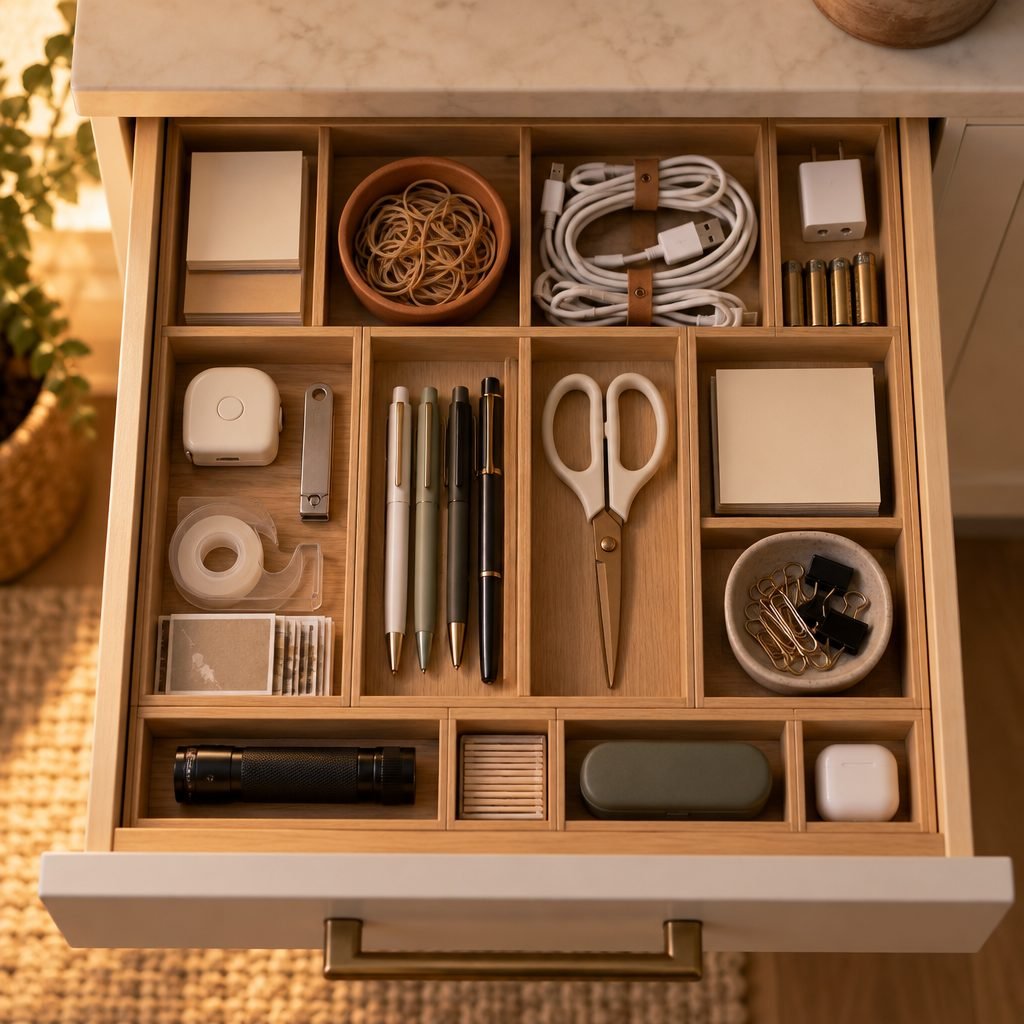
2. An Expandable Wooden Organizer
If your drawer is an odd width, an expandable organizer slides open to fit it edge to edge, so nothing can slip into a gap at the side. It works especially well in wide kitchen drawers and is a quick fix if you do not want to plan a tray layout.
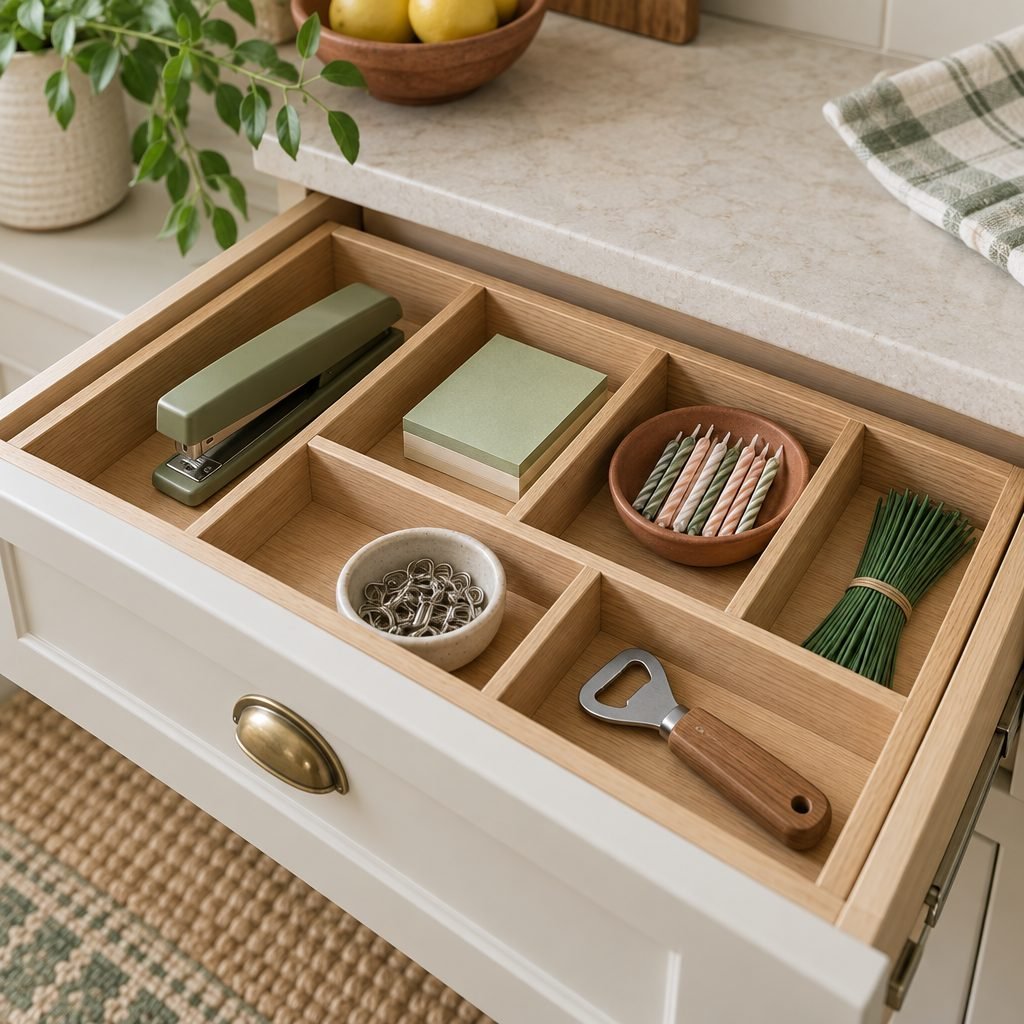
3. DIY Dividers From Boxes and Jars
You do not need to buy anything to organize a junk drawer. Small gift boxes, phone boxes and sturdy cereal box bottoms make great dividers, especially if you cover them with kraft or patterned paper. Empty spice jars and small glass jars hold paper clips and push pins, and a mint tin is perfect for tiny screws.
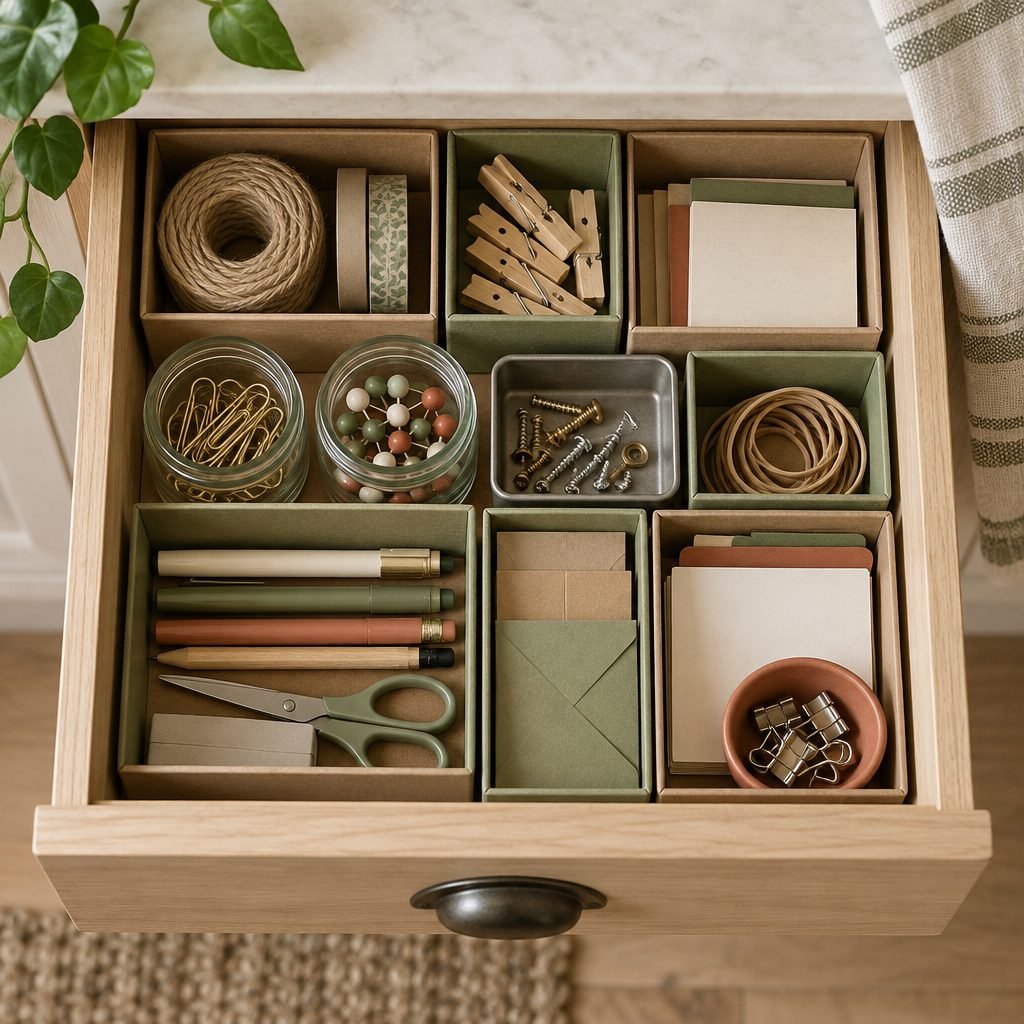
4. Small Jars for Tiny Bits
The smallest items cause the most mess. Rubber bands, twist ties, paper clips, push pins and binder clips each get their own small jar or lidded tin. Lids stop pieces from spilling when the drawer slams shut, and clear jars let you see when something is running low.
5. A Non-Slip Drawer Liner
A liner is cheap and makes every other idea work better. It keeps trays from sliding, quiets the rattle when you open the drawer and makes crumbs easy to shake out. Cut it to size with scissors and replace it when it gets grubby.
6. Two Layers in a Deep Drawer
A deep drawer wastes most of its height when everything lies flat on the bottom. A sliding top tray or a second layer of shallow trays keeps everyday items on top and backups underneath, like the extra tape and the spare notepads. Keep the heavier things on the bottom layer.
Give Every Category a Home
Junk drawer organizing gets easier when every type of item has its own place. These categories cover most drawers.
7. Front for Daily, Back for Rarely
Put the things you grab every day, like pens, scissors and tape, right at the front of the drawer. Spare keys, birthday candles and backup batteries can sit at the back. This one rule stops you from digging through everything to find a pen.
8. A Small Battery Station
A battery organizer or a small tray keeps batteries sorted by size, so you can see what you have before you buy more. Keep 9-volt batteries in their package or tape the posts, and keep them out of the shared tray, as the NFPA tip sheet recommends. Keep button and coin batteries in their package, out of sight and reach of young children, such as in a high cabinet. Do not let dead batteries pile up in the drawer.
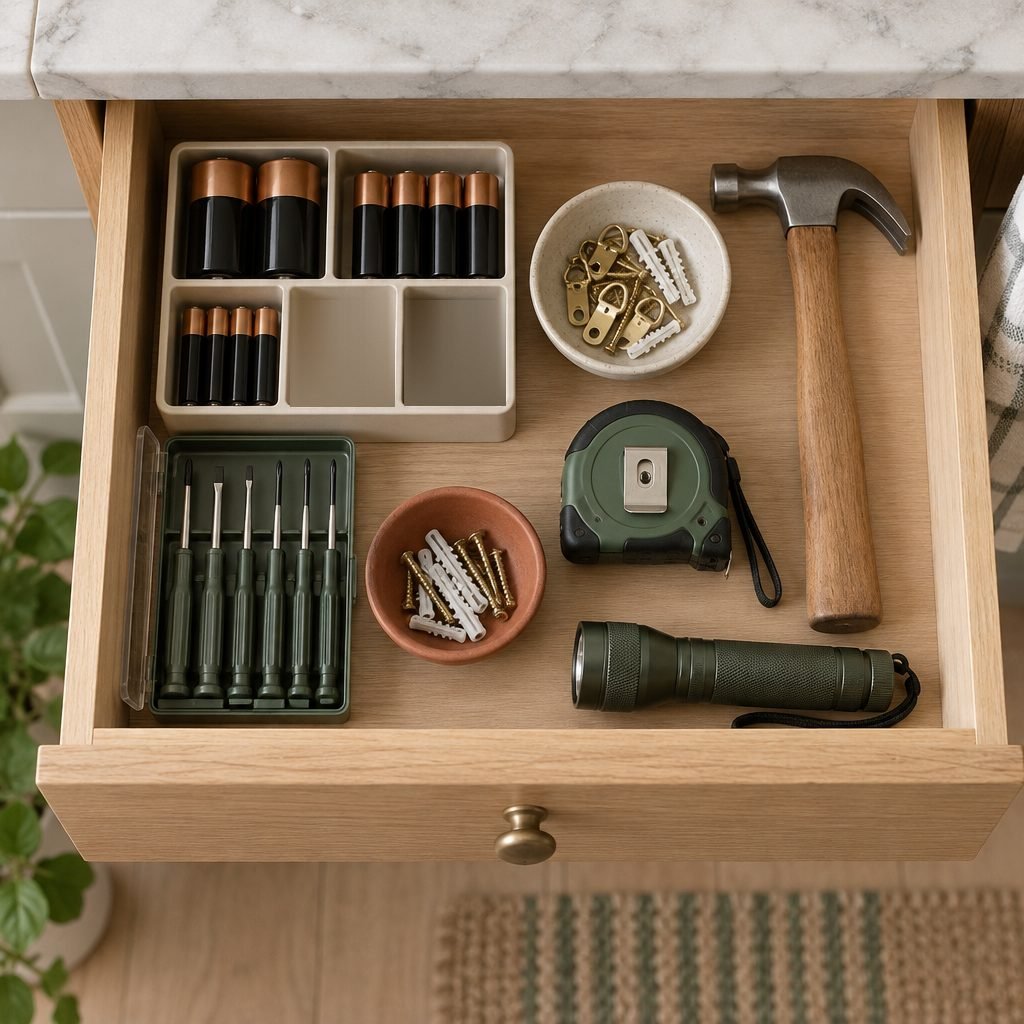
9. A Charging Drawer for Cords
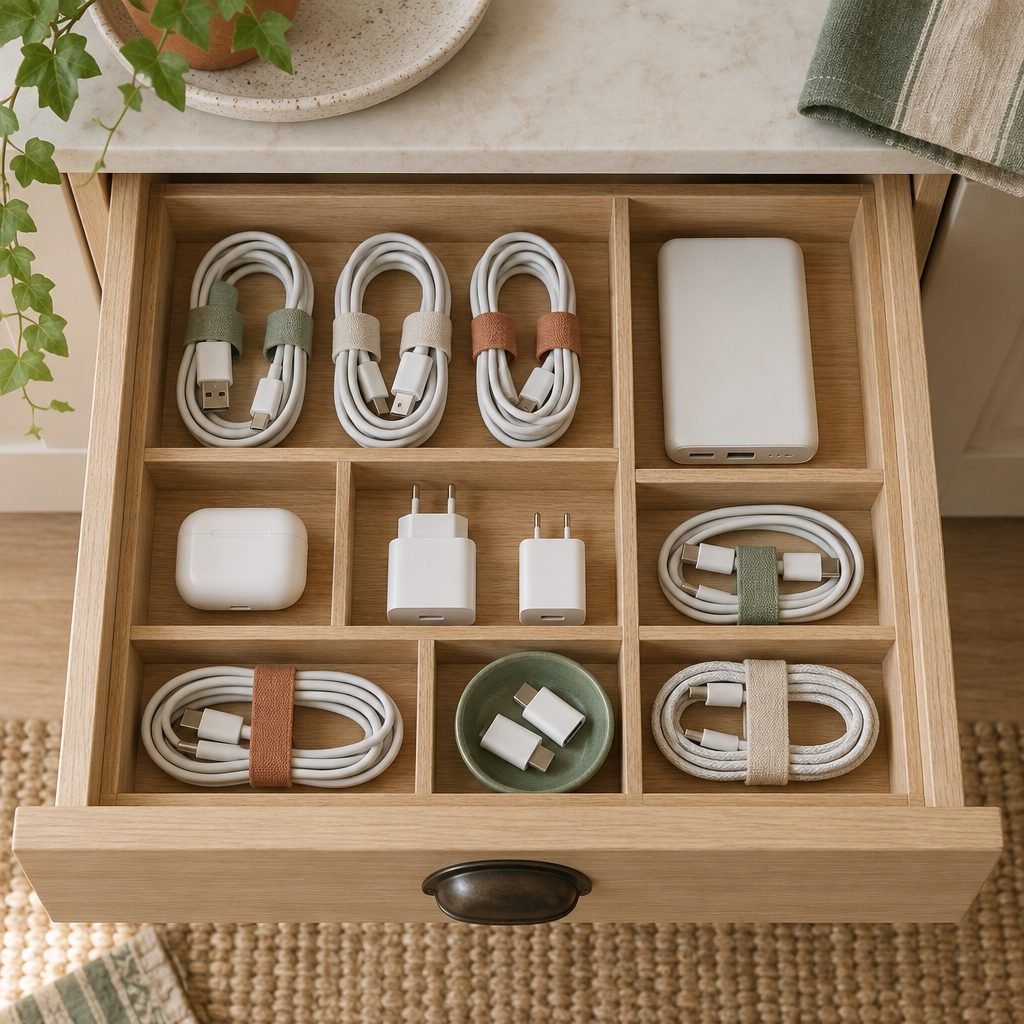
Cords are the main reason junk drawers turn into a tangle. Coil each cable and hold it with a fabric or hook-and-loop tie, then give cables, wall plugs and power banks their own compartments. Keep only the cables you actually use and donate or recycle the rest.
10. A Mini Tool Kit
A tape measure, a small flashlight, a mini screwdriver set and a few picture hooks handle most quick fixes around the house. Keeping them together in one tray means you are not hunting through the garage to hang a frame. Bigger tools still belong in a toolbox.
11. A Limit on Paper
Takeout menus, coupons, warranties and receipts pile up quickly. Keep just a small notepad and a few envelopes in the drawer. Snap a photo of receipts you need to keep, recycle menus you can find online, and file warranties with your other paperwork.
12. Labeled Spare Keys
Mystery keys are a classic junk drawer problem. Put each spare key on a ring with a small tag that says what it opens, and toss any key nobody can identify after you have tested it on every lock in the house. Keep spare house keys somewhere less obvious if your junk drawer is near the front door.
Junk Drawers Beyond the Kitchen
The same rules work in any drawer that collects odds and ends.
13. An Entryway Drop Zone Drawer
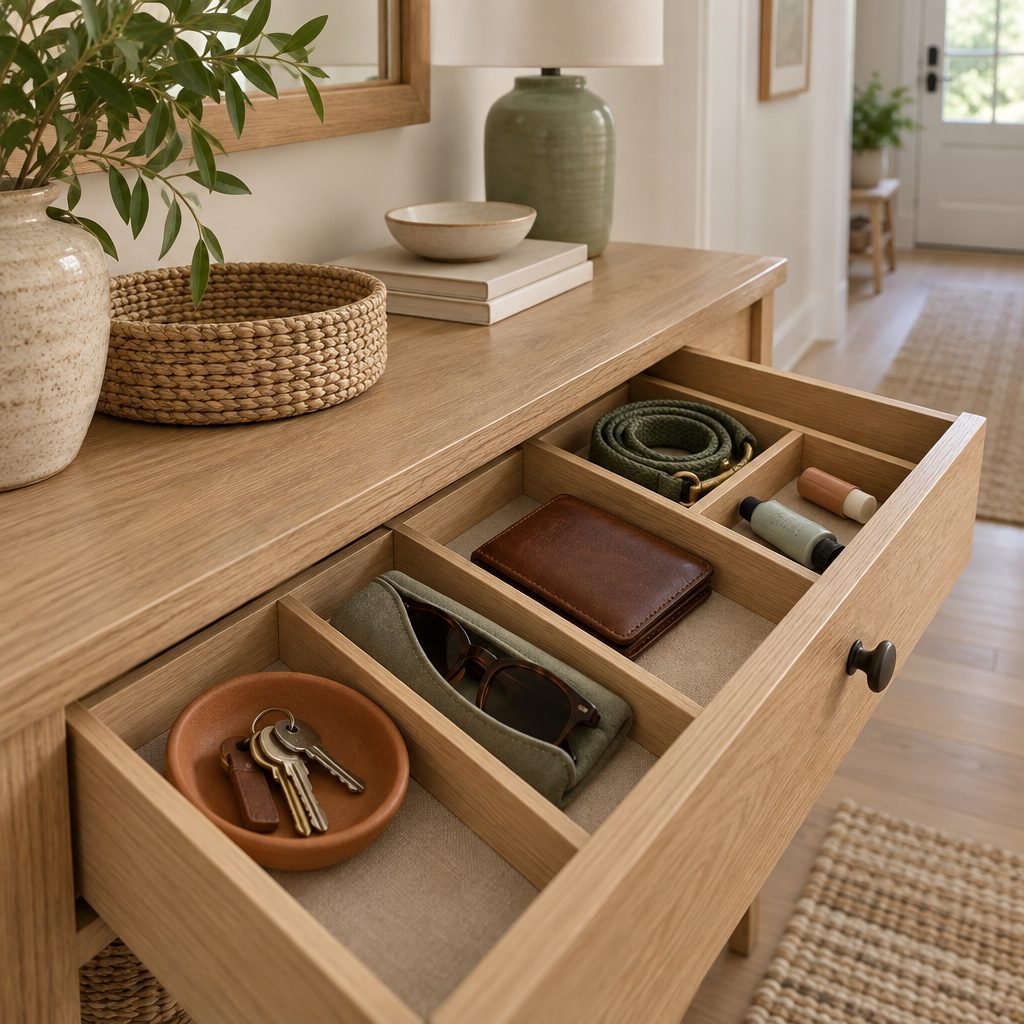
A console table drawer by the front door can hold keys, sunglasses, wallets, dog leashes and lip balm, so they are never left on the counter. Small dividers and a dish for keys make it work. Our small entryway ideas show how to set up the rest of a drop zone.
14. A Desk Junk Drawer
Home office drawers fill up with chargers, sticky notes, stamps and pens. Use the same zones as the kitchen: writing tools in front, paper in the middle and tech at the back. For more ideas, see our desk organization ideas.
Keep Your Junk Drawer From Filling Up Again
15. A Five-Minute Monthly Reset
Once a month, empty the front zone, test pens, toss trash and put strays back in their trays. Five minutes is enough when the drawer already has a system. Pair it with another monthly habit, like changing the bed sheets, so you remember.
16. A Move-It-Later Basket
Many things land in the junk drawer because their real home is in another room. Keep a small basket on the counter for those items, and return everything in it to the right room once a week. It is the same idea as the relocate pile in our guide on how to declutter your home.
Junk Drawer Mistakes to Avoid
- Buying organizers before you declutter. Sort and toss first, then buy trays for what is left.
- Ignoring the measurements. Trays that are too tall stop the drawer from closing, and gaps let small items slip around.
- Loose 9-volt batteries. Keep them in their package or tape the posts, and keep them away from keys and paper clips.
- One giant bin. A single large container just becomes a smaller junk drawer. Use several small compartments.
- Keeping duplicates. Ten pens and four pairs of scissors take up the space that one of each needs.
Junk Drawer FAQ
What is the best junk drawer organizer?
For most kitchen drawers, a set of modular trays in mixed sizes works best because you can arrange them to fit your drawer and your things. An expandable organizer is the easiest choice for wide or unusual drawers, and DIY boxes and jars cost nothing.
How do you organize a junk drawer without buying anything?
Use small boxes, jar lids, mint tins and clean food jars as dividers. Cut down cereal or cracker boxes to make trays of different sizes, and cover them with paper if you want them to look neat.
What should you keep in a junk drawer?
Keep everyday helpers: pens, a notepad, scissors, tape, rubber bands, a small flashlight, a tape measure, batteries in their packaging, a few cables and labeled spare keys. Anything broken, expired or used in another room should go.
How often should you clean out a junk drawer?
A quick five-minute reset once a month keeps it under control, with a full empty-and-sort every few months or whenever the drawer gets hard to close.
Final Thoughts
A junk drawer only becomes a problem when it has no system. With a little sorting, a junk drawer organizer that fits and a monthly reset, the most chaotic drawer in the house becomes the one that always has exactly what you need.
Ready for the next drawer? Try our guides to kitchen cabinet organization, kitchen counter organization and bathroom organization ideas.
How this guide was made: researched and written with the help of AI tools, fact-checked against trusted sources and published by Mohamed Elber. Images are AI-generated illustrations. See our Editorial Policy.