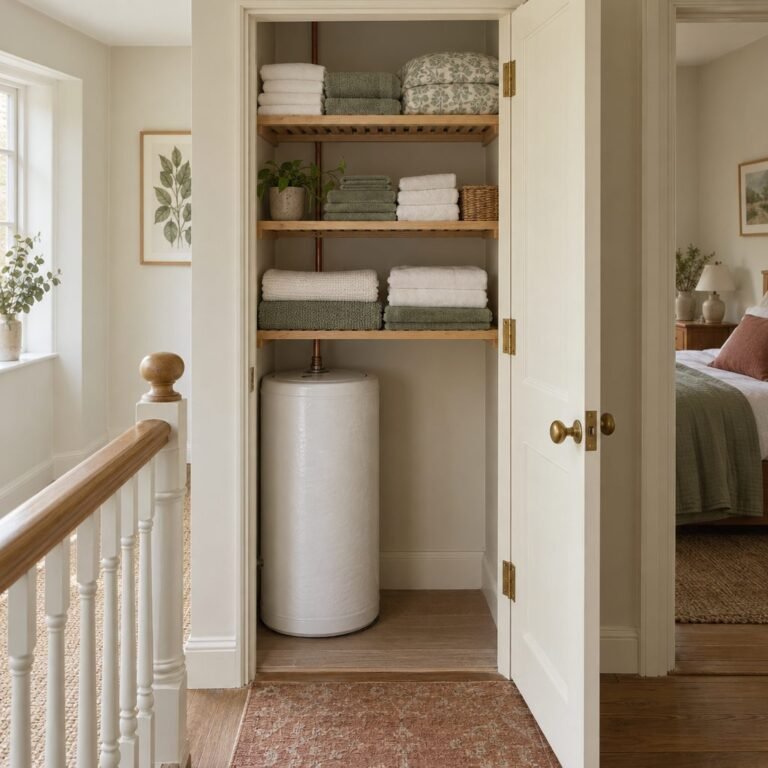
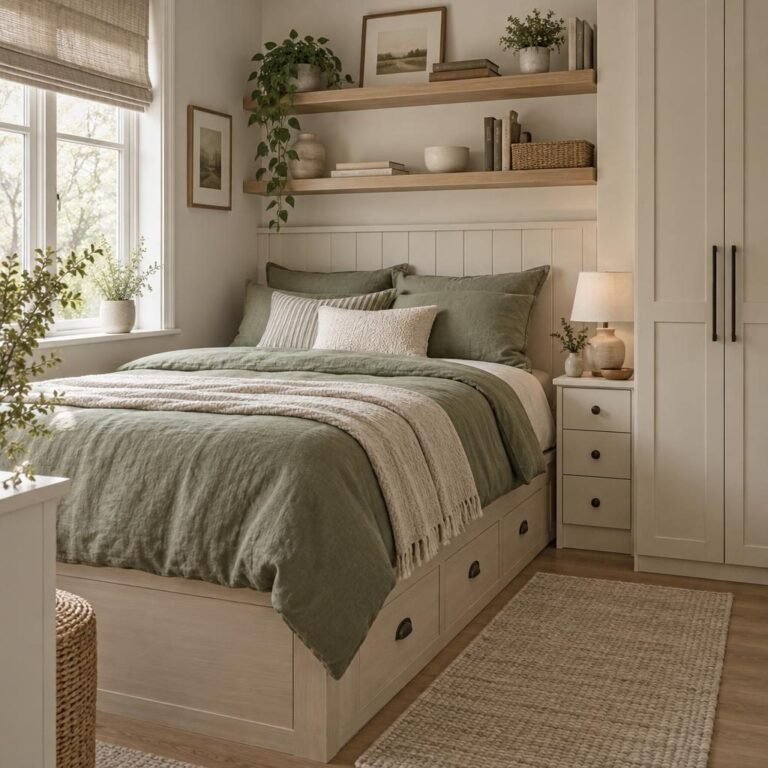
Learning how to organize your room is less about buying storage and more about deciding where things live. A messy bedroom is not always a sign that you own too much or that you are lazy. It is a sign that clothes, papers and everyday things do not have a home, so they land on the bed, the chair and the floor.
This guide gives you a simple zone plan, a 7-step method you can finish in an afternoon and 15 ideas for clothes, surfaces, storage and daily habits that keep the room tidy. It works for a teen’s bedroom, a shared room or your own, whatever the size.
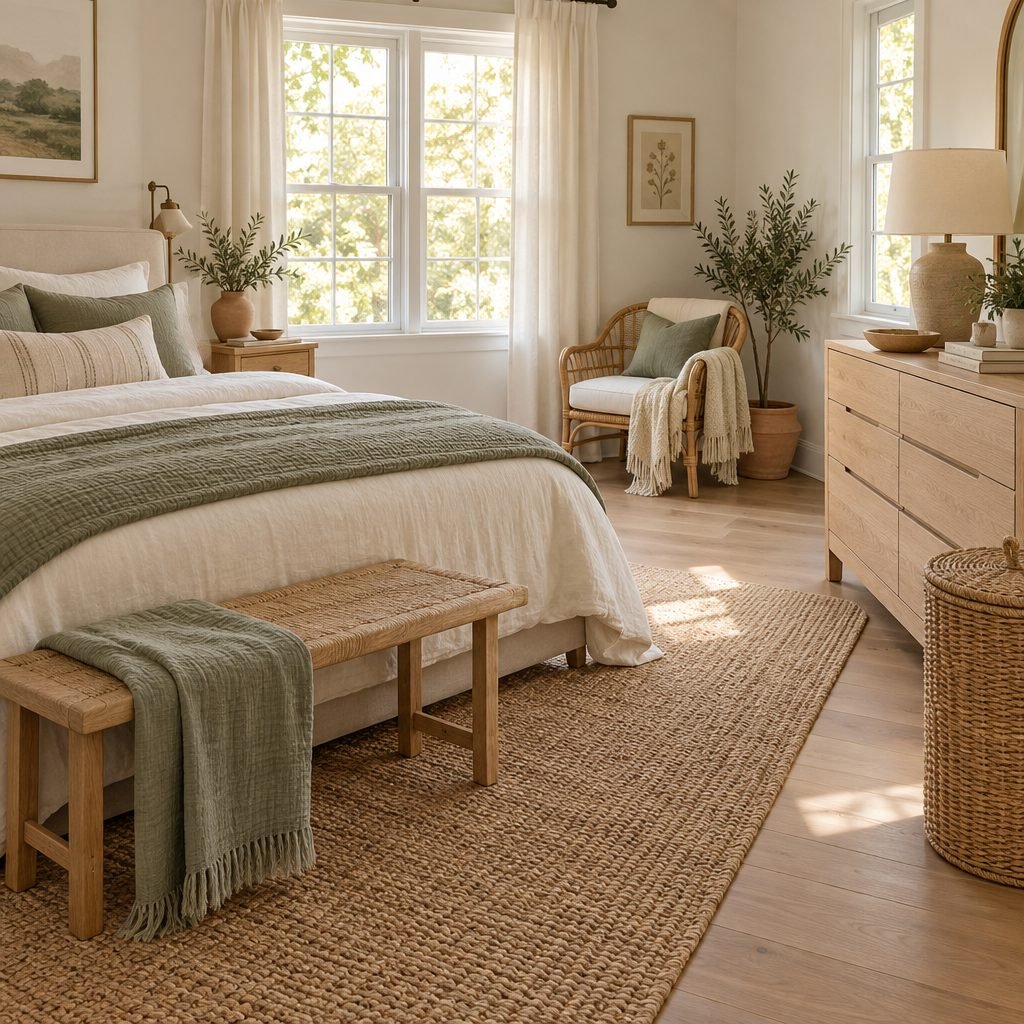
Key Takeaways
- Quick answer: To organize your room, clear the bed and floor, sort everything into keep, donate, trash and belongs-elsewhere boxes, deal with clothes first, then give every item a home in a zone (sleep, dressing, relax, work) and finish with a 10-minute daily reset.
- Fix two common clutter traps first: a lidded hamper where you undress and hooks for clothes you will wear again.
- Keep surfaces almost empty: one tray on the dresser and only a few things on the nightstand.
Time: 2–4 hours · Cost: $0–60 · Difficulty: Easy
Start With Zones
Every bedroom does a few jobs: sleeping, getting dressed, relaxing and sometimes working or studying. When each job has its own area, the things that belong to it stay there. Clothes live in the dressing zone, books in the relax zone and papers in the work zone, and nothing needs to sit on the bed.
A tidy room can also help you wind down. The Sleep Foundation’s guide on how to set up a bedroom for better sleep notes that visual clutter can generate stress, a known barrier to quality sleep, and suggests reviewing the items you do not really need and spending just a few minutes each day picking up clutter so it does not build up.
Quick Pick: Where to Start in Your Room
| Your biggest problem | Start with | Ideas |
|---|---|---|
| Clothes on the floor and chair | Hamper, hooks and folding | #1, #2, #3 |
| Too many clothes for the space | A closet edit | #4 |
| Cluttered dresser or nightstand | One tray and a three-item rule | #5, #6 |
| Not enough storage | Cube shelves, under-bed, door and wall space | #8, #9, #10, #11 |
| Room is messy again by Friday | Daily and monthly habits | #14, #15 |
How to Organize Your Room in 7 Steps
- Set a timer and clear the bed. Start with the bed so you have a clean surface to sort on. Work in 25-minute rounds with short breaks.
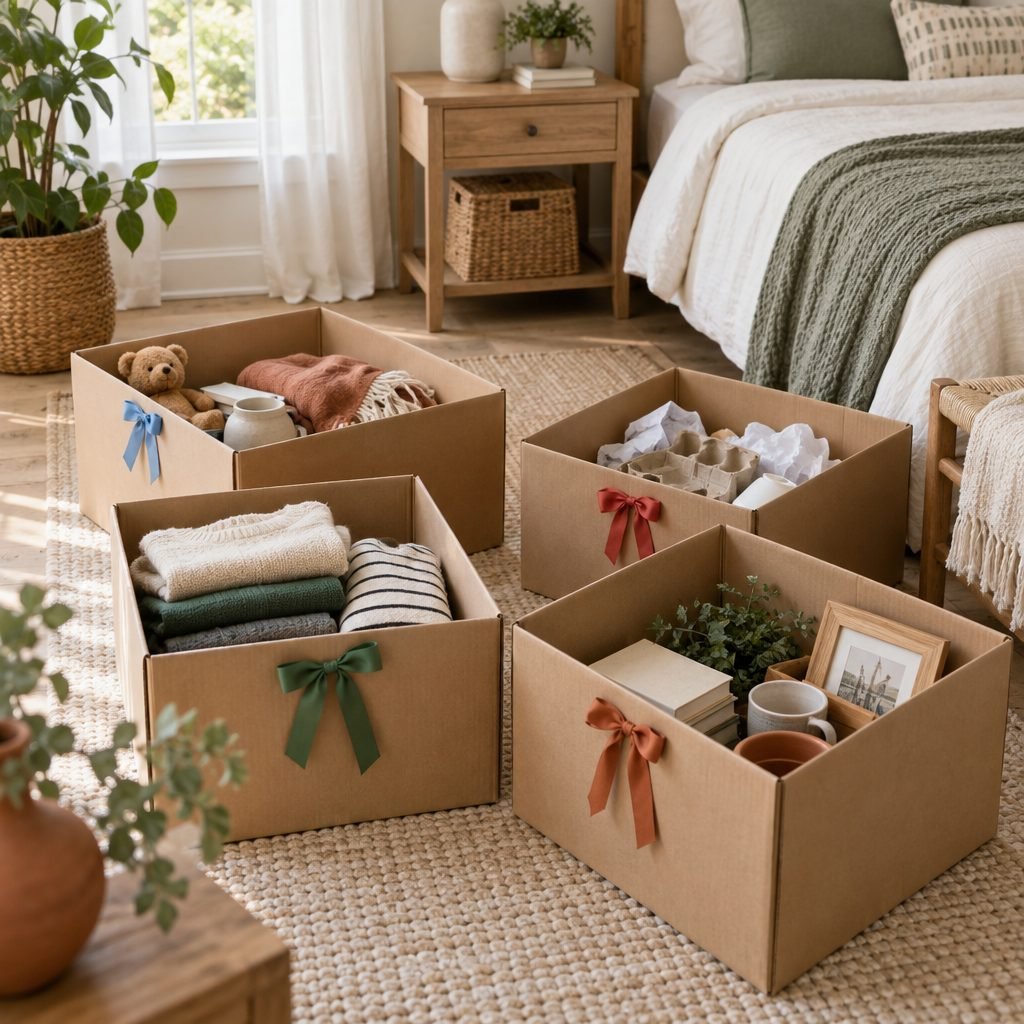
- Sort with four boxes. Label them keep, donate, trash and belongs elsewhere. Pick up every item from the floor, chair and surfaces and drop it in a box.
- Do the clothes first. Dirty clothes go in the hamper, clean ones get folded or hung, and anything that no longer fits goes in the donate box.
- Clear the surfaces. Empty the dresser, nightstand and desk, wipe them down and put back only what you use every day.
- Check hidden spots. Look under the bed, in the closet and in drawers for things you forgot you had.
- Give everything a zone. Put each item in the zone where you use it, in a bin, drawer or on a hook.
- Empty the boxes right away. Take donations to the car, trash outside and return belongs-elsewhere items to their rooms the same day.
Clothes and Laundry Ideas
For many people, clothes are the biggest source of bedroom clutter, so start there.
1. A Lidded Hamper Where You Undress
If the hamper is in the bathroom but you get changed by the bed, clothes will land on the floor. Put a hamper where you actually undress, and choose one with a lid so the room still looks calm. A two-section hamper lets you sort lights and darks as you go.
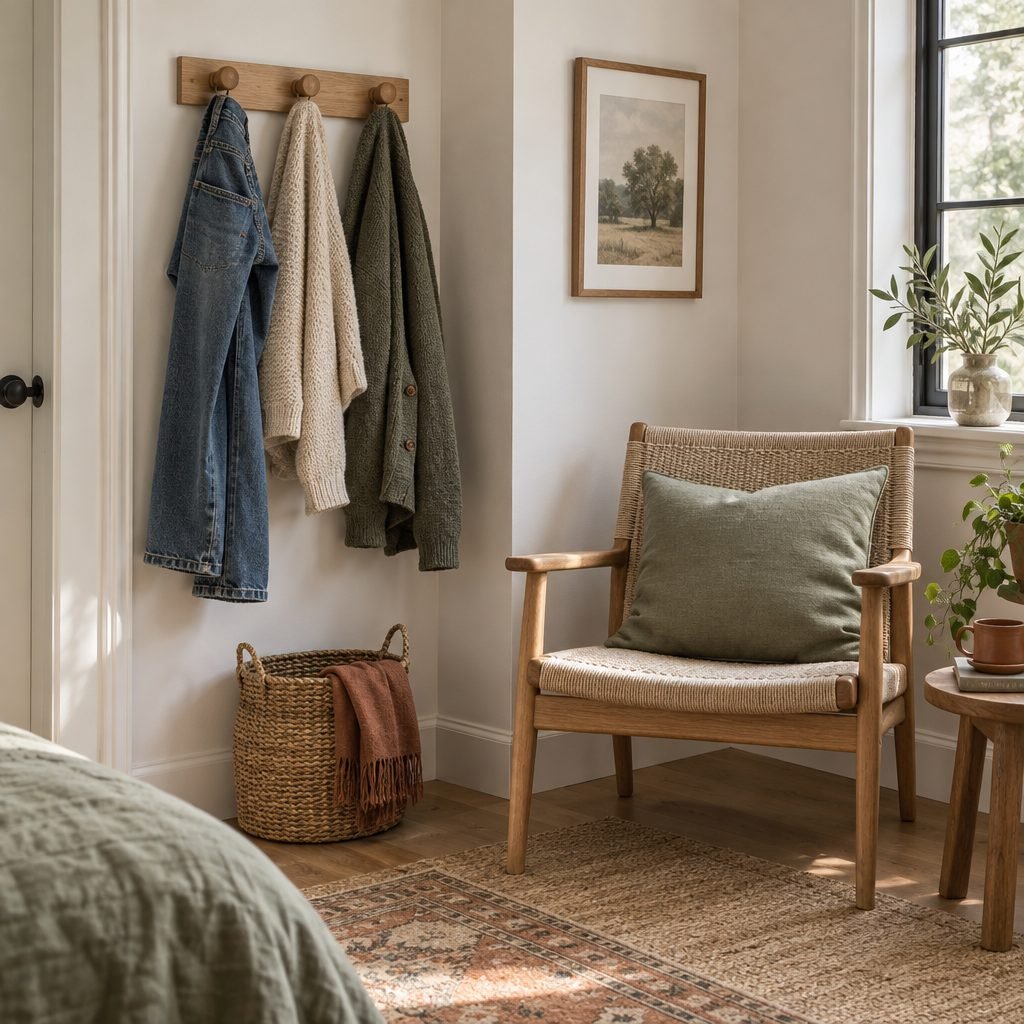
2. Hooks for Worn-Once Clothes
The chair in the corner usually holds clothes that are not dirty but not clean enough to put back. Give them a home instead: a short peg rail or three hooks on the wall near the closet. When the hooks are full, it is time to wash or put something away.
3. Fold to Fit Your Drawers
Folding clothes into small upright rectangles lets you see every T-shirt at once and fits more in each drawer. Our guide on how to fold clothes to save space shows the file fold and a few others step by step.
4. Edit the Closet
If the closet is packed, clothes end up everywhere else. Take out anything that does not fit, you have not worn in a year or you keep skipping. Our closet clean-out guide walks you through it, and our small closet organization ideas help you fit more in what is left.
Surfaces and Furniture
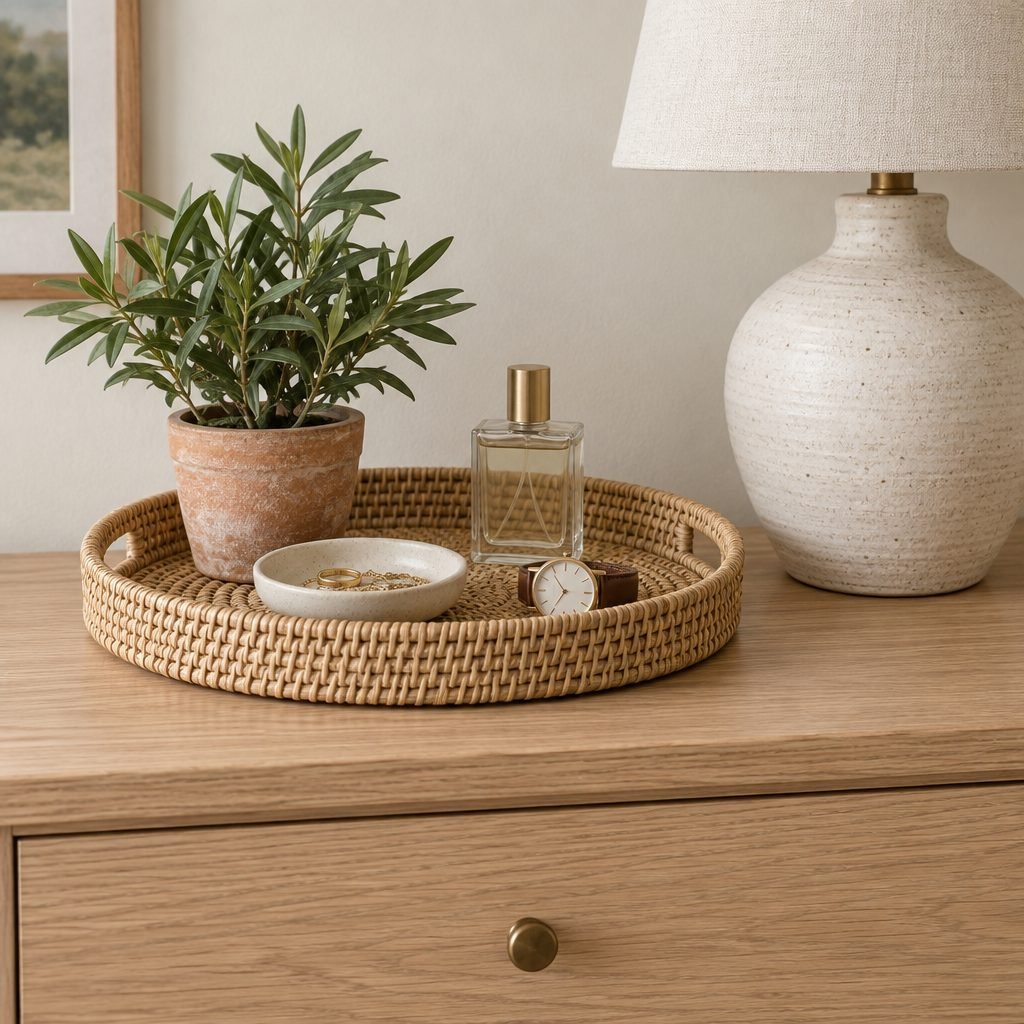
5. One Tray on the Dresser
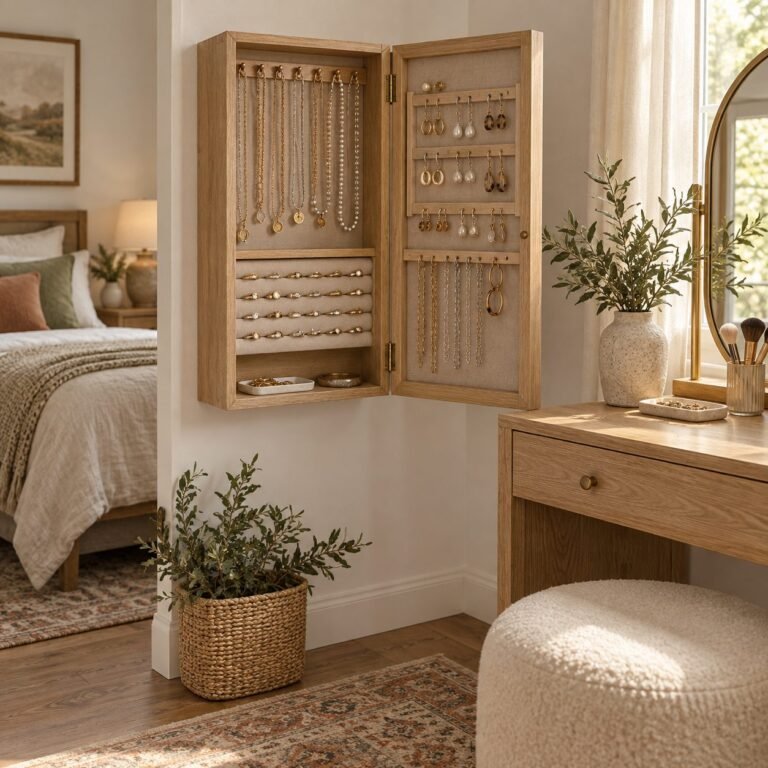
A dresser top fills up fast with jewelry, bottles, receipts and cups. Put one tray on it for the things you use daily, like a watch, a ring dish and a perfume, and keep the rest of the surface clear. When the tray is full, something has to go. Our jewelry storage ideas can help with the overflow.
6. A Three-Item Nightstand
Limit the nightstand top to about three things, such as a lamp, a book and a glass of water. Put chargers, hand cream and earplugs in the drawer. A clear nightstand makes the whole room feel tidier.
7. Anchor Tall Furniture
While you are moving furniture around, secure dressers and tall bookcases to the wall. The U.S. Consumer Product Safety Commission’s Anchor It! campaign says anchoring all furniture with drawers, doors and shelves to the wall prevents tip-over injuries and deaths. This is especially important in homes with young children.
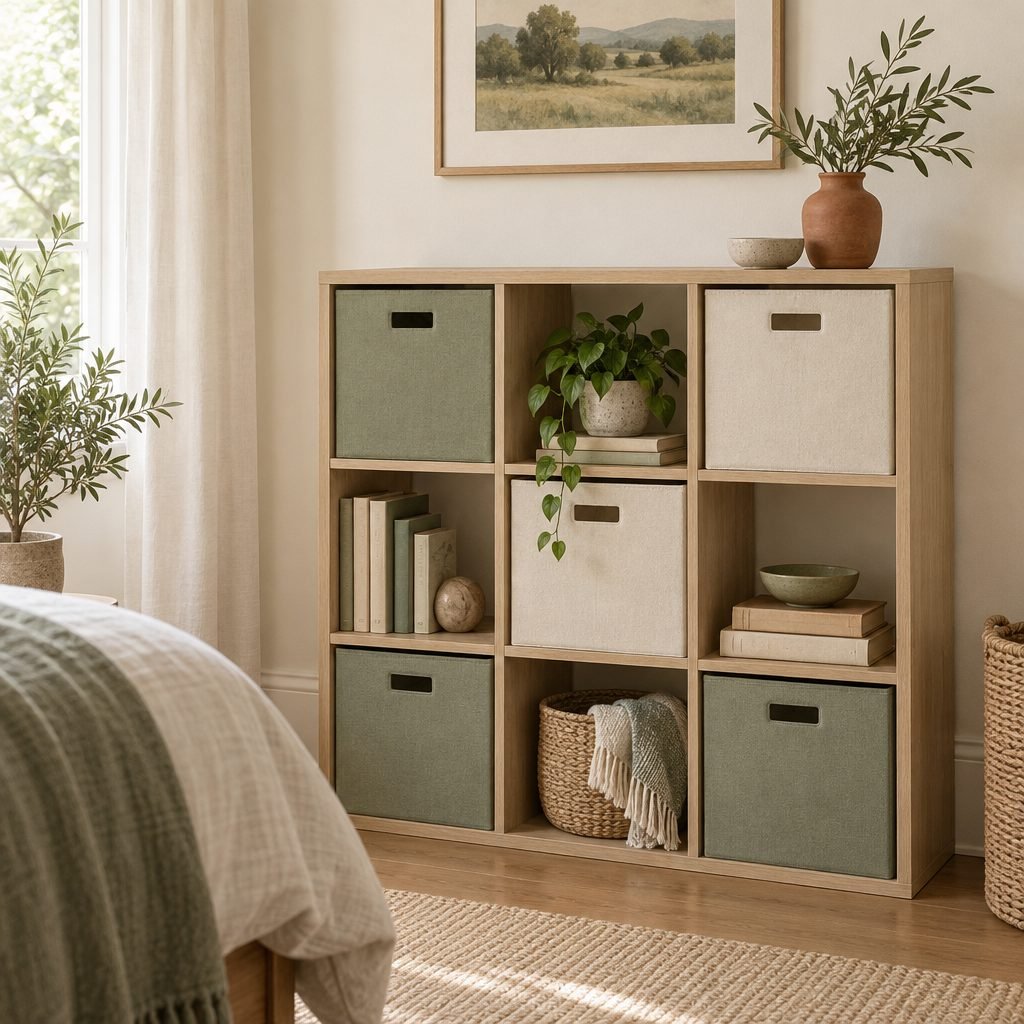
8. Cube Shelves With Fabric Bins
Cube shelves are one of the most flexible pieces of bedroom storage. Fill some cubes with matching fabric bins for small items and keep others open for books and a plant. Use one bin per category, like chargers, hobby supplies or socks, so you always know where to look.
Storage You Already Have
9. The Space Under the Bed
Under-bed bins or rolling drawers work well for off-season clothes, spare bedding and things you use less than once a month. Choose bins with lids to keep dust out, and keep at least one side clear so you can vacuum. Our small bedroom storage ideas include storage beds and more.
10. The Back of the Door
An over-the-door hook rack holds a robe, a bag and tomorrow’s outfit without using any floor space. A slim over-the-door organizer can hold shoes or accessories. For more space-saving tricks, see our storage ideas for small spaces.
11. Shelves Above Eye Level
Wall space above a desk or dresser is often empty. One or two shelves hold books, baskets and keepsakes and free up the surfaces below. Keep everyday items low and lighter, less-used things higher up.
Make Room for What You Love
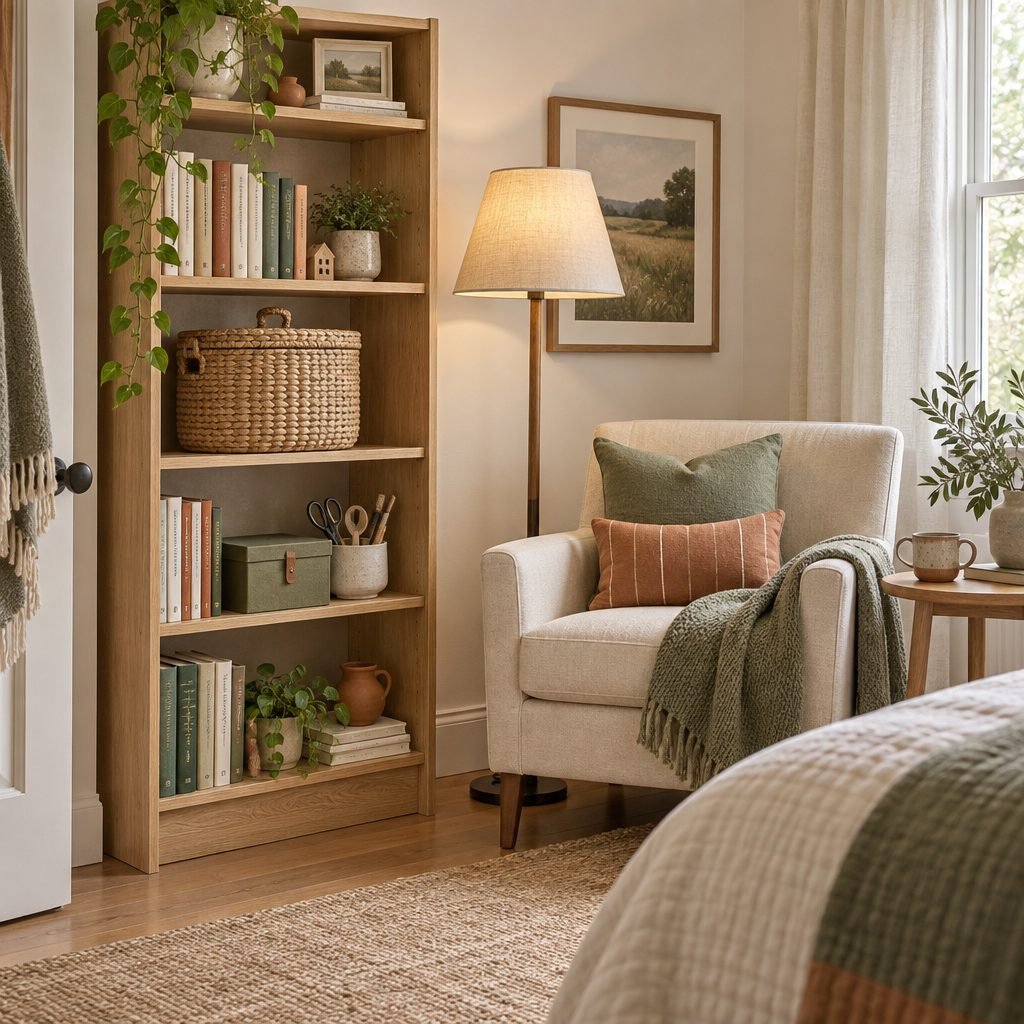
12. A Reading or Hobby Corner
A small corner with a chair, a lamp and a shelf gives books, yarn or sketchbooks a proper home, so they stop drifting onto the bed. Store supplies in a lidded basket or box on the shelf right next to the chair.
13. A Clear Desk Zone
If you work or study in your bedroom, keep the desk for that job only. Give papers, chargers and stationery their own spots and clear the desk at the end of each day. Our desk organization ideas cover the details.
Keep Your Room Organized
14. A 10-Minute Daily Reset
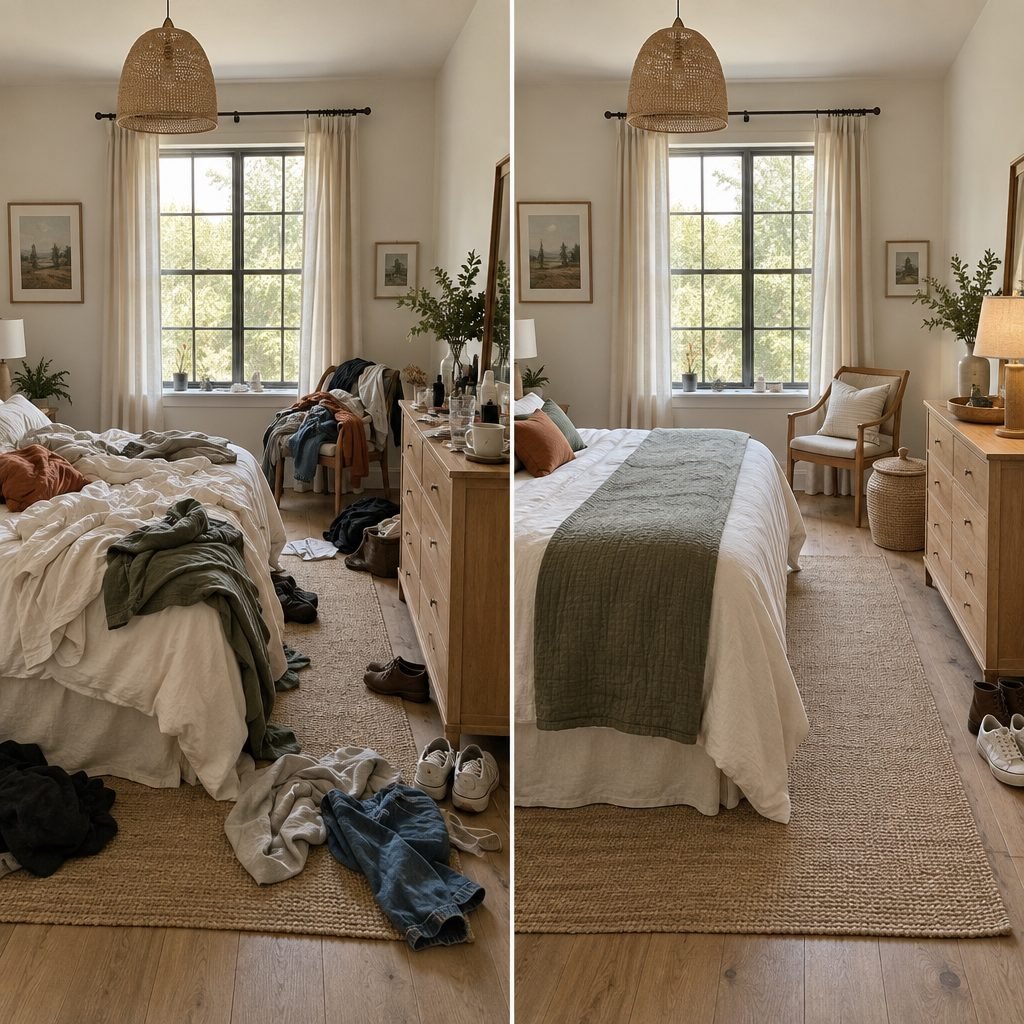
Once a day, spend about ten minutes putting the room back: make the bed, put clothes in the hamper or on hooks, return the dresser top to one tray, take stray items back to other rooms and clear the floor. This one habit goes a long way toward keeping a room organized.
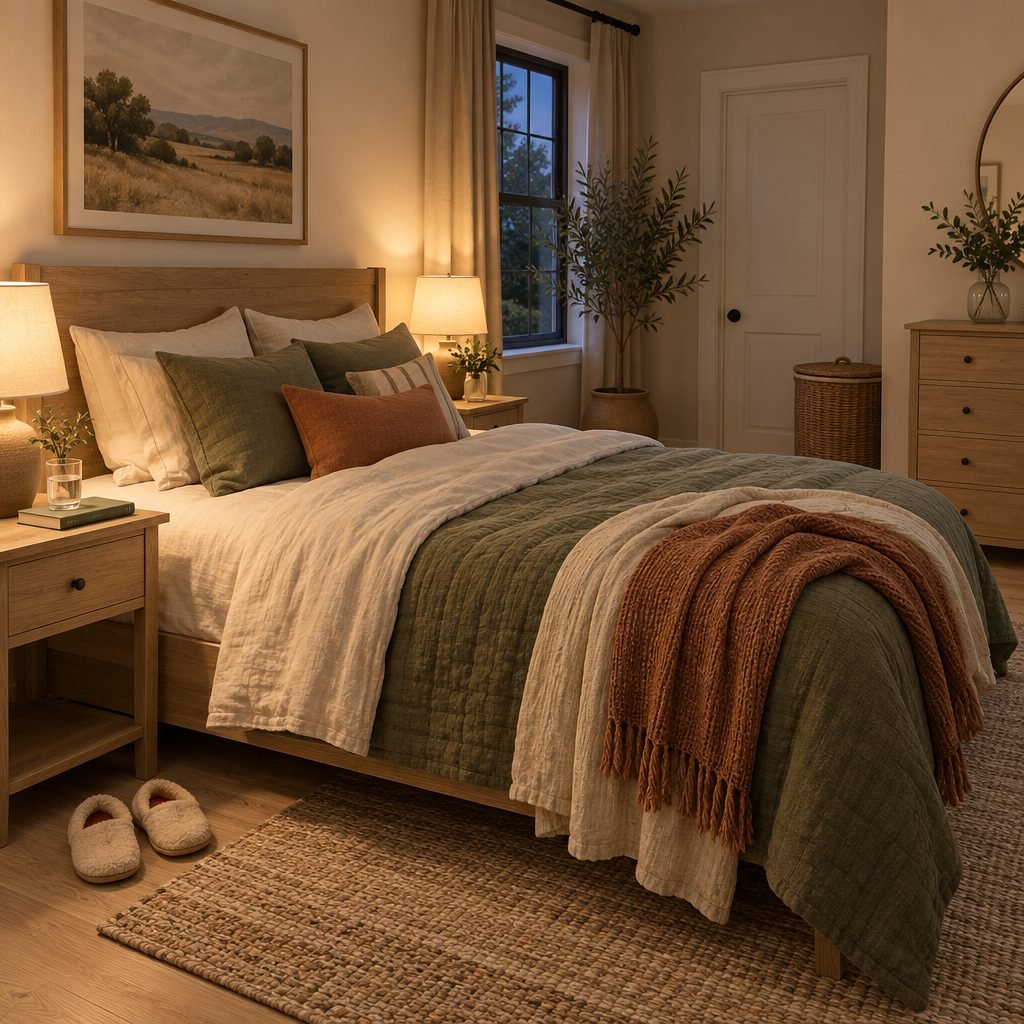
15. One In, One Out
Every time something new comes into the room, like a sweater, a book or a gadget, let something similar go. Once a month, take a few minutes to refill the donate box. Our guide on how to declutter your home has more ways to keep the clutter from coming back.
Mistakes to Avoid When You Organize Your Room
- Buying storage first. Sort and declutter before you buy bins, so you know what you actually need to store.
- Trying to do it all at once. Work in short timed rounds and finish one area before you start the next.
- Leaving the boxes in the room. Donations and things for other rooms should leave the same day.
- Hiding the problem. Stuffing things under the bed or in the closet without sorting just moves the mess.
- No home for worn-once clothes. Without hooks or a set spot, the chair becomes a second closet again.
Room Organization FAQ
Where do I start when my room is a mess?
Start with the bed. Clear it completely, then use it as your sorting table. Next, pick up everything on the floor, and only then move on to the dresser, nightstand and closet.
How long does it take to organize a room?
A full first round usually takes two to four hours, depending on how much you own. After that, a 10-minute daily reset and a short monthly declutter keep it under control.
How do I organize a small room with no closet?
Use vertical space and the furniture you have: a freestanding clothes rail, wall hooks, a dresser with deep drawers, under-bed bins and shelves above eye level. Keep the floor as clear as possible so the room feels bigger.
How do I keep my room organized?
Give every item a home, keep surfaces almost empty, and do a quick 10-minute reset every day, starting with making the bed. Follow a one-in, one-out rule for new things.
Clearing the dresser top? Our guide on how to store perfume shows how to keep bottles tidy and away from light and heat.
Working with the smallest bedroom in the house? Our box room bedroom ideas show which beds fit and how to use height for storage.
Rearranging the furniture as you organize? Use our rug size calculator to check that your rug still fits the new layout.
Final Thoughts
Now you know how to organize your room in a way that lasts: sort once, give everything a zone, and protect it with a short daily reset. Start with the bed and the floor today, and the rest of the room will be much easier to tackle.
Ready for the next step? Try our guides to shoe storage ideas, small closet organization and small bedroom storage.
How this guide was made: researched and written with the help of AI tools, fact-checked against trusted sources and published by Mohamed Elber. Images are AI-generated illustrations. See our Editorial Policy.