The best stuffed animal storage ideas give every plush toy a home your child can reach, without letting the pile take over the bedroom. Most kids collect far more soft toys than they play with, and they all end up in one heap on the bed or the floor, so cleanup takes forever and the favorites get lost.
This guide gives you a simple four-zone system, a 6-step clean-out and 16 ideas for kids’ rooms, walls, small spaces and long-term storage. Every idea works with things you can buy at a big-box store or already have at home, and most need no drilling.
Key Takeaways
- Quick answer: Keep one to three favorites on the bed, this week’s toys in one open basket or storage tower at your child’s height, and the rest in a lidded rotation bin under the bed or in the closet. Store sentimental ones clean and dry in a labeled box indoors, and donate what has no zone.
- Open storage at kid height makes cleanup easy; lids and high shelves are for rotation and keepsakes.
- Keep stuffed animals out of a baby’s sleep space, choose toy chests with a safe lid support and anchor tall units to the wall.
Time: 1 to 2 hours · Cost: free to about $60 · Difficulty: Easy
The 4-Zone Stuffed Animal System
Most plush piles grow because every toy is stored the same way, whether it is hugged every night or forgotten for a year. Sorting them by how often they are played with gives each group the right kind of storage: easy to reach for daily favorites, tucked away for the rest.
Fewer toys out at once can also mean better play. In a University of Toledo study of toddlers given either 4 or 16 toys, children with fewer toys played twice as long with the toys they had, and in more sophisticated ways. A rotation bin is a practical way to use that idea: keep a small set in the play zone and swap a few every 2 to 4 weeks.
Quick Pick: Stuffed Animal Storage Ideas by Situation
| Your situation | Best ideas | Cost |
|---|---|---|
| Big collection, small bedroom | #1, #11, #14 | Low to medium |
| Toddler who tidies up alone | #2, #4 | Low |
| No floor space at all | #5, #6, #9 | Low |
| Want it to look good | #1, #7, #8 | Medium |
| Renters, no drilling | #2, #3, #6, #11 | Low |
| Storing for years | #15, #16 | Low |
How to Organize Stuffed Animals in 6 Steps
- Gather every plush toy from the bed, the floor, the car and the toy box into one pile.
- Let your child choose the favorites. Ask which ones they sleep with and play with every week. These go in zones 1 and 2.
- Check the rest. Set aside toys with torn seams, loose eyes or spilling stuffing, and wash or spot-clean the ones you keep.
- Pick the keepsakes. Choose a few sentimental ones to keep long term, such as a first teddy or a gift from a grandparent.
- Donate or pass on the extras that are clean and in good condition. Check what your local thrift store or donation center accepts first.
- Give each zone one container: one basket or tower for play, one lidded bin for rotation and one box for keepsakes.
Stuffed Animal Storage Ideas for Kids’ Rooms
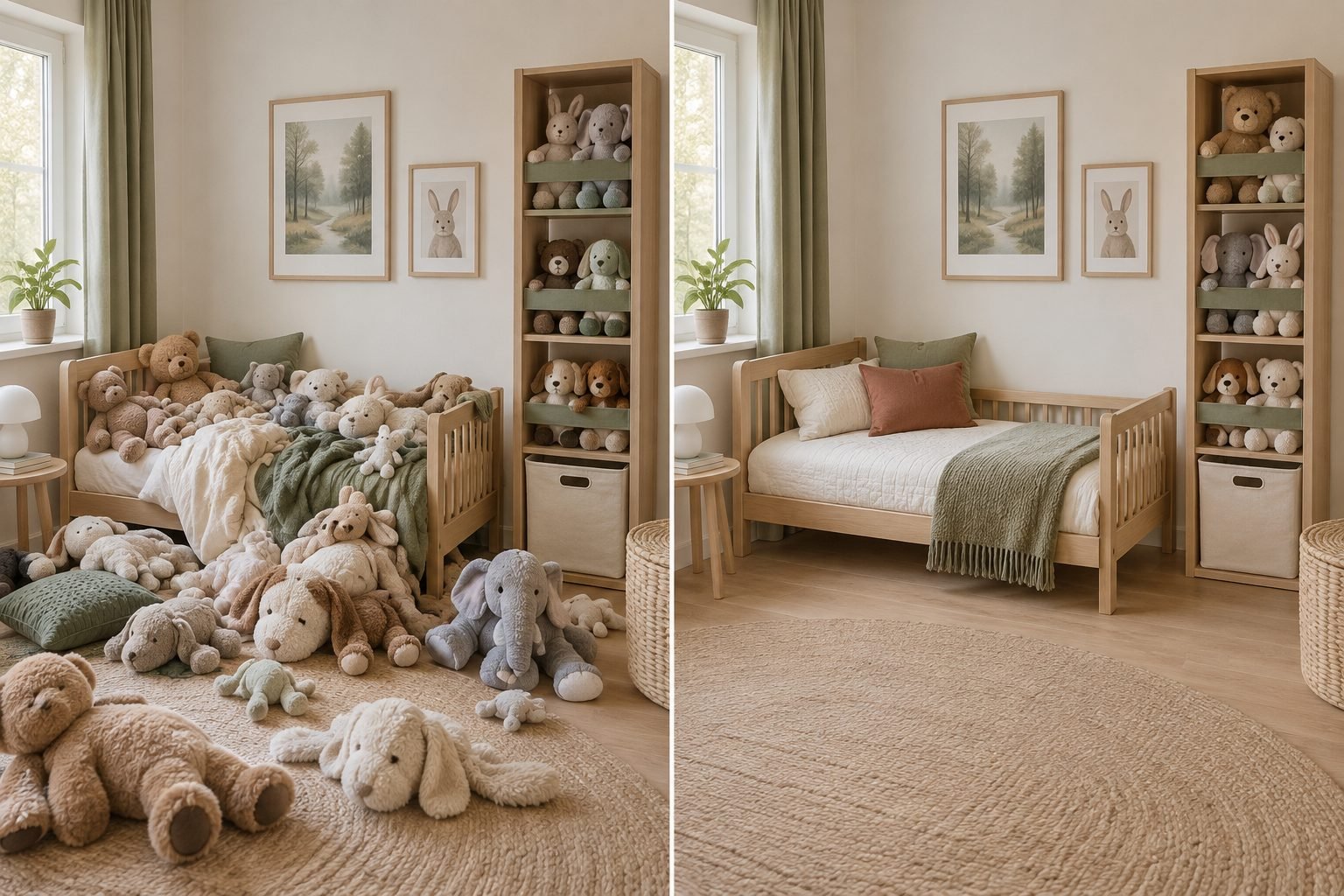
The play zone should be open and low, so a small child can grab a toy and put it back without help. These ideas hold a lot of plush toys in a small footprint.
1. A Stuffed Animal Storage Tower
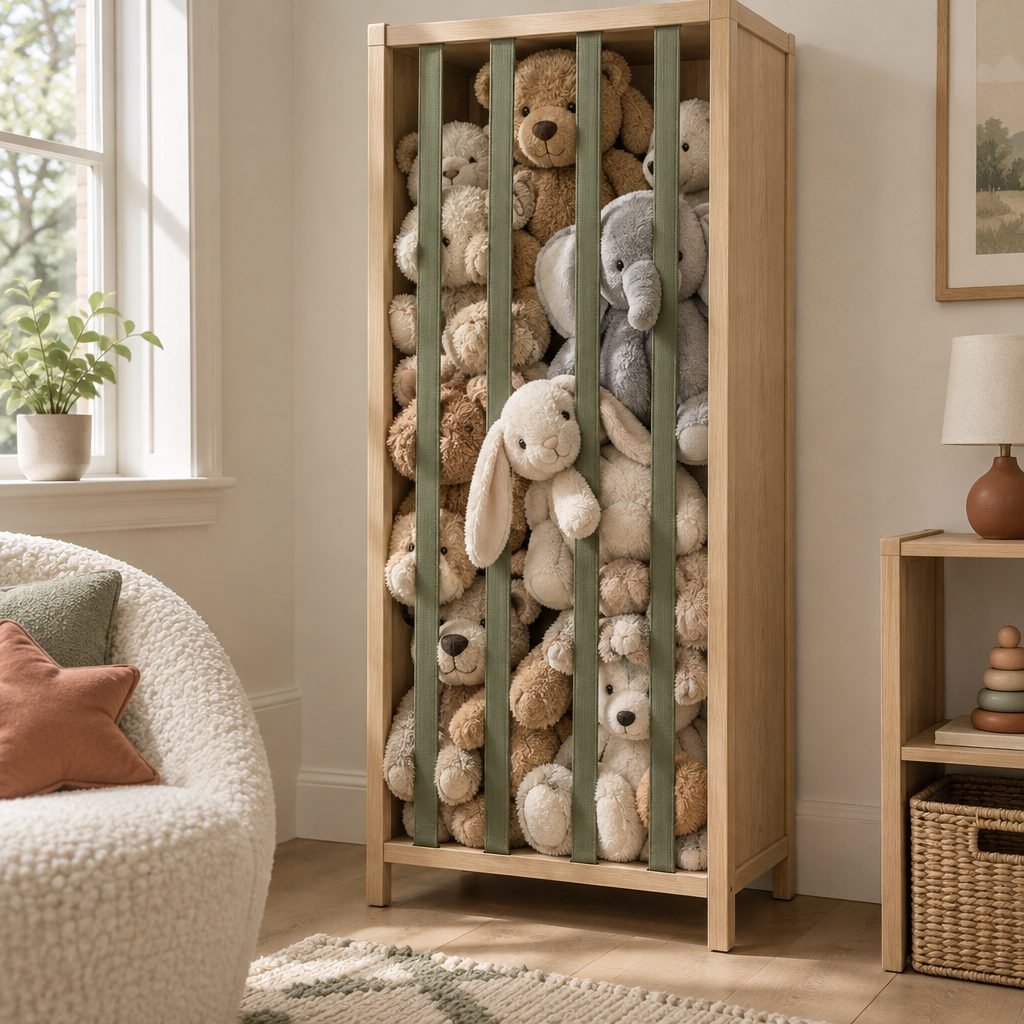
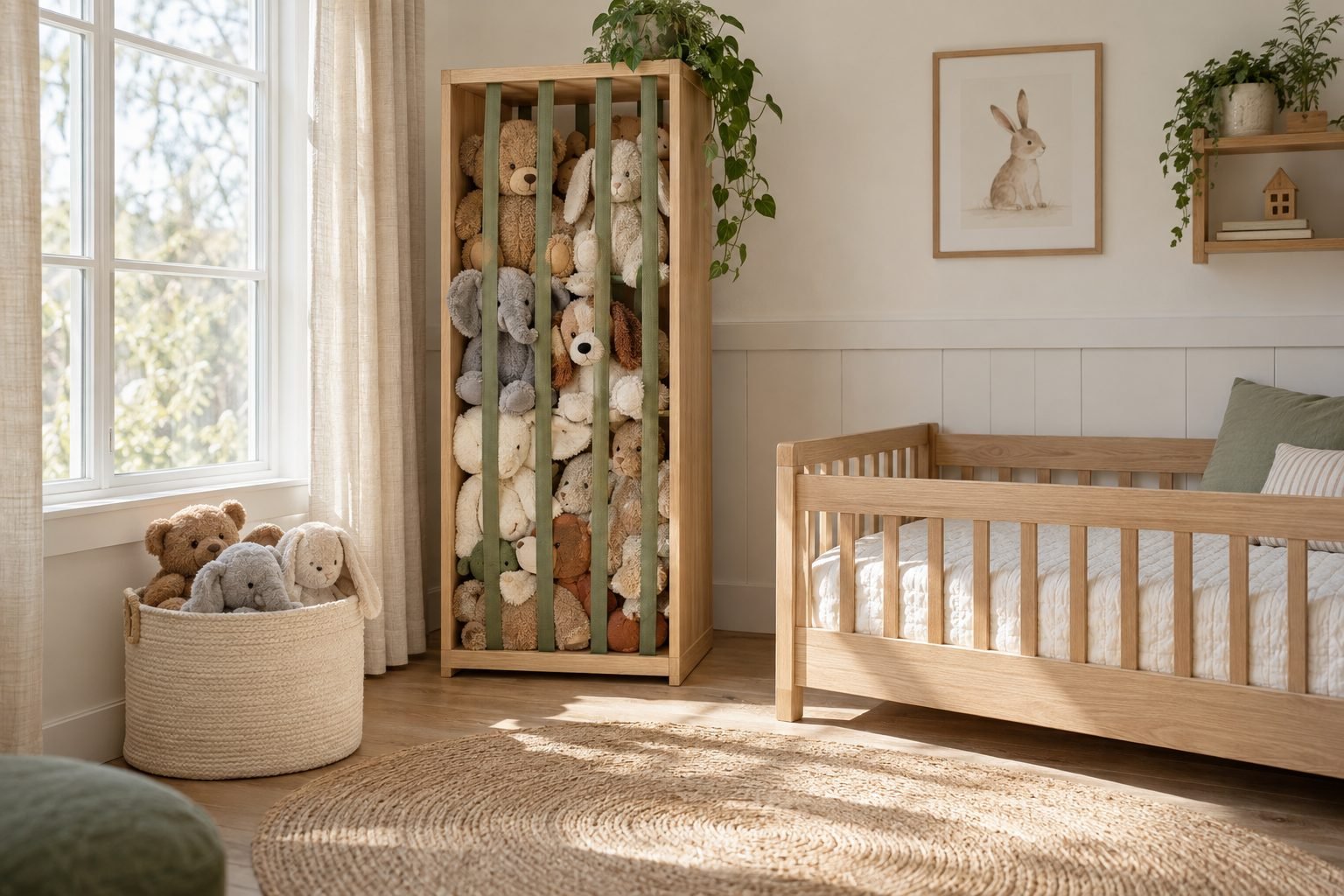
A tall frame with vertical elastic straps across the front, often called a stuffed animal zoo, holds dozens of soft toys in a small corner. Kids pull a toy out between the straps and push it back in, and they can see every toy at once. Choose a sturdy wooden frame with a wide base, and anchor tall units to the wall.
2. One Low Open Basket
A soft fabric or woven basket on the floor is the simplest play zone of all. Toddlers can toss toys in at cleanup time, and the basket sets a natural limit: when it is full, a few toys go to the rotation bin. Pick one without a lid so there is nothing to trap fingers.
3. A Bean Bag Storage Cover
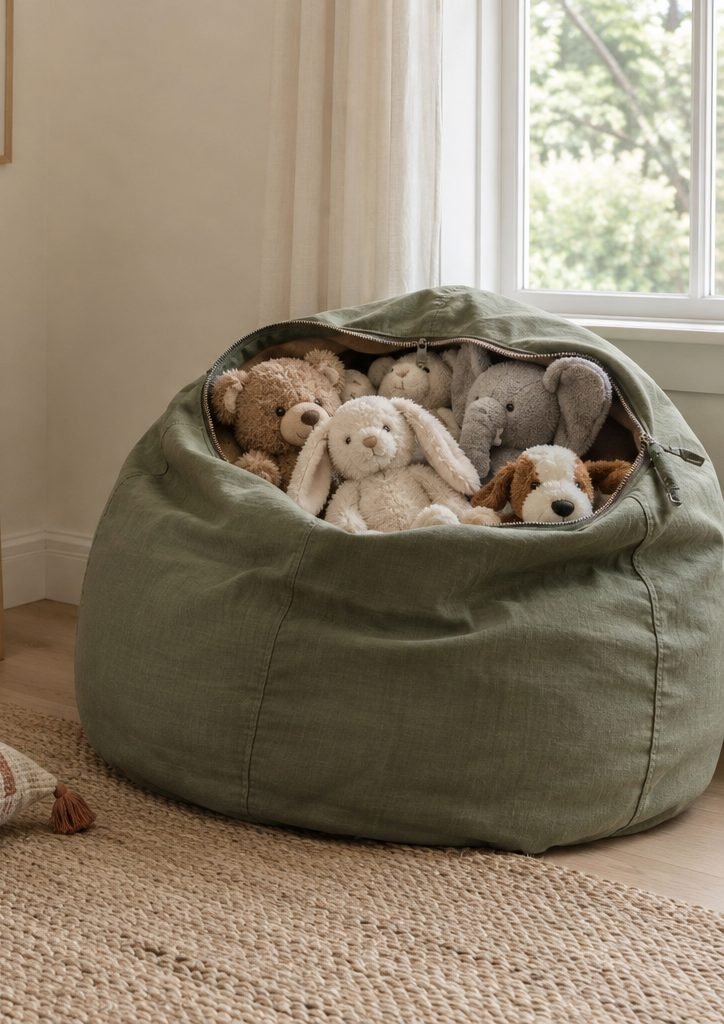
A zippered bean bag cover filled with plush toys becomes a soft seat for a reading corner. It hides a big collection and costs less than most furniture. Use it for toys that are not needed every day, and choose a cover with a child-resistant or locking zipper so small children cannot open it and climb inside.
4. A Side-Access Wire Hamper
A wire laundry hamper or crate with gaps in the sides works like a mini storage tower: kids can see the toys and pull one out through the side or the top. Line the bottom with a folded towel so smaller toys do not slip through.
5. A Corner Toy Hammock
A mesh or macrame toy hammock stretched across a corner keeps plush toys off the floor. Mount it with hooks screwed into the studs, keep it out of a baby’s reach and away from the bed and crib, and fill it with light toys only.
6. An Over-the-Door Pocket Organizer
A clear-pocket shoe organizer on the back of the bedroom or closet door holds small plush toys one per pocket. Kids can see each toy, and the floor stays clear. It needs no tools, so it is ideal for renters.
Wall and Display Ideas
For older kids and collectors, displaying the favorites can look as good as any decor. Keep wall storage away from the bed and the crib.
7. Floating Shelves Above a Window Seat
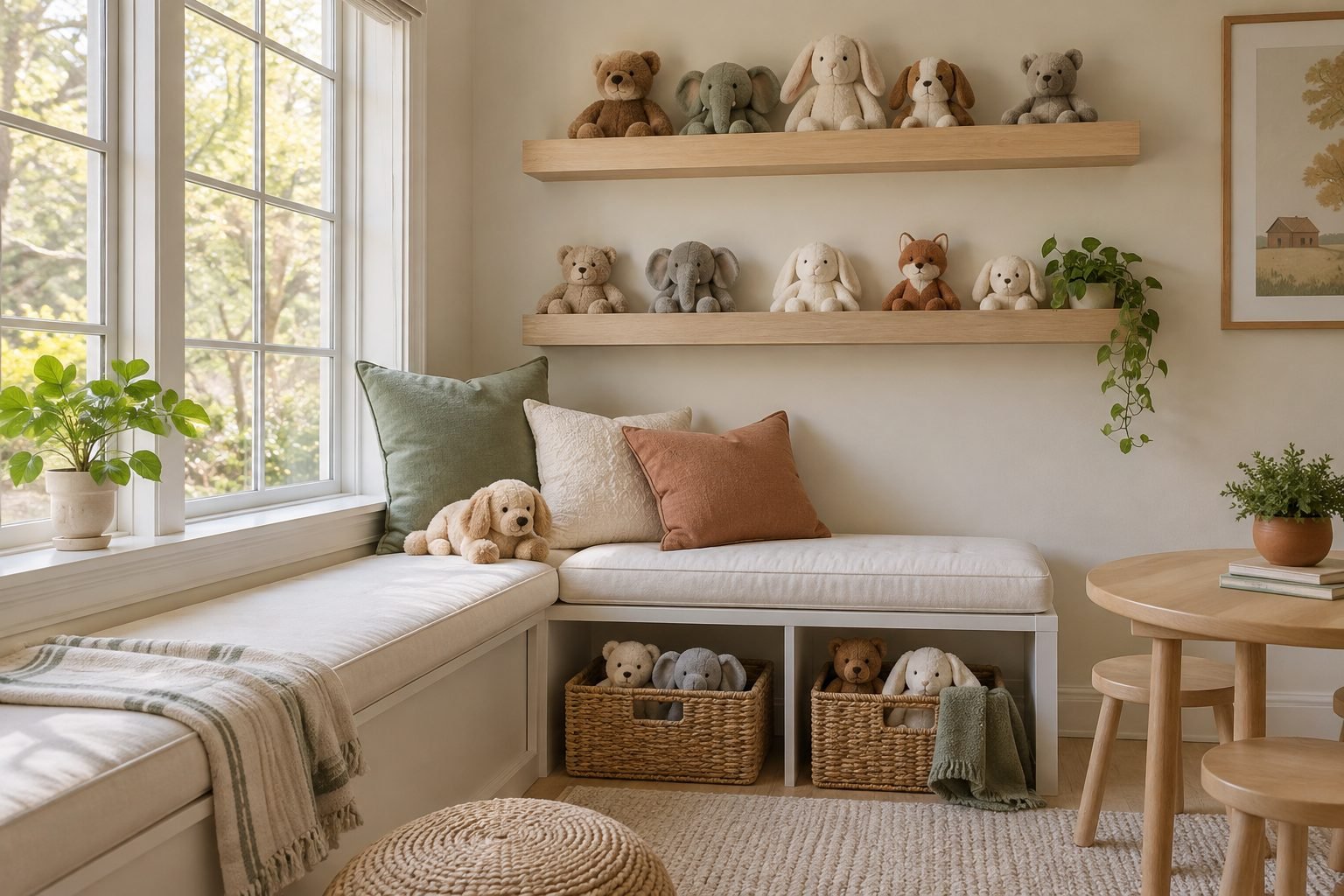
Two or three wall shelves turn the favorites into a display, and baskets under a window seat hold the rest. Mount the shelves into studs or with the right anchors, use shelves deep enough for toys to sit on, or lipped picture ledges for small ones, and put them above a desk, a dresser or a window seat rather than above a bed. Our DIY floating shelves guide shows how to mount shelves securely.
8. Cubbies in a Low Bookcase
A low cube bookcase gives each group of toys its own cubby: bears in one, bunnies in another, small ones in a fabric bin. Low furniture is safer for climbers than tall shelves, and the top can hold a lamp or a few books. Anchor it to the wall even if it is short.
9. Wall-Mounted Baskets
Two or three wire or woven baskets screwed to the wall in a row, at different heights, turn a bare wall into toy storage. Keep the lowest one at your child’s height for everyday toys, and the higher ones for display.
10. A Single Display Shelf for Collectors
If your child collects one kind of plush toy, give the collection one display shelf and a simple rule: when the shelf is full, one comes off before a new one goes on. The rule keeps the collection from creeping across the room.
Hidden and Small-Space Stuffed Animal Storage
In a small bedroom, the rotation bin and the overflow need to disappear. Our small bedroom storage ideas cover more ways to free floor space.
11. A Rolling Under-Bed Bin
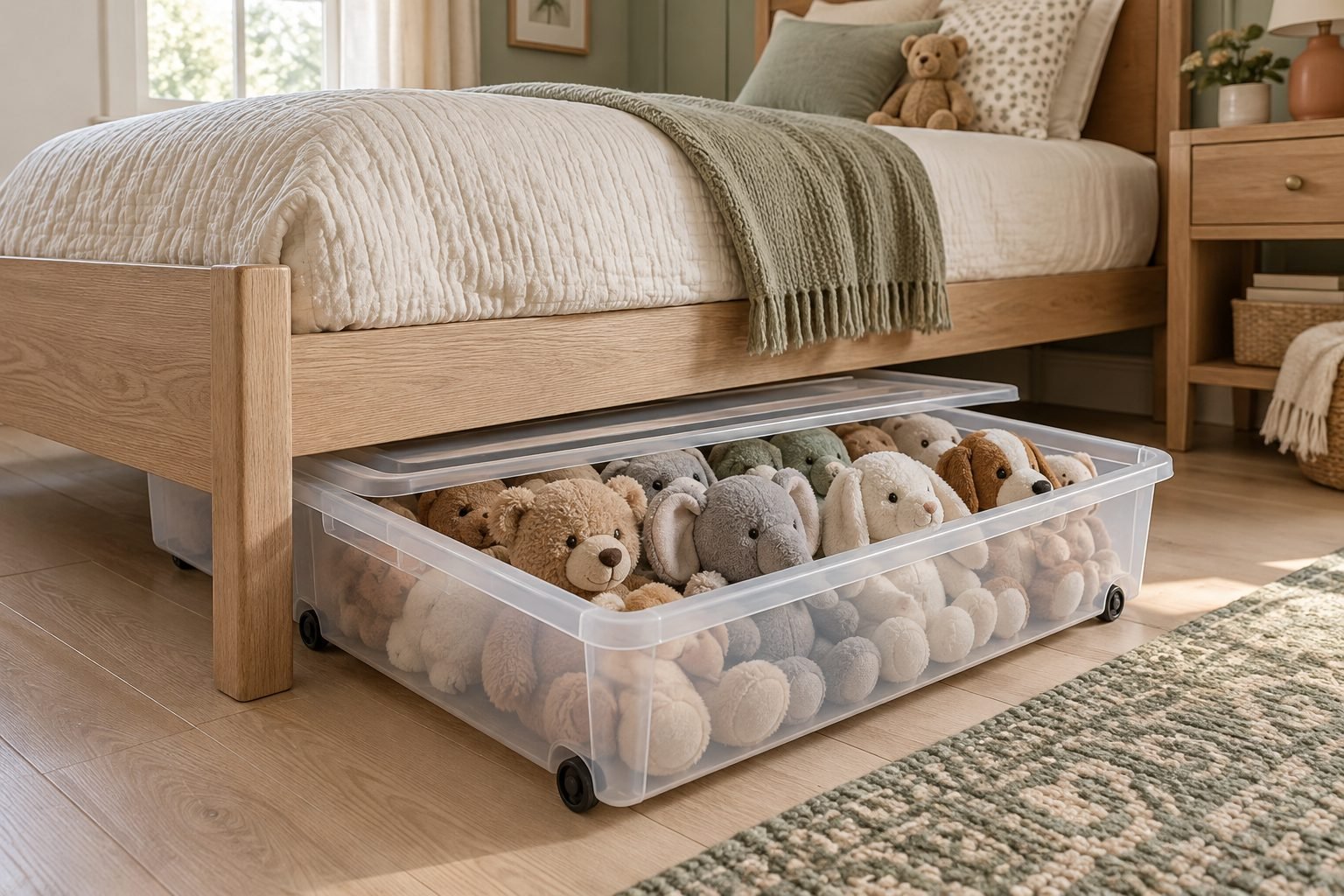
A clear, lidded under-bed box on wheels makes a good rotation bin. It slides out easily, you can see what is inside, and the lid keeps out dust. Measure the gap under the bed before you buy, and slide it back when you are done so no one trips.
12. A Toy Chest or Storage Bench With a Safe Lid
A toy chest or storage bench hides a big pile and gives you a seat, but choose it carefully. The CPSC warns that children can be trapped in storage and toy chests. It advises a lid support that keeps a hinged lid open in any position, and ventilation holes that are not blocked by the floor or a wall. Skip chests and trunks with lids that latch. An open bench with baskets avoids the lid question entirely.
13. Labeled Bins on a Closet Shelf
A row of fabric bins on the top shelf of the closet holds the rotation toys out of sight. Label each bin with a picture as well as a word so younger kids know what is inside. The same idea works for the linen closet, as in our linen closet organization guide.
14. A Toy Rotation Bin System
Divide the rotation toys into two or three bins and swap one bin with the play zone every few weeks. Old toys feel new again, and the play zone never overflows. Our toy storage ideas explain a simple rotation system for all toys, not only plush ones.
How to Store Stuffed Animals Long Term
15. Clean, Dry and in a Lidded Bin
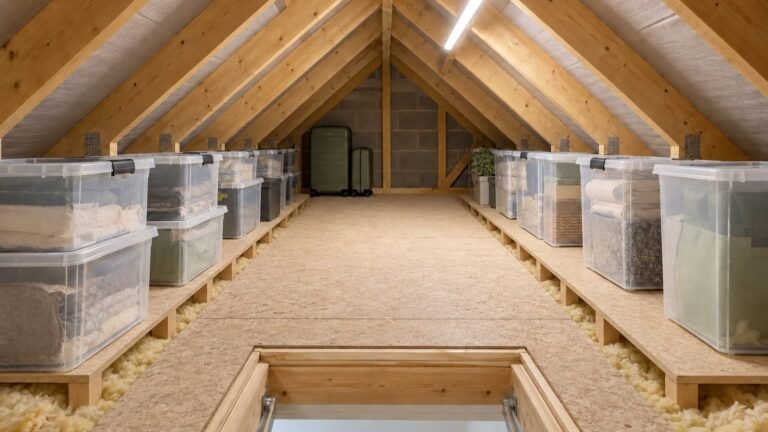
Before you store stuffed animals for months or years, take the batteries out of talking or musical toys, then wash or spot-clean them following the label and let them dry completely. Duracell advises removing batteries from devices you will not use for several months. Pack the toys in a clean, lidded plastic bin, label it and keep it in a cool, dry room indoors. The GW Museum and The Textile Museum point out that attics and basements usually have no climate control and the biggest swings in temperature and humidity, and that most moth and carpet beetle infestations occur in stored textiles.
16. A Keepsake Box for the Few That Matter
Keep a small keepsake box for the stuffed animals that carry real memories. Wrap each one in acid-free tissue paper, rather than squeezing them into a vacuum bag, so they keep their shape. For the rest, take a photo of your child with their favorites before you pass them on: the photo takes up no space.

Stuffed Animal Safety Tips
- Babies: the NIH Safe to Sleep campaign says to keep soft objects, toys and loose bedding out of your baby’s sleep area, so stuffed animals belong on a shelf away from the crib, not in it.
- Dust mite allergies: KidsHealth advises washing washable soft toys in hot water above 130°F (54°C) if they have no batteries, or freezing them in a sealed bag for at least 5 hours, and keeping the collection small for allergic kids.
- Tall storage: anchor towers, bookcases and dressers to the wall, as the CPSC’s Anchor It campaign recommends, because children climb.
- Worn toys: check seams, eyes and noses now and then, and retire toys that are coming apart.
Common Stuffed Animal Storage Mistakes
- Buying storage before you sort. Do the clean-out first, then buy containers for what is left.
- One giant bin for everything. The favorites sink to the bottom and everything ends up on the floor.
- Storage too high for kids. If a child cannot reach the play zone, they cannot tidy it.
- Shelves and hammocks above the bed. Keep wall storage over a desk or window seat instead.
- Storing dirty toys long term. Wash and dry them first, or they come out musty.
Stuffed Animal Storage FAQ
What is the best way to store a lot of stuffed animals?
The best way to store a lot of stuffed animals is to split them up: one to three favorites on the bed, this week’s toys in one open basket or storage tower at kid height, and the rest in a lidded rotation bin under the bed or in the closet. Swap a few every 2 to 4 weeks and donate what has no place.
How do you store stuffed animals long term?
Take out any batteries, then wash or spot-clean them and let them dry completely. Pack them in a clean, lidded plastic bin with a label, or wrap special ones in acid-free tissue in a keepsake box, and keep them in a cool, dry room indoors rather than the attic or basement.
Where should stuffed animals go in a small room?
In a small room, use vertical and hidden space: a storage tower in a corner, a pocket organizer on the back of the door, a toy hammock across a corner away from the bed, and a rolling bin under the bed for the toys in rotation. Keep only one small play zone out on the floor.
How do I get my child to let go of stuffed animals?
Let your child choose the favorites first, so they feel in control. Use a container as the limit, such as one basket, and explain that the others will wait in the rotation bin. Donate only toys they agree to pass on, and take a photo of special ones before they go.
Is it safe to store stuffed animals in vacuum bags?
Vacuum bags are fine for short-term storage of sturdy, washable plush toys you are moving or storing for a season. For sentimental or delicate toys, skip them: tight compression can crush the stuffing and flatten the fur. A lidded bin with acid-free tissue is gentler.
Final Thoughts
The best stuffed animal storage ideas are the ones your child can use without you. Keep a few favorites close, give this week’s toys one open home at kid height, rotate the rest from a bin and protect the keepsakes. With a simple limit for each zone, the plush pile stays under control.
Tackling the whole room? Try our tips on how to organize your room, sort the bricks with our LEGO storage ideas, and use our guide on how to declutter your home for the rest of the house.
How this guide was made: researched and written with the help of AI tools, fact-checked against trusted sources and published by Mohamed Elber. Images are AI-generated illustrations. See our Editorial Policy.